Qatar says worker deaths for FIFA World Cup 'between 400 and 500'

News Network
November 29, 2022

qatar.jpg

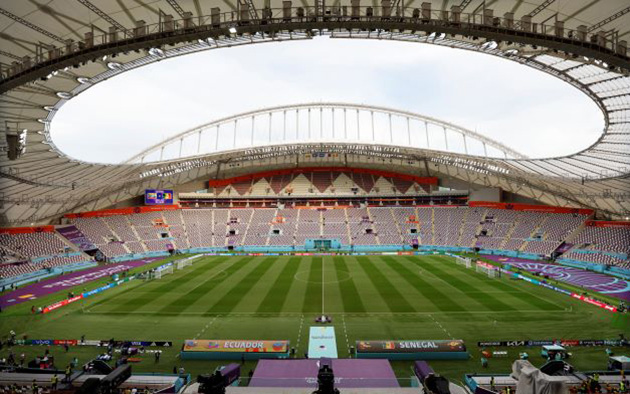
Doha, Nov 29: A top Qatari official involved in the country's World Cup organization has put the number of worker deaths for the tournament “between 400 and 500” for the first time, a drastically higher number than any other previously offered by Doha.

The comment by Hassan al-Thawadi, the secretary-general of Qatar's Supreme Committee for Delivery and Legacy, appeared to come off the cuff during an interview with British journalist Piers Morgan.

It also threatened to reinvigorate criticism by human rights groups over the toll of hosting the Middle East's first World Cup for the migrant labor that built over $200 billion worth of stadiums, metro lines and new infrastructure needed for the tournament.

In the interview, portions of which Morgan posted online, the British journalist asks al-Thawadi: "What is the honest, realistic total do you think of migrant workers who died from – as a result of work they're doing for the World Cup in totality?”

“The estimate is around 400, between 400 and 500," al-Thawadi responds.

"I don't have the exact number. That's something that's been discussed.”

But that figure hasn't been discussed publicly by Qatari officials previously. Reports from the Supreme Committee dating from 2014 through the end of 2021 only include the number of deaths of workers involved in building and refurbishing the stadiums now hosting the World Cup.

Those released figures put the total number of deaths at 40. They include 37 from what the Qataris describe as nonwork incidents such as heart attacks and three from workplace incidents. One report also separately lists a worker death from the coronavirus amid the pandemic.

Al-Thawadi pointed to those figures when discussing work just on stadiums in the interview, right before offering the “between 400 to 500” death toll for all the infrastructure for the tournament.

In a later statement, the Supreme Committee said al-Thawadi was referring to “national statistics covering the period of 2014-2020 for all work-related fatalities (414) nationwide in Qatar, covering all sectors and nationalities.”

Since FIFA awarded the tournament to Qatar in 2010, the country has taken some steps to overhaul the country's employment practices. That includes eliminating its so-called kafala employment system, which tied workers to their employers, who had say over whether they could leave their jobs or even the country.

Qatar also has adopted a minimum monthly wage of 1,000 Qatari riyals ($275) for workers and required food and housing allowances for employees not receiving those benefits directly from their employers. It also has updated its worker safety rules to prevent deaths.

“One death is a death too many. Plain and simple,” al-Thawadi adds in the interview.

Activists have called on Doha to do more, particularly when it comes to ensuring workers receive their salaries on time and are protected from abusive employers.

Al-Thawadi's comment also renews questions on the veracity of both government and private business reporting on worker injuries and deaths across the Gulf Arab states, whose skyscrapers have been built by laborers from South Asia nations like India, Pakistan and Sri Lanka.

“This is just the latest example of Qatar's inexcusable lack of transparency on the issues of workers' deaths," said Nicholas McGeehan of Fairsquare, a London-based group which advocates for migrant workers in the Middle East.

“We need proper data and thorough investigations, not vague figures announced through media interviews.

"FIFA and Qatar still have a lot of questions to answer, not least where, when, and how did these men die and did their families receive compensation.”

Mustafa Qadri, the executive director of Equidem Research, a labor consultancy that has published reports on the toll of the construction on migrant laborers, also said he was surprised by al-Thawadi's remark.

“For him now to come and say there is hundreds, it's shocking,” he told media. “They have no idea what's going on.”

Comments

Add new comment

  • Coastaldigest.com reserves the right to delete or block any comments.
  • Coastaldigset.com is not responsible for its readers’ comments.
  • Comments that are abusive, incendiary or irrelevant are strictly prohibited.
  • Please use a genuine email ID and provide your name to avoid reject.
News Network
December 7,2025

envoy.jpg

Since 1946, the United States has attempted 93 coups or “regime change” operations across the world — including two in Iran, US Special Envoy for Syria Tom Barrack has admitted.

Speaking to the UAE-based IMI Media Group, in remarks published by The National, Barrack said Washington tried twice to overthrow the Iranian government but failed both times. 

“For (Trump) then to be imputed with regime change — we had two regime changes in Iran already. Neither one worked. So I think wisely leave it to the region to solve,” said Barrack, who also serves as the US ambassador to Turkey.

His comments come six months after the US joined Israel in airstrikes against Iran during ongoing indirect nuclear negotiations between Tehran and Washington.

On June 13, Israel launched an attack on Iran that killed at least 1,064 people and hit civilian infrastructure. Days later, the United States targeted three nuclear facilities — Fordow, Natanz and Isfahan — in what Iran called a clear violation of international law. Iranian retaliation eventually forced a halt to the assault on June 24.

Barrack further claimed that US President Donald Trump and Foreign Secretary Marco Rubio are “not into regime change” and prefer a regional approach driven by Middle Eastern countries themselves. According to him, regional dialogue and non-interference by outside powers offer a more durable path forward.

He added that Washington is still open to an agreement with Tehran if Iranian authorities show “seriousness” and willingness to engage constructively.

However, Iran maintains the US has not shown readiness for meaningful talks. In an interview with Japan’s Kyodo News, Iranian Foreign Minister Abbas Araghchi said negotiations could advance only if Washington acknowledges Iran’s right to peaceful nuclear energy and lifts unilateral sanctions.

Comments

Add new comment

  • Coastaldigest.com reserves the right to delete or block any comments.
  • Coastaldigset.com is not responsible for its readers’ comments.
  • Comments that are abusive, incendiary or irrelevant are strictly prohibited.
  • Please use a genuine email ID and provide your name to avoid reject.
News Network
December 16,2025

bengal.jpg

The deletion of over 58 lakh names from West Bengal’s draft electoral rolls following a Special Intensive Revision (SIR) has sparked widespread concern and is likely to deepen political tensions in the poll-bound state.

According to the Election Commission, the revision exercise has identified 24 lakh voters as deceased, 19 lakh as relocated, 12 lakh as missing, and 1.3 lakh as duplicate entries. The draft list, published after the completion of the first phase of SIR, aims to remove errors and duplication from the electoral rolls.

However, the scale of deletions has raised fears that a large number of eligible voters may have been wrongly excluded. The Election Commission has said that individuals whose names are missing can file objections and seek corrections. The final voter list is scheduled to be published in February next year, after which the Assembly election announcement is expected. Notably, the last Special Intensive Revision in Bengal was conducted in 2002.

The development has intensified the political row over the SIR process. Chief Minister Mamata Banerjee and her Trinamool Congress have strongly opposed the exercise, accusing the Centre and the Election Commission of attempting to disenfranchise lakhs of voters ahead of the elections.

Addressing a rally in Krishnanagar earlier this month, Banerjee urged people to protest if their names were removed from the voter list, alleging intimidation during elections and warning of serious consequences if voting rights were taken away.

The BJP, meanwhile, has defended the revision and accused the Trinamool Congress of politicising the issue to protect what it claims is an illegal voter base. Leader of the Opposition Suvendu Adhikari alleged that the ruling party fears losing power due to the removal of deceased, fake, and illegal voters.

The controversy comes amid earlier allegations by the Trinamool Congress that excessive work pressure during the SIR led to the deaths by suicide of some Booth Level Officers (BLOs), for which the party blamed the Election Commission. With the draft list now out, another round of political confrontation appears imminent.

As objections begin to be filed, the focus will be on whether the correction mechanism is accessible, transparent, and timely—critical factors in ensuring that no eligible voter is denied their democratic right ahead of a crucial election.

Comments

Add new comment

  • Coastaldigest.com reserves the right to delete or block any comments.
  • Coastaldigset.com is not responsible for its readers’ comments.
  • Comments that are abusive, incendiary or irrelevant are strictly prohibited.
  • Please use a genuine email ID and provide your name to avoid reject.
News Network
December 19,2025

Saudi Arabia has abolished fees on expatriate workers employed in licensed industrial establishments, signaling a strong push to empower national factories and enhance the Kingdom’s global industrial competitiveness. The move reflects the leadership’s commitment to building a sustainable and resilient industrial economy under Saudi Vision 2030.

The decision was approved by the Council of Ministers, chaired by Crown Prince and Prime Minister Mohammed bin Salman, following a recommendation from the Council of Economic and Development Affairs (CEDA). It forms part of a broader strategy to support, modernize, and strengthen the industrial sector.

By removing fees on foreign workers, industrial establishments gain greater operational flexibility and relief from financial pressures. This is expected to help factories expand production, improve efficiency, and compete more effectively in international markets, while reinforcing long-term sustainability.

The initiative aligns closely with Saudi Vision 2030, which identifies industry as a key pillar of economic diversification. A competitive and resilient industrial base is viewed as essential for driving innovation, attracting investment, and sustaining long-term economic growth.

Overall, the fee exemption underscores the Kingdom’s commitment to creating a supportive environment for industrial development and ensuring that Saudi factories remain globally competitive and capable of leading the nation’s economic transformation.

Comments

Add new comment

  • Coastaldigest.com reserves the right to delete or block any comments.
  • Coastaldigset.com is not responsible for its readers’ comments.
  • Comments that are abusive, incendiary or irrelevant are strictly prohibited.
  • Please use a genuine email ID and provide your name to avoid reject.