



Sri Lankan Easter blast suspect was under Indian watch

Agencies
May 15, 2019

Colombo/Ahmedabad, May 15: A Sri Lankan software engineer suspected by authorities in Sri Lanka of having provided technical and logistical support to the Easter Sunday suicide bombers was monitored by Indian intelligence agencies three years ago for links with Islamic State suspects, investigators said.
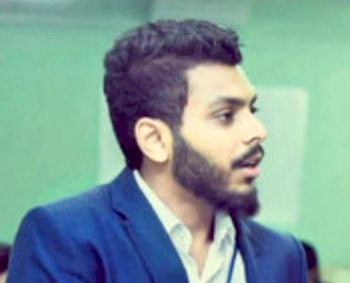
Four sources in Sri Lankan investigating agencies said they believed Aadhil Ameez, a 24-year-old, was the link between two groups that carried out the attacks on churches and hotels that killed more than 250 people and wounded hundreds more.

Aadhil has been arrested and is in police custody, the sources said. His arrest has not been made public, but when asked by Reuters, Ruwan Gunasekera, the main spokesman for the Sri Lankan police, confirmed Aadhil was taken into custody on April 25, four days after the attacks.

The spokesman declined to give more details.

A police official at India's National Investigation Agency (NIA) and another police official in the western state of Gujarat said they were providing assistance to Sri Lankan authorities.

Aadhil, who describes himself on his LinkedIn profile as a senior engineer/programmer/web designer with a masters degree in computer science and a bachelors in political science from U.K. universities, could not be reached for comment.

He does not yet have a lawyer and under Sri Lanka's tough new emergency laws imposed after the attacks, he can be held indefinitely.

His father, M. Ameez, who lives in Aluthgama, a town south of Colombo, denied that Aadhil was involved with the plotters and said such "allegations are lies".

The Indian investigators said they had been monitoring Aadhil since 2016 and named him in two chargesheets filed in Indian courts against suspected Islamic State operatives as being one of their contacts.

According to one of the chargesheets, reviewed by Reuters, he showed up in Facebook, WhatsApp and Telegram chats with two of the suspects who are on trial for plotting an attack on a synagogue in the western city of Ahmedabad.

The two suspects Ubed Ahmad Mirza, a lawyer, and Stimberwala Mohamed Kasim, a hospital technician, were accused of planning "lone-wolf" attacks, according to the chargesheet.

Lawyers for both men rejected the allegations and said they were innocent. Both lawyers declined to comment on the possible role of Aadhil.

Aadhil has also been named in another chargesheet filed in court by the NIA for providing propaganda and online material to three Indians arrested in early 2016 for promoting Islamic State.

The three men, Sheikh Azhar ul-Islam, Adnan Hassan and Mohammed Rafiq Sadique Shaikh are on trial in a special Delhi court facing charges of criminal conspiracy to propagate the ideology of Islamic State, recruit, raise funds and facilitate the travel of people to Syria, according to the chargesheet.

Sheikh Mohammad Munawar, a cousin of ul-Islam, said the charges were fabricated and that he had no criminal record ever.

Families of the other two accused could not be reached. Their lawyers were not immediately available for comment.

Reuters was unable to determine when the Indians informed Sri Lankan authorities of the surveillance. The two officials declined to say whether they continued to keep Aadhil under surveillance after they completed investigation of the cases in India.

Indian intelligence services warned Sri Lankan authorities of a possible attack at least three times in April alone, officials have said.

Link Between Groups

Sri Lankan authorities have said two local Islamist groups - the National Tawheed Jamaath (NTJ) led by radical preacher Zahran Hashim and the Jamathei Millathu Ibrahim (JMI) - were involved in the synchronised blasts in Colombo, the island nation's capital, and two other towns. Islamic State has claimed responsibility for the attacks.

Two sources in Sri Lanka's police Criminal Investigation Department and two military officials said Aadhil was the link between the two groups.

The groups used the dark web and WhatsApp to communicate, they said.

However, investigators don't know yet whether Aadhil was simply a facilitator for the bombers, or if he was also one of the ring leaders involved in planning and executing the attacks.

Last week, police raided IT firm Virtusa, where Aadhil had interned in 2013, according to his profile. One current employee has been detained for questioning in connection with the attacks, police say, but no other details have been provided.

Online Chats

India, with one of the world's largest populations of Muslims, has claimed success in foiling several Islamic State cells, mostly in southern and western India.

Court documents reviewed by Reuters show that the online conversations between the Sri Lankan and the two Indians in western India, began in the summer of 2016 and lasted until the arrest of the two Indians in late 2017. The documents describe how Aadhil Ax, as he called himself online, asked the Indians if they had heard about the atrocities being committed against Muslims in Sri Lanka by the majority Buddhist community.

He talked about his own experiences: that he had been in jail, that his house had been torched and that he limped because of beatings, the documents seen by Reuters show. Investigators and neighbours in Sri Lanka say none of these were true.

The Sri Lankan investigators interviewed by Reuters say Aadhil made claims he was a journalist and a PhD candidate in some of his online postings, which also were false.

They said they believed Aadhil, operating largely from his home, was a key part of the Easter bombings plot and helped in communications and training.

"He was the main technology person for them," said one of the CID sources involved in the investigation. The source said Aadhil was helped in this by Abdul Latheef Mohamed Jameel, one of the eight suicide bombers who detonated his explosives at a guesthouse after failing to do so at Colombo's luxury Taj Samudra hotel.

About a week before the bombings, Aadhil met Jameel, Zahran the extremist preacher, and Inshaf Ibrahim and Ilham Ibrahim, the two brothers from a family engaged in the spice trade in Colombo, the other sources said. The latter three men blew themselves up in five-star Colombo hotels.

The CID source said that Aadhil, Zahran and the Ibrahim brothers had leased land in Wanathawilluwa town in the north and set up a training camp. Police raided the place in January this year and discovered a large amount of explosives, but did not know at the time who had leased it.

When police raided Aadhil's home four days after the bombings, all his computer files were found to have been deleted.

"He seems to have played an important role in setting up communications for the attackers, helping organise meetings and training camps," said one of the military sources.

Comments

Add new comment

  • Coastaldigest.com reserves the right to delete or block any comments.
  • Coastaldigset.com is not responsible for its readers’ comments.
  • Comments that are abusive, incendiary or irrelevant are strictly prohibited.
  • Please use a genuine email ID and provide your name to avoid reject.
News Network
January 20,2026

iran.jpg

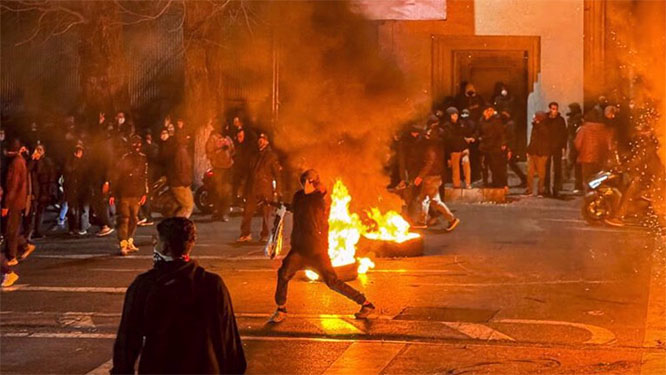
Iranian security and intelligence forces have captured more than 470 individuals in three provinces, identified as key figures behind the recent wave of violent unrest and terrorist activities linked to foreign-backed networks.

The Intelligence Ministry's provincial office in Khorasan Razavi announced on Monday the arrest of 192 armed terrorists, identified as the main agents behind recent riots in the region. 

According to an official statement, the detainees were involved in the killing of several security personnel and civilians, setting fire to mosques, public service facilities, and buses, as well as attacks on military and law enforcement centers.

The seized items from the group include several bulletproof vests, Kalashnikov rifles, hunting weapons, Winchester rifles, and various cold weapons such as daggers, swords, brass knuckles, tactical knives, crossbows, and chains.

Evidence indicates that some of the individuals were tied to hostile movements and terrorist organizations, with links overseas. Others were identified as members of violent criminal gangs, actively taking part in the unrest alongside their associates.

Simultaneously, in the western province of Lorestan, the IRGC announced the arrest of 134 individuals as the main leaders and influential field agents of a US-Israeli terrorist network.

The IRGC statement stated that these individuals formed terrorist cells during the recent unrest, committing "Daesh-like" acts.

They wounded security forces with firearms and cold weapons, and burned and destroyed public and private properties, including mosques, shops, banks, and private and public vehicles.

In the northwestern province of Zanjan, the police reported detaining 150 people identified as principal leaders and agents behind recent riots.

Authorities noted that these individuals were responsible for destroying public and private property and intentionally setting fire to vehicles in the province's squares.

Their crimes include shedding the blood of innocent people, destroying public and private property, attempting to enter military sites, disrupting public order, and spreading terror among citizens.

A variety of cold weapons were reportedly seized from the detainees.

What began late last month as peaceful protests over economic hardship across Iran turned violent after public statements by US and Israeli regime figures encouraged vandalism and disorder.

During the unrest, foreign-backed mercenaries rampaged through cities, killing security forces and civilians and damaging public property.

Comments

Add new comment

  • Coastaldigest.com reserves the right to delete or block any comments.
  • Coastaldigset.com is not responsible for its readers’ comments.
  • Comments that are abusive, incendiary or irrelevant are strictly prohibited.
  • Please use a genuine email ID and provide your name to avoid reject.
News Network
January 31,2026

trumpkill.jpg

The US Department of Justice has released millions of new documents linked to the case of convicted child sex offender Jeffrey Epstein, before removing some pages that contained complaints mentioning President Donald Trump.

Deputy Attorney General Todd Blanche said on Friday that approximately 3.5 million files were published to comply with the Epstein Transparency Act, following criticism that the administration had missed a December 19 deadline set by Congress.

The documents include FBI communications and complaints submitted as tips, some of which list comments mentioning Trump and others who had social or professional ties to Epstein.

Trump has repeatedly denied any wrongdoing in relation to his past association with Epstein.

Pages removed from DOJ website

After their publication, pages containing complaints that mentioned Trump were removed from the DOJ website and now return a “page not found” message. Copies of the documents, however, have circulated widely on social media. CNN anchor Jake Tapper was among those who publicly noted that the pages had been taken down.

One complaint, filed by a friend of a victim, says Trump forced a girl aged 13–14 to perform “oral sex” approximately 35 years ago in New Jersey. The document states that an investigator was sent to Washington to conduct an interview.

Another complaint says Trump regularly paid an individual to perform sexual acts and adds that he was present when her newborn child was murdered by a relative. The paperwork notes that there was “no contact made” with the complainant.

A separate complaint, which provided no contact information, said “calendar girls” parties at Trump’s Mar-a-Lago involved children and sexual abuse. The document also names several public figures as present at such events.

In another account, a complainant said they witnessed a “sex trafficking ring” at Trump National Golf Club in Rancho Palos Verdes, California, in the mid-1990s. The person noted “threats” from Trump’s head of security if she spoke publicly about what she had seen.

Other figures mentioned in the files

The latest release also includes a draft email Epstein wrote to himself in 2013, referring to Microsoft co-founder Bill Gates. In the message, Epstein said Gates asked him to delete emails and referenced “personal matters.”

The DOJ has not provided a detailed explanation for why certain pages were removed after publication. The department said the document release was ongoing.

Comments

Add new comment

  • Coastaldigest.com reserves the right to delete or block any comments.
  • Coastaldigset.com is not responsible for its readers’ comments.
  • Comments that are abusive, incendiary or irrelevant are strictly prohibited.
  • Please use a genuine email ID and provide your name to avoid reject.
News Network
January 31,2026

Roy.jpg

Bengaluru: The shooting incident involving CJ Roy, founder of the Confident Group, has once again put the spotlight on a businessman whose life has swung between flamboyant global success and persistent controversy at home.

Though Roy’s business interests extended across continents, his roots lay firmly in Karnataka. An alumnus of Christ School in Bengaluru, he later moved to Tumakuru to pursue an engineering degree. Those familiar with his early years describe him as intensely ambitious, beginning his career as a salesman at a small electronics firm dealing in computers.

Roy’s entry into large-scale real estate came through the Crystal Group, where he worked closely with Latha Namboothiri and rose from manager to director. However, the launch of the Confident Group in 2005 was clouded by industry speculation. Insiders speak of a fallout involving alleged “benami” properties and claims of deception that ultimately led to his independent venture—an episode Roy spent years trying to distance himself from, according to associates.

A tale of two cities

Roy’s professional trajectory diverged sharply across geographies.

In Dubai, he built a reputation as a bold and efficient developer, completing massive luxury residential projects in record time—some reportedly within 11 months. His rapid project delivery and lavish lifestyle in the Emirates earned him admiration and visibility in the real estate sector.

In Bengaluru, however, his image remained far more fractured. Sources say Roy stayed away from the city for several years amid disputes over unpaid dues to vendors and suppliers. Several projects were allegedly stalled, with accusations of unfulfilled commitments to cement and steel suppliers continuing to follow him.

Roy’s return to Bengaluru’s business and social circles began around 2018, marked by a conscious attempt at rebranding. His appointment as Honorary Consul of the Slovak Republic added diplomatic legitimacy, which he complemented with visible CSR initiatives, including ambulance donations and high-profile charity events.

Heavy police presence in Langford Town

Following the incident, police personnel from the Central division were deployed outside the Confident Group building in Langford Town, which also houses the Slovak Honorary Consulate in Bengaluru.

The otherwise busy premises near Hosur Road wore a deserted look on Friday, reflecting the shock and uncertainty that followed the tragedy.

Comments

Add new comment

  • Coastaldigest.com reserves the right to delete or block any comments.
  • Coastaldigset.com is not responsible for its readers’ comments.
  • Comments that are abusive, incendiary or irrelevant are strictly prohibited.
  • Please use a genuine email ID and provide your name to avoid reject.
