14 out of world's 20 most polluted cities in India: WHO

Agencies
May 2, 2018

New Delhi, May 2: Delhi and Varanasi are among the 14 Indian cities that figured in a list of 20 most polluted cities in the world in terms of PM2.5 levels in 2016, data released by the WHO showed on Wednesday.

The WHO data also said that nine out of 10 people in the world breathe air containing high levels of pollutants.

Other Indian cities that registered very high levels of PM2.5 pollutants were Kanpur, Faridabad, Gaya, Patna, Agra, Muzaffarpur, Srinagar, Gurgaon, Jaipur, Patiala and Jodhpur followed by Ali Subah Al-Salem in Kuwait and a few cities in China and Mongolia.

In terms of PM10 levels, 13 cities in India figured among the 20 most-polluted cities of the world in 2016.

The World Health Organisation has called upon member-countries in its Southeast Asia Region to aggressively address the double burden of household and ambient (outdoor) air pollution, saying the region, which comprises India, accounts for 34 pc or 2.4 million of the seven million premature deaths caused by household and ambient air pollution together globally every year.

Of the 3.8 million deaths caused by household air pollution globally, the region accounts for 1.5 million or 40 percent deaths, and of the 4.2 million global deaths due to ambient air pollution, 1.3 million or 30 percent are reported from the region, it said.

The PM2.5 includes pollutants like sulfate, nitrate and black carbon, which pose the greatest risk to human health.

WHO's global urban air pollution database measured the levels of fine particulate matter (PM10 and PM2.5) from more than 4,300 cities in 108 countries, according to which ambient air pollution alone caused some 4.2 million deaths in 2016, while household air pollution from cooking with polluting fuels and technologies caused an estimated 3.8 million deaths in the same period.

Since 2016, over 1,000 additional cities have been added to WHO's database, which shows more countries are measuring and taking action to reduce air pollution than ever before.

"WHO estimates that around 7 million people die every year from exposure to fine particles in the polluted air that penetrate deep into the lungs and cardiovascular system, causing diseases including stroke, heart disease, lung cancer, chronic obstructive pulmonary diseases and respiratory infections, including pneumonia," the report said.

According to the report, more than 90 percent of air pollution-related deaths occur in low- and middle-income countries (including India), mainly in Asia and Africa, followed by low- and middle-income countries of the Eastern Mediterranean region, Europe and the Americas.

"Around 3 billion people – more than 40 percent of the world's population – still do not have access to clean cooking fuels and technologies in their homes, the main source of household air pollution," it said.

It said the WHO recognises air pollution is a critical risk factor for noncommunicable diseases (NCDs), causing an estimated 24 percent of all adult deaths from heart disease, 25 percent from stroke, 43 percent from chronic obstructive pulmonary disease and 29 percent from lung cancer.

The report, however, stated countries are making efforts and taking measures and in this context, referred to India's Pradhan Mantri Ujjwala Yojana, which it said, in just two years, has provided 37 million women living below the poverty line with free LPG connections to support them to switch to clean household energy use.

India targets to reach 80 million households by 2020.

All countries in the region are making efforts to expand the availability of clean fuels and technologies, however, over 60 percent population do not have clean fuel. The combined effects of household air pollution and ambient air pollution become increasingly hard to address if not tackled early, Poonam Khetrapal Singh, regional director, WHO Southeast Asia, said.

"Air pollution needs to be brought under control with urgent and effective action. Non-communicable diseases are the leading cause of deaths globally and in the region, and air pollution contributes significantly to NCDs such as cardiovascular disease, respiratory disease and lung cancer.

"Cleaning up the air we breathe will help prevent NCDs, particularly among women and vulnerable groups such as children, those already ill and the elderly," Singh said.

"Many of the world's megacities exceed WHO's guideline levels for air quality by more than 5 times, representing a major risk to people's health," Maria Neira, director of the Department of Public Health, Social and Environmental Determinants of Health at WHO, said, adding, there is an acceleration of political interest to deal with this global public health challenge.

"Air pollution threatens us all, but the poorest and most marginalised people bear the brunt of the burden. It is unacceptable that over 3 billion people – most of them women and children – are still breathing deadly smoke every day from using polluting stoves and fuels in their homes," said Tedros Adhanom Ghebreyesus, director-general of WHO.

Major sources of air pollution from particulate matter include inefficient use of energy by households, industry, agriculture and transport sectors, and coal-fired power plants. In some regions, sand and desert dust, waste burning and deforestation are additional sources of air pollution.

"Air pollution does not recognise borders. Improving air quality demands sustained and coordinated government action at all levels," the WHO said.


Comments

Add new comment

  • Coastaldigest.com reserves the right to delete or block any comments.
  • Coastaldigset.com is not responsible for its readers’ comments.
  • Comments that are abusive, incendiary or irrelevant are strictly prohibited.
  • Please use a genuine email ID and provide your name to avoid reject.
News Network
December 16,2025

bengal.jpg

The deletion of over 58 lakh names from West Bengal’s draft electoral rolls following a Special Intensive Revision (SIR) has sparked widespread concern and is likely to deepen political tensions in the poll-bound state.

According to the Election Commission, the revision exercise has identified 24 lakh voters as deceased, 19 lakh as relocated, 12 lakh as missing, and 1.3 lakh as duplicate entries. The draft list, published after the completion of the first phase of SIR, aims to remove errors and duplication from the electoral rolls.

However, the scale of deletions has raised fears that a large number of eligible voters may have been wrongly excluded. The Election Commission has said that individuals whose names are missing can file objections and seek corrections. The final voter list is scheduled to be published in February next year, after which the Assembly election announcement is expected. Notably, the last Special Intensive Revision in Bengal was conducted in 2002.

The development has intensified the political row over the SIR process. Chief Minister Mamata Banerjee and her Trinamool Congress have strongly opposed the exercise, accusing the Centre and the Election Commission of attempting to disenfranchise lakhs of voters ahead of the elections.

Addressing a rally in Krishnanagar earlier this month, Banerjee urged people to protest if their names were removed from the voter list, alleging intimidation during elections and warning of serious consequences if voting rights were taken away.

The BJP, meanwhile, has defended the revision and accused the Trinamool Congress of politicising the issue to protect what it claims is an illegal voter base. Leader of the Opposition Suvendu Adhikari alleged that the ruling party fears losing power due to the removal of deceased, fake, and illegal voters.

The controversy comes amid earlier allegations by the Trinamool Congress that excessive work pressure during the SIR led to the deaths by suicide of some Booth Level Officers (BLOs), for which the party blamed the Election Commission. With the draft list now out, another round of political confrontation appears imminent.

As objections begin to be filed, the focus will be on whether the correction mechanism is accessible, transparent, and timely—critical factors in ensuring that no eligible voter is denied their democratic right ahead of a crucial election.

Comments

Add new comment

  • Coastaldigest.com reserves the right to delete or block any comments.
  • Coastaldigset.com is not responsible for its readers’ comments.
  • Comments that are abusive, incendiary or irrelevant are strictly prohibited.
  • Please use a genuine email ID and provide your name to avoid reject.
News Network
December 24,2025

alhind.jpg

New Delhi: Two new airlines - Al Hind Air and FlyExpress - are set to take to the skies, with the carriers receiving their no objection certificates from the Civil Aviation Ministry.

In 2026, apart from these two carriers, Uttar Pradesh-based Shankh Air, which already has a No Objection Certificate (NOC), is likely to start operations.

Al Hind Air is being promoted by Kerala-based alhind Group.

The ministry is keen to have more airline operators in the country, which is one of the world's fastest growing domestic civil aviation markets.

Currently, there are nine operational scheduled domestic carriers in the country. Fly Big, a regional airline, suspended scheduled flights in October.

IndiGo and Air India Group - Air India and Air India Express - together have over 90 per cent of the domestic market share.

Concerns about apparent duopoly in the fast-growing domestic airlines' industry got amplified this month in the wake of the massive operational disruptions at IndiGo, which has a market share of more than 65 per cent.

"Over the last one week, pleased to have met teams from new airlines aspiring to take wings in Indian skies- Shankh Air, Al Hind Air and FlyExpress. While Shankh Air has already got the NOC from the Ministry, Al Hind Air and FlyExpress have received their NOCs this week," Civil Aviation Minister K Rammohan Naidu said in a post on X on Tuesday.

According to him, it has been the endeavour of the ministry to encourage more airlines in Indian aviation which is amongst the fastest growing aviation markets.

Schemes like UDAN, have enabled smaller carriers Star Air, India One Air and Fly91 to play an important role in the regional connectivity within the country and there is more scope for further growth, he added.

Apart from Air India, Air India Express, IndiGo and state-owned Alliance Air, other scheduled carriers are Akasa Air, SpiceJet, Star Air, Fly91 and IndiaOne Air, as per latest data from the Directorate General of Civil Aviation (DGCA).

In the past years, many airlines, including Go First and Jet Airways, stopped flying amid debt woes.

Comments

Add new comment

  • Coastaldigest.com reserves the right to delete or block any comments.
  • Coastaldigset.com is not responsible for its readers’ comments.
  • Comments that are abusive, incendiary or irrelevant are strictly prohibited.
  • Please use a genuine email ID and provide your name to avoid reject.
News Network
December 21,2025

hadith.jpg

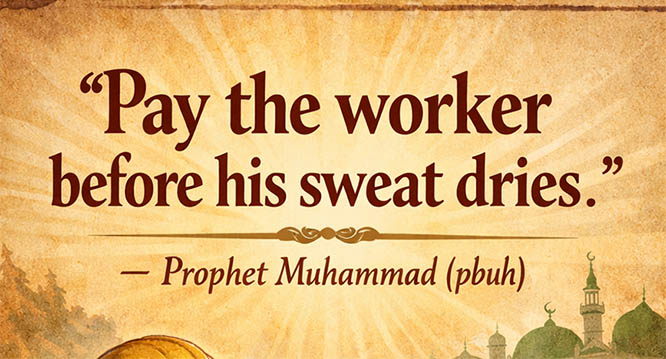
Invoking the teachings of Prophet Muhammad—“pay the worker before his sweat dries”—the Madras High Court has directed a municipal corporation to settle long-pending legal dues owed to a former counsel. The court observed that this principle reflects basic fairness and applies equally to labour and service-related disputes.

Justice G. R. Swaminathan made the observation while hearing a petition filed by advocate P. Thirumalai, who claimed that the Madurai City Municipal Corporation failed to pay him legal fees amounting to ₹13.05 lakh. Earlier, the High Court had asked the corporation to consider his representation. However, a later order rejected a major portion of his claim, prompting the present petition.

The court allowed Thirumalai to approach the District Legal Services Authority (DLSA) and submit a list of cases in which he had appeared. It also directed the corporation to settle the verified fee bills within two months, without interest. The court noted that the petitioner had waited nearly 18 years before challenging the non-payment and that the corporation could not be fully blamed, as the fee bills were not submitted properly.

‘A Matter of Embarrassment’

Justice Swaminathan described it as a “matter of embarrassment” that the State has nearly a dozen Additional Advocate Generals. He observed that appointing too many law officers often leads to unnecessary allocation of work and frequent adjournments, as government counsel claim that senior officers are engaged elsewhere.

He expressed hope that such practices would end at least in the Madurai Bench of the High Court and added that Additional Advocate Generals should “turn a new leaf” from 2026 onwards.

‘Scandalously High Amounts’

While stating that the court cannot examine the exact fees paid to senior counsel or law officers, Justice Swaminathan stressed that good governance requires public funds to be used prudently. He expressed concern over the “scandalously high amounts” paid by government and quasi-government bodies to a few favoured law officers.

In contrast, the court noted that Thirumalai’s total claim was “a pittance” considering the large number of cases he had handled.

Background

Thirumalai served as the standing counsel for the Madurai City Municipal Corporation for more than 14 years, from 1992 to 2006. During this period, he represented the corporation in about 818 cases before the Madurai District Courts.

As the former counsel was unable to hire a clerk to obtain certified copies of judgments in all 818 cases, the court directed the District Legal Services Authority to collect the certified copies within two months. The court further ordered the corporation to bear the cost incurred by the DLSA and deduct that amount from the final settlement payable to the petitioner.

Comments

Add new comment

  • Coastaldigest.com reserves the right to delete or block any comments.
  • Coastaldigset.com is not responsible for its readers’ comments.
  • Comments that are abusive, incendiary or irrelevant are strictly prohibited.
  • Please use a genuine email ID and provide your name to avoid reject.