Arun Jaitley may have to undergo surgery for kidney-related ailment

Agencies
April 5, 2018

Finance Minister Arun Jaitley is suffering from a kidney ailment and may have to undergo a surgery, sources close to the minister said.

Mr Jaitley, 65, is undergoing diagnostic tests and doctors have so far indicated that it was a kidney-related ailment, they said.

The minister, however, has not yet been hospitalised but has been advised to avoid going out in public for fear of infection.

He has not been attending office since Monday and even skipped taking oath after being re-elected as Rajya Sabha MP from Uttar Pradesh. 53 out of the 58 newly-elected or re-elected members took oath of office during the last two days. Mr Jaitley was one of the five members who hasn't taken oath.

Sources said the minister's present condition may be a fallout of the bariatric surgery he had undergone soon after the BJP government came to power at the Centre in 2014.

He underwent the surgery to treat weight gain that he suffered because of a long-standing diabetic condition.

That surgery was first performed at Max Hospital, but he then had to be shifted to AIIMS because of complications.

Sources said doctors from AIIMS are attending to Mr Jaitley at his residence now. A final call is yet to be taken on whether a kidney transplant is required or not, they said.

Depending on doctors advice, he may be admitted to the Cardio-Neuro Tower at the All India Institute of Medical Sciences (AIIMS) here. The centre is housed in a separate building and is equipped with state-of-the-art equipment.

Though he has not been attending office since Monday, he is clearing files from his residence, they said.

The minister, who suffers from chronic diabetes, had heart surgery several years ago. He is a key member of the Prime Minister Narendra Modi's cabinet and presented his fifth and the present NDA government's final full budget on February 1.

The Budget was last month approved by the Lok Sabha without a discussion and it is not listed to be taken up in Rajya Sabha before the current session of Parliament ends tomorrow, thereby not requiring his presence for a reply.

Comments

Add new comment

  • Coastaldigest.com reserves the right to delete or block any comments.
  • Coastaldigset.com is not responsible for its readers’ comments.
  • Comments that are abusive, incendiary or irrelevant are strictly prohibited.
  • Please use a genuine email ID and provide your name to avoid reject.
News Network
December 23,2025

pakleader.jpg

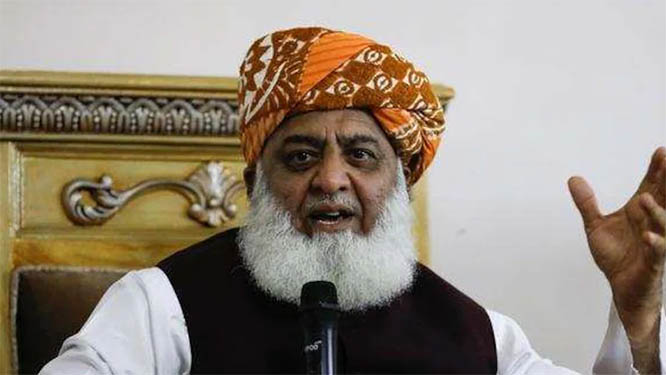
A Pakistani lawmaker has called out the hypocrisy of his country's leadership, drawing a parallel between Islamabad's military actions against Kabul and India's 'Operation Sindoor'.

Condemning the Pakistan army, led by Asim Munir, for strikes on Afghanistan - which resulted in civilian casualties - Jamiat Ulema-e-Islam-F (JUI-F) chief Maulana Fazlur Rehman questioned the consistency of Islamabad's logic. He argued that if Pakistan's cross-border attacks are considered justified, then the country has little ground to object when India enters Pakistani territory to eliminate terrorists.

Rehman was addressing the 'Majlis-e-Ittehad-e-Ummat' conference on Monday in Karachi's Lyari. The town recently gained international attention as the setting for the Ranveer Singh-starrer Dhurandhar, which depicted the intersection of informants and operatives within the Lyari underworld.

"If you say that we attacked our enemy in Afghanistan and justify this, then India can also say that it attacked Bahawalpur, Muridke, and the headquarters of groups responsible for the attack in Kashmir," Rehman said, referring to India's retaliatory strikes. "Then how can you raise objections? The same accusations are now being levelled against Pakistan by Afghanistan. How do you justify both positions?"

The JUI-F chief's remarks specifically referenced 'Operation Sindoor'.

On May 7, Indian armed forces carried out pre-dawn missile strikes on nine terror targets in Pakistan and Pakistan-occupied Kashmir, including the Jaish-e-Mohammad stronghold of Bahawalpur and Lashkar-e-Taiba's base in Muridke.

Pak-Afghanistan Tension

Fazlur Rehman has been a consistent critic of the Pakistani government's policy towards Afghanistan. In October, during a peak in bilateral tensions, he offered to mediate between the two nations. According to a Dawn report, he stated, "In the past, I have played a role in reducing tensions between Pakistan and Afghanistan, and I can still do so."

Rehman is known to wield significant influence within the region and remains the only Pakistani lawmaker to have met with the Taliban's supreme leader, Haibatullah Akhundzada.

Recently, India condemned Pakistan's fresh strikes on Afghanistan. "We have seen reports of border clashes in which several Afghan civilians have been killed," Ministry of External Affairs (MEA) spokesperson Randhir Jaiswal said at a weekly media briefing.

"We condemn such attacks on innocent Afghan people. India strongly supports the territorial integrity, sovereignty and independence of Afghanistan," he said.

A spokesperson for the Taliban regime claimed Pakistan initiated the attacks and that Kabul was "forced to respond".

The two countries have been locked in an increasingly bitter dispute since the Taliban authorities retook control in Kabul in 2021, with Islamabad accusing its neighbour of harbouring terrorists - a charge that the Afghan government denies.

Comments

Add new comment

  • Coastaldigest.com reserves the right to delete or block any comments.
  • Coastaldigset.com is not responsible for its readers’ comments.
  • Comments that are abusive, incendiary or irrelevant are strictly prohibited.
  • Please use a genuine email ID and provide your name to avoid reject.
News Network
December 22,2025

bhagavat.jpg

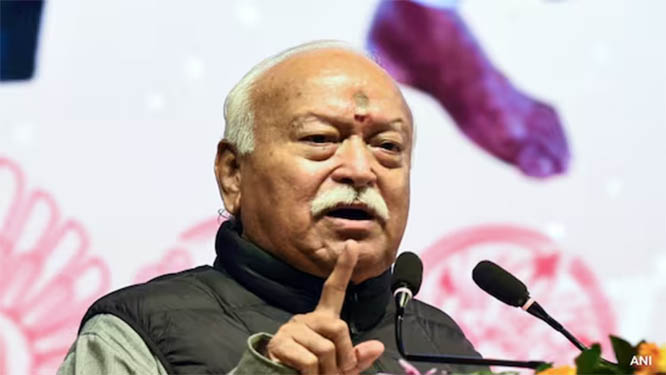
Kolkata: Stressing that India is a "Hindu nation," Rashtriya Swayamsevak Sangh (RSS) Chief Mohan Bhagwat on Sunday said that no constitutional approval is needed as it is the "truth".

Addressing an event marking 100 years of the RSS, Bhagwat said that India is, and will remain, a Hindu nation until Indian culture is appreciated in the country.

"The Sun rises in the east; we don't know since when this has been happening. So, do we need constitutional approval for that, too? Hindustan is a Hindu nation. Whoever considers India their motherland appreciates Indian culture, as long as there is even one person alive on the land of Hindustan who believes in and cherishes the glory of Indian ancestors, India is a Hindu nation. This is the ideology of the Sangh," he said at the '100 Vyakhyan Mala' program of RSS in Kolkata.

"If Parliament ever decides to amend the Constitution and add that word, whether they do it or not, it's fine. We don't care about that word because we are Hindus, and our nation is a Hindu nation. That is the truth. The caste system based on birth is not the hallmark of Hindutva," he added.

RSS has always argued that India is a "Hindu Nation," given the culture and majority's affiliations to Hinduism. However, 'secular' was not originally part of the Preamble of the Constitution, but it was added along with the word 'socialist' by the Constitution (42nd Amendment) Act, 1976, during the Emergency imposed by then Prime Minister Indira Gandhi.

Bhagwat also urged people to visit the organisation's offices and 'shakhas' to understand its work, so that what he dubbed as the “false perception” of the organisation as anti-Muslim can be dispelled!

Bhagwat said that people have understood that the organisation advocates for the protection of Hindus, and are "staunch nationalists," but not anti-muslim.

"If there is a perception that we are anti-Muslim, then, as I said, the RSS work is transparent. You can come anytime and see for yourself, and if you see anything like that happening, then you keep your views, and if you don't see it, then you change your views. There is a lot to understand (about RSS), but if you don't want to understand, then no one can change your mind," Bhagwat said.

He said, but anyone unwilling to learn cannot be helped.

"After seeing, people have said that you are staunch nationalists. You organise Hindus, and you advocate for the protection of Hindus. But you are not anti-Muslim. Many people have accepted this, and those who want to know more should come and see the RSS for themselves," he said.

Comments

Add new comment

  • Coastaldigest.com reserves the right to delete or block any comments.
  • Coastaldigset.com is not responsible for its readers’ comments.
  • Comments that are abusive, incendiary or irrelevant are strictly prohibited.
  • Please use a genuine email ID and provide your name to avoid reject.
News Network
December 13,2025

New Delhi: School-going children are picking up drug and smoking habits and engaging in consumption of alcohol, with the average age of introduction to such harmful substances found to be around 13 years, suggesting a need for earlier interventions as early as primary school, a multi-city survey by AIIMS-Delhi said.

The findings also showed substance use increased in higher grades, with grade XI/XII students two times more likely to report use of substances when compared with grade VIII students. This emphasised the importance of continued prevention and intervention through middle and high school.

The study led by Dr Anju Dhawan of AIIMS's National Drug Dependence Treatment Centre, published in the National Medical Journal of India this month, looks at adolescent substance use across diverse regions.

The survey included 5,920 students from classes 8, 9, 11 and 12 in urban government, private and rural schools across 10 cities -- Bengaluru, Chandigarh, Delhi, Dibrugarh, Hyderabad, Imphal, Jammu, Lucknow, Mumbai, and Ranchi. The data were collected between May 2018 and June 2019.

The average age of initiation for any substance was 12.9 (2.8) years. It was lowest for inhalants (11.3 years) followed by heroin (12.3 years) and opioid pharmaceuticals (without prescription; 12.5 years).

Overall, 15.1 per cent of participants reported lifetime use, 10.3 per cent reported past year use, and 7.2 per cent reported use in the past month of any substance, the study found.

The most common substances used in the past year, after tobacco (4 per cent) and alcohol (3.8 per cent), were opioids (2.8 per cent), followed by cannabis (2 per cent) and inhalants (1.9 per cent). Use of non-prescribed pharmaceutical opioids was most common among opioid users (90.2 per cent).

On being asked, 'Do you think this substance is easily available for a person of your age' separately for each substance category, nearly half the students (46.3 per cent) endorsed that tobacco products and more than one-third of the students (36.5 per cent) agreed that a person of their age can easily procure alcohol products.

Similarly, for Bhang (21.9 per cent), ganja/charas (16.1 per cent), inhalants (15.2 per cent), sedatives (13.7 per cent), opium and heroin (10 per cent each), the students endorsed that these can be easily procured.

About 95 per cent of the children, irrespective of their grade, agreed with the statement that 'drug use is harmful'.

The rates of substance use (any) among boys were significantly higher than those of girls for substance use (ever), use in the past year and use in the past 30 days. Compared to grade VIII students, grade IX students were more likely, and grade XI/XII students were twice as likely to have used any substance (ever).

The likelihood of past-year use of any substance was also higher for grade IX students and for grade XI/XII students as compared to grade VIII students.

About 40 per cent of students mentioned that they had a family member who used tobacco or alcohol each. The use of cannabis (any product) and opioid (any product) by a family member was reported by 8.2 per cent and 3.9 per cent of students, respectively, while the use of other substances, such as inhalants/sedatives by family was 2-3 per cent, the study found.

A relatively smaller percentage of students reported use of tobacco or alcohol among peers as compared to among family members, while a higher percentage reported inhalants, sedatives, cannabis or opioid use among peers.

Children using substances (past year) compared to non-users reported significantly higher any substance use by their family members and peers.

There were 25.7 per cent students who replied 'yes' to the question 'conflicts/fights often occur in your family'. Most students also replied affirmatively to 'family members are aware of how their time is being spent' and 'damily members are aware of with whom they spend their time'.

Comments

Add new comment

  • Coastaldigest.com reserves the right to delete or block any comments.
  • Coastaldigset.com is not responsible for its readers’ comments.
  • Comments that are abusive, incendiary or irrelevant are strictly prohibited.
  • Please use a genuine email ID and provide your name to avoid reject.