



Crude output: US may soon knock down Saud Arabia from second to third place

Agencies
January 20, 2018

London, Jan 20: The rapid growth of US shale producers will shortly knock Saudi Arabia from second to third place among the world’s oil-producing titans, with only Russia ahead, the International Energy Agency said on Friday.

With Venezuelan output plummeting amid political and economic turmoil, the IEA indicated the Kingdom could lose its number two position in 2018.

“Very soon US crude production may overtake that of Saudi Arabia and also rival Russia’s,” it said.

The backdrop is a tightening market amid a significant fall in Venezuelan production, geopolitical uncertainty, continuing falls in inventory levels and OPEC/Russia supply cuts.

But the upshot, said the agency, is likely to be a sizeable pick-up in non-OPEC production. After adding in barrels from Brazil, Canada and other growth countries, and allowing for falls in Mexico, China and elsewhere, total non-OPEC production will increase by 1.7 million barrels per day (bpd), IEA said in its latest world oil market report.

The agency said: “This represents, after the downturn in 2016 and the steady recovery in 2017, a return to the heady days of 2013-2015 when US-led growth averaged 1.9 million bpd.

The factors contributing to investor interest in oil include the possible unraveling of the Iran nuclear deal and recent demonstrations in the country, disruption to the industry in Libya, and the closure of the Forties pipeline system.

Although these factors might have faded somewhat, there are others at work, said the IEA. “The general perception that the market has been tightening is clearly the overriding factor and, within this overall picture, there is mounting concern about Venezuela’s production.

A plunge in Venezuelan supply cut OPEC crude output to 32.23 million bpd in December, boosting compliance to 129 percent. Declines are accelerating in Venezuela, which posted the world’s biggest unplanned output fall in 2017.”

Said the IEA: “Venezuelan production is now about half the level inherited by president Chavez in 1999 - and in December output was 490,000 bpd a day lower than a year ago, having fallen to 1.61 million bpd.

The agency said it was reasonable to assume that the decline will continue, but it was impossible to say at what rate. But if output and exports sank further, it was fair to assume other producers would probably step in with the flexibility to deliver oil similar in quality to Venezuela’s shipments to the US and elsewhere, including China.

Market tightening in the final months of 2017 was evident and continued into 2018. OECD commercial stocks declined for the fourth consecutive month in November, by 17.9 million barrels, with a large fall in middle distillates, said IEA. Preliminary data for December suggested a further fall of 42.7 million barrels.

“Additionally, global crude oil markets saw an exceptionally tight fourth quarter in 2017 as the large draw in OECD crude stocks coincided with a decline in Chinese implied crude balances.”

On the demand side, estimates for 2017 and 2018 were roughly unchanged at 97.8 million bpd and 99.1 million bpd respectively.

“The slowdown in 2018 demand growth is mainly due to the impact of higher oil prices, changing patterns of oil use in China, recent weakness in OECD demand and the switch to natural gas in several non-OECD countries. Production was steady on a year ago as non-OPEC gains of nearly 1 mb/d offset declines in OPEC.”

The price of Brent crude oil closed earlier this week above $70 for the first time since Dec. 2, 2014, and money managers have placed record bets on the recent upward momentum continuing. Whether or not the recent price rise has run out of steam and “seventy really is plenty” remained to be seen, said the agency.

“However, such are the geopolitical uncertainties and the ever-dynamic prospects for US shale that we should expect a volatile year,” it added.

Comments

Add new comment

  • Coastaldigest.com reserves the right to delete or block any comments.
  • Coastaldigset.com is not responsible for its readers’ comments.
  • Comments that are abusive, incendiary or irrelevant are strictly prohibited.
  • Please use a genuine email ID and provide your name to avoid reject.
News Network
February 1,2026

US President Donald Trump on Saturday claimed that the government of India led by Prime Minister Narendra Modi has made a deal to buy Venezuelan oil, as opposed to purchasing it from Iran.

"We've already made that deal, the concept of the deal," he told reporters on Air Force One.

Trump had imposed 25% tariffs on countries buying Venezuelan oil, including India, in March 2025. He had also hit India with tariffs for buying Russian oil, saying it was "funding" President Vladimir Putin's war against Ukraine.

Trump has said that the US has taken control of the oil-rich Venezuela after capturing former President Nicolas Maduro in January.

A fleet of 18 ships loaded with crude oil bound for refineries in Texas, Louisiana, and Mississippi in January, the most since December 2024, according to a report by the news agency Bloomberg.

Combined crude deliveries to the US will reach about 2,75,000 barrels a day, more than doubling volumes seen in December last year. Shipments to China, which averaged 4,00,000 barrels a day last year, fell to zero in January.

PM Modi, Venezuelan President Agree To Expand Ties

Prime Minister Narendra Modi and Venezuela's acting President Delcy Rodriguez spoke on Friday and agreed to take the bilateral relations to "new heights" in the years ahead.

It was the first phone call between the two leaders since the capture of Maduro and his wife by the US on January 3.

"Spoke with Acting President of Venezuela, Ms. Delcy Rodriguez. We agreed to further deepen and expand our bilateral partnership in all areas, with a shared vision of taking India-Venezuela relations to new heights in the years ahead," PM Modi said in a post on X.

A statement from Prime Minister Modi's office said the two leaders agreed to further expand and deepen the India-Venezuela partnership in all areas, including trade and investment, energy, digital technology, health, agriculture, and people-to-people ties.

They exchanged views on various regional and global issues of mutual interest and underscored the importance of their close cooperation for the Global South, the statement said.

Rodriguez also said that they discussed partnerships in the fields of agriculture, science and technology, mining, and tourism, as well as the pharmaceutical and automotive industries.

Comments

Add new comment

  • Coastaldigest.com reserves the right to delete or block any comments.
  • Coastaldigset.com is not responsible for its readers’ comments.
  • Comments that are abusive, incendiary or irrelevant are strictly prohibited.
  • Please use a genuine email ID and provide your name to avoid reject.
News Network
January 23,2026

oscar.jpg

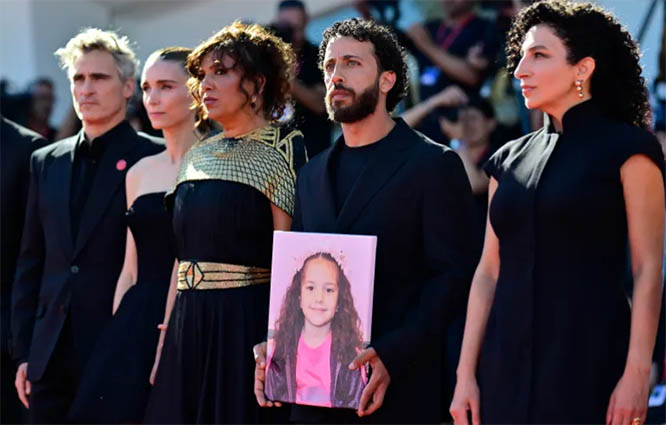
The Voice of Hind Rajab, inspired by the tragic final moments of a young Palestinian girl killed by Israeli fire in Gaza, has been nominated for an Academy Award in the Best International Feature Film category.

Directed by Tunisian filmmaker Kaouther Ben Hania, the film recounts the true story of five-year-old Hind Rajab, who lost her life in January 2024 while fleeing Israeli bombardment with her family.

The film features the real audio of Hind’s desperate call to the Palestinian Red Crescent Society, where she pleaded for help moments before the vehicle she was in was struck by 355 bullets.

The haunting narrative begins with a brief call made from the besieged Tel al-Hawa neighborhood of Gaza, where gunfire and armored vehicles drowned out every sound.

After witnessing the brutal killing of her family, she made a trembling call, her voice reduced to a whisper as she spoke of the massacre and her unbearable loneliness as the sole survivor.

Premiering at the Venice International Film Festival in September 2025, The Voice of Hind Rajab garnered widespread acclaim, receiving a record-setting 23-minute standing ovation and the Silver Lion Grand Jury Prize, the festival’s second-highest honor.

In her acceptance speech, Ben Hania dedicated the film to humanitarian workers and first responders in Gaza, emphasizing that Hind's voice symbolizes countless civilians affected by war.

She aims to give voice to victims often reduced to mere statistics, highlighting the broader suffering of civilians in war zones.

The film’s Oscar nomination underscores its powerful storytelling and ethical approach to depicting real-life tragedy, making it a crucial piece of contemporary cinema.

It serves not only as a narration of individual tragedy but also as an artistic and documentary response to the silence and censorship that often overshadow West Asian struggles and wars.

Using an innovative method she calls docufiction, Ben Hania bridges unvarnished reality and narrative structure, creating a work that is both artistically valuable and socially impactful.

Born in 1977 in Sidi Bouzid—later the epicenter of the Arab revolution—her background profoundly influenced her worldview and artistic approach.

She is a graduate of the Higher School of Audiovisual Arts of Tunis, Pantheon-Sorbonne University, and La Fémis in Paris, where her studies equipped her with the technical and theoretical tools needed to address complex subjects. 

Comments

Add new comment

  • Coastaldigest.com reserves the right to delete or block any comments.
  • Coastaldigset.com is not responsible for its readers’ comments.
  • Comments that are abusive, incendiary or irrelevant are strictly prohibited.
  • Please use a genuine email ID and provide your name to avoid reject.
News Network
February 4,2026

Mangaluru: Urban local bodies and gram panchayats should make the use of Kannada on signboards mandatory while issuing trade licences to commercial establishments, Dakshina Kannada Deputy Commissioner Darshan HV said. He also called for regular inspections to ensure compliance.

Presiding over the District Kannada Awareness Committee meeting at the deputy commissioner’s office, Darshan said the city corporation would be directed to ensure that shops operating in malls prominently display their names in Kannada. “All commercial establishments, including shops, companies, offices and hotels, must mandatorily display their names in Kannada on signboards,” he said.

The deputy commissioner added that the National Highways Authority of India (NHAI) would be instructed to include Kannada on signboards along national highways. Banks, he said, would be directed through committee meetings to provide application forms in Kannada.

“Even if English-medium schools and colleges impart education in English, their signboards must display the institution’s name in Kannada. Steps will also be taken to ensure that private buses display place names in Kannada,” Darshan said.

During the meeting, committee members raised concerns over the closure of Kannada-medium schools in rural areas due to a shortage of teachers and stressed the need for immediate corrective measures. They also pointed out that several industries employ workers from other states while overlooking local candidates.

Members further demanded that nationalised banks provide deposit and withdrawal slips in Kannada. It was brought to the deputy commissioner’s notice that the presence of staff without knowledge of Kannada in rural branches of nationalised banks is causing hardship to local customers.

Meanwhile, MP Srinath, president of the District Kannada Sahitya Parishat, urged the district administration to allot land for the construction of a district Kannada Bhavana in Mangaluru.

Comments

Add new comment

  • Coastaldigest.com reserves the right to delete or block any comments.
  • Coastaldigset.com is not responsible for its readers’ comments.
  • Comments that are abusive, incendiary or irrelevant are strictly prohibited.
  • Please use a genuine email ID and provide your name to avoid reject.