



Washington, Jul 1: Indian-origin academics head a raft of engineering, math, science, and business schools in the United States. But for a country with a long-standing and deep-rooted tradition in law and jurisprudence — almost the entire team of India's founding fathers consisted of legal eagles — the dean-ship of a US law school has eluded them.
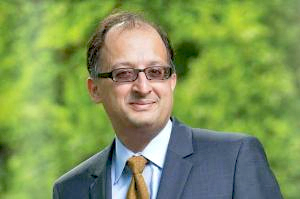
Choudhry, who is just 44, moves to California from New York University (NYU), where he founded, and helmed, the Center for Constitutional Transitions. The New Delhi-born academic has received rave reviews for his scholarship in the area, including for work in the sub-continent (he is currently co-editing the Oxford Handbook of Indian Constitutional Law with Pratap Bhanu Mehta), and he had no trouble making it to the top of the short list to head UC Berkeley Law School, whose alumni include former Chief Justice of the United States Earl Warren, former Secretary of State Dean Rusk, and Silicon Valley legal eagle Larry Sonsini, among others.
Law is not among the favored subject of Indian students in the United States that has brought some 100,000 collegiates stateside. According to the Open Doors report that monitors foreign student inflow to the US, some 75 per cent of students from India go into engineering, math, and science streams, and close to 15 per cent study at business schools. The report does not tabulate law school entrants, but social sciences and humanities account for less than 5 per cent.
Anecdotal reports suggest that is starting to change, particularly among Indian-Americans, and Choudhry concurs. "When I went to law school 20 years ago there weren't many Indian kids growing up in North America who considered law," he recalled in an interview with The Times of India. "The way in which legal education had been viewed relative to other opportunities at home (in India) had kind of carried over to North America."
In part, there were historical reasons for Indian students not looking to US for law studies. "If you look at Indian legal elite, Oxbridge and London were the central points of reference from the 1930s to 1980s," says Choudhry. Gandhi, Nehru, Patel, Jinnah and others trooped to the UK to burnish their legal credentials, and only Ambedkar among the Founding Fathers came to the US (to New York's Columbia University).
Choudhry maintains it is very different now, and top law schools in America are "full of Indians, whether they are from India or Indian kids who have grown up here." The perceived value of legal education has changed since liberalization, he says, and India has turned increasingly towards American institutions of higher education, because "work here is more interdisciplinary and increasingly global in its orientation."
Even more so in culturally and ethnically diverse California and Bay Area (where UC Berkeley Law goes head-to-head against Stanford Law School), which Choudhry says, is what drew him to the West Coast (in addition to the small matter of having an extensive family network there).
"Great law schools of the 21st century will be a global crossroads for people and ideas from around the world," says Choudhry. "Legal issues are not confined to single jurisdictions now. They may have state, federal, foreign, international and transnational dimensions."
It's a line of thinking that appealed to New Delhi law professional Geetanjani Bhushan almost a decade back when she decided to come to the prestigious Georgetown University Law Center to earn an LLM degree with specialization in corporate transactions and negotiations. "I didn't just bounce out of bed with the idea of flying off to the US. I was motivated to undertake the rigorous (and costly) endeavor to study in a top American law school after being a practicing attorney for six years in New Delhi," she recalls. In course of a bruising program, she says she got the kind of exposure in the US she "would not trade for anything."
Given the number of international legal wrangles India is coming up against, from water disputes to intellectual property rights' spats to tax rows with MNCs, it will be no surprise if there are many more Indian students thinking along the same lines. Choudhry's Berkeley Law and other law schools may yet see more Indian students in the coming years.

Comments
Add new comment