Govt linking driving licences with Aadhaar, Centre tells Supreme Court

Agencies
February 8, 2018

New Delhi, Feb 8: The Centre is in the process of linking driving licenses with Aadhaar number to weed out fake licenses and a software for this covering all states on a real time basis is under preparation, the Supreme Court was told today.

A bench comprising Justices Madan B Lokur and Deepak Gupta was informed about it by a court-appointed committee on road safety headed by former Supreme Court judge Justice K S Radhakrishnan.

This assumes significance as a five-judge Constitution bench headed by Chief Justice Dipak Misra is currently hearing a clutch of petitions challenging the constitutional validity of the Aadhaar scheme and the enabling 2016 law.

The committee, in its report filed in the top court, said it had held a meeting on November 28 last year with the joint secretary of Ministry of Road Transport and Highways (MoRTH) to discuss several issues, including procurement of fake licences and how to eliminate it.

"On the issue of fake licences, joint secretary, MoRTH informed that NIC (national informatics centre) is now preparing 'Sarthi-4' under which all the licences would be linked to Aadhaar," the report said. "This software will cover all the states on real time basis and it will not be possible for anyone to get duplicate or fake licence anywhere in the country," it said.

The advocate representing the committee, told the bench that the panel was scheduled to have a meeting with the MoRTH and other authorities concerned on February 22-23 to discuss compliance of directions given by the apex court earlier.

Additional Solicitor General Pinky Anand, appearing for the ministry, told the bench that fatalities in road accidents in India have gone down by around three percent in 2017 as compared to 2016. The bench said it was "heartening to know" that number of fatalities and injuries in road accidents have come down.

In its report, the committee said it had asked states and union territories (UTs) to forward road accident data for entire 2017.

The committee told the court that through its November 24 last year letter, it had asked all the states to set up a road safety fund which would be non-lapsable, and to have a steady flow of funds by diversion of "significant" portion of fines collected from traffic violations.

It said some states have already set up road safety fund and the committee was pursuing the issue with remaining states in order to ensure full compliance of the apex court's order which had said that the fund should be established by March 31, 2018.

The report said at the November 28 last year meeting, it was discussed that since driving licences were now in the form of a smart card, its punching in cases of default was likely to damage the data stored in it.

"Joint Secretary MoRTH pointed out that presently NIC is in the process of developing central computerised data base and all the states would be covered under the same. "This data base is likely to be effective from October 1, 2018," it said, adding, that all the offences committed by the driver would be recorded in this data base and there would be no necessity for punching of driving licences.

The committee further said that 20-25 per cent fatalities on roads occur due to non-existence of pedestrian facilities, like footpaths, over-head passes, and under-passes and so it has asked the states to provide pedestrian facilities in accordance with the Indian Road Congress (IRC) guidelines.

The court, while posting the matter for hearing on April 23, said that the committee should ensure compliance of its directions given earlier.

The apex court had in November last year issued a slew of directions on road safety and asked all states and UTs to set up a trauma centre in each district of the country and make safety norms part of school curriculum.

It had also directed that road safety education and counselling be made a part of school curriculum by the state boards by April 1, 2018, and at least one trauma care centre be set up in every district with an ambulance.

The court had issued its directions on a PIL raising the issue of road safety in the country.

Comments

Add new comment

  • Coastaldigest.com reserves the right to delete or block any comments.
  • Coastaldigset.com is not responsible for its readers’ comments.
  • Comments that are abusive, incendiary or irrelevant are strictly prohibited.
  • Please use a genuine email ID and provide your name to avoid reject.
News Network
December 23,2025

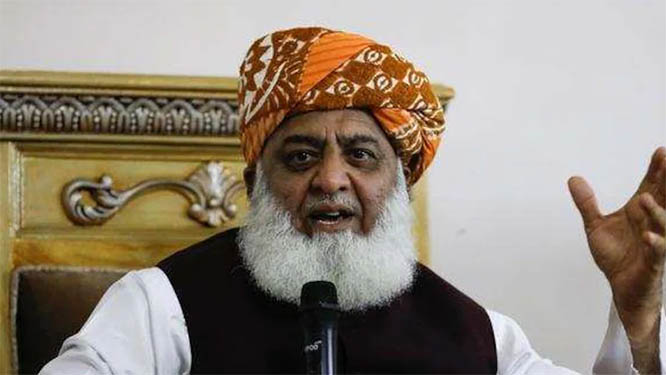
pakleader.jpg

A Pakistani lawmaker has called out the hypocrisy of his country's leadership, drawing a parallel between Islamabad's military actions against Kabul and India's 'Operation Sindoor'.

Condemning the Pakistan army, led by Asim Munir, for strikes on Afghanistan - which resulted in civilian casualties - Jamiat Ulema-e-Islam-F (JUI-F) chief Maulana Fazlur Rehman questioned the consistency of Islamabad's logic. He argued that if Pakistan's cross-border attacks are considered justified, then the country has little ground to object when India enters Pakistani territory to eliminate terrorists.

Rehman was addressing the 'Majlis-e-Ittehad-e-Ummat' conference on Monday in Karachi's Lyari. The town recently gained international attention as the setting for the Ranveer Singh-starrer Dhurandhar, which depicted the intersection of informants and operatives within the Lyari underworld.

"If you say that we attacked our enemy in Afghanistan and justify this, then India can also say that it attacked Bahawalpur, Muridke, and the headquarters of groups responsible for the attack in Kashmir," Rehman said, referring to India's retaliatory strikes. "Then how can you raise objections? The same accusations are now being levelled against Pakistan by Afghanistan. How do you justify both positions?"

The JUI-F chief's remarks specifically referenced 'Operation Sindoor'.

On May 7, Indian armed forces carried out pre-dawn missile strikes on nine terror targets in Pakistan and Pakistan-occupied Kashmir, including the Jaish-e-Mohammad stronghold of Bahawalpur and Lashkar-e-Taiba's base in Muridke.

Pak-Afghanistan Tension

Fazlur Rehman has been a consistent critic of the Pakistani government's policy towards Afghanistan. In October, during a peak in bilateral tensions, he offered to mediate between the two nations. According to a Dawn report, he stated, "In the past, I have played a role in reducing tensions between Pakistan and Afghanistan, and I can still do so."

Rehman is known to wield significant influence within the region and remains the only Pakistani lawmaker to have met with the Taliban's supreme leader, Haibatullah Akhundzada.

Recently, India condemned Pakistan's fresh strikes on Afghanistan. "We have seen reports of border clashes in which several Afghan civilians have been killed," Ministry of External Affairs (MEA) spokesperson Randhir Jaiswal said at a weekly media briefing.

"We condemn such attacks on innocent Afghan people. India strongly supports the territorial integrity, sovereignty and independence of Afghanistan," he said.

A spokesperson for the Taliban regime claimed Pakistan initiated the attacks and that Kabul was "forced to respond".

The two countries have been locked in an increasingly bitter dispute since the Taliban authorities retook control in Kabul in 2021, with Islamabad accusing its neighbour of harbouring terrorists - a charge that the Afghan government denies.

Comments

Add new comment

  • Coastaldigest.com reserves the right to delete or block any comments.
  • Coastaldigset.com is not responsible for its readers’ comments.
  • Comments that are abusive, incendiary or irrelevant are strictly prohibited.
  • Please use a genuine email ID and provide your name to avoid reject.
News Network
December 13,2025

New Delhi: School-going children are picking up drug and smoking habits and engaging in consumption of alcohol, with the average age of introduction to such harmful substances found to be around 13 years, suggesting a need for earlier interventions as early as primary school, a multi-city survey by AIIMS-Delhi said.

The findings also showed substance use increased in higher grades, with grade XI/XII students two times more likely to report use of substances when compared with grade VIII students. This emphasised the importance of continued prevention and intervention through middle and high school.

The study led by Dr Anju Dhawan of AIIMS's National Drug Dependence Treatment Centre, published in the National Medical Journal of India this month, looks at adolescent substance use across diverse regions.

The survey included 5,920 students from classes 8, 9, 11 and 12 in urban government, private and rural schools across 10 cities -- Bengaluru, Chandigarh, Delhi, Dibrugarh, Hyderabad, Imphal, Jammu, Lucknow, Mumbai, and Ranchi. The data were collected between May 2018 and June 2019.

The average age of initiation for any substance was 12.9 (2.8) years. It was lowest for inhalants (11.3 years) followed by heroin (12.3 years) and opioid pharmaceuticals (without prescription; 12.5 years).

Overall, 15.1 per cent of participants reported lifetime use, 10.3 per cent reported past year use, and 7.2 per cent reported use in the past month of any substance, the study found.

The most common substances used in the past year, after tobacco (4 per cent) and alcohol (3.8 per cent), were opioids (2.8 per cent), followed by cannabis (2 per cent) and inhalants (1.9 per cent). Use of non-prescribed pharmaceutical opioids was most common among opioid users (90.2 per cent).

On being asked, 'Do you think this substance is easily available for a person of your age' separately for each substance category, nearly half the students (46.3 per cent) endorsed that tobacco products and more than one-third of the students (36.5 per cent) agreed that a person of their age can easily procure alcohol products.

Similarly, for Bhang (21.9 per cent), ganja/charas (16.1 per cent), inhalants (15.2 per cent), sedatives (13.7 per cent), opium and heroin (10 per cent each), the students endorsed that these can be easily procured.

About 95 per cent of the children, irrespective of their grade, agreed with the statement that 'drug use is harmful'.

The rates of substance use (any) among boys were significantly higher than those of girls for substance use (ever), use in the past year and use in the past 30 days. Compared to grade VIII students, grade IX students were more likely, and grade XI/XII students were twice as likely to have used any substance (ever).

The likelihood of past-year use of any substance was also higher for grade IX students and for grade XI/XII students as compared to grade VIII students.

About 40 per cent of students mentioned that they had a family member who used tobacco or alcohol each. The use of cannabis (any product) and opioid (any product) by a family member was reported by 8.2 per cent and 3.9 per cent of students, respectively, while the use of other substances, such as inhalants/sedatives by family was 2-3 per cent, the study found.

A relatively smaller percentage of students reported use of tobacco or alcohol among peers as compared to among family members, while a higher percentage reported inhalants, sedatives, cannabis or opioid use among peers.

Children using substances (past year) compared to non-users reported significantly higher any substance use by their family members and peers.

There were 25.7 per cent students who replied 'yes' to the question 'conflicts/fights often occur in your family'. Most students also replied affirmatively to 'family members are aware of how their time is being spent' and 'damily members are aware of with whom they spend their time'.

Comments

Add new comment

  • Coastaldigest.com reserves the right to delete or block any comments.
  • Coastaldigset.com is not responsible for its readers’ comments.
  • Comments that are abusive, incendiary or irrelevant are strictly prohibited.
  • Please use a genuine email ID and provide your name to avoid reject.