Govt returns SC collegium proposal on Justice Joseph, says his elevation not 'appropriate'

Agencies
April 26, 2018

New Delhi, Apr 26: In a fresh confrontation with the judiciary, the government on Thursday told the Supreme Court collegium to reconsider its proposal to appoint Uttarakhand high court chief justice KM Joseph to the top court, saying the elevation may not be "appropriate".

The government received immediate support from the collegium head, Chief Justice Dipak Misra, who said the executive was well within its rights  to reject Justice Joseph's name while accepting the second name even though both were recommended for elevation together by the collegium. The names of Malhotra and Justice Joseph were recommended by the collegium in January.

In a letter to Justice Misra, union law minister Ravi Shankar Prasad said the government's rejection of Justice Joseph's name has approval of the President and the Prime Minister and also flagged that the SCs/STs have no representation in the Supreme Court since long.

"The proposed appointment of ... Joseph as a Judge of the Supreme Court at this stage does not appear to be appropriate," Prasad said in the letter. "It would also not be fair and justified to other more senior, suitable and deserving Chief Justices and senior judges of various High Courts."

In theory, the collegium can still reject the government's proposal and re-send Justice Joseph's name to the law ministry, which can then decide the future action.

The government's opposition to Justice Joseph's elevation is likely to deepen the rift between the executive and the judiciary.

In a ruling in 2016, Justice Joseph had cancelled President's rule in Uttarakhand and brought back to power the then Congress government of Harish Rawat in the state. The judgement was seen at that time as a major setback to the BJP-ruled government at the Centre.

The government's decision against Justice Joseph's elevation evoked sharp reactions with the Supreme Court Bar Association President terming it as "disturbing" and the main opposition party, Congress, asserting that the independence of the judiciary "is in danger" and asking if it would now speak in one voice that "enough is enough".

Meanwhile, the apex court rejected a plea of senior advocate Indira Jaisingh to stay the warrant of apointment of Malhotra.

Notification announcing the appointment of Malhotra was issued this morning by the department of justice in the law ministry.

"... the government has been constrained to segregate the recommendation of the Supreme Court ... such segregation of proposals has been done in many cases earlier, which include appointment of judges to various HCs and even the SC in the interest of expeditious action on appointments," Prasad told Justice Misra.

In June 2014, the then Chief Justice of India R M Lodha had written to the government making it clear that the executive cannot segregate recommendations without prior approval of the collegium. This had happened when the government had had decided against elevating senior lawyer and former solicitor general Gopal Subramanium to the Supreme Court, while accepting other recommendations of the collegium, a group of senior most judges of the Supreme Court that decides on appointment of the apex court judges.

But in the meantime, Subramanium withdrew his consent to be recommended for the judgeship.

In his six-page letter this morning, Union minister Prasad said in the all-India high court judges seniority list, Justice Joseph is placed at serial number 42.

"There are presently 11 chief justices of various high courts who are senior to him in the all-India high court judges seniority list," he said.

Out of a sanctioned strength of 1079 judges, the 24 HCs have 669 judges.

Noting that the parent high court of Justice Joseph, the Kerala high court, has adequate representation in the Supreme Court and other high courts, Prasad said the high courts of Calcutta, Chhattisgarh, Gujarat, Rajasthan, Jharkhand, Jammu and Kashmir, Uttarakhand, Sikkim, Maniur and Meghalaya have no representation in the top court.

"It may be relevant to mention here that there is no representation of SCs/STs in the Supreme Court since long," the letter read.

Quoting two Supreme Court judgements, the letter also said that senior HC judges should entertain hopes of elevation to the SC and the CJI and the collegium should bear this in mind.

While recommending the name of Justice Joseph for the top court, the collegium had said that he is "more deserving and suitable in all respects than other chief justices and senior puisne judges of high courts for being appointed as judge of the Supreme Court of India".

The collegium had taken into consideration combined seniority on all-India basis of chief justices and senior puisne judges of high courts, apart from their merit and integrity, the body of top five judges of the Supreme Court had said.

But government sources said the "campaign" to project Justice Joseph as a victim of the order was "disturbing". "It is baseless ... Justice J S Khehar struck down the National Judicial Appointments Commission Act. He was appointed as the CJI," they pointed out.  

Comments

Add new comment

  • Coastaldigest.com reserves the right to delete or block any comments.
  • Coastaldigset.com is not responsible for its readers’ comments.
  • Comments that are abusive, incendiary or irrelevant are strictly prohibited.
  • Please use a genuine email ID and provide your name to avoid reject.
News Network
December 24,2025

alhind.jpg

New Delhi: Two new airlines - Al Hind Air and FlyExpress - are set to take to the skies, with the carriers receiving their no objection certificates from the Civil Aviation Ministry.

In 2026, apart from these two carriers, Uttar Pradesh-based Shankh Air, which already has a No Objection Certificate (NOC), is likely to start operations.

Al Hind Air is being promoted by Kerala-based alhind Group.

The ministry is keen to have more airline operators in the country, which is one of the world's fastest growing domestic civil aviation markets.

Currently, there are nine operational scheduled domestic carriers in the country. Fly Big, a regional airline, suspended scheduled flights in October.

IndiGo and Air India Group - Air India and Air India Express - together have over 90 per cent of the domestic market share.

Concerns about apparent duopoly in the fast-growing domestic airlines' industry got amplified this month in the wake of the massive operational disruptions at IndiGo, which has a market share of more than 65 per cent.

"Over the last one week, pleased to have met teams from new airlines aspiring to take wings in Indian skies- Shankh Air, Al Hind Air and FlyExpress. While Shankh Air has already got the NOC from the Ministry, Al Hind Air and FlyExpress have received their NOCs this week," Civil Aviation Minister K Rammohan Naidu said in a post on X on Tuesday.

According to him, it has been the endeavour of the ministry to encourage more airlines in Indian aviation which is amongst the fastest growing aviation markets.

Schemes like UDAN, have enabled smaller carriers Star Air, India One Air and Fly91 to play an important role in the regional connectivity within the country and there is more scope for further growth, he added.

Apart from Air India, Air India Express, IndiGo and state-owned Alliance Air, other scheduled carriers are Akasa Air, SpiceJet, Star Air, Fly91 and IndiaOne Air, as per latest data from the Directorate General of Civil Aviation (DGCA).

In the past years, many airlines, including Go First and Jet Airways, stopped flying amid debt woes.

Comments

Add new comment

  • Coastaldigest.com reserves the right to delete or block any comments.
  • Coastaldigset.com is not responsible for its readers’ comments.
  • Comments that are abusive, incendiary or irrelevant are strictly prohibited.
  • Please use a genuine email ID and provide your name to avoid reject.
News Network
December 21,2025

hadith.jpg

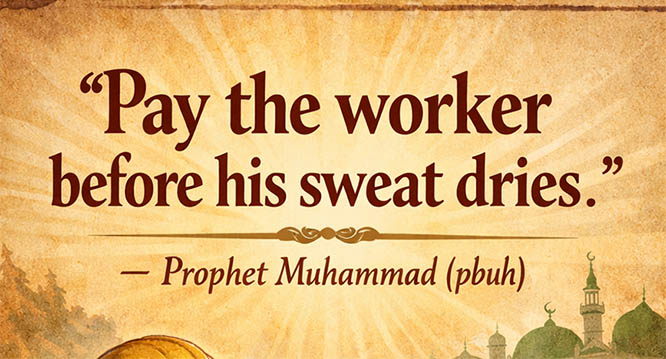
Invoking the teachings of Prophet Muhammad—“pay the worker before his sweat dries”—the Madras High Court has directed a municipal corporation to settle long-pending legal dues owed to a former counsel. The court observed that this principle reflects basic fairness and applies equally to labour and service-related disputes.

Justice G. R. Swaminathan made the observation while hearing a petition filed by advocate P. Thirumalai, who claimed that the Madurai City Municipal Corporation failed to pay him legal fees amounting to ₹13.05 lakh. Earlier, the High Court had asked the corporation to consider his representation. However, a later order rejected a major portion of his claim, prompting the present petition.

The court allowed Thirumalai to approach the District Legal Services Authority (DLSA) and submit a list of cases in which he had appeared. It also directed the corporation to settle the verified fee bills within two months, without interest. The court noted that the petitioner had waited nearly 18 years before challenging the non-payment and that the corporation could not be fully blamed, as the fee bills were not submitted properly.

‘A Matter of Embarrassment’

Justice Swaminathan described it as a “matter of embarrassment” that the State has nearly a dozen Additional Advocate Generals. He observed that appointing too many law officers often leads to unnecessary allocation of work and frequent adjournments, as government counsel claim that senior officers are engaged elsewhere.

He expressed hope that such practices would end at least in the Madurai Bench of the High Court and added that Additional Advocate Generals should “turn a new leaf” from 2026 onwards.

‘Scandalously High Amounts’

While stating that the court cannot examine the exact fees paid to senior counsel or law officers, Justice Swaminathan stressed that good governance requires public funds to be used prudently. He expressed concern over the “scandalously high amounts” paid by government and quasi-government bodies to a few favoured law officers.

In contrast, the court noted that Thirumalai’s total claim was “a pittance” considering the large number of cases he had handled.

Background

Thirumalai served as the standing counsel for the Madurai City Municipal Corporation for more than 14 years, from 1992 to 2006. During this period, he represented the corporation in about 818 cases before the Madurai District Courts.

As the former counsel was unable to hire a clerk to obtain certified copies of judgments in all 818 cases, the court directed the District Legal Services Authority to collect the certified copies within two months. The court further ordered the corporation to bear the cost incurred by the DLSA and deduct that amount from the final settlement payable to the petitioner.

Comments

Add new comment

  • Coastaldigest.com reserves the right to delete or block any comments.
  • Coastaldigset.com is not responsible for its readers’ comments.
  • Comments that are abusive, incendiary or irrelevant are strictly prohibited.
  • Please use a genuine email ID and provide your name to avoid reject.
News Network
December 22,2025

bhagavat.jpg

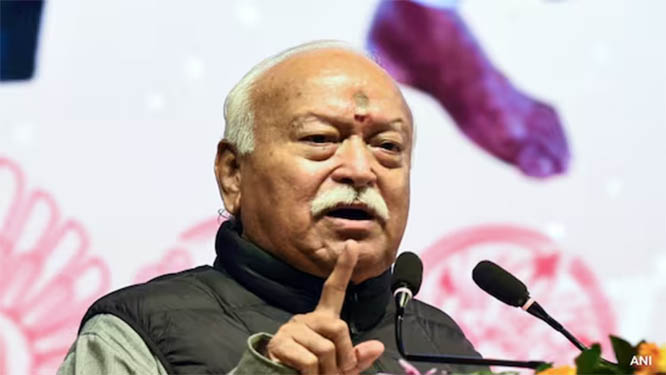
Kolkata: Stressing that India is a "Hindu nation," Rashtriya Swayamsevak Sangh (RSS) Chief Mohan Bhagwat on Sunday said that no constitutional approval is needed as it is the "truth".

Addressing an event marking 100 years of the RSS, Bhagwat said that India is, and will remain, a Hindu nation until Indian culture is appreciated in the country.

"The Sun rises in the east; we don't know since when this has been happening. So, do we need constitutional approval for that, too? Hindustan is a Hindu nation. Whoever considers India their motherland appreciates Indian culture, as long as there is even one person alive on the land of Hindustan who believes in and cherishes the glory of Indian ancestors, India is a Hindu nation. This is the ideology of the Sangh," he said at the '100 Vyakhyan Mala' program of RSS in Kolkata.

"If Parliament ever decides to amend the Constitution and add that word, whether they do it or not, it's fine. We don't care about that word because we are Hindus, and our nation is a Hindu nation. That is the truth. The caste system based on birth is not the hallmark of Hindutva," he added.

RSS has always argued that India is a "Hindu Nation," given the culture and majority's affiliations to Hinduism. However, 'secular' was not originally part of the Preamble of the Constitution, but it was added along with the word 'socialist' by the Constitution (42nd Amendment) Act, 1976, during the Emergency imposed by then Prime Minister Indira Gandhi.

Bhagwat also urged people to visit the organisation's offices and 'shakhas' to understand its work, so that what he dubbed as the “false perception” of the organisation as anti-Muslim can be dispelled!

Bhagwat said that people have understood that the organisation advocates for the protection of Hindus, and are "staunch nationalists," but not anti-muslim.

"If there is a perception that we are anti-Muslim, then, as I said, the RSS work is transparent. You can come anytime and see for yourself, and if you see anything like that happening, then you keep your views, and if you don't see it, then you change your views. There is a lot to understand (about RSS), but if you don't want to understand, then no one can change your mind," Bhagwat said.

He said, but anyone unwilling to learn cannot be helped.

"After seeing, people have said that you are staunch nationalists. You organise Hindus, and you advocate for the protection of Hindus. But you are not anti-Muslim. Many people have accepted this, and those who want to know more should come and see the RSS for themselves," he said.

Comments

Add new comment

  • Coastaldigest.com reserves the right to delete or block any comments.
  • Coastaldigset.com is not responsible for its readers’ comments.
  • Comments that are abusive, incendiary or irrelevant are strictly prohibited.
  • Please use a genuine email ID and provide your name to avoid reject.