Gujarat lagging behind in education, health: Niti Aayog Vice Chairman

Agencies
March 18, 2018

New Delhi, Mar 18: Niti Aayog Vice Chairman Rajiv Kumar today said that while Gujarat has done very well in industrialisation, it will need to do some catching-up in the health and education sectors. Kumar met Chief Minister Vijay Rupani and senior state officials here.

“Gujarat’s achievements in education and health are not like those in other areas like industrialisation, infrastructure and energy….it lags behind in these two (health and education). I talked about this with the state government,” he said, speaking to reporters after the meeting.

He was happy to learn from the government that budgetary allocations for health and education have been increased for 2018-19, Kumar said.

He was told that the state is planning “big success this year itself” in the health sector, and district collectors have been asked to pay special attention to child malnutrition and the maternal mortality ratio, he said.

The Niti Aayog will help Gujarat set up the proposed Coastal Economic Zones which aim to spur economic activities along the state coast, he said.

“The issue of Coastal Economic Zones between Kandla and Jamnagar was raised, and I believe this can be a very good initiative. If these (Zones) are formed, I can talk to relevant departments of the Central government to take it forward,” Kumar said.

“The chief minister laid a lot of emphasis on the need to take up (creation of) Zones, and I will see how this can be made possible. It will be a big step towards industrialisation in the state,” he said.

Kumar further said that the Niti Aayog will help the state government in disposal of around 8.5 lakh tons of groundnut procured from farmers at a price higher than the Minimum Support Price (MSP).

The Aayog has also requested the state government to share details of its desalination plant project, so that it can be replicated in other coastal states, he said.

“We will see how it can be improved further in Gujarat and implemented in other coastal states to make it cost-effective. If the desalination plant runs on solar energy, the cost will drop further,” he said.

The Aayog will offer a three-scheme package to the states and each state will be free to adopt one of the three schemes to ensure that farmers get an MSP which is at least 1.5 times the production cost (as assured by the prime minister yesterday), Kumar said.

The Niti Aayog is committed to ensure that farmers get MSP as per this formula from the Rabi season itself, so that it is fully implemented from the coming Kharif season, he said.

He also expressed satisfaction over the implementation of the Centre’s apprenticeship scheme in Gujarat, and said the Aayog is trying to ensure that the stipend under the scheme is increased from the existing Rs 1,500 per month.

“We are trying to increase the stipend of Rs 1,500. If it is increased, Gujarat will increase the number of apprentices to two lakh from (existing) one lakh,” he said.

Comments

Add new comment

  • Coastaldigest.com reserves the right to delete or block any comments.
  • Coastaldigset.com is not responsible for its readers’ comments.
  • Comments that are abusive, incendiary or irrelevant are strictly prohibited.
  • Please use a genuine email ID and provide your name to avoid reject.
News Network
December 23,2025

pakleader.jpg

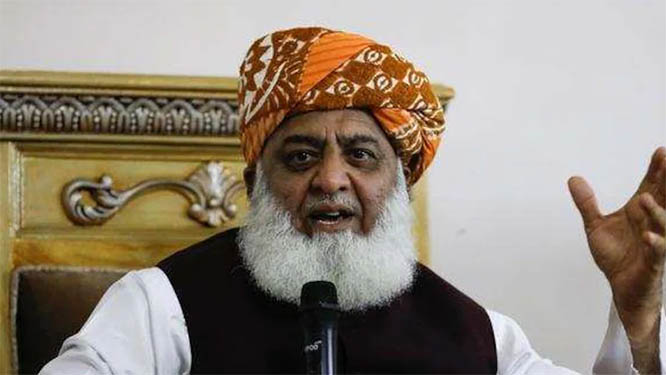
A Pakistani lawmaker has called out the hypocrisy of his country's leadership, drawing a parallel between Islamabad's military actions against Kabul and India's 'Operation Sindoor'.

Condemning the Pakistan army, led by Asim Munir, for strikes on Afghanistan - which resulted in civilian casualties - Jamiat Ulema-e-Islam-F (JUI-F) chief Maulana Fazlur Rehman questioned the consistency of Islamabad's logic. He argued that if Pakistan's cross-border attacks are considered justified, then the country has little ground to object when India enters Pakistani territory to eliminate terrorists.

Rehman was addressing the 'Majlis-e-Ittehad-e-Ummat' conference on Monday in Karachi's Lyari. The town recently gained international attention as the setting for the Ranveer Singh-starrer Dhurandhar, which depicted the intersection of informants and operatives within the Lyari underworld.

"If you say that we attacked our enemy in Afghanistan and justify this, then India can also say that it attacked Bahawalpur, Muridke, and the headquarters of groups responsible for the attack in Kashmir," Rehman said, referring to India's retaliatory strikes. "Then how can you raise objections? The same accusations are now being levelled against Pakistan by Afghanistan. How do you justify both positions?"

The JUI-F chief's remarks specifically referenced 'Operation Sindoor'.

On May 7, Indian armed forces carried out pre-dawn missile strikes on nine terror targets in Pakistan and Pakistan-occupied Kashmir, including the Jaish-e-Mohammad stronghold of Bahawalpur and Lashkar-e-Taiba's base in Muridke.

Pak-Afghanistan Tension

Fazlur Rehman has been a consistent critic of the Pakistani government's policy towards Afghanistan. In October, during a peak in bilateral tensions, he offered to mediate between the two nations. According to a Dawn report, he stated, "In the past, I have played a role in reducing tensions between Pakistan and Afghanistan, and I can still do so."

Rehman is known to wield significant influence within the region and remains the only Pakistani lawmaker to have met with the Taliban's supreme leader, Haibatullah Akhundzada.

Recently, India condemned Pakistan's fresh strikes on Afghanistan. "We have seen reports of border clashes in which several Afghan civilians have been killed," Ministry of External Affairs (MEA) spokesperson Randhir Jaiswal said at a weekly media briefing.

"We condemn such attacks on innocent Afghan people. India strongly supports the territorial integrity, sovereignty and independence of Afghanistan," he said.

A spokesperson for the Taliban regime claimed Pakistan initiated the attacks and that Kabul was "forced to respond".

The two countries have been locked in an increasingly bitter dispute since the Taliban authorities retook control in Kabul in 2021, with Islamabad accusing its neighbour of harbouring terrorists - a charge that the Afghan government denies.

Comments

Add new comment

  • Coastaldigest.com reserves the right to delete or block any comments.
  • Coastaldigset.com is not responsible for its readers’ comments.
  • Comments that are abusive, incendiary or irrelevant are strictly prohibited.
  • Please use a genuine email ID and provide your name to avoid reject.
News Network
December 13,2025

New Delhi: School-going children are picking up drug and smoking habits and engaging in consumption of alcohol, with the average age of introduction to such harmful substances found to be around 13 years, suggesting a need for earlier interventions as early as primary school, a multi-city survey by AIIMS-Delhi said.

The findings also showed substance use increased in higher grades, with grade XI/XII students two times more likely to report use of substances when compared with grade VIII students. This emphasised the importance of continued prevention and intervention through middle and high school.

The study led by Dr Anju Dhawan of AIIMS's National Drug Dependence Treatment Centre, published in the National Medical Journal of India this month, looks at adolescent substance use across diverse regions.

The survey included 5,920 students from classes 8, 9, 11 and 12 in urban government, private and rural schools across 10 cities -- Bengaluru, Chandigarh, Delhi, Dibrugarh, Hyderabad, Imphal, Jammu, Lucknow, Mumbai, and Ranchi. The data were collected between May 2018 and June 2019.

The average age of initiation for any substance was 12.9 (2.8) years. It was lowest for inhalants (11.3 years) followed by heroin (12.3 years) and opioid pharmaceuticals (without prescription; 12.5 years).

Overall, 15.1 per cent of participants reported lifetime use, 10.3 per cent reported past year use, and 7.2 per cent reported use in the past month of any substance, the study found.

The most common substances used in the past year, after tobacco (4 per cent) and alcohol (3.8 per cent), were opioids (2.8 per cent), followed by cannabis (2 per cent) and inhalants (1.9 per cent). Use of non-prescribed pharmaceutical opioids was most common among opioid users (90.2 per cent).

On being asked, 'Do you think this substance is easily available for a person of your age' separately for each substance category, nearly half the students (46.3 per cent) endorsed that tobacco products and more than one-third of the students (36.5 per cent) agreed that a person of their age can easily procure alcohol products.

Similarly, for Bhang (21.9 per cent), ganja/charas (16.1 per cent), inhalants (15.2 per cent), sedatives (13.7 per cent), opium and heroin (10 per cent each), the students endorsed that these can be easily procured.

About 95 per cent of the children, irrespective of their grade, agreed with the statement that 'drug use is harmful'.

The rates of substance use (any) among boys were significantly higher than those of girls for substance use (ever), use in the past year and use in the past 30 days. Compared to grade VIII students, grade IX students were more likely, and grade XI/XII students were twice as likely to have used any substance (ever).

The likelihood of past-year use of any substance was also higher for grade IX students and for grade XI/XII students as compared to grade VIII students.

About 40 per cent of students mentioned that they had a family member who used tobacco or alcohol each. The use of cannabis (any product) and opioid (any product) by a family member was reported by 8.2 per cent and 3.9 per cent of students, respectively, while the use of other substances, such as inhalants/sedatives by family was 2-3 per cent, the study found.

A relatively smaller percentage of students reported use of tobacco or alcohol among peers as compared to among family members, while a higher percentage reported inhalants, sedatives, cannabis or opioid use among peers.

Children using substances (past year) compared to non-users reported significantly higher any substance use by their family members and peers.

There were 25.7 per cent students who replied 'yes' to the question 'conflicts/fights often occur in your family'. Most students also replied affirmatively to 'family members are aware of how their time is being spent' and 'damily members are aware of with whom they spend their time'.

Comments

Add new comment

  • Coastaldigest.com reserves the right to delete or block any comments.
  • Coastaldigset.com is not responsible for its readers’ comments.
  • Comments that are abusive, incendiary or irrelevant are strictly prohibited.
  • Please use a genuine email ID and provide your name to avoid reject.
News Network
December 24,2025

alhind.jpg

New Delhi: Two new airlines - Al Hind Air and FlyExpress - are set to take to the skies, with the carriers receiving their no objection certificates from the Civil Aviation Ministry.

In 2026, apart from these two carriers, Uttar Pradesh-based Shankh Air, which already has a No Objection Certificate (NOC), is likely to start operations.

Al Hind Air is being promoted by Kerala-based alhind Group.

The ministry is keen to have more airline operators in the country, which is one of the world's fastest growing domestic civil aviation markets.

Currently, there are nine operational scheduled domestic carriers in the country. Fly Big, a regional airline, suspended scheduled flights in October.

IndiGo and Air India Group - Air India and Air India Express - together have over 90 per cent of the domestic market share.

Concerns about apparent duopoly in the fast-growing domestic airlines' industry got amplified this month in the wake of the massive operational disruptions at IndiGo, which has a market share of more than 65 per cent.

"Over the last one week, pleased to have met teams from new airlines aspiring to take wings in Indian skies- Shankh Air, Al Hind Air and FlyExpress. While Shankh Air has already got the NOC from the Ministry, Al Hind Air and FlyExpress have received their NOCs this week," Civil Aviation Minister K Rammohan Naidu said in a post on X on Tuesday.

According to him, it has been the endeavour of the ministry to encourage more airlines in Indian aviation which is amongst the fastest growing aviation markets.

Schemes like UDAN, have enabled smaller carriers Star Air, India One Air and Fly91 to play an important role in the regional connectivity within the country and there is more scope for further growth, he added.

Apart from Air India, Air India Express, IndiGo and state-owned Alliance Air, other scheduled carriers are Akasa Air, SpiceJet, Star Air, Fly91 and IndiaOne Air, as per latest data from the Directorate General of Civil Aviation (DGCA).

In the past years, many airlines, including Go First and Jet Airways, stopped flying amid debt woes.

Comments

Add new comment

  • Coastaldigest.com reserves the right to delete or block any comments.
  • Coastaldigset.com is not responsible for its readers’ comments.
  • Comments that are abusive, incendiary or irrelevant are strictly prohibited.
  • Please use a genuine email ID and provide your name to avoid reject.