India refrains from seeking East Jerusalem as capital of Palestine

DHNS
December 7, 2017

New Delhi, Dec 7: India on Thursday refrained from reiterating its long-held view that eastern part of the holy city of Jerusalem should be the capital of Palestine even as it declined to toe the US line to recognise the holy city s the capital of Israel.

"India's position on Palestine is independent and consistent. It is shaped by our views and interests and not determined by any third country," said Raveesh Kumar, spokesperson of the Ministry of External Affairs.

On Wednesday, US President Donald Trump formally recognised Jerusalem as the capital of Israel and set in motion a plan to shift the US Embassy from Tel Aviv to the holy city.
The US move evoked sharp criticism not only from the Arab world but also from Europe.

India's ambassador to Israel, like the envoys of all other nations, is based in Tel Aviv.

Though some nations maintain consulates in Jerusalem without recognising them as a diplomatic mission to either Israel or Palestine, New Delhi does not have any in the fiercely contested city.

Sources in New Delhi on Thursday indicated that India had no plan to shift its embassy to Jerusalem.

But New Delhi carefully avoided articulating its long-held position that Israel-Palestine conflict should be resolved through negotiation "resulting in sovereign, independent, viable and united State of Palestine, with East Jerusalem as its capital, living within secure and recognised borders, side by side at peace with Israel as endorsed in the Quartet Roadmap and relevant United Nations Security Council resolutions".

During his visit to Ramallah in October 2015, the then President Pranab Mukherjee had reiterated India's "principled support" to Palestinians' demand for East Jerusalem to be the capital of the State of Palestine.

New Delhi's long-held view was last articulated in India's statement presented at a committee of the United Nations General Assembly in New York on December 5, 2016.

India stopped calling for East Jerusalem to be the capital of Palestine this year.

Hosting Palestinian President Mahmoud Abbas in New Delhi in May, Prime Minister Narendra Modi did call for "a sovereign, independent, united and viable Palestine, co-existing peacefully with Israel", but avoided supporting the demand for East Jerusalem to be the capital of Palestine.

He carefully avoided referring to it during his visit to Israel in July, the first by a Prime Minister of India.

His message on the occasion of International Day of Solidarity with the Palestinian People on November 25 last or India's statement to UN General Assembly on November 29 last, too, did not refer to the call for East Jerusalem to be the capital of Palestine.

Modi's visit to Tel Aviv and Jerusalem in July substantially de-linked India's relations with Israel and Palestine.
Indian dignitaries visiting Israel in the past had made it a point to visit Palestine too.

Mukherjee had visited both Israel and Palestine. External Affairs Minister Sushma Swaraj, too, had visited Palestine after touring Israel in January 2016, just as one of her predecessors, S M Krishna, had done in October 2012.

India was the first non-Arab country to recognise Palestine way back in 1988.

But New Delhi's growing ties with Israel after the BJP's ascent to power in May 2014 fuelled speculation about India reviewing its position on Palestine.

The Narendra Modi government made it clear that while India would continue to support the cause of Palestine, it would also seek to build stronger ties with Israel.

New Delhi is now set to host Israel Prime Minister Benjamin Netanyahu who is likely to visit India next month.


Comments

Add new comment

  • Coastaldigest.com reserves the right to delete or block any comments.
  • Coastaldigset.com is not responsible for its readers’ comments.
  • Comments that are abusive, incendiary or irrelevant are strictly prohibited.
  • Please use a genuine email ID and provide your name to avoid reject.
News Network
December 13,2025

New Delhi: School-going children are picking up drug and smoking habits and engaging in consumption of alcohol, with the average age of introduction to such harmful substances found to be around 13 years, suggesting a need for earlier interventions as early as primary school, a multi-city survey by AIIMS-Delhi said.

The findings also showed substance use increased in higher grades, with grade XI/XII students two times more likely to report use of substances when compared with grade VIII students. This emphasised the importance of continued prevention and intervention through middle and high school.

The study led by Dr Anju Dhawan of AIIMS's National Drug Dependence Treatment Centre, published in the National Medical Journal of India this month, looks at adolescent substance use across diverse regions.

The survey included 5,920 students from classes 8, 9, 11 and 12 in urban government, private and rural schools across 10 cities -- Bengaluru, Chandigarh, Delhi, Dibrugarh, Hyderabad, Imphal, Jammu, Lucknow, Mumbai, and Ranchi. The data were collected between May 2018 and June 2019.

The average age of initiation for any substance was 12.9 (2.8) years. It was lowest for inhalants (11.3 years) followed by heroin (12.3 years) and opioid pharmaceuticals (without prescription; 12.5 years).

Overall, 15.1 per cent of participants reported lifetime use, 10.3 per cent reported past year use, and 7.2 per cent reported use in the past month of any substance, the study found.

The most common substances used in the past year, after tobacco (4 per cent) and alcohol (3.8 per cent), were opioids (2.8 per cent), followed by cannabis (2 per cent) and inhalants (1.9 per cent). Use of non-prescribed pharmaceutical opioids was most common among opioid users (90.2 per cent).

On being asked, 'Do you think this substance is easily available for a person of your age' separately for each substance category, nearly half the students (46.3 per cent) endorsed that tobacco products and more than one-third of the students (36.5 per cent) agreed that a person of their age can easily procure alcohol products.

Similarly, for Bhang (21.9 per cent), ganja/charas (16.1 per cent), inhalants (15.2 per cent), sedatives (13.7 per cent), opium and heroin (10 per cent each), the students endorsed that these can be easily procured.

About 95 per cent of the children, irrespective of their grade, agreed with the statement that 'drug use is harmful'.

The rates of substance use (any) among boys were significantly higher than those of girls for substance use (ever), use in the past year and use in the past 30 days. Compared to grade VIII students, grade IX students were more likely, and grade XI/XII students were twice as likely to have used any substance (ever).

The likelihood of past-year use of any substance was also higher for grade IX students and for grade XI/XII students as compared to grade VIII students.

About 40 per cent of students mentioned that they had a family member who used tobacco or alcohol each. The use of cannabis (any product) and opioid (any product) by a family member was reported by 8.2 per cent and 3.9 per cent of students, respectively, while the use of other substances, such as inhalants/sedatives by family was 2-3 per cent, the study found.

A relatively smaller percentage of students reported use of tobacco or alcohol among peers as compared to among family members, while a higher percentage reported inhalants, sedatives, cannabis or opioid use among peers.

Children using substances (past year) compared to non-users reported significantly higher any substance use by their family members and peers.

There were 25.7 per cent students who replied 'yes' to the question 'conflicts/fights often occur in your family'. Most students also replied affirmatively to 'family members are aware of how their time is being spent' and 'damily members are aware of with whom they spend their time'.

Comments

Add new comment

  • Coastaldigest.com reserves the right to delete or block any comments.
  • Coastaldigset.com is not responsible for its readers’ comments.
  • Comments that are abusive, incendiary or irrelevant are strictly prohibited.
  • Please use a genuine email ID and provide your name to avoid reject.
News Network
December 24,2025

alhind.jpg

New Delhi: Two new airlines - Al Hind Air and FlyExpress - are set to take to the skies, with the carriers receiving their no objection certificates from the Civil Aviation Ministry.

In 2026, apart from these two carriers, Uttar Pradesh-based Shankh Air, which already has a No Objection Certificate (NOC), is likely to start operations.

Al Hind Air is being promoted by Kerala-based alhind Group.

The ministry is keen to have more airline operators in the country, which is one of the world's fastest growing domestic civil aviation markets.

Currently, there are nine operational scheduled domestic carriers in the country. Fly Big, a regional airline, suspended scheduled flights in October.

IndiGo and Air India Group - Air India and Air India Express - together have over 90 per cent of the domestic market share.

Concerns about apparent duopoly in the fast-growing domestic airlines' industry got amplified this month in the wake of the massive operational disruptions at IndiGo, which has a market share of more than 65 per cent.

"Over the last one week, pleased to have met teams from new airlines aspiring to take wings in Indian skies- Shankh Air, Al Hind Air and FlyExpress. While Shankh Air has already got the NOC from the Ministry, Al Hind Air and FlyExpress have received their NOCs this week," Civil Aviation Minister K Rammohan Naidu said in a post on X on Tuesday.

According to him, it has been the endeavour of the ministry to encourage more airlines in Indian aviation which is amongst the fastest growing aviation markets.

Schemes like UDAN, have enabled smaller carriers Star Air, India One Air and Fly91 to play an important role in the regional connectivity within the country and there is more scope for further growth, he added.

Apart from Air India, Air India Express, IndiGo and state-owned Alliance Air, other scheduled carriers are Akasa Air, SpiceJet, Star Air, Fly91 and IndiaOne Air, as per latest data from the Directorate General of Civil Aviation (DGCA).

In the past years, many airlines, including Go First and Jet Airways, stopped flying amid debt woes.

Comments

Add new comment

  • Coastaldigest.com reserves the right to delete or block any comments.
  • Coastaldigset.com is not responsible for its readers’ comments.
  • Comments that are abusive, incendiary or irrelevant are strictly prohibited.
  • Please use a genuine email ID and provide your name to avoid reject.
News Network
December 21,2025

hadith.jpg

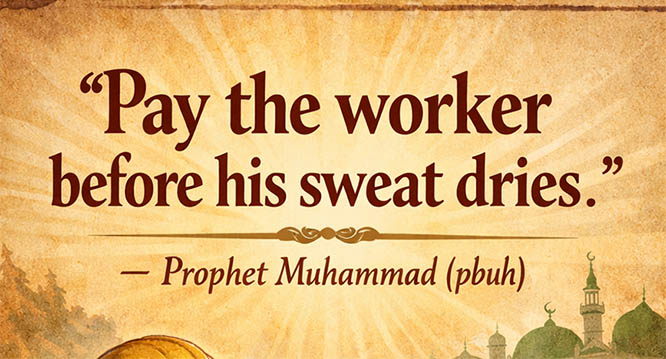
Invoking the teachings of Prophet Muhammad—“pay the worker before his sweat dries”—the Madras High Court has directed a municipal corporation to settle long-pending legal dues owed to a former counsel. The court observed that this principle reflects basic fairness and applies equally to labour and service-related disputes.

Justice G. R. Swaminathan made the observation while hearing a petition filed by advocate P. Thirumalai, who claimed that the Madurai City Municipal Corporation failed to pay him legal fees amounting to ₹13.05 lakh. Earlier, the High Court had asked the corporation to consider his representation. However, a later order rejected a major portion of his claim, prompting the present petition.

The court allowed Thirumalai to approach the District Legal Services Authority (DLSA) and submit a list of cases in which he had appeared. It also directed the corporation to settle the verified fee bills within two months, without interest. The court noted that the petitioner had waited nearly 18 years before challenging the non-payment and that the corporation could not be fully blamed, as the fee bills were not submitted properly.

‘A Matter of Embarrassment’

Justice Swaminathan described it as a “matter of embarrassment” that the State has nearly a dozen Additional Advocate Generals. He observed that appointing too many law officers often leads to unnecessary allocation of work and frequent adjournments, as government counsel claim that senior officers are engaged elsewhere.

He expressed hope that such practices would end at least in the Madurai Bench of the High Court and added that Additional Advocate Generals should “turn a new leaf” from 2026 onwards.

‘Scandalously High Amounts’

While stating that the court cannot examine the exact fees paid to senior counsel or law officers, Justice Swaminathan stressed that good governance requires public funds to be used prudently. He expressed concern over the “scandalously high amounts” paid by government and quasi-government bodies to a few favoured law officers.

In contrast, the court noted that Thirumalai’s total claim was “a pittance” considering the large number of cases he had handled.

Background

Thirumalai served as the standing counsel for the Madurai City Municipal Corporation for more than 14 years, from 1992 to 2006. During this period, he represented the corporation in about 818 cases before the Madurai District Courts.

As the former counsel was unable to hire a clerk to obtain certified copies of judgments in all 818 cases, the court directed the District Legal Services Authority to collect the certified copies within two months. The court further ordered the corporation to bear the cost incurred by the DLSA and deduct that amount from the final settlement payable to the petitioner.

Comments

Add new comment

  • Coastaldigest.com reserves the right to delete or block any comments.
  • Coastaldigset.com is not responsible for its readers’ comments.
  • Comments that are abusive, incendiary or irrelevant are strictly prohibited.
  • Please use a genuine email ID and provide your name to avoid reject.