India Slips to 42nd Place on EIU Democracy Index; US at 21st

Agencies
February 1, 2018

New Delhi, Feb 1: India has slipped to 42nd place on an annual Global Democracy Index amid "rise of conservative religious ideologies" and increase in vigilantism and violence against minorities as well as other dissenting voices.

While Norway has again topped the list, followed by Iceland and Sweden, compiled by the Economist Intelligence Unit (EIU), India has moved down from 32nd place last year and remains classified among "flawed democracies".

The index ranks 165 independent states and two territories on the basis of five categories: electoral process and pluralism, civil liberties, the functioning of government, political participation and political culture. The list has been divided into four broad categories -- full democracy, flawed democracy, hybrid regime and authoritarian regime.

The US (ranked 21), Japan, Italy, France, Israel, Singapore, and Hong Kong have also been named among flawed democracies.

The EIU is the research and analysis division of the UK- based media behemoth The Economist Group. Created in 1946, the EIU describes itself as having over 70 years of experience "in helping businesses, financial firms and governments to understand how the world is changing and how that creates opportunities to be seized and risks to be managed".

The top three positions on the list are occupied by Nordic countries -- Norway, Iceland and Sweden. New Zealand is at fourth and Denmark at fifth place, while others in top-ten include Ireland, Canada, Australia, Finland and Switzerland.

Only top-19 countries have been classified as full democracies, while the hybrid regimes include Pakistan (110th), Bangladesh (92nd), Nepal (94th) and Bhutan (99th).

Those named as authoritarian regimes include China (139th), Myanmar (120th), Russia (135th) and Vietnam (140th).

North Korea is ranked the lowest at 167th, while Syria is a notch better at 166th place.

Top-ranked Norway has been given an overall score of 9.87 with perfect-ten scores for Electoral process and pluralism; Political participation; and Political culture.

Indias overall score has fallen to 7.23 points, even as it scored well on electoral process and pluralism (9.17). It has not managed to score so well on other four parameters -- political culture, functioning of government, political participation and civil liberties.

"The rise of conservative religious ideologies also affected India. The strengthening of right-wing Hindu forces in an otherwise secular country led to a rise of vigilantism and violence against minority communities, particularly Muslims, as well as other dissenting voices," the EIU added.

This years report which also measured the state of media freedom around the world noted that in India, media is partially free.

Moreover, journalists are at risk from government, military and non-state actors and radical groups, and the threat of violence has a chilling effect on media coverage.

"India has also become a more dangerous place for journalists, especially the central state of Chhattisgarh and the northern state of Jammu and Kashmir. The authorities there have restricted freedom of the press, closed down several newspapers and heavily controlled mobile internet services. Several journalists were murdered in India in 2017, as in the previous year," it noted.

In the 2017 Democracy Index, the average global score fell from 5.52 in 2016 to 5.48 (on a scale of 0 to 10). Some 89 countries experienced a decline in their total score compared with 2016. 27 recorded an improvement. The other 51 countries stagnated, as their scores remained unchanged compared with 2016.

Almost one-half (49.3 per cent) of the worlds population lives in a democracy of some sort, although only 4.5 per cent reside in a "full democracy", down from 8.9 per cent in 2015 as a result of the US being demoted from a "full democracy" to a "flawed democracy" in 2016.

Around one-third of the worlds population lives under authoritarian rule, with a large share being in China, EIU noted.


Comments

Add new comment

  • Coastaldigest.com reserves the right to delete or block any comments.
  • Coastaldigset.com is not responsible for its readers’ comments.
  • Comments that are abusive, incendiary or irrelevant are strictly prohibited.
  • Please use a genuine email ID and provide your name to avoid reject.
News Network
December 16,2025

bengal.jpg

The deletion of over 58 lakh names from West Bengal’s draft electoral rolls following a Special Intensive Revision (SIR) has sparked widespread concern and is likely to deepen political tensions in the poll-bound state.

According to the Election Commission, the revision exercise has identified 24 lakh voters as deceased, 19 lakh as relocated, 12 lakh as missing, and 1.3 lakh as duplicate entries. The draft list, published after the completion of the first phase of SIR, aims to remove errors and duplication from the electoral rolls.

However, the scale of deletions has raised fears that a large number of eligible voters may have been wrongly excluded. The Election Commission has said that individuals whose names are missing can file objections and seek corrections. The final voter list is scheduled to be published in February next year, after which the Assembly election announcement is expected. Notably, the last Special Intensive Revision in Bengal was conducted in 2002.

The development has intensified the political row over the SIR process. Chief Minister Mamata Banerjee and her Trinamool Congress have strongly opposed the exercise, accusing the Centre and the Election Commission of attempting to disenfranchise lakhs of voters ahead of the elections.

Addressing a rally in Krishnanagar earlier this month, Banerjee urged people to protest if their names were removed from the voter list, alleging intimidation during elections and warning of serious consequences if voting rights were taken away.

The BJP, meanwhile, has defended the revision and accused the Trinamool Congress of politicising the issue to protect what it claims is an illegal voter base. Leader of the Opposition Suvendu Adhikari alleged that the ruling party fears losing power due to the removal of deceased, fake, and illegal voters.

The controversy comes amid earlier allegations by the Trinamool Congress that excessive work pressure during the SIR led to the deaths by suicide of some Booth Level Officers (BLOs), for which the party blamed the Election Commission. With the draft list now out, another round of political confrontation appears imminent.

As objections begin to be filed, the focus will be on whether the correction mechanism is accessible, transparent, and timely—critical factors in ensuring that no eligible voter is denied their democratic right ahead of a crucial election.

Comments

Add new comment

  • Coastaldigest.com reserves the right to delete or block any comments.
  • Coastaldigset.com is not responsible for its readers’ comments.
  • Comments that are abusive, incendiary or irrelevant are strictly prohibited.
  • Please use a genuine email ID and provide your name to avoid reject.
News Network
December 22,2025

bhagavat.jpg

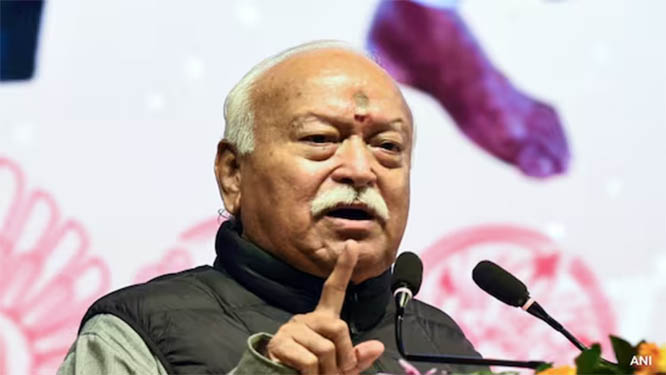
Kolkata: Stressing that India is a "Hindu nation," Rashtriya Swayamsevak Sangh (RSS) Chief Mohan Bhagwat on Sunday said that no constitutional approval is needed as it is the "truth".

Addressing an event marking 100 years of the RSS, Bhagwat said that India is, and will remain, a Hindu nation until Indian culture is appreciated in the country.

"The Sun rises in the east; we don't know since when this has been happening. So, do we need constitutional approval for that, too? Hindustan is a Hindu nation. Whoever considers India their motherland appreciates Indian culture, as long as there is even one person alive on the land of Hindustan who believes in and cherishes the glory of Indian ancestors, India is a Hindu nation. This is the ideology of the Sangh," he said at the '100 Vyakhyan Mala' program of RSS in Kolkata.

"If Parliament ever decides to amend the Constitution and add that word, whether they do it or not, it's fine. We don't care about that word because we are Hindus, and our nation is a Hindu nation. That is the truth. The caste system based on birth is not the hallmark of Hindutva," he added.

RSS has always argued that India is a "Hindu Nation," given the culture and majority's affiliations to Hinduism. However, 'secular' was not originally part of the Preamble of the Constitution, but it was added along with the word 'socialist' by the Constitution (42nd Amendment) Act, 1976, during the Emergency imposed by then Prime Minister Indira Gandhi.

Bhagwat also urged people to visit the organisation's offices and 'shakhas' to understand its work, so that what he dubbed as the “false perception” of the organisation as anti-Muslim can be dispelled!

Bhagwat said that people have understood that the organisation advocates for the protection of Hindus, and are "staunch nationalists," but not anti-muslim.

"If there is a perception that we are anti-Muslim, then, as I said, the RSS work is transparent. You can come anytime and see for yourself, and if you see anything like that happening, then you keep your views, and if you don't see it, then you change your views. There is a lot to understand (about RSS), but if you don't want to understand, then no one can change your mind," Bhagwat said.

He said, but anyone unwilling to learn cannot be helped.

"After seeing, people have said that you are staunch nationalists. You organise Hindus, and you advocate for the protection of Hindus. But you are not anti-Muslim. Many people have accepted this, and those who want to know more should come and see the RSS for themselves," he said.

Comments

Add new comment

  • Coastaldigest.com reserves the right to delete or block any comments.
  • Coastaldigset.com is not responsible for its readers’ comments.
  • Comments that are abusive, incendiary or irrelevant are strictly prohibited.
  • Please use a genuine email ID and provide your name to avoid reject.
News Network
December 23,2025

pakleader.jpg

A Pakistani lawmaker has called out the hypocrisy of his country's leadership, drawing a parallel between Islamabad's military actions against Kabul and India's 'Operation Sindoor'.

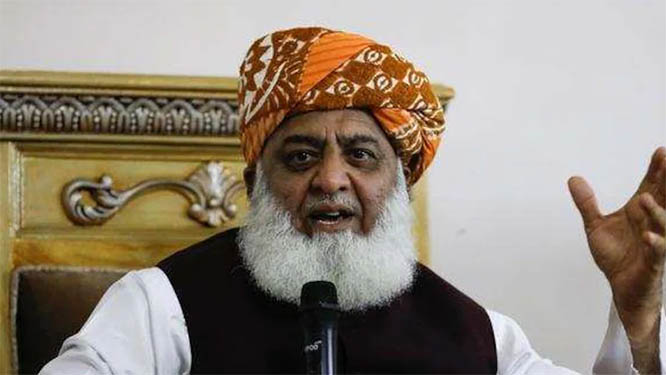
Condemning the Pakistan army, led by Asim Munir, for strikes on Afghanistan - which resulted in civilian casualties - Jamiat Ulema-e-Islam-F (JUI-F) chief Maulana Fazlur Rehman questioned the consistency of Islamabad's logic. He argued that if Pakistan's cross-border attacks are considered justified, then the country has little ground to object when India enters Pakistani territory to eliminate terrorists.

Rehman was addressing the 'Majlis-e-Ittehad-e-Ummat' conference on Monday in Karachi's Lyari. The town recently gained international attention as the setting for the Ranveer Singh-starrer Dhurandhar, which depicted the intersection of informants and operatives within the Lyari underworld.

"If you say that we attacked our enemy in Afghanistan and justify this, then India can also say that it attacked Bahawalpur, Muridke, and the headquarters of groups responsible for the attack in Kashmir," Rehman said, referring to India's retaliatory strikes. "Then how can you raise objections? The same accusations are now being levelled against Pakistan by Afghanistan. How do you justify both positions?"

The JUI-F chief's remarks specifically referenced 'Operation Sindoor'.

On May 7, Indian armed forces carried out pre-dawn missile strikes on nine terror targets in Pakistan and Pakistan-occupied Kashmir, including the Jaish-e-Mohammad stronghold of Bahawalpur and Lashkar-e-Taiba's base in Muridke.

Pak-Afghanistan Tension

Fazlur Rehman has been a consistent critic of the Pakistani government's policy towards Afghanistan. In October, during a peak in bilateral tensions, he offered to mediate between the two nations. According to a Dawn report, he stated, "In the past, I have played a role in reducing tensions between Pakistan and Afghanistan, and I can still do so."

Rehman is known to wield significant influence within the region and remains the only Pakistani lawmaker to have met with the Taliban's supreme leader, Haibatullah Akhundzada.

Recently, India condemned Pakistan's fresh strikes on Afghanistan. "We have seen reports of border clashes in which several Afghan civilians have been killed," Ministry of External Affairs (MEA) spokesperson Randhir Jaiswal said at a weekly media briefing.

"We condemn such attacks on innocent Afghan people. India strongly supports the territorial integrity, sovereignty and independence of Afghanistan," he said.

A spokesperson for the Taliban regime claimed Pakistan initiated the attacks and that Kabul was "forced to respond".

The two countries have been locked in an increasingly bitter dispute since the Taliban authorities retook control in Kabul in 2021, with Islamabad accusing its neighbour of harbouring terrorists - a charge that the Afghan government denies.

Comments

Add new comment

  • Coastaldigest.com reserves the right to delete or block any comments.
  • Coastaldigset.com is not responsible for its readers’ comments.
  • Comments that are abusive, incendiary or irrelevant are strictly prohibited.
  • Please use a genuine email ID and provide your name to avoid reject.