



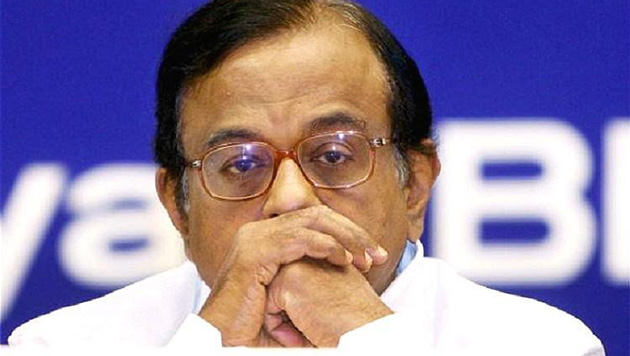
2023 state assembly polls will set field for 2024 Lok Sabha polls: Chidambaram

News Network
December 11, 2022

chidambaram.jpg

New Delhi, Dec 11: The Congress is best placed to be the "pole" around which a non-BJP front can be built for the 2024 general elections, senior party leader P Chidambaram said on Sunday and asserted that the Aam Aadmi Party does not have much appeal outside Delhi with the exception of Haryana and Punjab.

Chidambaram also stressed that there were lessons to be learnt by the Congress from the Gujarat loss, saying there is no such thing as a "silent" campaign in a hard-fought election.

In an interview, he also said the Aam Aadmi Party (AAP) played spoiler in Gujarat, like it did earlier in Goa and Uttarakhand.

He weighed in on the recent elections in Gujarat, Himachal Pradesh assemblies and the Municipal Corporation of Delhi, saying Prime Minister Narendra Modi should reflect on the fact that the BJP was in power in all three but was defeated in two.

"That is a huge setback for the BJP. The win in Gujarat, important as it is, cannot hide the fact that the BJP, the incumbent, was defeated decisively in Himachal Pradesh and MCD," the former Union minister said.

The Congress in Himachal and the AAP in MCD polls won by a decisive margin of seats, he pointed out.

"The overall margin of votes in Himachal Pradesh may be small, but it was not a state-wide presidential kind of election. It was a constituency-wise election and we have to look at the margin in each constituency," he said.

"In many of the 40 constituencies won by the Congress, the margins were sizable. A state-wide margin is an inappropriate measure in a constituency-wise election," Chidambaram said when asked about the PM highlighting the less than one per cent vote share difference between the Congress and the BJP in Himachal.

Asked about the Congress' debacle in Gujarat and the low key campaign in the state, Chidambaram said he was not fully acquainted with the strategy, if any, followed in the state.

"My sense was the Congress did not have great expectations in Gujarat. As a general rule, I believe that in every election the party must put its best forward and throw into the battle all the available resources - human, material and digital," he said.

The Gujarat Pradesh Congress Committee ought to have mobilised the best human resources available in the Congress all over the country and deployed them in the campaign, he said.

"I also believe that there is no such thing as a 'silent' campaign in a hard-fought election. There are lessons to be learnt from the Gujarat loss," he said.

On whether the AAP would pose a challenge to the Congress' leadership of the Opposition block after winning MCD polls and bagging about 13 per cent of the vote share in Gujarat, Chidambaram said the AAP's win in the MCD election was not surprising as it is the ruling party in Delhi.

The BJP carried the burden of 15 years of incumbency in the MCD and the Congress was not a serious contender, he opined.

"However, in Gujarat, the AAP played the spoiler's role, like it did earlier in Goa and Uttarakhand. The AAP dented the chances of the Congress in 33 seats in Gujarat," Chidambaram said.

"I do not think the AAP has much appeal outside Delhi except perhaps (in) Haryana and Punjab. As the AAP travels further from Delhi, it will find that its appeal diminishes," he said.

Whether the AAP has qualified for the label of 'national' party or not, is of little significance, he added.

Asked whether the Congress still remains the fulcrum of the Opposition alliance to take on the BJP in 2024 polls, Chidambaram said, "Yes, the Congress is best placed to be the pole around which a non-BJP front can be built."

Talking about Opposition unity, he said, "Opposition unity has always been difficult to build and maintain. Remember 1977 and 1989? If the Congress undertakes the task with humility and if the other parties undertake the task with realism, I think it is possible to forge unity for an electoral alliance."

On the poll results and their implications for the road to 2024 general elections, he said that before 2024, there is 2023 and elections in several states, including Karnataka, Rajasthan, Madhya Pradesh and Chhattisgarh.

Along with the results of the recently concluded three elections in 2022, the forthcoming state elections next year will set the field for the Lok Sabha elections in 2024, he said.

"How well the BJP will do and how well the Congress and other non-BJP parties will do in the state elections will undoubtedly play a major role in determining the outcome of the Lok Sabha elections," Chidambaram opined.

Asked whether the Bharat Jodo Yatra had any impact on the recently concluded polls and whether it would pay any electoral dividends to the party going forward, he said Rahul Gandhi made it clear at the outset that the aim of the Bharat Jodo Yatra was not to reap political benefits.

"Its goals were larger and with a long time view. I did not expect the BJY to influence the election in a state that the Bharat Jodo Yatra did not traverse. What impact it may have in the states that it traversed remains to be seen," Chidambaram said.

In Gujarat assembly polls, the BJP won a record 156 seats with a staggering 52.5 per cent vote share, dwarfing the Opposition Congress and the AAP, that got over 27 per cent and about 13 per cent vote share respectively. The Congress got just 17 seats while the AAP managed to bag five. Independents won three seats and the Samajwadi Party picked up one.

In Himachal Pradesh, the Congress won 40 seats and a vote share of 43.9 per cent. The BJP won 25 with 43 per cent vote share and on three seats independents were victorious. 

Comments

Add new comment

  • Coastaldigest.com reserves the right to delete or block any comments.
  • Coastaldigset.com is not responsible for its readers’ comments.
  • Comments that are abusive, incendiary or irrelevant are strictly prohibited.
  • Please use a genuine email ID and provide your name to avoid reject.
News Network
February 1,2026

US President Donald Trump on Saturday claimed that the government of India led by Prime Minister Narendra Modi has made a deal to buy Venezuelan oil, as opposed to purchasing it from Iran.

"We've already made that deal, the concept of the deal," he told reporters on Air Force One.

Trump had imposed 25% tariffs on countries buying Venezuelan oil, including India, in March 2025. He had also hit India with tariffs for buying Russian oil, saying it was "funding" President Vladimir Putin's war against Ukraine.

Trump has said that the US has taken control of the oil-rich Venezuela after capturing former President Nicolas Maduro in January.

A fleet of 18 ships loaded with crude oil bound for refineries in Texas, Louisiana, and Mississippi in January, the most since December 2024, according to a report by the news agency Bloomberg.

Combined crude deliveries to the US will reach about 2,75,000 barrels a day, more than doubling volumes seen in December last year. Shipments to China, which averaged 4,00,000 barrels a day last year, fell to zero in January.

PM Modi, Venezuelan President Agree To Expand Ties

Prime Minister Narendra Modi and Venezuela's acting President Delcy Rodriguez spoke on Friday and agreed to take the bilateral relations to "new heights" in the years ahead.

It was the first phone call between the two leaders since the capture of Maduro and his wife by the US on January 3.

"Spoke with Acting President of Venezuela, Ms. Delcy Rodriguez. We agreed to further deepen and expand our bilateral partnership in all areas, with a shared vision of taking India-Venezuela relations to new heights in the years ahead," PM Modi said in a post on X.

A statement from Prime Minister Modi's office said the two leaders agreed to further expand and deepen the India-Venezuela partnership in all areas, including trade and investment, energy, digital technology, health, agriculture, and people-to-people ties.

They exchanged views on various regional and global issues of mutual interest and underscored the importance of their close cooperation for the Global South, the statement said.

Rodriguez also said that they discussed partnerships in the fields of agriculture, science and technology, mining, and tourism, as well as the pharmaceutical and automotive industries.

Comments

Add new comment

  • Coastaldigest.com reserves the right to delete or block any comments.
  • Coastaldigset.com is not responsible for its readers’ comments.
  • Comments that are abusive, incendiary or irrelevant are strictly prohibited.
  • Please use a genuine email ID and provide your name to avoid reject.
News Network
February 4,2026

Mangaluru: Urban local bodies and gram panchayats should make the use of Kannada on signboards mandatory while issuing trade licences to commercial establishments, Dakshina Kannada Deputy Commissioner Darshan HV said. He also called for regular inspections to ensure compliance.

Presiding over the District Kannada Awareness Committee meeting at the deputy commissioner’s office, Darshan said the city corporation would be directed to ensure that shops operating in malls prominently display their names in Kannada. “All commercial establishments, including shops, companies, offices and hotels, must mandatorily display their names in Kannada on signboards,” he said.

The deputy commissioner added that the National Highways Authority of India (NHAI) would be instructed to include Kannada on signboards along national highways. Banks, he said, would be directed through committee meetings to provide application forms in Kannada.

“Even if English-medium schools and colleges impart education in English, their signboards must display the institution’s name in Kannada. Steps will also be taken to ensure that private buses display place names in Kannada,” Darshan said.

During the meeting, committee members raised concerns over the closure of Kannada-medium schools in rural areas due to a shortage of teachers and stressed the need for immediate corrective measures. They also pointed out that several industries employ workers from other states while overlooking local candidates.

Members further demanded that nationalised banks provide deposit and withdrawal slips in Kannada. It was brought to the deputy commissioner’s notice that the presence of staff without knowledge of Kannada in rural branches of nationalised banks is causing hardship to local customers.

Meanwhile, MP Srinath, president of the District Kannada Sahitya Parishat, urged the district administration to allot land for the construction of a district Kannada Bhavana in Mangaluru.

Comments

Add new comment

  • Coastaldigest.com reserves the right to delete or block any comments.
  • Coastaldigset.com is not responsible for its readers’ comments.
  • Comments that are abusive, incendiary or irrelevant are strictly prohibited.
  • Please use a genuine email ID and provide your name to avoid reject.
News Network
January 23,2026

Karnataka Governor Thaawarchand Gehlot read only three lines from the 122-paragraph address prepared by the Congress-led state government while addressing the joint session of the Legislature on Thursday, effectively bypassing large sections critical of the BJP-led Union government.

The omitted portions of the customary Governor’s address outlined what the state government described as a “suppressive situation in economic and policy matters” under India’s federal framework. The speech also sharply criticised the Centre’s move to replace the Mahatma Gandhi National Rural Employment Guarantee Act (MGNREGA) with the Viksit Bharat–Guarantee for Rozgar and Ajeevika Mission (Gramin) Act, commonly referred to as the VB-GRAM (G) Act.

Governor Gehlot had earlier conveyed his objection to several paragraphs that were explicitly critical of the Union government. On Thursday, he confined himself to the opening lines — “I extend a warm welcome to all of you to the joint session of the State legislature. I am extremely pleased to address this august House” — before jumping directly to the concluding sentence of the final paragraph.

He ended the address by reading the last line of paragraph 122: “Overall, my government is firmly committed to doubling the pace of the State’s economic, social and physical development. Jai Hind — Jai Karnataka.”

According to the prepared speech, the Karnataka government demanded the scrapping of the VB-GRAM (G) Act, describing it as “contractor-centric” and detrimental to rural livelihoods, and called for the full restoration of MGNREGA. The state government argued that the new law undermines decentralisation, weakens labour protections, and centralises decision-making in violation of constitutional norms.

Key points from the unread sections of the speech:

•    Karnataka facing a “suppressive” economic and policy environment within the federal system

•    Repeal of MGNREGA described as a blow to rural livelihoods

•    VB-GRAM (G) Act accused of protecting corporate and contractor interests

•    New law alleged to weaken decentralised governance

•    Decision-making said to be imposed by the Centre without consulting states

•    Rights of Adivasis, women, backward classes and agrarian communities curtailed

•    Labourers allegedly placed under contractor control

•    States facing mounting fiscal stress due to central policies

•    VB-GRAM (G) Act accused of enabling large-scale corruption

Comments

Add new comment

  • Coastaldigest.com reserves the right to delete or block any comments.
  • Coastaldigset.com is not responsible for its readers’ comments.
  • Comments that are abusive, incendiary or irrelevant are strictly prohibited.
  • Please use a genuine email ID and provide your name to avoid reject.