‘8 billion global population an opportunity for India; focus should be on equity and equality’

News Network
November 15, 2022

india.jpg

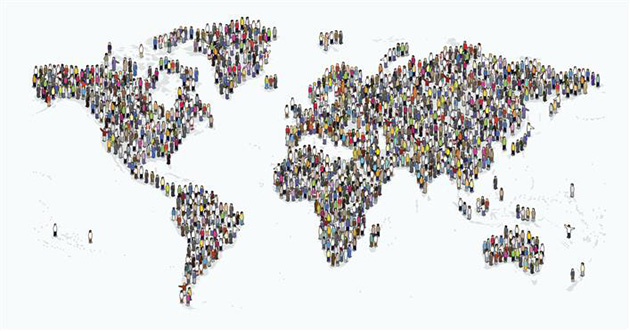
New Delhi, Nov 15: The global population reaching eight billion should be seen as an opportunity with people as creators of resources, experts said on Tuesday but stressed that focus should be on equity and equality as well as caring for the aging populace.

The world population touched eight billion on Tuesday and India was the largest contributor to the milestone, having added 177 million people, the United Nations said, noting that for China, which added 73 million people, the projection is its contribution to the next billion in the global population is to be in the negative.

The Population Foundation of India (PFI) said this milestone should be seen as an opportunity for India to plan better and provide a healthy and happy life for all eight billion people. "We must celebrate the day the world population reaches eight billion," it had earlier said.

According to the United Nations' World Population Prospects-2022, released on July 11 (World Population Day), the global population was projected to reach eight billion on November 15.

The report also stated that the global population is growing at its slowest rate since 1950, having fallen under one per cent in 2020.

"Given the fact that India is projected to become the most populous country in the world in 2023, some sections have been expressing fear that a high population would be a problem for governance. However, this milestone should be seen as an opportunity to plan better and provide a healthy and happy life for all eight billion of us," the PFI said.

PFI executive director Poonam Muttreja said, "We know that population growth is stabilising across the world. While it took 12 years for the world population to grow from seven to eight billion, it will take approximately 15 years, until 2037, to reach nine billion, suggesting that population growth is slowing down."

"We should now focus on eliminating unmet need for contraception, so that women can decide if they want to have children and if yes, when, how many and at what intervals," she said.

There also must be a stop at creating a false dichotomy between population and limited resources, Muttreja said.

She said a skilled population is a strength and "we must see people as creators of resources".

The obsession with numbers needs to end and the need is to start thinking of "our population as people, in line with the principles of equality and equity", the PFI executive director said.

"We must also broaden our view on the multidimensional relationship between the population and the planet," Muttreja said.

Global evidence shows that a small portion of the world's people use most of the earth's resources and produce most of its greenhouse gas emissions. Over the past 25 years, the richest 10 per cent of the global population has been responsible for more than half of all carbon emissions, she claimed.

Muttreja said going forward, countries such as India also need to put in place public measures to address the needs of the growing aging population. These would include attaining universal health care and improving social security systems, she said.

With the world's population crossing 8 billion, "let us not become knee-jerk and insist that it is the root cause of all our problems nor take the diametrically opposite position that population growth produces no stress especially at a time when climate threats are exacerbating inequality and loss of livelihood, impacting adversely women and all marginal communities the most", Executive director at the Centre for Advocacy and Research, Akhila Sivadas,

"Today more than ever before we need to engage with population increase from a gender equality perspective and focus on human development and build resilience in every sense of the word," she said.

The UN Population Fund (UNFPA), in a special graphic to mark the global population reaching eight billion, said Asia and Africa have driven much of this growth and they are expected to drive the next billion by 2037, while Europe's contribution will be negative due to declining population.

The world added a billion people in the last 12 years, it said, adding that as the world adds the next billion to its tally of inhabitants, China's contribution will be negative.

"India, the largest contributor to the eight billion (177 million) will surpass China, which was the second largest contributor (73 million) and whose contribution to the next billion will be negative, as the world's most populous nation by 2023," the UNFPA said.

The UN said it took about 12 years for the world population to grow from seven to eight billion, but the next billion is expected to take about 14.5 years (2037), reflecting the slowdown in global growth.

The world population is projected to reach a peak of around 10.4 billion people during the 2080s and is expected to remain at that level until 2100.

For the increase from seven to eight billion, around 70 per cent of the added population was in low-income and lower-middle-income countries. For the increase from eight to nine billion, these two groups of countries are expected to account for more than 90 per cent of the global growth, the UN said.


Comments

Add new comment

  • Coastaldigest.com reserves the right to delete or block any comments.
  • Coastaldigset.com is not responsible for its readers’ comments.
  • Comments that are abusive, incendiary or irrelevant are strictly prohibited.
  • Please use a genuine email ID and provide your name to avoid reject.
News Network
December 13,2025

New Delhi: School-going children are picking up drug and smoking habits and engaging in consumption of alcohol, with the average age of introduction to such harmful substances found to be around 13 years, suggesting a need for earlier interventions as early as primary school, a multi-city survey by AIIMS-Delhi said.

The findings also showed substance use increased in higher grades, with grade XI/XII students two times more likely to report use of substances when compared with grade VIII students. This emphasised the importance of continued prevention and intervention through middle and high school.

The study led by Dr Anju Dhawan of AIIMS's National Drug Dependence Treatment Centre, published in the National Medical Journal of India this month, looks at adolescent substance use across diverse regions.

The survey included 5,920 students from classes 8, 9, 11 and 12 in urban government, private and rural schools across 10 cities -- Bengaluru, Chandigarh, Delhi, Dibrugarh, Hyderabad, Imphal, Jammu, Lucknow, Mumbai, and Ranchi. The data were collected between May 2018 and June 2019.

The average age of initiation for any substance was 12.9 (2.8) years. It was lowest for inhalants (11.3 years) followed by heroin (12.3 years) and opioid pharmaceuticals (without prescription; 12.5 years).

Overall, 15.1 per cent of participants reported lifetime use, 10.3 per cent reported past year use, and 7.2 per cent reported use in the past month of any substance, the study found.

The most common substances used in the past year, after tobacco (4 per cent) and alcohol (3.8 per cent), were opioids (2.8 per cent), followed by cannabis (2 per cent) and inhalants (1.9 per cent). Use of non-prescribed pharmaceutical opioids was most common among opioid users (90.2 per cent).

On being asked, 'Do you think this substance is easily available for a person of your age' separately for each substance category, nearly half the students (46.3 per cent) endorsed that tobacco products and more than one-third of the students (36.5 per cent) agreed that a person of their age can easily procure alcohol products.

Similarly, for Bhang (21.9 per cent), ganja/charas (16.1 per cent), inhalants (15.2 per cent), sedatives (13.7 per cent), opium and heroin (10 per cent each), the students endorsed that these can be easily procured.

About 95 per cent of the children, irrespective of their grade, agreed with the statement that 'drug use is harmful'.

The rates of substance use (any) among boys were significantly higher than those of girls for substance use (ever), use in the past year and use in the past 30 days. Compared to grade VIII students, grade IX students were more likely, and grade XI/XII students were twice as likely to have used any substance (ever).

The likelihood of past-year use of any substance was also higher for grade IX students and for grade XI/XII students as compared to grade VIII students.

About 40 per cent of students mentioned that they had a family member who used tobacco or alcohol each. The use of cannabis (any product) and opioid (any product) by a family member was reported by 8.2 per cent and 3.9 per cent of students, respectively, while the use of other substances, such as inhalants/sedatives by family was 2-3 per cent, the study found.

A relatively smaller percentage of students reported use of tobacco or alcohol among peers as compared to among family members, while a higher percentage reported inhalants, sedatives, cannabis or opioid use among peers.

Children using substances (past year) compared to non-users reported significantly higher any substance use by their family members and peers.

There were 25.7 per cent students who replied 'yes' to the question 'conflicts/fights often occur in your family'. Most students also replied affirmatively to 'family members are aware of how their time is being spent' and 'damily members are aware of with whom they spend their time'.

Comments

Add new comment

  • Coastaldigest.com reserves the right to delete or block any comments.
  • Coastaldigset.com is not responsible for its readers’ comments.
  • Comments that are abusive, incendiary or irrelevant are strictly prohibited.
  • Please use a genuine email ID and provide your name to avoid reject.
News Network
December 3,2025

arrival.jpg

Mangaluru, Dec 3: A group of Congress workers gathered at the Mangaluru International Airport on Wednesday to welcome AICC general secretary K C Venugopal, but the reception quickly turned into a display of support for Deputy Chief Minister D K Shivakumar.

Venugopal arrived in the city to participate in the centenary commemoration of the historic dialogue between Mahatma Gandhi and Narayana Guru. The event, organised by the Sivagiri Mutt, Varkala, in association with the Mangalore University Sri Narayana Guru Study Chair, is being held on the university’s Konaje campus.

KPCC general secretary Mithun Rai and several party workers had assembled at the airport to receive Venugopal. However, the moment he stepped out, workers began raising slogans backing Shivakumar.

The university programme will be inaugurated by Chief Minister Siddaramaiah.

This show of support comes just a day after Siddaramaiah remarked that Shivakumar would lead the government “when the high command decides.” The chief minister made the comment after a breakfast meeting at Shivakumar’s residence—another public display of camaraderie between the two leaders amid ongoing attempts by the party high command to downplay their leadership rivalry.

Comments

Add new comment

  • Coastaldigest.com reserves the right to delete or block any comments.
  • Coastaldigset.com is not responsible for its readers’ comments.
  • Comments that are abusive, incendiary or irrelevant are strictly prohibited.
  • Please use a genuine email ID and provide your name to avoid reject.
News Network
December 6,2025

indigoticket.jpg

With IndiGo flight disruptions impacting thousands of passengers, the airline on Saturday said that it will offer full waiver on all cancellations/reschedule requests for travel bookings between December 5, 2025 and December 15, 2025.

Earlier in the day, the civil aviation ministry had directed the airline to complete the ticket refund process for the cancelled flights by Sunday evening, as well as ensure baggage separated from the travellers are delivered in the next two days.

In a post on X, titled 'No questions asked', IndiGo wrote, "In response to recent events, all refunds for your cancellations will be processed automatically to your original mode of payment."

"We are deeply sorry for the hardships caused," it further added.

Several passengers, however, complained of not getting full refund as promised by the airline.

Netizens have shared screenchots of getting charged for airline cancellation fee and convenience fee.

"Please tell me why u have did this airline cancellation charges when u say full amount will be refunded (sic)," a user wrote sharing a screenshot of the refund page.

"Well, but you have still debited the convenience charges," wrote another.

Passengers have also raised concerns about the "cancel" option being disabled on the IndiGo app. "First enable the 'Cancel' button on your App & offer full refund on tickets cancelled by customers between the said dates," wrote a user.

A day after the country's largest airline, IndiGo, cancelled more than 1,000 flights and caused disruptions for the fifth day on Saturday, the ministry said that any delay or non-compliance in refund processing will invite immediate regulatory action.

The refund process for all cancelled or disrupted flights must be completed by 8 pm on Sunday, the ministry said in a statement.

"Airlines have also been instructed not to levy any rescheduling charges for passengers whose travel plans were affected by cancellations," it said.

On Saturday, more than 400 flights were cancelled at various airports.

IndiGo has also been instructed to set up dedicated passenger support and refund facilitation cells.

Comments

Add new comment

  • Coastaldigest.com reserves the right to delete or block any comments.
  • Coastaldigset.com is not responsible for its readers’ comments.
  • Comments that are abusive, incendiary or irrelevant are strictly prohibited.
  • Please use a genuine email ID and provide your name to avoid reject.