‘Muslim quota is unconstitutional’: Karnataka BJP govt tells Supreme Court

News Network
April 26, 2023

SC.jpg

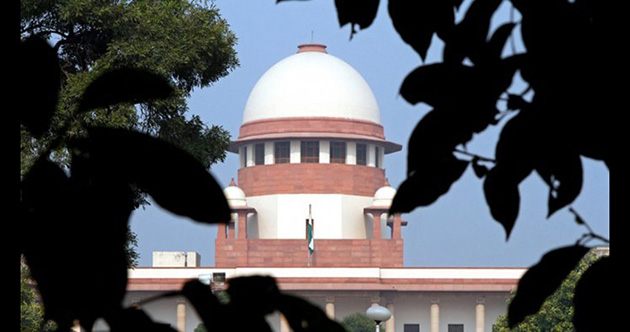
New Delhi, Apr 26: The Karnataka government defended before the Supreme Court its decision to scrap reservation on the sole basis of religion for Muslim community, saying it is  unconstitutional and contrary to the mandate of Article 14 to 16 of the Constitution of India.

Such a decision is also against the principles of social justice and secularism, it said.

The state government, however, pointed out the groups within the Muslim community who were found to be backward and found mention in Group I of the 2002 reservation order continued to enjoy the benefits of reservation. 

"Merely because reservations have been provided in the past on the basis of religion, it is no ground to continue the same for perpetuity, more so when it is on the basis of an unconstitutional principle," it said, contending that to provide the quota to the community was not justified.

Maintaining that the power to classify a group of citizens as Socially and Educationally Backward Class (SEBC) has to be constitutionally exercised in accordance with the provisions of Articles 14, 15 and 16 of the Constitution, it contended that assuming for the moment that any of the commissions had recommended for the inclusion of Muslims as Backward castes, the same does not denude the power of the State Government to take a decision in accordance with law.

In an affidavit to the challenge to the validity of its March 27 order, the state government said the power has been constitutionally conferred upon the state government to provide for protection to the Backward Classes. 

The government asserted that reservation can be provided to the Socially and Educationally backward classes in society who have been historically deprived and discriminated against within the society. "The same cannot be equated with an entire religion," it said.

The Karnataka government also pointed out there is no reservation given to Muslim community on the basis of religion as a whole in the Central List. 

"Even throughout the country, it is believed verily, except State of Kerala, there is no state that provides for reservation for the Muslim community as a whole," the state government said. 

There are various communities from the Muslim religion who are included in the SEBC which also continues to be the case in Karnataka. As such, the same in itself shows that the reservation solely on the basis of religion is not the practice followed anywhere in the country except Kerala and in the State of Karnataka, till recently, it added. 

"Reservation solely on the basis of religion is also contrary to the principles of social justice. The concept of social justice aims to protect those who are deprived and discriminated against within the society. Including within the said ambit an entire religion would be an antithesis to the concept of social justice and the ethos of the Constitution. Therefore reservation cannot be extended to any community on the sole basis of religion," it said.

The provision of reservation on the basis of religion would also be contrary to the concept of secularism. Further it would be violative of right to equality and non-discrimination on the basis of race, religion, caste, gender etc, it added.

The state government further said the issue of reservations has anyway undergone a radical shift with the introduction of reservation on the basis of economic criteria (EWS) by virtue of the 103rd Amendment. It is pertinent to state that the said amendment has been upheld by this Court in Janhit Abhiyan Vs Union of India, (2022). Therefore, the Muslim community suffers no prejudice as they can avail the benefit of EWS reservation which is 10 per cent. 

In the case of Andhra Pradesh, the Supreme Court permitted the reservation for only limited identifiable communities amongst Muslims and not the entire religion, it pointed out.

"The petitioners herein have sought to give a colour to the exercise in question which is completely baseless. The timing of the decision, etc, are immaterial without the petitioners clearly demonstrating that the reservation on the basis of religion is constitutional and permissible," it said.

The state government also said that its March 27 order was passed following the High Court's order on March 23.

The initial inclusion of Muslim community into the category of Other Backward Classes in 1979 was contrary to the recommendations of the first backward class commission headed by L G Havanur. The said inclusion has thereafter been continued subsequently primarily on the ground of economic backwardness. It is pertinent to state that the constitutional scheme at that stage did not contemplate reservations to economically weaker sections, it said. 

Comments

Add new comment

  • Coastaldigest.com reserves the right to delete or block any comments.
  • Coastaldigset.com is not responsible for its readers’ comments.
  • Comments that are abusive, incendiary or irrelevant are strictly prohibited.
  • Please use a genuine email ID and provide your name to avoid reject.
News Network
February 1,2026

US President Donald Trump on Saturday claimed that the government of India led by Prime Minister Narendra Modi has made a deal to buy Venezuelan oil, as opposed to purchasing it from Iran.

"We've already made that deal, the concept of the deal," he told reporters on Air Force One.

Trump had imposed 25% tariffs on countries buying Venezuelan oil, including India, in March 2025. He had also hit India with tariffs for buying Russian oil, saying it was "funding" President Vladimir Putin's war against Ukraine.

Trump has said that the US has taken control of the oil-rich Venezuela after capturing former President Nicolas Maduro in January.

A fleet of 18 ships loaded with crude oil bound for refineries in Texas, Louisiana, and Mississippi in January, the most since December 2024, according to a report by the news agency Bloomberg.

Combined crude deliveries to the US will reach about 2,75,000 barrels a day, more than doubling volumes seen in December last year. Shipments to China, which averaged 4,00,000 barrels a day last year, fell to zero in January.

PM Modi, Venezuelan President Agree To Expand Ties

Prime Minister Narendra Modi and Venezuela's acting President Delcy Rodriguez spoke on Friday and agreed to take the bilateral relations to "new heights" in the years ahead.

It was the first phone call between the two leaders since the capture of Maduro and his wife by the US on January 3.

"Spoke with Acting President of Venezuela, Ms. Delcy Rodriguez. We agreed to further deepen and expand our bilateral partnership in all areas, with a shared vision of taking India-Venezuela relations to new heights in the years ahead," PM Modi said in a post on X.

A statement from Prime Minister Modi's office said the two leaders agreed to further expand and deepen the India-Venezuela partnership in all areas, including trade and investment, energy, digital technology, health, agriculture, and people-to-people ties.

They exchanged views on various regional and global issues of mutual interest and underscored the importance of their close cooperation for the Global South, the statement said.

Rodriguez also said that they discussed partnerships in the fields of agriculture, science and technology, mining, and tourism, as well as the pharmaceutical and automotive industries.

Comments

Add new comment

  • Coastaldigest.com reserves the right to delete or block any comments.
  • Coastaldigset.com is not responsible for its readers’ comments.
  • Comments that are abusive, incendiary or irrelevant are strictly prohibited.
  • Please use a genuine email ID and provide your name to avoid reject.
News Network
February 3,2026

manjeshwar.jpg

Kasaragod: An 18-year-old girl was stabbed to death at Thuminad in Manjeshwar panchayat on Monday, allegedly by her father following a domestic dispute. 

The victim has been identified as K U Mariyamath Jumaila. Her father, Umar Farooq, has been taken into police custody, Manjeshwar Station House Officer Inspector Ajith Kumar P said.

According to the police, Umar Farooq had been working in a West Asian country and returned home about three months ago. 

Family tensions reportedly escalated after his wife, Thahira (41), decided to seek a divorce and asked him to leave her life. Kasaragod district panchayat member Harshad Vorkady alleged that Umer was addicted to marijuana and frequently caused disturbances at home.

On Monday, Thahira asked Umar to come to her sister’s house in Thuminad to discuss the dispute. Jumaila accompanied her mother. 

Manjeshwar panchayat member Illiyas Thuminad said Umar arrived along with his brother, following which Thahira handed over gold ornaments and property documents to him and asked him to sever ties with her.

However, the police said a property dispute had been ongoing between Umar Farooq and his sister-in-law’s husband. During a heated argument, Umar allegedly attempted to attack the man with a sharp weapon. When Jumaila intervened to stop the assault, she was stabbed in the neck.

The teenager collapsed after bleeding profusely and was rushed to a private hospital in Mangaluru, where doctors declared her dead. Her body was later shifted to Mangalpady Taluk Hospital for post-mortem examination.

Jumaila was a former student of Sirajul Huda English Medium Higher Secondary School, Manjeshwar. 

Comments

Add new comment

  • Coastaldigest.com reserves the right to delete or block any comments.
  • Coastaldigset.com is not responsible for its readers’ comments.
  • Comments that are abusive, incendiary or irrelevant are strictly prohibited.
  • Please use a genuine email ID and provide your name to avoid reject.
News Network
January 23,2026

Karnataka Governor Thaawarchand Gehlot read only three lines from the 122-paragraph address prepared by the Congress-led state government while addressing the joint session of the Legislature on Thursday, effectively bypassing large sections critical of the BJP-led Union government.

The omitted portions of the customary Governor’s address outlined what the state government described as a “suppressive situation in economic and policy matters” under India’s federal framework. The speech also sharply criticised the Centre’s move to replace the Mahatma Gandhi National Rural Employment Guarantee Act (MGNREGA) with the Viksit Bharat–Guarantee for Rozgar and Ajeevika Mission (Gramin) Act, commonly referred to as the VB-GRAM (G) Act.

Governor Gehlot had earlier conveyed his objection to several paragraphs that were explicitly critical of the Union government. On Thursday, he confined himself to the opening lines — “I extend a warm welcome to all of you to the joint session of the State legislature. I am extremely pleased to address this august House” — before jumping directly to the concluding sentence of the final paragraph.

He ended the address by reading the last line of paragraph 122: “Overall, my government is firmly committed to doubling the pace of the State’s economic, social and physical development. Jai Hind — Jai Karnataka.”

According to the prepared speech, the Karnataka government demanded the scrapping of the VB-GRAM (G) Act, describing it as “contractor-centric” and detrimental to rural livelihoods, and called for the full restoration of MGNREGA. The state government argued that the new law undermines decentralisation, weakens labour protections, and centralises decision-making in violation of constitutional norms.

Key points from the unread sections of the speech:

•    Karnataka facing a “suppressive” economic and policy environment within the federal system

•    Repeal of MGNREGA described as a blow to rural livelihoods

•    VB-GRAM (G) Act accused of protecting corporate and contractor interests

•    New law alleged to weaken decentralised governance

•    Decision-making said to be imposed by the Centre without consulting states

•    Rights of Adivasis, women, backward classes and agrarian communities curtailed

•    Labourers allegedly placed under contractor control

•    States facing mounting fiscal stress due to central policies

•    VB-GRAM (G) Act accused of enabling large-scale corruption

Comments

Add new comment

  • Coastaldigest.com reserves the right to delete or block any comments.
  • Coastaldigset.com is not responsible for its readers’ comments.
  • Comments that are abusive, incendiary or irrelevant are strictly prohibited.
  • Please use a genuine email ID and provide your name to avoid reject.