Protect environment for future, says outgoing President in farewell address to India

News Network
July 24, 2022

ramnathkovind.jpg

New Delhi, July 24: Mother nature is in deep agony and the climate crisis can endanger the very future of this planet, outgoing President Ram Nath Kovind said in his farewell address to the nation on Sunday as he appealed to all to protect the environment for the coming generations.

Emphasising that the country is getting equipped to make the 21st century "the century of India," Kovind highlighted the importance of healthcare and education and said these, along with economic reforms, would enable citizens to pursue happiness by discovering their potential.

President-elect Droupadi Murmu will be sworn in as the country's 15th President on Monday.

In his last televised address to the nation, Kovind said, "The pandemic has underlined the need to further improve the public healthcare infrastructure. I am glad that the government has accorded top priority to this task.

"Once education and healthcare are in place, economic reforms will let citizens find the best course for their lives, he said, adding that "I firmly believe that our country is getting equipped to make the 21st century, the century of India".

He said the National Education Policy will go a long way in making it possible for young Indians to connect with their heritage and also find their feet in the twenty-first century.

The president made a special mention of the threat to the environment and asked all citizens to take care of it for future generations.

"Mother Nature is in deep agony and the climate crisis can endanger the very future of this planet. We must take care of our environment, our land, air and water for the sake of our children.

"In our daily lives and routine choices, we must be more careful to protect our trees, rivers, seas and mountains as well as all other living beings. As the first citizen, if I have to give one advice to my fellow citizens, it has to be this," he added.

President Kovind also hailed the trinity of ideals of liberty, equality and fraternity, saying they must not be mistaken as abstractions beacause they ''are lofty, noble and uplifting."

"Our history, not only of modern times but also from ancient times, reminds us that they are real; that they can be realised, and indeed have been realised in different eras.

"Our ancestors and founders of our modern nation exemplified the meaning of justice, liberty, equality and fraternity with hard work and an attitude of service. We only have to follow in their footsteps and keep walking," he said.

And what do such ideals mean for a common citizen today? Kovind asked.

"I believe the chief goal is to help them discover the joy of living. For that, first of all, their basic necessities must be taken care of," the president emphasised.

During his address, the president went down memory lane to highlight the inherent power of vibrant democratic institutions.

Kovind recalled his earlier days when the country had just achieved independence and said, "There was a fresh wave of energy to rebuild the country; there were new dreams. I too had a dream, that one day I would be able to participate in a meaningful way in this nation-building exercise."

"A young boy living in a mud house could not have any idea about the highest Constitutional office of the Republic. But it is a testament to the strength of India's democracy that it has created pathways to let each citizen take part in the shaping of our collective destiny.

"If that Ram Nath Kovind from village Paraunkh is addressing you today, it is solely thanks to the inherent power of our vibrant democratic institutions," he said.

In his farewell speech on the eve of his completing five-year tenure as the president, Kovind said the founders of our modern nation exemplified the meaning of justice, liberty, equality and fraternity with hard work and an attitude of service, and "we only have to follow in their footsteps and keep walking".

The president said the nation is working with the objective of providing better housing, and access to drinking water and electricity for every family.

"This change has been made possible by the momentum of development and good governance which knows no discrimination," he said.

Kovind said the formal map for the democratic path "we all have been navigating was drafted by the Constituent Assembly" and the Constitution they prepared, with invaluable contributions from each of them, has been our guiding beacon.

"Values enshrined in it have been part of the Indian ethos since time immemorial," the outgoing president said and quoted Dr Babasaheb Bhimrao Ambedkar's concluding remarks in the Constituent Assembly where he had pointed out the distinction between political and social democracy.

"What does social democracy mean? It means a way of life which recognises liberty, equality and fraternity as the principles of life.

"These principles of liberty, equality and fraternity are not to be treated as separate items in a trinity. They form a union of trinity in the sense that to divorce one from the other is to defeat the very purpose of democracy," Kovind quoted Ambedkar as having said.

President Kovind said in modern times, the glorious journey of the country commenced with the awakening of nationalist feelings during colonial rule and the launch of the freedom struggle.

"There were many uprisings across the country in the nineteenth century. The names of many of the heroes who brought hopes of new dawn have long been forgotten.

"Contributions of some of them have come to be appreciated only in recent times. Around the turn of the century, the various struggles were coming together, creating a new consciousness," he said.
When Gandhiji returned to the motherland in 1915, the nationalist fervour was gaining momentum, Kovind said, mentioning Gurudev Rabindranath Tagore, Babasaheb Bhimrao Ambedkar, Jawaharlal Nehru and Syama Prasad Mookerjee among others.

"From Tilak and Gokhale to Bhagat Singh and Netaji, from Jawaharlal Nehru, Sardar Patel and Shyama Prasad Mukherjee to Sarojini Naidu and Kamaladevi Chattopadhyay – nowhere in the history of humankind have so many great minds come together for a common cause," he said.

Expressing deep gratitude to all fellow citizens and elected representatives, Kovind said he has been inspired and energised by interactions with farmers and workers from small villages, teachers shaping young minds, artists enriching our legacy, scholars investigating various facets of our country and business people creating wealth for the nation.

He also mentioned doctors and nurses serving the people, scientists and engineers engaged in nation-building, judges and advocates contributing to the justice delivery system of the country and civil servants who run the administration smoothly.

"'Our social workers actively connecting every social segment with development, preachers and masters of all sects who maintain the flow of spirituality in Indian society – you all have continuously helped me discharge my duties," he said.

"In short, I received full cooperation, support and blessings from all sections of society. I will especially cherish the occasions when I had an opportunity to meet our brave jawans of the armed forces, para-military forces and the police. Their patriotic zeal is as amazing, as it is inspiring," the president said.

Referring to his interaction with the Indian diaspora during his visits abroad, Kovind said he found their love and concern for the homeland very touching.

"All these re-affirm the belief that the nation is after all composed of its citizens; and with each of you striving to make India better and better, the nation’s great future is secure," he said.

Kovind said that among the most memorable moments of his life has been visiting his home during his term and touching the feet of his teachers at Kanpur to seek their blessings.

"This year, the prime minister also honoured my village Paraunkh with his visit. This connection with our roots has been the essence of India. I would request the younger generation to continue this tradition of staying connected with their village or town, their schools and teachers," the president said.

Asserting that he has discharged his responsibilities to the best of his ability and has been conscious of being a successor to great icons like Dr Rajendra Prasad, Dr S Radhakrishnan and Dr APJ Abdul Kalam, Kovind said, "Still, whenever I was in doubt, I turned to Gandhiji and his famous talisman."

"His advice of recalling the face of the poorest man and asking myself if the step I am about to take will be of any use to him. At the risk of repeating myself, I will urge you to contemplate Gandhiji’s life and teachings at least for a few minutes every day," he said. 

Comments

Add new comment

  • Coastaldigest.com reserves the right to delete or block any comments.
  • Coastaldigset.com is not responsible for its readers’ comments.
  • Comments that are abusive, incendiary or irrelevant are strictly prohibited.
  • Please use a genuine email ID and provide your name to avoid reject.
News Network
February 1,2026

Bengaluru: The Karnataka High Court has refused to quash an investigation against a WhatsApp group administrator accused of allowing the circulation of obscene and offensive images depicting Hindutva politicians and idols in 2021.

Justice M Nagaprasanna observed that, prima facie, the ingredients of the offence under Section 295A of the Indian Penal Code were made out. “The offence under Section 295A of the IPC is met to every word of its ingredient, albeit prima facie,” the judge said.

The petitioner, Sirajuddin, a resident of Belthangady taluk in Dakshina Kannada district, had challenged the FIR registered against him at the CEN (Cyber, Economics and Narcotics) police station, Mangaluru, for offences under Section 295A of the IPC and Section 67 of the Information Technology Act. Section 295A relates to punishment for deliberate and malicious acts intended to outrage the religious feelings of any class of citizens.

According to the complaint filed by K Jayaraj Salian, also a resident of Belthangady taluk, he received a WhatsApp group link from an unknown source and was added to the group after accessing it. The group reportedly had six administrators and around 250 participants, where obscene and offensive images depicting Hindu deities and certain political figures were allegedly circulated repeatedly.

Sirajuddin was arrested in connection with the case and later released on bail on February 16, 2021. He argued before the court that he was being selectively targeted, while other administrators—including the creator of the group—were neither arrested nor investigated. He also contended that the Magistrate could not have taken cognisance of the offence under Section 295A without prior sanction under Section 196(1) of the CrPC.

Rejecting the argument, Justice Nagaprasanna held that prior sanction is required only at the stage of taking cognisance, and not at the stage of registration of the crime or during investigation.

The judge noted that the State had produced the entire investigation material before the court. “A perusal of the material reveals depictions of Hindu deities in an extraordinarily obscene, demeaning and profane manner. The content is such that its reproduction in a judicial order would itself be inappropriate,” the court said, adding that the material, on its face, had the tendency to outrage religious feelings and disturb communal harmony.

Observing that the case was still at the investigation stage, the court said it could not interdict the probe at this juncture. However, it expressed concern that the investigating officer appeared to have not proceeded uniformly against all administrators. The court clarified that if the investigation revealed the active involvement of any member in permitting the circulation of such content, they must also be proceeded against.

“At this investigative stage, any further observation by this Court would be unnecessary,” the order concluded.

Comments

Add new comment

  • Coastaldigest.com reserves the right to delete or block any comments.
  • Coastaldigset.com is not responsible for its readers’ comments.
  • Comments that are abusive, incendiary or irrelevant are strictly prohibited.
  • Please use a genuine email ID and provide your name to avoid reject.
News Network
February 4,2026

gaming.jpg

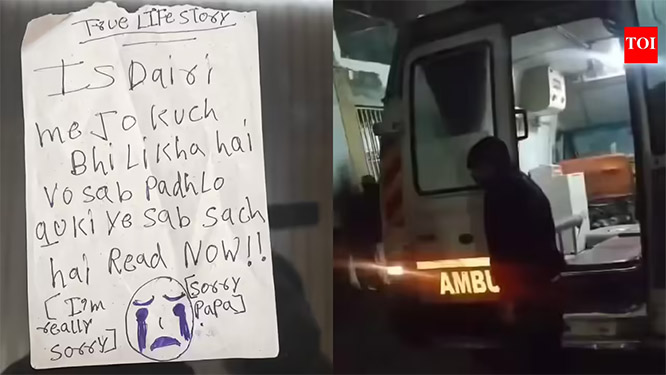
Ghaziabad: In a tragic incident, three sisters aged 12, 14 and 16 died after jumping from the ninth floor of their apartment in Uttar Pradesh’s Ghaziabad in the early hours of Wednesday. The girls allegedly took the extreme step after becoming deeply obsessed with an online Korean task-based game.

The incident occurred around 2.15 am at a high-rise apartment complex in Bharat City. Before jumping, the sisters — Pakhi (12), Prachi (14) and Vishika (16) — left behind a handwritten note that read, “Sorry, Papa.”

According to police, the girls went to the balcony, bolted the door from inside and jumped one after another. Their screams and the sound alerted their parents, neighbours and security guards. By the time the parents broke open the balcony door, all three had died.

“When we reached the spot, we confirmed that three minor girls, daughters of Chetan Kumar, had died after jumping from the building,” said Assistant Commissioner of Police Atul Kumar Singh.

Visuals from the scene on Wednesday morning showed the bodies lying on the ground, their mother wailing in grief, and stunned neighbours gathering at the complex.

Police said the sisters were heavily influenced by Korean culture and were addicted to an online “Korean love game”, though no specific game has been identified so far. Investigators are examining an eight-page suicide note written in a pocket diary, detailing the girls’ mobile and gaming activities.

“Read everything written in this diary because all of it is true. I’m really sorry. Sorry, Papa,” the note said, accompanied by a hand-drawn crying emoji.

Their father, Chetan Kumar, told police that the girls had even adopted Korean names and had gradually withdrawn from school and daily activities. “They used to say, ‘Korea is our life, Korea is our biggest love. We cannot give it up,’” he said, breaking down.

Police said the parents had recently restricted the girls’ mobile phone usage, which may have triggered distress. “The investigation has not revealed the name of any particular game, but it is evident that the girls were deeply influenced by Korean culture, as mentioned in the suicide note,” said senior police officer Nimish Patel.

The sisters reportedly did everything together, including eating and bathing. Their gaming addiction is believed to have begun during the COVID-19 pandemic, after which they became irregular at school and eventually stopped attending altogether.

Police also revealed that Chetan Kumar is married to two sisters and lives with both wives and their children, all daughters. Two of the deceased girls were daughters of one wife, while the third was their half-sister.

Further investigation is underway.

Comments

Add new comment

  • Coastaldigest.com reserves the right to delete or block any comments.
  • Coastaldigset.com is not responsible for its readers’ comments.
  • Comments that are abusive, incendiary or irrelevant are strictly prohibited.
  • Please use a genuine email ID and provide your name to avoid reject.
News Network
February 4,2026

Mangaluru: Urban local bodies and gram panchayats should make the use of Kannada on signboards mandatory while issuing trade licences to commercial establishments, Dakshina Kannada Deputy Commissioner Darshan HV said. He also called for regular inspections to ensure compliance.

Presiding over the District Kannada Awareness Committee meeting at the deputy commissioner’s office, Darshan said the city corporation would be directed to ensure that shops operating in malls prominently display their names in Kannada. “All commercial establishments, including shops, companies, offices and hotels, must mandatorily display their names in Kannada on signboards,” he said.

The deputy commissioner added that the National Highways Authority of India (NHAI) would be instructed to include Kannada on signboards along national highways. Banks, he said, would be directed through committee meetings to provide application forms in Kannada.

“Even if English-medium schools and colleges impart education in English, their signboards must display the institution’s name in Kannada. Steps will also be taken to ensure that private buses display place names in Kannada,” Darshan said.

During the meeting, committee members raised concerns over the closure of Kannada-medium schools in rural areas due to a shortage of teachers and stressed the need for immediate corrective measures. They also pointed out that several industries employ workers from other states while overlooking local candidates.

Members further demanded that nationalised banks provide deposit and withdrawal slips in Kannada. It was brought to the deputy commissioner’s notice that the presence of staff without knowledge of Kannada in rural branches of nationalised banks is causing hardship to local customers.

Meanwhile, MP Srinath, president of the District Kannada Sahitya Parishat, urged the district administration to allot land for the construction of a district Kannada Bhavana in Mangaluru.

Comments

Add new comment

  • Coastaldigest.com reserves the right to delete or block any comments.
  • Coastaldigset.com is not responsible for its readers’ comments.
  • Comments that are abusive, incendiary or irrelevant are strictly prohibited.
  • Please use a genuine email ID and provide your name to avoid reject.