



Tug-of-war for 'Byari' glory: Sara Aboobaker hits out at producer

[email protected] (CD Network)
March 9, 2012
Mangalore, March 9: The controversy surrounding the authorship of the story of 'Byari' has surfaced again with noted Kannada writer Sara Aboobaker reiterating her claim that the National Award winning movie was based on her first book Chandragiri Thiradalli released in mid-80s.

The first-ever Beary film with the same title, shared the Best Feature Film award along with Marathi film Deol when the names were announced on Wednesday in New Delhi.

The film, produced by Mangalore-based producer Altaf Hussain Chokkabettu, was released in June last year with the director himself playing the lead male character.
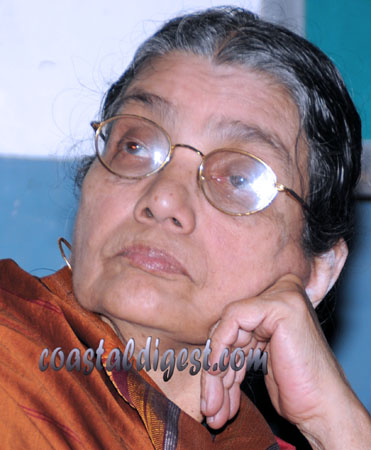
sara

Sara, who had raised her objections during and before the release of the movie, once again reiterated her stand that the movie was based on her successful novel, which narrated the plight of a young Muslim woman who 's life was shattered by the misuse of provisions of Talaq in Islam.

“Altaf Hussain Chokkabettu, the producer of the movie had asked her for the rights of the book. “I had already signed a agreement until 2015 with the National Film Development Corporation that I would not give the story to any visual media,” she told coastaldigest.com

Despite her telling the producer of Byari that he could not use the story, in Kerala, he had declared that his film was based on her book. “He even put up posters in Mangalore saying that the story was mine,” she said. “But when I raised objections he backtracked and, claimed that the story was written by Irfan Chokabettu”.

Sara, has in fact, approached court seeking justice, but had to withdraw since she was 'disillusioned' with the legal system of the country.

“Today lawyers don't take up cases on the basis of who's right or who's wrong. They want to ascertain how influential or financially sound the other party is before taking up one's case. Even otherwise, the judicial process is riddled with inordinate delays. At 75, I was not prepared for the long haul,” says Sara.

“I still have the clippings of his (Altaf) statements published in Malayalam newspapers. I also have a poster of the movie which has my name on it. I had produced them before the court. The court had asked the defendant to produce the book supposedly written by Irfan Chokkabettu,” she said, but insisted she had withdrawn the case since she was not sure of getting justice.

When asked about the marked difference in the climax of her novel and that of the movie, she said: “When you adopt a book to the visual media, you make certain changes. It has happened with all the great works of Kannada literature. It cannot be a mere coincidence that the names of characters of the movie and that of my book are same.”

Sara is also unhappy that fellow-writers did not come out in the open to support her fight against what she called an act of blatant plagiarism. “Of course I am pained by the marked silence of my fellow writers. They should have come out in the open to fight against the injustice. Even in the Karnataka Film Chamber, except Jayamala, no one took up my cause. If this had happened in United States or some other country, people would have reacted strongly,” she says.

When asked how she felt about a debut Beary film getting a top national award, she said: “Awards are not a big thing. The movie was about one of the worst practices in our religion. The portrayal of the evil practice will definitely fetch awards. I won the award for the best story for the same novel when it was made a film in Tamil. So it was quiet expected. And you know how the awards are decided these days. Lot of lobbying and behind-the-scene maneuvering goes into it.”

Reacting to a question if she was feeling betrayed that she had been denied the credit, Mrs. Sara said: “No, not at all. I have already secured awards and accolades for my work. My books have been made the textbook in some universities. I have been bestowed honorary doctorate by three universities in Karnataka. I am saddened by the way he (Altaf) cheated me and went on to claim that he did not even know me.”
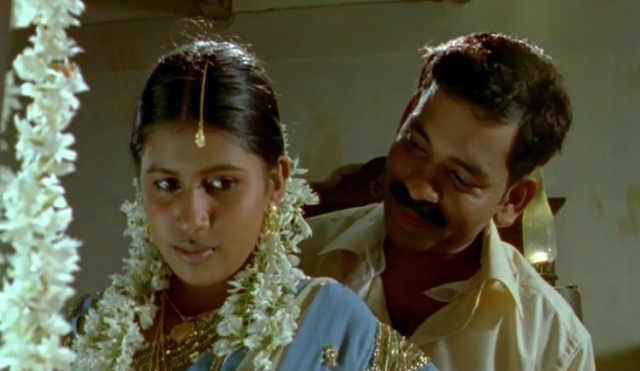
altaf

On the other hand producer Altaf Hussain refuted her claim and said the film was based on Quran and not on anyone's book.

“Just because the names of the characters are same, she cannot claim that the movie is based on her book. The movie has been created based on a real-life event. Our movie does not violate the tenets of Islam, while her book questions the Islamic customs,” he argues.

Altaf reiterated that he did not know Sara Aboobaker until the controversy broke out. “I did not know who this woman was. When I set out on the movie-making mission, I would have naturally spoken to writers in the Beary community. There are eminent writers like Boluvaru, Fakir Mohammed Katpad, Baddur who are well-versed in Beary culture and language. Sara Aboobaker does not belong to beary community. She is a Malayali. Their culture and our culture are different. So, I would not have met her even to get her advice,” he says.

Insisting that he had never spoken to the media in Trissur International Film Festival, nor printed any publicity material with her name on it, Altaf says, “the publicity material submitted by her (Sara) to the court is two years old. But we prepared the first poster only after we got the censor certificate from the concerned authorities. The movie was released in Mangalore on June 9. The only press meet we held in connection with the movie was in Mangalore on June 3.”

When asked if Irfan Chokkabettu's work has been published in the print media, he said: “Irfan is a talented writer. He has got a number of stories with him which are not published anywhere.”

Reacting sharply to Sara's criticism of plagiarism, Altaf said: “It is foolish to say that she withdrew her case because lawyers cheated her. The advancing age is clearily showing in her statements. Now that the film has won national award, she has started to blackmail us once again. But this will not succeed.”




Comments

Add new comment

  • Coastaldigest.com reserves the right to delete or block any comments.
  • Coastaldigset.com is not responsible for its readers’ comments.
  • Comments that are abusive, incendiary or irrelevant are strictly prohibited.
  • Please use a genuine email ID and provide your name to avoid reject.
News Network
February 4,2026

Mangaluru: Urban local bodies and gram panchayats should make the use of Kannada on signboards mandatory while issuing trade licences to commercial establishments, Dakshina Kannada Deputy Commissioner Darshan HV said. He also called for regular inspections to ensure compliance.

Presiding over the District Kannada Awareness Committee meeting at the deputy commissioner’s office, Darshan said the city corporation would be directed to ensure that shops operating in malls prominently display their names in Kannada. “All commercial establishments, including shops, companies, offices and hotels, must mandatorily display their names in Kannada on signboards,” he said.

The deputy commissioner added that the National Highways Authority of India (NHAI) would be instructed to include Kannada on signboards along national highways. Banks, he said, would be directed through committee meetings to provide application forms in Kannada.

“Even if English-medium schools and colleges impart education in English, their signboards must display the institution’s name in Kannada. Steps will also be taken to ensure that private buses display place names in Kannada,” Darshan said.

During the meeting, committee members raised concerns over the closure of Kannada-medium schools in rural areas due to a shortage of teachers and stressed the need for immediate corrective measures. They also pointed out that several industries employ workers from other states while overlooking local candidates.

Members further demanded that nationalised banks provide deposit and withdrawal slips in Kannada. It was brought to the deputy commissioner’s notice that the presence of staff without knowledge of Kannada in rural branches of nationalised banks is causing hardship to local customers.

Meanwhile, MP Srinath, president of the District Kannada Sahitya Parishat, urged the district administration to allot land for the construction of a district Kannada Bhavana in Mangaluru.

Comments

Add new comment

  • Coastaldigest.com reserves the right to delete or block any comments.
  • Coastaldigset.com is not responsible for its readers’ comments.
  • Comments that are abusive, incendiary or irrelevant are strictly prohibited.
  • Please use a genuine email ID and provide your name to avoid reject.
News Network
February 3,2026

wind.jpg

Dakshina Kannada MP Capt Brijesh Chowta has urged the Centre to give high priority to offshore wind energy generation along the Mangaluru coast, citing its strategic importance to India’s green energy and port-led development goals.

Raising the issue in the Lok Sabha under Rule 377, Chowta said studies by the National Institute of Oceanography have identified the Mangaluru coastline as part of India’s promising offshore wind ‘Zone-2’, covering nearly 6,490 sq km. He noted that the region’s relatively low exposure to cyclones and earthquakes makes it suitable for long-term offshore wind projects and called for its development as a dedicated offshore wind energy zone.

Highlighting the role of New Mangalore Port, Chowta said its modern infrastructure, multiple berths and heavy cargo-handling capacity position it well as a logistics hub for transporting and assembling large wind energy equipment.

He also pointed to the presence of major industrial units such as MRPL, OMPL, UPCL and the Mangaluru SEZ, which could serve as direct buyers of green power through power purchase agreements, improving project viability and speeding up execution.

With Karnataka’s peak power demand crossing 18,000 MW in early 2025, Chowta stressed the need to diversify renewable energy sources. He added that offshore wind projects in the Arabian Sea are strategically safer compared to the cyclone-prone Bay of Bengal.

Calling the project vital to India’s target of 500 GW of renewable energy by 2030, Chowta urged the Ministry of New and Renewable Energy to initiate resource assessments, pilot projects and stakeholder consultations at the earliest.

Comments

Add new comment

  • Coastaldigest.com reserves the right to delete or block any comments.
  • Coastaldigset.com is not responsible for its readers’ comments.
  • Comments that are abusive, incendiary or irrelevant are strictly prohibited.
  • Please use a genuine email ID and provide your name to avoid reject.
News Network
February 5,2026

In an era where digital distractions are the primary rival to academic excellence, the Karnataka Education Department is taking the fight directly to the living room. As the SSLC (Class 10) annual examinations loom, officials have launched a localized "digital strike" to ensure students aren't losing their competitive edge to scrolling or soap operas.

The 7-to-9 Lockdown

The department has issued a formal directive urging—and in some cases, enforcing via home visits—a total blackout of mobile phones and television sets between 7:00 PM and 9:00 PM. This two-hour window is being designated as "sacred study time" across the state until the examinations conclude on April 2.

Key Pillars of the Initiative:

•    Doorstep Advocacy: Teachers are transitioning from classrooms to living rooms, meeting parents to explain the psychological benefits of a distraction-free environment.

•    Parental Accountability: The campaign shifts the burden of discipline from the student to the household, asking parents to lead by example and switch off their own devices.

•    The Timeline: The focus remains sharp on the upcoming exam block, scheduled from March 18 to April 2.

"The objective is simple: uninterrupted focus. We are reclaiming the evening hours for the students, ensuring their environment is as prepared as their minds," stated a senior department official.

Student vs. Reality

While the student community has largely welcomed the "forced focus"—with many admitting they lack the willpower to ignore notifications—the move has sparked a debate on enforceability. Without a "TV Police," the success of this initiative rests entirely on the shoulders of parents and the persuasive power of visiting educators.

Comments

Add new comment

  • Coastaldigest.com reserves the right to delete or block any comments.
  • Coastaldigset.com is not responsible for its readers’ comments.
  • Comments that are abusive, incendiary or irrelevant are strictly prohibited.
  • Please use a genuine email ID and provide your name to avoid reject.