



Tug-of-war for 'Byari' glory: Sara Aboobaker hits out at producer

[email protected] (CD Network)
March 9, 2012
Mangalore, March 9: The controversy surrounding the authorship of the story of 'Byari' has surfaced again with noted Kannada writer Sara Aboobaker reiterating her claim that the National Award winning movie was based on her first book Chandragiri Thiradalli released in mid-80s.

The first-ever Beary film with the same title, shared the Best Feature Film award along with Marathi film Deol when the names were announced on Wednesday in New Delhi.

The film, produced by Mangalore-based producer Altaf Hussain Chokkabettu, was released in June last year with the director himself playing the lead male character.
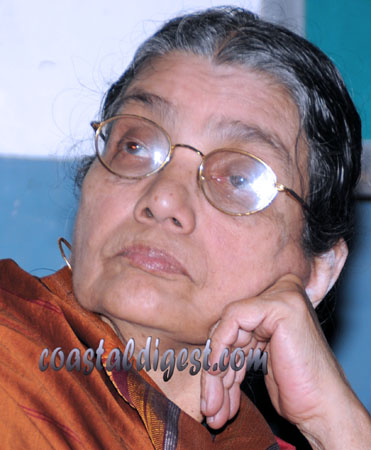
sara

Sara, who had raised her objections during and before the release of the movie, once again reiterated her stand that the movie was based on her successful novel, which narrated the plight of a young Muslim woman who 's life was shattered by the misuse of provisions of Talaq in Islam.

“Altaf Hussain Chokkabettu, the producer of the movie had asked her for the rights of the book. “I had already signed a agreement until 2015 with the National Film Development Corporation that I would not give the story to any visual media,” she told coastaldigest.com

Despite her telling the producer of Byari that he could not use the story, in Kerala, he had declared that his film was based on her book. “He even put up posters in Mangalore saying that the story was mine,” she said. “But when I raised objections he backtracked and, claimed that the story was written by Irfan Chokabettu”.

Sara, has in fact, approached court seeking justice, but had to withdraw since she was 'disillusioned' with the legal system of the country.

“Today lawyers don't take up cases on the basis of who's right or who's wrong. They want to ascertain how influential or financially sound the other party is before taking up one's case. Even otherwise, the judicial process is riddled with inordinate delays. At 75, I was not prepared for the long haul,” says Sara.

“I still have the clippings of his (Altaf) statements published in Malayalam newspapers. I also have a poster of the movie which has my name on it. I had produced them before the court. The court had asked the defendant to produce the book supposedly written by Irfan Chokkabettu,” she said, but insisted she had withdrawn the case since she was not sure of getting justice.

When asked about the marked difference in the climax of her novel and that of the movie, she said: “When you adopt a book to the visual media, you make certain changes. It has happened with all the great works of Kannada literature. It cannot be a mere coincidence that the names of characters of the movie and that of my book are same.”

Sara is also unhappy that fellow-writers did not come out in the open to support her fight against what she called an act of blatant plagiarism. “Of course I am pained by the marked silence of my fellow writers. They should have come out in the open to fight against the injustice. Even in the Karnataka Film Chamber, except Jayamala, no one took up my cause. If this had happened in United States or some other country, people would have reacted strongly,” she says.

When asked how she felt about a debut Beary film getting a top national award, she said: “Awards are not a big thing. The movie was about one of the worst practices in our religion. The portrayal of the evil practice will definitely fetch awards. I won the award for the best story for the same novel when it was made a film in Tamil. So it was quiet expected. And you know how the awards are decided these days. Lot of lobbying and behind-the-scene maneuvering goes into it.”

Reacting to a question if she was feeling betrayed that she had been denied the credit, Mrs. Sara said: “No, not at all. I have already secured awards and accolades for my work. My books have been made the textbook in some universities. I have been bestowed honorary doctorate by three universities in Karnataka. I am saddened by the way he (Altaf) cheated me and went on to claim that he did not even know me.”
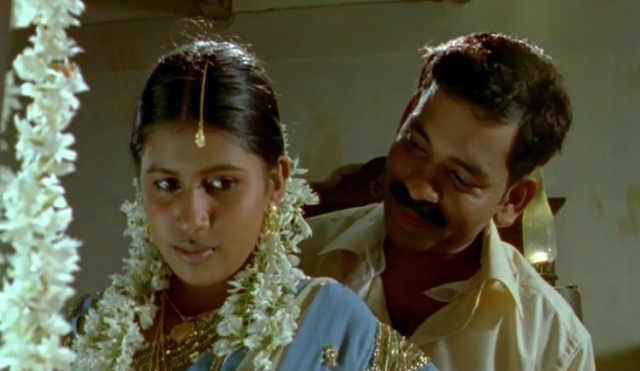
altaf

On the other hand producer Altaf Hussain refuted her claim and said the film was based on Quran and not on anyone's book.

“Just because the names of the characters are same, she cannot claim that the movie is based on her book. The movie has been created based on a real-life event. Our movie does not violate the tenets of Islam, while her book questions the Islamic customs,” he argues.

Altaf reiterated that he did not know Sara Aboobaker until the controversy broke out. “I did not know who this woman was. When I set out on the movie-making mission, I would have naturally spoken to writers in the Beary community. There are eminent writers like Boluvaru, Fakir Mohammed Katpad, Baddur who are well-versed in Beary culture and language. Sara Aboobaker does not belong to beary community. She is a Malayali. Their culture and our culture are different. So, I would not have met her even to get her advice,” he says.

Insisting that he had never spoken to the media in Trissur International Film Festival, nor printed any publicity material with her name on it, Altaf says, “the publicity material submitted by her (Sara) to the court is two years old. But we prepared the first poster only after we got the censor certificate from the concerned authorities. The movie was released in Mangalore on June 9. The only press meet we held in connection with the movie was in Mangalore on June 3.”

When asked if Irfan Chokkabettu's work has been published in the print media, he said: “Irfan is a talented writer. He has got a number of stories with him which are not published anywhere.”

Reacting sharply to Sara's criticism of plagiarism, Altaf said: “It is foolish to say that she withdrew her case because lawyers cheated her. The advancing age is clearily showing in her statements. Now that the film has won national award, she has started to blackmail us once again. But this will not succeed.”




Comments

Add new comment

  • Coastaldigest.com reserves the right to delete or block any comments.
  • Coastaldigset.com is not responsible for its readers’ comments.
  • Comments that are abusive, incendiary or irrelevant are strictly prohibited.
  • Please use a genuine email ID and provide your name to avoid reject.
coastaldigest.com news network
February 5,2026

protestkerala.jpg

Mangaluru: The KSRTC Mangaluru division has rolled back the fare hike on buses operating on the Mangaluru–Kasaragod route following the suspension of toll collection at the Arikkady toll plaza near Kumbala in Kasaragod district.

The fare revision had been implemented after the National Highways Authority of India (NHAI) began toll collection at the Arikkady plaza on NH-66. As a result, fares for ordinary and Rajahamsa services were increased by ₹7 and ₹10, respectively, raising the bus fare from Mangaluru to Kasaragod from ₹81 to ₹88.

Senior Divisional Controller of KSRTC’s Mangaluru division, Rajesh Shetty, said the fares were reduced after toll collection at the Arikkady plaza was stopped. “The tollgate began operations on January 13, and the toll amount was deducted from the FASTag accounts of KSRTC buses operating on the route. Following an order from the central government to suspend toll collection, KSRTC has also withdrawn the additional fare with immediate effect,” he said.

At present, vehicles travelling on the Mangaluru–Kasaragod route pay toll only at the Talapady toll plaza. The toll for light motor vehicles (LMVs) at Talapady is ₹80 for a same-day return, while heavy vehicles, including buses, are charged ₹250. At Arikkady, the toll rates were ₹130 for LMVs (same-day return) and ₹450 for buses.

Protests against Arikkady toll plaza

The Arikkady toll plaza witnessed widespread protests from January 12, the day toll collection commenced. On the second day, an action committee led by Manjeshwar MLA A K M Ashraf launched an indefinite protest at the site. Except for the BJP, leaders and workers of most major political parties participated in the agitation.

On the night of January 14, a large number of protesters gathered at the plaza and vandalised property, following which authorities temporarily suspended toll operations. The BJP later also expressed opposition to the toll plaza and criticised NHAI’s decision. 

Comments

Add new comment

  • Coastaldigest.com reserves the right to delete or block any comments.
  • Coastaldigset.com is not responsible for its readers’ comments.
  • Comments that are abusive, incendiary or irrelevant are strictly prohibited.
  • Please use a genuine email ID and provide your name to avoid reject.
News Network
February 1,2026

Golf.jpg

The coastal city of Mangaluru is gearing up for a major sporting milestone with the launch of a Golf Excellence Academy at the Pilikula Golf Club (PGC), scheduled to open on May 31. The initiative aims to position Mangaluru firmly on India’s national golfing map.

Speaking to reporters on Saturday during PGC’s first-ever floodlit Pro-Am tournament, club captain Manoj Kumar Shetty said the project is being funded by UAE-based philanthropist Michael D’Souza and is currently in the design phase. Experts from leading golf academies across the country are expected to visit Mangaluru to help shape the training programme and infrastructure.

The academy will train 20 young golfers at a time, with a long-term vision of producing national-level players from the region. Until now, PGC relied on an in-house coach, but the recent renovation of the course and the introduction of floodlights have opened new possibilities for expanding the sport.

Shetty said discussions are underway with two reputed coaching academies, whose heads are expected to visit PGC shortly. “A dormitory for trainers is already under construction. We are inviting academies to assess the facilities and suggest changes so we can build a truly world-class Golf Excellence Academy,” he said.

Professional golfer Aryan Roopa Anand noted that the floodlit course would be a game-changer for young players. “Students can now practise after school hours, even up to 8 or 9 pm, without compromising on academics,” he said.

Comments

Add new comment

  • Coastaldigest.com reserves the right to delete or block any comments.
  • Coastaldigset.com is not responsible for its readers’ comments.
  • Comments that are abusive, incendiary or irrelevant are strictly prohibited.
  • Please use a genuine email ID and provide your name to avoid reject.
News Network
January 23,2026

Mangaluru: The Karnataka Government Polytechnic (KPT), Mangaluru, has achieved autonomous status from the All India Council for Technical Education (AICTE), becoming the first government polytechnic in the country to receive such recognition in its 78-year history. The status was granted by AICTE, New Delhi, and subsequently approved by the Karnataka Board of Technical Education in October last year.

Officials said the autonomy was conferred a few months ago. Until recently, AICTE extended autonomous status only to engineering colleges, excluding diploma institutions. However, with a renewed national focus on skill development, several government polytechnics across India have now been granted autonomy.

KPT, the second-largest polytechnic in Karnataka, was established in 1946 with four branches and has since expanded to offer eight diploma programmes, including computer science and polymer technology. The institution is spread across a 19-acre campus.

Ravindra M Keni, the first dean of the institution, told The Times of India that AICTE had proposed autonomous status for polytechnic institutions that are over 25 years old. “Many colleges applied. In the first round, 100 institutions were shortlisted, which was further narrowed down to 15 in the second round. We have already completed one semester after becoming an autonomous institution,” he said. He added that nearly 500 students are admitted annually across eight three-year diploma courses.

Explaining the factors that helped KPT secure autonomy, Keni said the institution has consistently recorded 100 per cent admissions and placements for its graduates. He also noted its strong performance in sports, with the college emerging champions for 12 consecutive years, along with active student participation in NCC and NSS activities.

Autonomous status allows KPT to design industry-oriented curricula, conduct examinations, prepare question papers, and manage academic documentation independently. The institution can also directly collaborate with industries and receive priority funding from AICTE or the Ministry of Education. While academic autonomy has been granted, financial control will continue to rest with the state government.

“There will be separate committees for examinations, question paper setting, boards of studies, and boards of examiners. The institution will now have the freedom to conduct admissions without government notifications and issue its own marks cards,” Keni said, adding that new academic initiatives would be planned after a year of functioning under the autonomous framework.

Comments

Add new comment

  • Coastaldigest.com reserves the right to delete or block any comments.
  • Coastaldigset.com is not responsible for its readers’ comments.
  • Comments that are abusive, incendiary or irrelevant are strictly prohibited.
  • Please use a genuine email ID and provide your name to avoid reject.