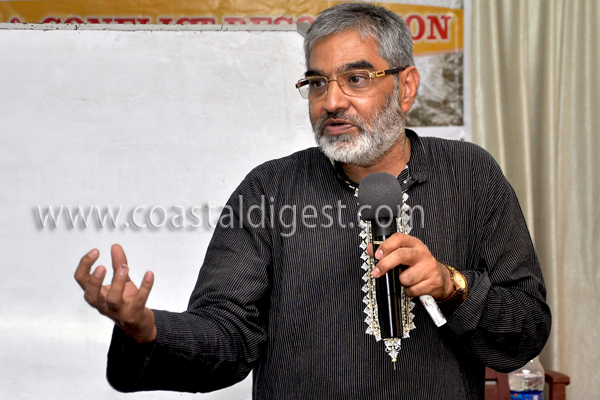
Condemn all forms of communalism: Irfan Engineer

March 28, 2012

Canara2

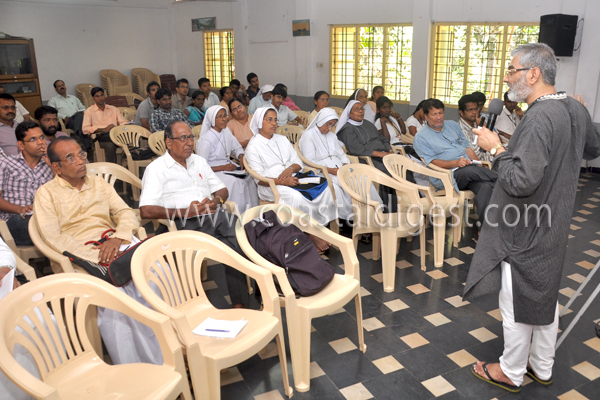
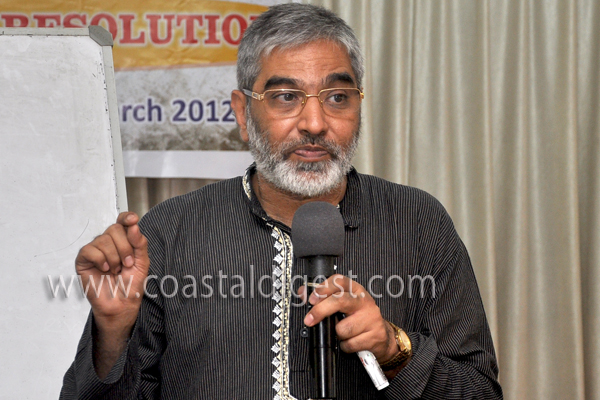
Mangalore, March 28: Communalism is rampant not just in India but in other South Asian countries like Pakistan and Bangladesh too. While condemning communalism, one must condemn the idea of communalism itself and not a particular type of communalism perpetrated by a particular group or religious ideology, said Irfan Engineer, advocate and Director, Institute for Peace Studies and Conflict, Mumbai.

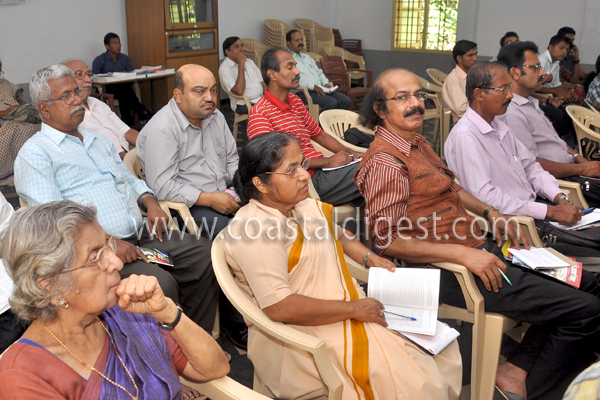
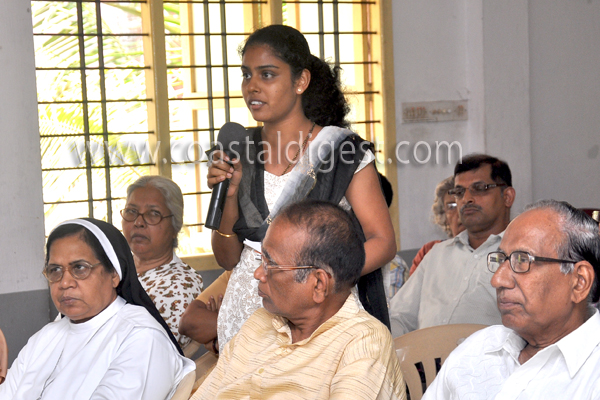
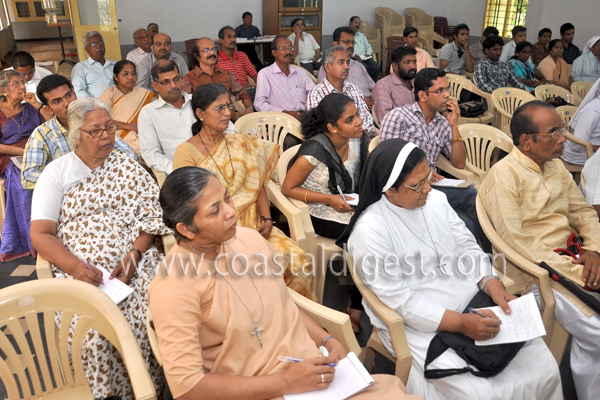
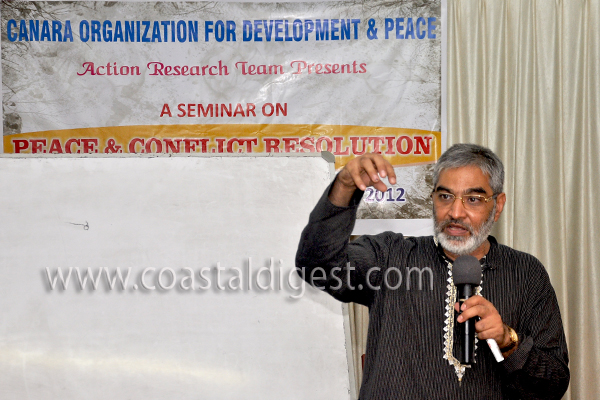
He was speaking at a seminar on Peace and Conflict Resolution organised by Canara Organisation for Development and Peace in Mangalore on Wednesday.

Stating that communalism exists in Pakistan and Bangladesh too, Mr. Engineer said “In Pakistan, the Taliban and Lashkar-e-Toiba are to be blamed for communalism. The rights of minority Hindus are not being protected there. In Bangladesh, I would condemn Jamaat-e-Islami for the communalism existing there. All those political organisations which victimize innocent people anywhere in the world are to be condemned”, he said.

Mr. Engineer also said that although he may not agree with the concept of M F Hussain's controversial painting or Salman Rushdie's controversial writings, he defends their right to say what they want to, as they are exercising the value of liberty that secular constitutions vouch for. “One should have the right to say things about me even if they offend me,” he said.

Shedding light on the concept of 'Hindutva' ideology, Mr. Engineer said that according to its own conceptualizers such as M S Golwalkar, V D Savarkar and others, it is 'a political strategy and has got nothing to do with religion'. He substantiated his claim by citing the tricolor hoisting issue at Eidgah Maidan at Hubli. “Show me one RSS office where the national tricolor is hoisted any day in the year. They have no regard for the tricolor as they are against the Constitution of India as a whole. The BJP which made a hue and cry about the issue then, forgot about it after coming to power,” he said.

Mr. Engineer said that the RSS 'creates' its targets and works accordingly. “If there are no terrorists they will create terrorists so that they get a pretext to attack Muslims. If there is no New Life Church, they will create one. They want New Life to exist. They will finance people to make sure that these things happen. The blast probes in Malegaon and other places have revealed that RSS made its men don Muslim appearances and carried out the bomb blasts. They 'create' Muslim and Christian extremists. They thrive on the idea of playing on emotions and projecting wrong history,” Mr. Engineer claimed.

Talking about communalism in the pre-Independence era, Mr. Engineer said that primarily two types of nationalism concepts emerged at the time to challenge the British imperialism. “On one hand, there was the feudal system that was followed in the country for long which had also traditional and religious affiliations to it. On the other hand, there was the secular inclusive nationalism. The Hindu Maha Sabha and the Muslim League were parties that represented this religious and traditional nationalism and parties such as the Indian National Congress of Gandhiji and Nehru, Dr Ambedkar's Republican Party of India, Bhagat Singh's Hindustan Socialist Republican Association, the Communist Party of India etc proposed secular nationalism. Even today, the former wants to defend their traditions which would mean inequality. However, India as a whole has a history of opposing hierarchy traditions. When people talk about 'Indian Nationalism' why don't they consider Buddhism, Jainism, Basavanna's and Charvaka's teachings? Aren't they part of Indian nationalism too?” Mr. Engineer questioned.

Stressing that there is a need to bring about a change in attitude as far as communalism is concerned, Mr. Engineer said “Although innocents are killed during communal riots, most people do not feel bad about the fact that lives have been lost. They see these losses of lives in the prism of communalism. If a Muslim dies in a communal riot, an average Hindu says that the country is now one terrorist less. A mindset has been created by communal forces which have resulted in people justifying the killings although they feel sorry when they see an innocent human die in a vehicle accident. This attitude and mindset needs to be changed,” he said.
Canara4
Canara1

Canara5

Canara7

Canara6

Canara3

Comments

Add new comment

  • Coastaldigest.com reserves the right to delete or block any comments.
  • Coastaldigset.com is not responsible for its readers’ comments.
  • Comments that are abusive, incendiary or irrelevant are strictly prohibited.
  • Please use a genuine email ID and provide your name to avoid reject.
News Network
February 3,2026

wind.jpg

Dakshina Kannada MP Capt Brijesh Chowta has urged the Centre to give high priority to offshore wind energy generation along the Mangaluru coast, citing its strategic importance to India’s green energy and port-led development goals.

Raising the issue in the Lok Sabha under Rule 377, Chowta said studies by the National Institute of Oceanography have identified the Mangaluru coastline as part of India’s promising offshore wind ‘Zone-2’, covering nearly 6,490 sq km. He noted that the region’s relatively low exposure to cyclones and earthquakes makes it suitable for long-term offshore wind projects and called for its development as a dedicated offshore wind energy zone.

Highlighting the role of New Mangalore Port, Chowta said its modern infrastructure, multiple berths and heavy cargo-handling capacity position it well as a logistics hub for transporting and assembling large wind energy equipment.

He also pointed to the presence of major industrial units such as MRPL, OMPL, UPCL and the Mangaluru SEZ, which could serve as direct buyers of green power through power purchase agreements, improving project viability and speeding up execution.

With Karnataka’s peak power demand crossing 18,000 MW in early 2025, Chowta stressed the need to diversify renewable energy sources. He added that offshore wind projects in the Arabian Sea are strategically safer compared to the cyclone-prone Bay of Bengal.

Calling the project vital to India’s target of 500 GW of renewable energy by 2030, Chowta urged the Ministry of New and Renewable Energy to initiate resource assessments, pilot projects and stakeholder consultations at the earliest.

Comments

Add new comment

  • Coastaldigest.com reserves the right to delete or block any comments.
  • Coastaldigset.com is not responsible for its readers’ comments.
  • Comments that are abusive, incendiary or irrelevant are strictly prohibited.
  • Please use a genuine email ID and provide your name to avoid reject.
News Network
February 1,2026

Bengaluru: The Karnataka High Court has refused to quash an investigation against a WhatsApp group administrator accused of allowing the circulation of obscene and offensive images depicting Hindutva politicians and idols in 2021.

Justice M Nagaprasanna observed that, prima facie, the ingredients of the offence under Section 295A of the Indian Penal Code were made out. “The offence under Section 295A of the IPC is met to every word of its ingredient, albeit prima facie,” the judge said.

The petitioner, Sirajuddin, a resident of Belthangady taluk in Dakshina Kannada district, had challenged the FIR registered against him at the CEN (Cyber, Economics and Narcotics) police station, Mangaluru, for offences under Section 295A of the IPC and Section 67 of the Information Technology Act. Section 295A relates to punishment for deliberate and malicious acts intended to outrage the religious feelings of any class of citizens.

According to the complaint filed by K Jayaraj Salian, also a resident of Belthangady taluk, he received a WhatsApp group link from an unknown source and was added to the group after accessing it. The group reportedly had six administrators and around 250 participants, where obscene and offensive images depicting Hindu deities and certain political figures were allegedly circulated repeatedly.

Sirajuddin was arrested in connection with the case and later released on bail on February 16, 2021. He argued before the court that he was being selectively targeted, while other administrators—including the creator of the group—were neither arrested nor investigated. He also contended that the Magistrate could not have taken cognisance of the offence under Section 295A without prior sanction under Section 196(1) of the CrPC.

Rejecting the argument, Justice Nagaprasanna held that prior sanction is required only at the stage of taking cognisance, and not at the stage of registration of the crime or during investigation.

The judge noted that the State had produced the entire investigation material before the court. “A perusal of the material reveals depictions of Hindu deities in an extraordinarily obscene, demeaning and profane manner. The content is such that its reproduction in a judicial order would itself be inappropriate,” the court said, adding that the material, on its face, had the tendency to outrage religious feelings and disturb communal harmony.

Observing that the case was still at the investigation stage, the court said it could not interdict the probe at this juncture. However, it expressed concern that the investigating officer appeared to have not proceeded uniformly against all administrators. The court clarified that if the investigation revealed the active involvement of any member in permitting the circulation of such content, they must also be proceeded against.

“At this investigative stage, any further observation by this Court would be unnecessary,” the order concluded.

Comments

Add new comment

  • Coastaldigest.com reserves the right to delete or block any comments.
  • Coastaldigset.com is not responsible for its readers’ comments.
  • Comments that are abusive, incendiary or irrelevant are strictly prohibited.
  • Please use a genuine email ID and provide your name to avoid reject.
News Network
February 3,2026

Bengaluru: Following reports of fresh Nipah virus (NiV) cases in West Bengal and heightened vigilance across parts of Southeast Asia, the Karnataka Health Department has placed the state on high alert and activated emergency preparedness protocols.

Health officials said enhanced surveillance measures have been initiated after two healthcare workers in Barasat, West Bengal, tested positive for the virus earlier this month. While no cases have been reported in Karnataka so far, authorities said the state’s past exposure to Nipah outbreaks and high inter-state mobility warranted preventive action.

Officials have directed district health teams to intensify monitoring, particularly at hospitals and points of entry, and to ensure early detection and isolation of suspected cases.

High Mortality Virus with Multiple Transmission Routes

Nipah virus is a zoonotic disease that can spread from animals to humans and has a reported fatality rate ranging between 60 and 75 per cent. Fruit bats, also known as flying foxes, are the natural reservoirs of the virus and can transmit it by contaminating food sources with saliva or urine.

Known modes of transmission include:

•    Contaminated food: Consumption of fruits partially eaten by bats or raw date-palm sap
•    Animal contact: Exposure to infected pigs or other animals
•    Human-to-human transmission: Close contact with body fluids of infected persons, particularly in healthcare settings

Symptoms and Disease Progression

The incubation period typically ranges from 4 to 14 days, though delayed onset has also been reported. Early symptoms often resemble common viral infections, making prompt clinical suspicion critical.

•    Initial symptoms: Fever, headache, body aches, fatigue, sore throat
•    Progressive symptoms: Drowsiness, disorientation, altered mental state
•    Severe stage: Seizures, neck stiffness and acute encephalitis, which can rapidly progress to coma

Public Health Advisory

The Health Department has issued precautionary guidelines urging the public to adopt risk-avoidance practices to prevent any local spillover.

Do’s
•    Wash fruits thoroughly before consumption
•    Drink boiled and cooled water
•    Use protective equipment while handling livestock
•    Maintain strict hand hygiene

Don’ts
•    Avoid fruits found on the ground or showing bite marks
•    Do not consume beverages made from raw tree sap, including toddy
•    Avoid areas with dense bat populations
•    Do not handle sick or dead animals

Preparedness Measures

Officials confirmed that isolation wards are being readied in major government hospitals and that medical staff are being sensitised to identify early warning signs.

“There is no cause for panic, but there is a need for heightened vigilance,” a senior health official said, adding that there is currently no approved vaccine or specific antiviral treatment for Nipah, and care remains largely supportive.

Comments

Add new comment

  • Coastaldigest.com reserves the right to delete or block any comments.
  • Coastaldigset.com is not responsible for its readers’ comments.
  • Comments that are abusive, incendiary or irrelevant are strictly prohibited.
  • Please use a genuine email ID and provide your name to avoid reject.