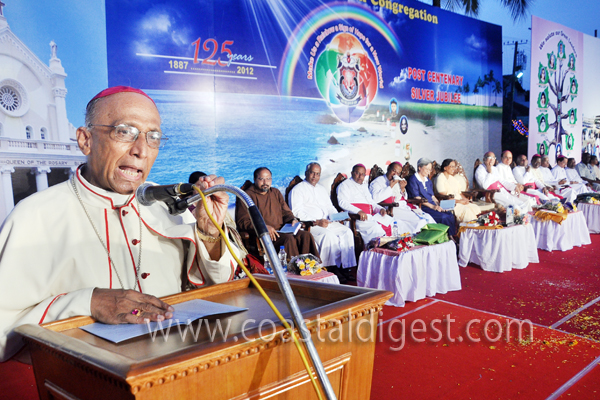
Post-centenary silver jubilee of UFS Congregation held

April 12, 2012

PCSJC1

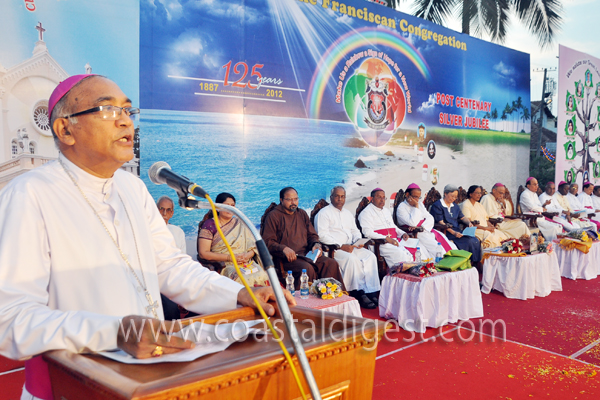
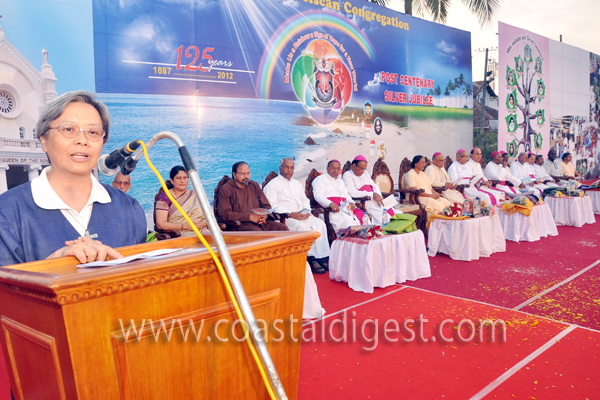
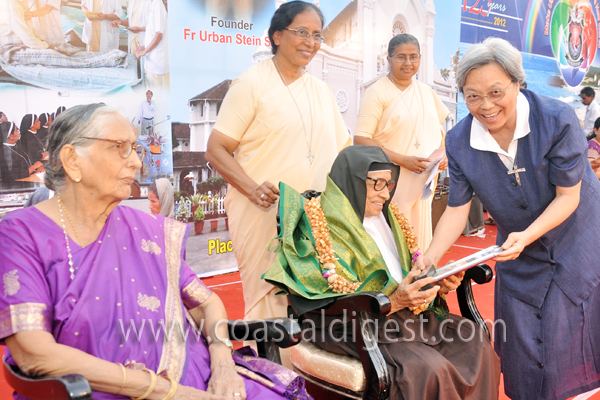
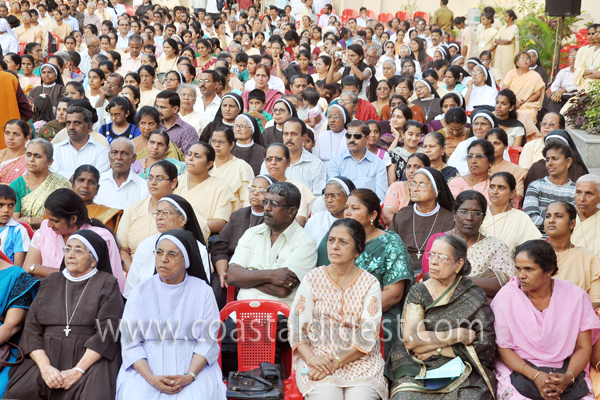
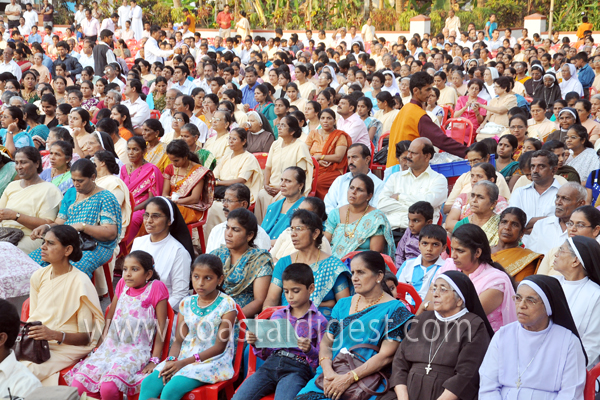
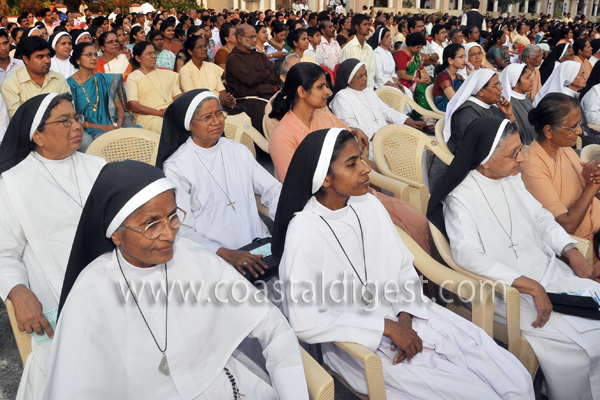
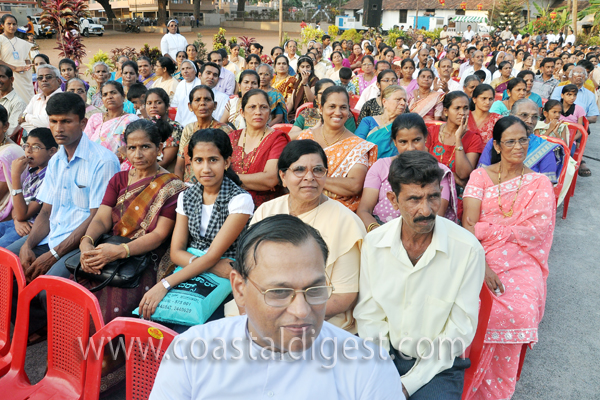
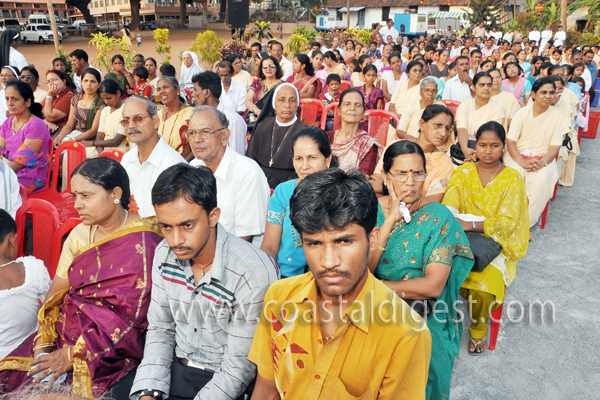
Mangalore, April 12: The Congregation of Ursuline Franciscan Sisters (UFS), which originated in Mangalore at Rosario Cathedral in 1887, celebrated its post-centenary silver jubilee on Thursday.

The congregation which started as a pious association has grown to pontifical height. Today there are more than 128 Convents with 1,100 members. They take up pastoral ministry and run educational, social and vocational centres, orphanages, hostels, homes for the elderly, medical support and so on through 33 dioceses, he said and added that the sisters have opened their houses in rural areas and helped the poorest of the poor.

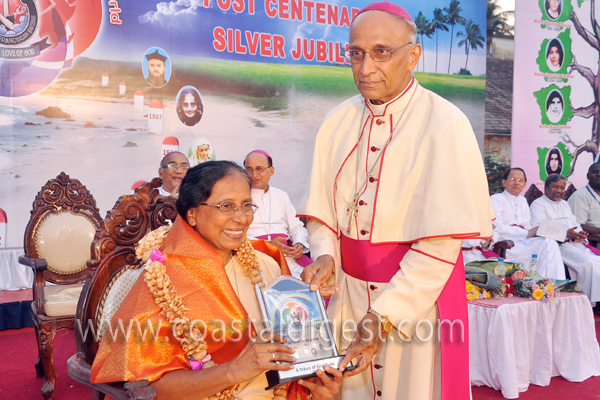
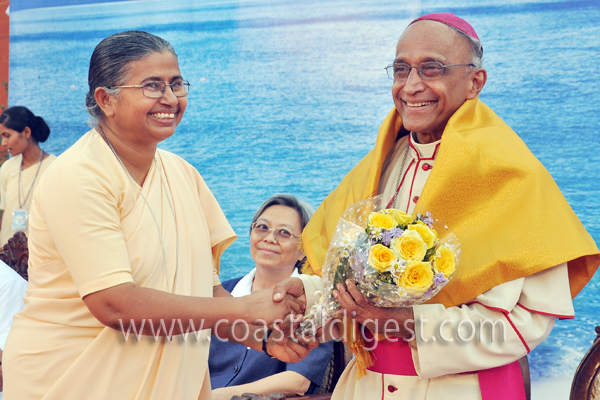
Presiding over the programme, Archbishop of Bangalore Rev Dr Bernard Moras said that though the missionaries have served a lot in the region, they are treated like outsiders.

“This means we have failed some where to be part of the community, state and our country. This is the opportunity to be a part of the suffering of the society and work even more,” he said.

“To be relevant in turbulent times is a real challenge. Do not ask what the society and church can do for you. Instead think what you can do for the world. If an egg is broken from outside life dies, but if it breaks from within a new life begins,” he added.

Superior General of Roman Union of Ursuline Rev Sr Cecilia Wang appreciated the charitable work taken up by the congregation. “You have continued the work of St Angela Merici, St Francis of Assisi, St Ignatius of Loyola and St Ursula,” she said.

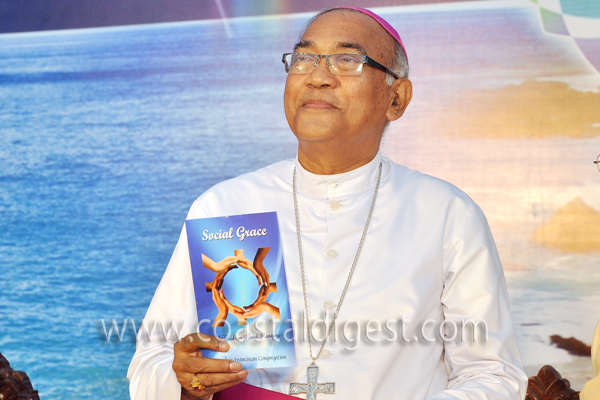
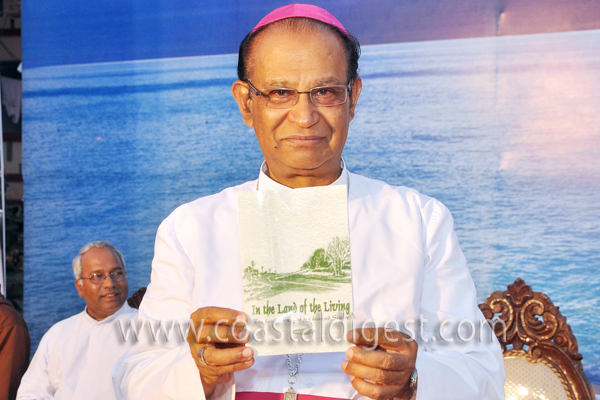
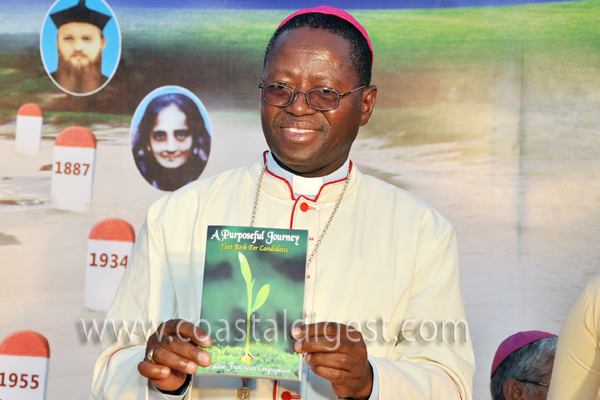
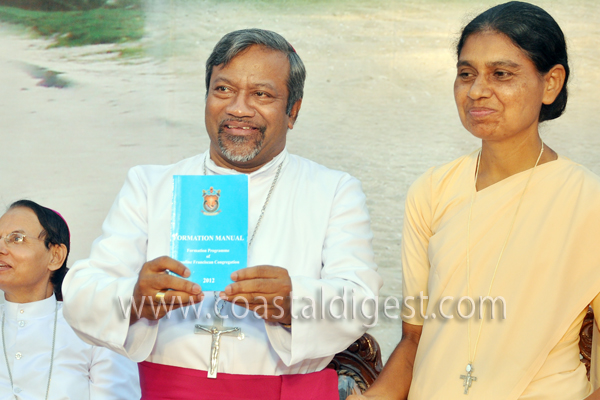
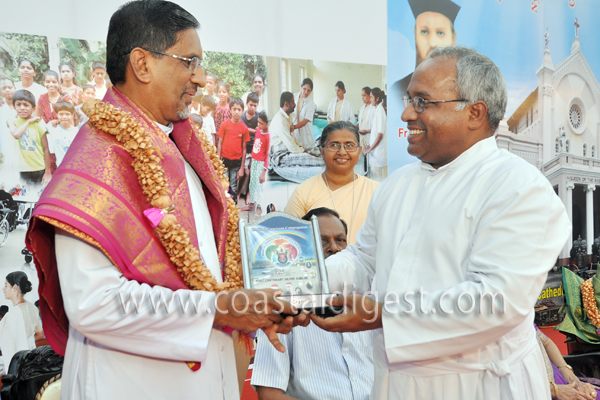
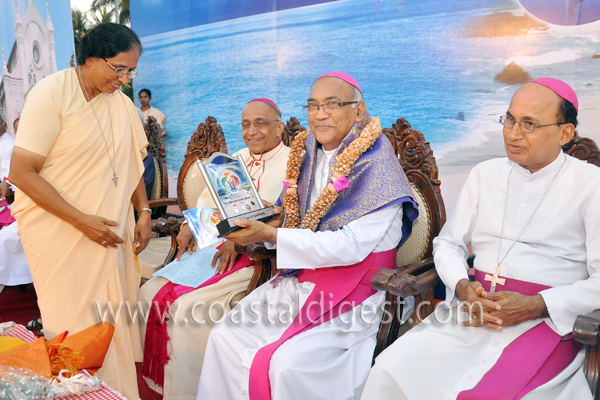
Five books, which are connected with the Ursuline Franciscan Congregation were released on the occasion. The 'Formation Manual' was released by Bishop Peter Machado, 'UFLA Hand book' by Leon from Tanzania, 'In the land of the living,' by Bishop Thomas Vazhapilly, 'Social Grace' by Bishop Aloysius Paul D'Souza, 'A purposeful Journey' by Bishop Rogath Kimario.

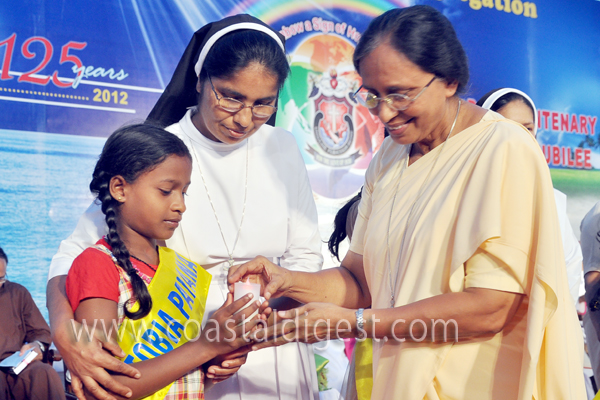
'Tobia Payana' a project to help children was inaugurated by the Congregation Superior General Rev Sr Doreen D'Souza.

A dance drama 'Kannada Nrithya Roopaka', Life Story of St Angela Merici the Founder of the Company of St Ursula in Italy was presented. It was followed by a song, dance and drama show 'Dhonu' (Rainbow) highlighting the frontline ministries of the Ursuline Franciscan Congregation and their future jubilee projects.

A short documentary 'Pilgrimage of Love' which showed the history, life and mission of the Ursuline Franciscan sisters was projected.

Fr Urban Stein motivated a few young ladies of Mangalore region to care for the suffering in the Old Bundar area. In the forefront was Nympha Fernandez, daughter of the Deputy Collector who became the first superior of the order. Initially the order was refereed to as “The company of St Ursula”.

This small dedicated band of local catholic maidens did exemplary work among the down trodden and were often called as the 'Angles of Bundar'.

On April 10,1887 the Association was formally formed and it obtained the seal of an integral religious congregation with its 'Canonical Erection' on May 13, 1934.

PCSJC2

PCSJC3

PCSJC4

PCSJC5

PCSJC6

PCSJC7

PCSJC8

PCSJC9

PCSJC10

PCSJC11

PCSJC12

PCSJC13

PCSJC14

PCSJC15

PCSJC16

PCSJC17

PCSJC18

PCSJC19

PCSJC20

Comments

Add new comment

  • Coastaldigest.com reserves the right to delete or block any comments.
  • Coastaldigset.com is not responsible for its readers’ comments.
  • Comments that are abusive, incendiary or irrelevant are strictly prohibited.
  • Please use a genuine email ID and provide your name to avoid reject.
coastaldigest.com news network
February 5,2026

protestkerala.jpg

Mangaluru: The KSRTC Mangaluru division has rolled back the fare hike on buses operating on the Mangaluru–Kasaragod route following the suspension of toll collection at the Arikkady toll plaza near Kumbala in Kasaragod district.

The fare revision had been implemented after the National Highways Authority of India (NHAI) began toll collection at the Arikkady plaza on NH-66. As a result, fares for ordinary and Rajahamsa services were increased by ₹7 and ₹10, respectively, raising the bus fare from Mangaluru to Kasaragod from ₹81 to ₹88.

Senior Divisional Controller of KSRTC’s Mangaluru division, Rajesh Shetty, said the fares were reduced after toll collection at the Arikkady plaza was stopped. “The tollgate began operations on January 13, and the toll amount was deducted from the FASTag accounts of KSRTC buses operating on the route. Following an order from the central government to suspend toll collection, KSRTC has also withdrawn the additional fare with immediate effect,” he said.

At present, vehicles travelling on the Mangaluru–Kasaragod route pay toll only at the Talapady toll plaza. The toll for light motor vehicles (LMVs) at Talapady is ₹80 for a same-day return, while heavy vehicles, including buses, are charged ₹250. At Arikkady, the toll rates were ₹130 for LMVs (same-day return) and ₹450 for buses.

Protests against Arikkady toll plaza

The Arikkady toll plaza witnessed widespread protests from January 12, the day toll collection commenced. On the second day, an action committee led by Manjeshwar MLA A K M Ashraf launched an indefinite protest at the site. Except for the BJP, leaders and workers of most major political parties participated in the agitation.

On the night of January 14, a large number of protesters gathered at the plaza and vandalised property, following which authorities temporarily suspended toll operations. The BJP later also expressed opposition to the toll plaza and criticised NHAI’s decision. 

Comments

Add new comment

  • Coastaldigest.com reserves the right to delete or block any comments.
  • Coastaldigset.com is not responsible for its readers’ comments.
  • Comments that are abusive, incendiary or irrelevant are strictly prohibited.
  • Please use a genuine email ID and provide your name to avoid reject.
News Network
February 5,2026

In an era where digital distractions are the primary rival to academic excellence, the Karnataka Education Department is taking the fight directly to the living room. As the SSLC (Class 10) annual examinations loom, officials have launched a localized "digital strike" to ensure students aren't losing their competitive edge to scrolling or soap operas.

The 7-to-9 Lockdown

The department has issued a formal directive urging—and in some cases, enforcing via home visits—a total blackout of mobile phones and television sets between 7:00 PM and 9:00 PM. This two-hour window is being designated as "sacred study time" across the state until the examinations conclude on April 2.

Key Pillars of the Initiative:

•    Doorstep Advocacy: Teachers are transitioning from classrooms to living rooms, meeting parents to explain the psychological benefits of a distraction-free environment.

•    Parental Accountability: The campaign shifts the burden of discipline from the student to the household, asking parents to lead by example and switch off their own devices.

•    The Timeline: The focus remains sharp on the upcoming exam block, scheduled from March 18 to April 2.

"The objective is simple: uninterrupted focus. We are reclaiming the evening hours for the students, ensuring their environment is as prepared as their minds," stated a senior department official.

Student vs. Reality

While the student community has largely welcomed the "forced focus"—with many admitting they lack the willpower to ignore notifications—the move has sparked a debate on enforceability. Without a "TV Police," the success of this initiative rests entirely on the shoulders of parents and the persuasive power of visiting educators.

Comments

Add new comment

  • Coastaldigest.com reserves the right to delete or block any comments.
  • Coastaldigset.com is not responsible for its readers’ comments.
  • Comments that are abusive, incendiary or irrelevant are strictly prohibited.
  • Please use a genuine email ID and provide your name to avoid reject.
News Network
January 23,2026

Mangaluru: The Karnataka Government Polytechnic (KPT), Mangaluru, has achieved autonomous status from the All India Council for Technical Education (AICTE), becoming the first government polytechnic in the country to receive such recognition in its 78-year history. The status was granted by AICTE, New Delhi, and subsequently approved by the Karnataka Board of Technical Education in October last year.

Officials said the autonomy was conferred a few months ago. Until recently, AICTE extended autonomous status only to engineering colleges, excluding diploma institutions. However, with a renewed national focus on skill development, several government polytechnics across India have now been granted autonomy.

KPT, the second-largest polytechnic in Karnataka, was established in 1946 with four branches and has since expanded to offer eight diploma programmes, including computer science and polymer technology. The institution is spread across a 19-acre campus.

Ravindra M Keni, the first dean of the institution, told The Times of India that AICTE had proposed autonomous status for polytechnic institutions that are over 25 years old. “Many colleges applied. In the first round, 100 institutions were shortlisted, which was further narrowed down to 15 in the second round. We have already completed one semester after becoming an autonomous institution,” he said. He added that nearly 500 students are admitted annually across eight three-year diploma courses.

Explaining the factors that helped KPT secure autonomy, Keni said the institution has consistently recorded 100 per cent admissions and placements for its graduates. He also noted its strong performance in sports, with the college emerging champions for 12 consecutive years, along with active student participation in NCC and NSS activities.

Autonomous status allows KPT to design industry-oriented curricula, conduct examinations, prepare question papers, and manage academic documentation independently. The institution can also directly collaborate with industries and receive priority funding from AICTE or the Ministry of Education. While academic autonomy has been granted, financial control will continue to rest with the state government.

“There will be separate committees for examinations, question paper setting, boards of studies, and boards of examiners. The institution will now have the freedom to conduct admissions without government notifications and issue its own marks cards,” Keni said, adding that new academic initiatives would be planned after a year of functioning under the autonomous framework.

Comments

Add new comment

  • Coastaldigest.com reserves the right to delete or block any comments.
  • Coastaldigset.com is not responsible for its readers’ comments.
  • Comments that are abusive, incendiary or irrelevant are strictly prohibited.
  • Please use a genuine email ID and provide your name to avoid reject.