



Manto, Gandhi always spoke truth'

[email protected] (Deccan Herald, Photos by Ahmed Anwar )
May 12, 2012

journ1

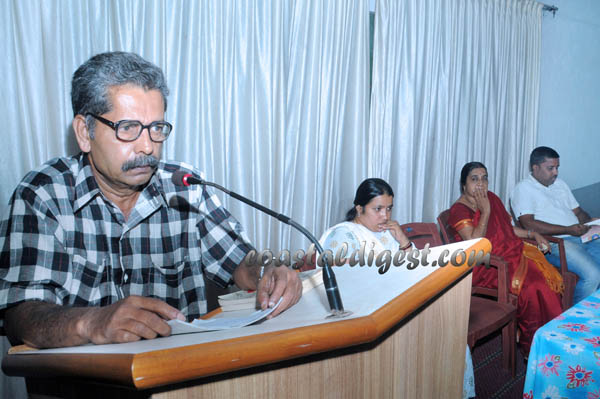
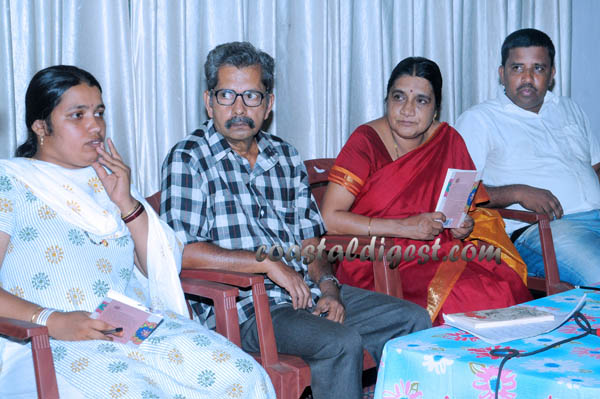
Mangalore, May 12: Journalist' Study Centre Mangalore organized a talk on writer Saadat Hasan Manto and held deliberations on journalist B M Bashir's book 'Angaiyalli Akasha,' in Mangalore on Friday.

Speaking about Saadat Hasan Manto, thinker G Rajeshekar said that Manto brought out through his writings the failure and Shortcomings of the administration of his time.

Comparing Manto and Mahatma Gandhi, Rajashekar said that while Gandhi did not seek power, Manto was not governed by popularity or readership. “Both never backed out from speaking out truth, which was unpleasant,” he said.

Born on May 11, 1912, he was an Urdu short-story writer of the twentieth century of Kashmiri ancestry. He was a journalist, critic and film writer. He worked for All India Radio during World War II and was a successful screen-writer in Bombay before moving to Pakistan during Partition of India. During his controversial two decade career, Manto published 22 collections of stories, seven collections of radio plays, three collections of essays, and a novel. He is best known for his short stories –over 250 in two decades, many of which have been enacted in plays and films.

He is best known for his short stories, 'BU' (Odour), 'Khol Do' (open It), 'Thanda Gosht' (Cold Meat), and his magnum opus, 'Toba Tek Singh'.

Speaking about life of Manto, Rajshekar said that Manto was tried for obscenity half-a-dozen times, thrice before 1947 and thrice after 1947 in Pakistan, but was never convicted.

“Manto's views were modern because he lived in big cities. He reflected and chronicled the madness during partition and after partition,'' he said adding that though Manto had carved a niche for himself in Bollywood, his films like Chal Chal Re Naujawan and Mirza Ghalib did not taste box office success. “Manto had to leave India and Mumbai and had to settle in Lahore, where he lived without friends. Simultaneously, he had embarked on a journey of self-destruction. He soon fell victim of liver cirrhosis due to heavy drinking and succumbed to the same at the age of 43,” he recalled.

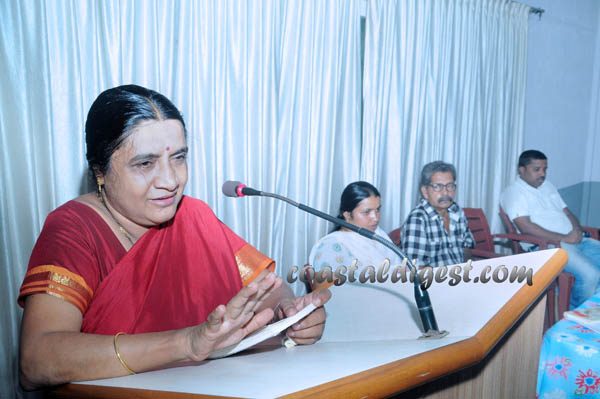
Earlier speaking about B M Bashir's book 'Angaiyalli Akasha,' writer Bhuvaneshwari Hegde, reading out short stories from the book, called it a flow of poetry. “Each of the stories in the book are food for thought and each of the story are never detached from human emotions like compassion, love and affection etc.
centre1

journ2


Comments

Add new comment

  • Coastaldigest.com reserves the right to delete or block any comments.
  • Coastaldigset.com is not responsible for its readers’ comments.
  • Comments that are abusive, incendiary or irrelevant are strictly prohibited.
  • Please use a genuine email ID and provide your name to avoid reject.
News Network
February 1,2026

Bengaluru: Karnataka Deputy Chief Minister D K Shivakumar on Sunday criticised the Union Budget presented by Finance Minister Nirmala Sitharaman, claiming it offered no tangible benefit to the state.

Though he said he was yet to study the budget in detail, Shivakumar asserted that Karnataka had gained little from it. “There is no benefit for our state from the central budget. I was observing it. They have now named a programme after Mahatma Gandhi, after repealing the MGNREGA Act that was named after him,” he said.

Speaking to reporters here, the Deputy Chief Minister demanded the restoration of MGNREGA, and made it clear that the newly enacted rural employment scheme — VB-G RAM G — which proposes a 60:40 fund-sharing formula between the Centre and the states, would not be implemented in Karnataka.

“I don’t see any major share for our state in this budget,” he added.

Shivakumar, who also holds charge of Bengaluru development, said there were high expectations for the city from the Union Budget. “The Prime Minister calls Bengaluru a ‘global city’, but what has the Centre done for it?” he asked.

He also drew attention to the problems faced by sugar factories, particularly those in the cooperative sector, alleging a lack of timely decisions and support from the central government.

Noting that the Centre has the authority to fix the minimum support price (MSP) for agricultural produce, Shivakumar said the Union government must take concrete steps to protect farmers’ interests.

Comments

Add new comment

  • Coastaldigest.com reserves the right to delete or block any comments.
  • Coastaldigset.com is not responsible for its readers’ comments.
  • Comments that are abusive, incendiary or irrelevant are strictly prohibited.
  • Please use a genuine email ID and provide your name to avoid reject.
News Network
February 3,2026

Bengaluru: Following reports of fresh Nipah virus (NiV) cases in West Bengal and heightened vigilance across parts of Southeast Asia, the Karnataka Health Department has placed the state on high alert and activated emergency preparedness protocols.

Health officials said enhanced surveillance measures have been initiated after two healthcare workers in Barasat, West Bengal, tested positive for the virus earlier this month. While no cases have been reported in Karnataka so far, authorities said the state’s past exposure to Nipah outbreaks and high inter-state mobility warranted preventive action.

Officials have directed district health teams to intensify monitoring, particularly at hospitals and points of entry, and to ensure early detection and isolation of suspected cases.

High Mortality Virus with Multiple Transmission Routes

Nipah virus is a zoonotic disease that can spread from animals to humans and has a reported fatality rate ranging between 60 and 75 per cent. Fruit bats, also known as flying foxes, are the natural reservoirs of the virus and can transmit it by contaminating food sources with saliva or urine.

Known modes of transmission include:

•    Contaminated food: Consumption of fruits partially eaten by bats or raw date-palm sap
•    Animal contact: Exposure to infected pigs or other animals
•    Human-to-human transmission: Close contact with body fluids of infected persons, particularly in healthcare settings

Symptoms and Disease Progression

The incubation period typically ranges from 4 to 14 days, though delayed onset has also been reported. Early symptoms often resemble common viral infections, making prompt clinical suspicion critical.

•    Initial symptoms: Fever, headache, body aches, fatigue, sore throat
•    Progressive symptoms: Drowsiness, disorientation, altered mental state
•    Severe stage: Seizures, neck stiffness and acute encephalitis, which can rapidly progress to coma

Public Health Advisory

The Health Department has issued precautionary guidelines urging the public to adopt risk-avoidance practices to prevent any local spillover.

Do’s
•    Wash fruits thoroughly before consumption
•    Drink boiled and cooled water
•    Use protective equipment while handling livestock
•    Maintain strict hand hygiene

Don’ts
•    Avoid fruits found on the ground or showing bite marks
•    Do not consume beverages made from raw tree sap, including toddy
•    Avoid areas with dense bat populations
•    Do not handle sick or dead animals

Preparedness Measures

Officials confirmed that isolation wards are being readied in major government hospitals and that medical staff are being sensitised to identify early warning signs.

“There is no cause for panic, but there is a need for heightened vigilance,” a senior health official said, adding that there is currently no approved vaccine or specific antiviral treatment for Nipah, and care remains largely supportive.

Comments

Add new comment

  • Coastaldigest.com reserves the right to delete or block any comments.
  • Coastaldigset.com is not responsible for its readers’ comments.
  • Comments that are abusive, incendiary or irrelevant are strictly prohibited.
  • Please use a genuine email ID and provide your name to avoid reject.
