



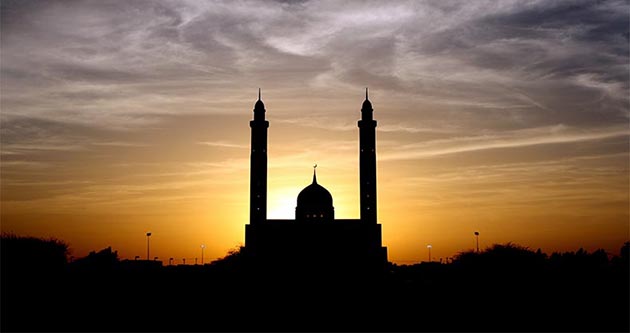
‘Already exhausted with religious places’: Kerala HC denies permission for new masjid

News Network
August 26, 2022

kerrala.jpg

Kochi, Aug 26: The Kerala High Court on Friday denied permission to construct a mosque in a locality that has many mosques, observing that the state already has a large number of religious structures and their ratio to the population is very high.

Justice PV Kunhikrishnan opined that Kerala, that is termed as 'God's own country', is crammed full of religious places.

"Because of the peculiar geographical situation of Kerala, it is known as 'God's own country'. But we are exhausted with religious places and prayer halls and we are not in a position to allow any new religious places and prayer halls except in the rarest of rare cases," he said.

The court observed that even though mosques are important to the Muslim community, it is not necessary, as per the Holy Quran, that there be a mosque in every nook and cranny.

"The verses of the Holy Quran clearly highlight the importance of he mosque to the Muslim community. But it is not stated in the above verses of the Holy Quran that a mosque is necessary in every nook and corner.... It is not stated in the 'Hadis' or in the Holy Quran that mosque is to be situated adjacent to the house of every Muslim community member. Distance is not the criteria, but reaching the mosque is important," it said.

The court also referred to a study on religious structures, based on the 2011 Census, which it termed as "alarming" as it said that Kerala has 10 times the number of religious structures as villages and 3.5 times the number of hospitals.

"Kerala is exhausted with religious institutions and prayer halls... If every devotee ... Hindu, Christian, Muslim, Jew, Parsi, etc. starts to construct religious places and prayer halls near their residence, the state will face serious consequence including communal disharmony. In this case, the intelligence report and the police report says that if the present conversion of the commercial building to a religious prayer hall is allowed, there is chance for communal disharmony. It is a sensitive issue," it noted.

In the instant case, since 36 mosques were existing within the vicinity in question, the court held that there was no need of another mosque in that vicinity because the adherents of Islam can go to other nearby mosques, especially considering the fact that most citizens have access to some kind of vehicle or public transportation.

"It is true that Article 26(a) of the Constitution of India states that subject to the public order, morality and health, every religious denomination or any section thereof shall have the right to establish and maintain institutions for religious and charitable purposes. That does not mean that they can construct religious places in every nook and corner of the country. Kerala is a very small state," it said.

Justice Kunhikrishnan also referred to a movie song by acclaimed poet, late Vayalar Ramavarma which speaks of how man created religions, religion created God, and together they divided the world and humanity.

The verdict was given on a petition seeking to change a commercial building to a Muslim place of worship so as to enable Muslims in the vicinity to access a mosque to offer prayers.

The District Collector considered the request and denied it, based on reports of the district police chief who noted that there are about 36 mosques situated within 5 kilometre radius from the existing commercial building of the petitioner.

This prompted the petitioner to approach the High Court.

The court went through the 'The Manual of guidelines to prevent and control communal disturbance and to promote communal harmony' issued by the state, via a Government Order, and found that even for a change of occupancy, the permission from district authorities is necessary.

In the present case, the court found no reason to interfere with the decision of the state authorities and dismissed the petition.

It then asked to issue the following directions to the state government and police authorities, including, that the Kerala Chief Secretary and the state police chief shall issue necessary orders/circulars directing all the officers concerned to see that there is no illegal functioning of any religious places and prayer halls without obtaining permission from the competent authorities as per the Manual of Guidelines.

If any such religious place or prayer hall is functioning without necessary permission, they should take necessary steps to close down the same forthwith, it said.

Besides, the court said that it should be clearly mentioned that the distance to the nearest similar religious place/prayer hall is one of the criteria while considering the application for religious places and prayer halls and also directed the Chief Secretary to issue a separate circular/order prohibiting change of category of a building to a religious place/prayer hall, except in the rarest of rare case, and that also only after getting report from the police and intelligence, ascertaining the ground realities of that particular place.


Comments

Add new comment

  • Coastaldigest.com reserves the right to delete or block any comments.
  • Coastaldigset.com is not responsible for its readers’ comments.
  • Comments that are abusive, incendiary or irrelevant are strictly prohibited.
  • Please use a genuine email ID and provide your name to avoid reject.
News Network
February 1,2026

Bengaluru: The Karnataka High Court has refused to quash an investigation against a WhatsApp group administrator accused of allowing the circulation of obscene and offensive images depicting Hindutva politicians and idols in 2021.

Justice M Nagaprasanna observed that, prima facie, the ingredients of the offence under Section 295A of the Indian Penal Code were made out. “The offence under Section 295A of the IPC is met to every word of its ingredient, albeit prima facie,” the judge said.

The petitioner, Sirajuddin, a resident of Belthangady taluk in Dakshina Kannada district, had challenged the FIR registered against him at the CEN (Cyber, Economics and Narcotics) police station, Mangaluru, for offences under Section 295A of the IPC and Section 67 of the Information Technology Act. Section 295A relates to punishment for deliberate and malicious acts intended to outrage the religious feelings of any class of citizens.

According to the complaint filed by K Jayaraj Salian, also a resident of Belthangady taluk, he received a WhatsApp group link from an unknown source and was added to the group after accessing it. The group reportedly had six administrators and around 250 participants, where obscene and offensive images depicting Hindu deities and certain political figures were allegedly circulated repeatedly.

Sirajuddin was arrested in connection with the case and later released on bail on February 16, 2021. He argued before the court that he was being selectively targeted, while other administrators—including the creator of the group—were neither arrested nor investigated. He also contended that the Magistrate could not have taken cognisance of the offence under Section 295A without prior sanction under Section 196(1) of the CrPC.

Rejecting the argument, Justice Nagaprasanna held that prior sanction is required only at the stage of taking cognisance, and not at the stage of registration of the crime or during investigation.

The judge noted that the State had produced the entire investigation material before the court. “A perusal of the material reveals depictions of Hindu deities in an extraordinarily obscene, demeaning and profane manner. The content is such that its reproduction in a judicial order would itself be inappropriate,” the court said, adding that the material, on its face, had the tendency to outrage religious feelings and disturb communal harmony.

Observing that the case was still at the investigation stage, the court said it could not interdict the probe at this juncture. However, it expressed concern that the investigating officer appeared to have not proceeded uniformly against all administrators. The court clarified that if the investigation revealed the active involvement of any member in permitting the circulation of such content, they must also be proceeded against.

“At this investigative stage, any further observation by this Court would be unnecessary,” the order concluded.

Comments

Add new comment

  • Coastaldigest.com reserves the right to delete or block any comments.
  • Coastaldigset.com is not responsible for its readers’ comments.
  • Comments that are abusive, incendiary or irrelevant are strictly prohibited.
  • Please use a genuine email ID and provide your name to avoid reject.
News Network
January 31,2026

Roy.jpg

Bengaluru: The shooting incident involving CJ Roy, founder of the Confident Group, has once again put the spotlight on a businessman whose life has swung between flamboyant global success and persistent controversy at home.

Though Roy’s business interests extended across continents, his roots lay firmly in Karnataka. An alumnus of Christ School in Bengaluru, he later moved to Tumakuru to pursue an engineering degree. Those familiar with his early years describe him as intensely ambitious, beginning his career as a salesman at a small electronics firm dealing in computers.

Roy’s entry into large-scale real estate came through the Crystal Group, where he worked closely with Latha Namboothiri and rose from manager to director. However, the launch of the Confident Group in 2005 was clouded by industry speculation. Insiders speak of a fallout involving alleged “benami” properties and claims of deception that ultimately led to his independent venture—an episode Roy spent years trying to distance himself from, according to associates.

A tale of two cities

Roy’s professional trajectory diverged sharply across geographies.

In Dubai, he built a reputation as a bold and efficient developer, completing massive luxury residential projects in record time—some reportedly within 11 months. His rapid project delivery and lavish lifestyle in the Emirates earned him admiration and visibility in the real estate sector.

In Bengaluru, however, his image remained far more fractured. Sources say Roy stayed away from the city for several years amid disputes over unpaid dues to vendors and suppliers. Several projects were allegedly stalled, with accusations of unfulfilled commitments to cement and steel suppliers continuing to follow him.

Roy’s return to Bengaluru’s business and social circles began around 2018, marked by a conscious attempt at rebranding. His appointment as Honorary Consul of the Slovak Republic added diplomatic legitimacy, which he complemented with visible CSR initiatives, including ambulance donations and high-profile charity events.

Heavy police presence in Langford Town

Following the incident, police personnel from the Central division were deployed outside the Confident Group building in Langford Town, which also houses the Slovak Honorary Consulate in Bengaluru.

The otherwise busy premises near Hosur Road wore a deserted look on Friday, reflecting the shock and uncertainty that followed the tragedy.

Comments

Add new comment

  • Coastaldigest.com reserves the right to delete or block any comments.
  • Coastaldigset.com is not responsible for its readers’ comments.
  • Comments that are abusive, incendiary or irrelevant are strictly prohibited.
  • Please use a genuine email ID and provide your name to avoid reject.
News Network
February 4,2026

Mangaluru: Urban local bodies and gram panchayats should make the use of Kannada on signboards mandatory while issuing trade licences to commercial establishments, Dakshina Kannada Deputy Commissioner Darshan HV said. He also called for regular inspections to ensure compliance.

Presiding over the District Kannada Awareness Committee meeting at the deputy commissioner’s office, Darshan said the city corporation would be directed to ensure that shops operating in malls prominently display their names in Kannada. “All commercial establishments, including shops, companies, offices and hotels, must mandatorily display their names in Kannada on signboards,” he said.

The deputy commissioner added that the National Highways Authority of India (NHAI) would be instructed to include Kannada on signboards along national highways. Banks, he said, would be directed through committee meetings to provide application forms in Kannada.

“Even if English-medium schools and colleges impart education in English, their signboards must display the institution’s name in Kannada. Steps will also be taken to ensure that private buses display place names in Kannada,” Darshan said.

During the meeting, committee members raised concerns over the closure of Kannada-medium schools in rural areas due to a shortage of teachers and stressed the need for immediate corrective measures. They also pointed out that several industries employ workers from other states while overlooking local candidates.

Members further demanded that nationalised banks provide deposit and withdrawal slips in Kannada. It was brought to the deputy commissioner’s notice that the presence of staff without knowledge of Kannada in rural branches of nationalised banks is causing hardship to local customers.

Meanwhile, MP Srinath, president of the District Kannada Sahitya Parishat, urged the district administration to allot land for the construction of a district Kannada Bhavana in Mangaluru.

Comments

Add new comment

  • Coastaldigest.com reserves the right to delete or block any comments.
  • Coastaldigset.com is not responsible for its readers’ comments.
  • Comments that are abusive, incendiary or irrelevant are strictly prohibited.
  • Please use a genuine email ID and provide your name to avoid reject.