



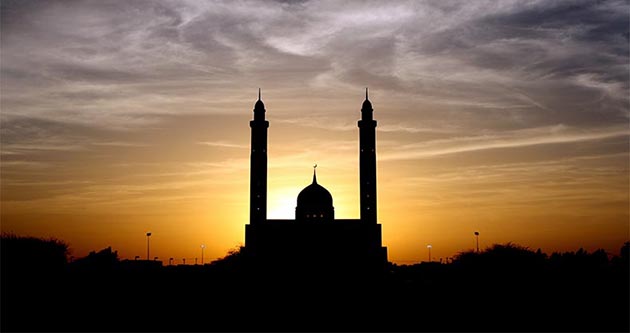
‘Already exhausted with religious places’: Kerala HC denies permission for new masjid

News Network
August 26, 2022

kerrala.jpg

Kochi, Aug 26: The Kerala High Court on Friday denied permission to construct a mosque in a locality that has many mosques, observing that the state already has a large number of religious structures and their ratio to the population is very high.

Justice PV Kunhikrishnan opined that Kerala, that is termed as 'God's own country', is crammed full of religious places.

"Because of the peculiar geographical situation of Kerala, it is known as 'God's own country'. But we are exhausted with religious places and prayer halls and we are not in a position to allow any new religious places and prayer halls except in the rarest of rare cases," he said.

The court observed that even though mosques are important to the Muslim community, it is not necessary, as per the Holy Quran, that there be a mosque in every nook and cranny.

"The verses of the Holy Quran clearly highlight the importance of he mosque to the Muslim community. But it is not stated in the above verses of the Holy Quran that a mosque is necessary in every nook and corner.... It is not stated in the 'Hadis' or in the Holy Quran that mosque is to be situated adjacent to the house of every Muslim community member. Distance is not the criteria, but reaching the mosque is important," it said.

The court also referred to a study on religious structures, based on the 2011 Census, which it termed as "alarming" as it said that Kerala has 10 times the number of religious structures as villages and 3.5 times the number of hospitals.

"Kerala is exhausted with religious institutions and prayer halls... If every devotee ... Hindu, Christian, Muslim, Jew, Parsi, etc. starts to construct religious places and prayer halls near their residence, the state will face serious consequence including communal disharmony. In this case, the intelligence report and the police report says that if the present conversion of the commercial building to a religious prayer hall is allowed, there is chance for communal disharmony. It is a sensitive issue," it noted.

In the instant case, since 36 mosques were existing within the vicinity in question, the court held that there was no need of another mosque in that vicinity because the adherents of Islam can go to other nearby mosques, especially considering the fact that most citizens have access to some kind of vehicle or public transportation.

"It is true that Article 26(a) of the Constitution of India states that subject to the public order, morality and health, every religious denomination or any section thereof shall have the right to establish and maintain institutions for religious and charitable purposes. That does not mean that they can construct religious places in every nook and corner of the country. Kerala is a very small state," it said.

Justice Kunhikrishnan also referred to a movie song by acclaimed poet, late Vayalar Ramavarma which speaks of how man created religions, religion created God, and together they divided the world and humanity.

The verdict was given on a petition seeking to change a commercial building to a Muslim place of worship so as to enable Muslims in the vicinity to access a mosque to offer prayers.

The District Collector considered the request and denied it, based on reports of the district police chief who noted that there are about 36 mosques situated within 5 kilometre radius from the existing commercial building of the petitioner.

This prompted the petitioner to approach the High Court.

The court went through the 'The Manual of guidelines to prevent and control communal disturbance and to promote communal harmony' issued by the state, via a Government Order, and found that even for a change of occupancy, the permission from district authorities is necessary.

In the present case, the court found no reason to interfere with the decision of the state authorities and dismissed the petition.

It then asked to issue the following directions to the state government and police authorities, including, that the Kerala Chief Secretary and the state police chief shall issue necessary orders/circulars directing all the officers concerned to see that there is no illegal functioning of any religious places and prayer halls without obtaining permission from the competent authorities as per the Manual of Guidelines.

If any such religious place or prayer hall is functioning without necessary permission, they should take necessary steps to close down the same forthwith, it said.

Besides, the court said that it should be clearly mentioned that the distance to the nearest similar religious place/prayer hall is one of the criteria while considering the application for religious places and prayer halls and also directed the Chief Secretary to issue a separate circular/order prohibiting change of category of a building to a religious place/prayer hall, except in the rarest of rare case, and that also only after getting report from the police and intelligence, ascertaining the ground realities of that particular place.


Comments

Add new comment

  • Coastaldigest.com reserves the right to delete or block any comments.
  • Coastaldigset.com is not responsible for its readers’ comments.
  • Comments that are abusive, incendiary or irrelevant are strictly prohibited.
  • Please use a genuine email ID and provide your name to avoid reject.
News Network
February 3,2026

Bengaluru: Following reports of fresh Nipah virus (NiV) cases in West Bengal and heightened vigilance across parts of Southeast Asia, the Karnataka Health Department has placed the state on high alert and activated emergency preparedness protocols.

Health officials said enhanced surveillance measures have been initiated after two healthcare workers in Barasat, West Bengal, tested positive for the virus earlier this month. While no cases have been reported in Karnataka so far, authorities said the state’s past exposure to Nipah outbreaks and high inter-state mobility warranted preventive action.

Officials have directed district health teams to intensify monitoring, particularly at hospitals and points of entry, and to ensure early detection and isolation of suspected cases.

High Mortality Virus with Multiple Transmission Routes

Nipah virus is a zoonotic disease that can spread from animals to humans and has a reported fatality rate ranging between 60 and 75 per cent. Fruit bats, also known as flying foxes, are the natural reservoirs of the virus and can transmit it by contaminating food sources with saliva or urine.

Known modes of transmission include:

•    Contaminated food: Consumption of fruits partially eaten by bats or raw date-palm sap
•    Animal contact: Exposure to infected pigs or other animals
•    Human-to-human transmission: Close contact with body fluids of infected persons, particularly in healthcare settings

Symptoms and Disease Progression

The incubation period typically ranges from 4 to 14 days, though delayed onset has also been reported. Early symptoms often resemble common viral infections, making prompt clinical suspicion critical.

•    Initial symptoms: Fever, headache, body aches, fatigue, sore throat
•    Progressive symptoms: Drowsiness, disorientation, altered mental state
•    Severe stage: Seizures, neck stiffness and acute encephalitis, which can rapidly progress to coma

Public Health Advisory

The Health Department has issued precautionary guidelines urging the public to adopt risk-avoidance practices to prevent any local spillover.

Do’s
•    Wash fruits thoroughly before consumption
•    Drink boiled and cooled water
•    Use protective equipment while handling livestock
•    Maintain strict hand hygiene

Don’ts
•    Avoid fruits found on the ground or showing bite marks
•    Do not consume beverages made from raw tree sap, including toddy
•    Avoid areas with dense bat populations
•    Do not handle sick or dead animals

Preparedness Measures

Officials confirmed that isolation wards are being readied in major government hospitals and that medical staff are being sensitised to identify early warning signs.

“There is no cause for panic, but there is a need for heightened vigilance,” a senior health official said, adding that there is currently no approved vaccine or specific antiviral treatment for Nipah, and care remains largely supportive.

Comments

Add new comment

  • Coastaldigest.com reserves the right to delete or block any comments.
  • Coastaldigset.com is not responsible for its readers’ comments.
  • Comments that are abusive, incendiary or irrelevant are strictly prohibited.
  • Please use a genuine email ID and provide your name to avoid reject.
News Network
February 3,2026

wind.jpg

Dakshina Kannada MP Capt Brijesh Chowta has urged the Centre to give high priority to offshore wind energy generation along the Mangaluru coast, citing its strategic importance to India’s green energy and port-led development goals.

Raising the issue in the Lok Sabha under Rule 377, Chowta said studies by the National Institute of Oceanography have identified the Mangaluru coastline as part of India’s promising offshore wind ‘Zone-2’, covering nearly 6,490 sq km. He noted that the region’s relatively low exposure to cyclones and earthquakes makes it suitable for long-term offshore wind projects and called for its development as a dedicated offshore wind energy zone.

Highlighting the role of New Mangalore Port, Chowta said its modern infrastructure, multiple berths and heavy cargo-handling capacity position it well as a logistics hub for transporting and assembling large wind energy equipment.

He also pointed to the presence of major industrial units such as MRPL, OMPL, UPCL and the Mangaluru SEZ, which could serve as direct buyers of green power through power purchase agreements, improving project viability and speeding up execution.

With Karnataka’s peak power demand crossing 18,000 MW in early 2025, Chowta stressed the need to diversify renewable energy sources. He added that offshore wind projects in the Arabian Sea are strategically safer compared to the cyclone-prone Bay of Bengal.

Calling the project vital to India’s target of 500 GW of renewable energy by 2030, Chowta urged the Ministry of New and Renewable Energy to initiate resource assessments, pilot projects and stakeholder consultations at the earliest.

Comments

Add new comment

  • Coastaldigest.com reserves the right to delete or block any comments.
  • Coastaldigset.com is not responsible for its readers’ comments.
  • Comments that are abusive, incendiary or irrelevant are strictly prohibited.
  • Please use a genuine email ID and provide your name to avoid reject.
News Network
February 5,2026

Bengaluru: As air quality continues to worsen across several parts of the city, hospitals in Bengaluru are reporting a steady rise in patients suffering from respiratory illnesses such as asthma, bronchitis and Chronic Obstructive Pulmonary Disease (COPD), health officials and doctors said.

Data from the Suvarna Arogya Suraksha Trust (SAST) shows that 3,891 patients received treatment for respiratory ailments between April and November 2024. The figure rose to 4,187 during the same period in 2025.

Private hospitals, too, are witnessing a 10–15 per cent year-on-year increase in such cases.

While doctors caution that the rise cannot be attributed solely to air pollution, a significant number of patients are non-smokers with no prior history of respiratory disease.

“Nearly 70 per cent of the patients we see are non-smokers with no previous respiratory issues. When other causes are ruled out, air pollution emerges as the most likely factor,” said Dr Manjunath PH, consultant interventional pulmonologist at a hospital in Kengeri.

Doctors noted that patient footfall spikes during the winter months and around Deepavali, when air quality typically worsens.

“There is a clear correlation between poor air quality and the rise in cases. People commonly present with persistent cough, breathlessness and irritation of the respiratory tract, indicating the impact of polluted air on their health,” said Dr Sheetal Chaurasia, consultant in pulmonary medicine at a private hospital in Whitefield.

Dr Chaurasia added that respiratory tract infections are also on the rise.

“Poor air quality leads to chronic airway inflammation, making the airways more vulnerable to infections. We are seeing an increase in both upper and lower respiratory tract infections,” she said.

Patients with pre-existing respiratory conditions remain the worst affected.

“For those already diagnosed with respiratory illnesses, deteriorating air quality significantly worsens the condition. Both the frequency and severity of attacks increase sharply,” said Dr Vandana P, a pulmonologist at a hospital on Bannerghatta Road.

Doctors also flagged a worrying trend of rising respiratory problems among younger adults and children.

To reduce exposure, they advised people to wear masks while travelling on two-wheelers or autos and ensure adequate ventilation at home to minimise indoor air pollution.

Comments

Add new comment

  • Coastaldigest.com reserves the right to delete or block any comments.
  • Coastaldigset.com is not responsible for its readers’ comments.
  • Comments that are abusive, incendiary or irrelevant are strictly prohibited.
  • Please use a genuine email ID and provide your name to avoid reject.