Secret meetings with Israel: UK’s Indian-origin minister Priti Patel quits

Agencies
November 9, 2017

London, Nov 9: Britain's senior-most Indian-origin minister Priti Patel resigned from her Cabinet post over her unauthorised secret meetings with Israeli politicians, after a meeting at Downing Street with Prime Minister Theresa May.

Patel's position as international development minister had become increasingly untenable after it emerged that she had two further meetings with Israeli officials that were not disclosed through the proper procedure.

In her resignation, Patel again apologised and said her actions "fell below the standards of transparency and openness that I have promoted and advocated".

It follows a week of controversies around a dozen undisclosed meetings she had with other Israelis, including Prime Minister Benjamin Netanyahu, for which she had been forced to apologise.

Her departure from the Cabinet marks an abrupt halt to the meteoric rise of the Gujarati-origin MP, often touted as a potential future leader of the Conservative party and a prime ministerial candidate.

The 45-year-old was elected as a Conservative MP for Witham in Essex in 2010 and gained prominence in the then David Cameron-led Tory government as his 'Indian Diaspora Champion'.

She went on to be appointed to junior ministerial posts, treasury minister in 2014 and then employment minister after the 2015 general election, before May promoted her to secretary of state in the department for international development (DfID) last year.

A longstanding Eurosceptic, Patel is among the most vocal supporters of Brexit and had steered the 'Vote Leave' campaign in the lead up to the June 2016 referendum in favour of Britain's exit from the European Union (EU).

She must have hoped that the storm around her undisclosed meetings in Israel would die down after a formal apology before she flew out to Africa for an official tour of Uganda and Ethiopia yesterday.

But she was unable to attend any of the scheduled meetings as she was ordered to abandon the visit and fly back to London today "at the request of the prime minister".

Earlier this week, Downing Street had said that May had accepted Patel's apology over a series of meetings while she was on holiday in Israel in August without reporting them to the Foreign Office.

But new revelations of further meetings with Israeli officials following that visit had made Patel's position within the Cabinet very precarious.

It is understood that she met Israel's public security minister Gilad Erdan in the UK Parliament complex in early September and an Israeli foreign ministry official Yuval Rotem in New York later that month.

The British premier was reportedly told about the unreported New York meeting during Patel's apology conversation at Downing Street on Monday but only learned about her unreported meeting with Erdan after the talks.

Ministers are required to tell the UK Foreign Office when they are conducting official business overseas, but it emerged that British diplomats in Israel were not informed about any of Patel's meetings - which included a meeting with Netanyahu and other political figures as well as charity organisations.

Opposition parties had been calling for Patel's resignation as minister in charge of DfID and the country's aid budget if it emerged that she had breached the ministerial code of conduct and failed to follow established protocol.

In a letter to May, Labour's shadow Cabinet Office minister Jon Trickett had called on the premier to either call in her independent adviser on ministerial standards to investigate, or "state publicly and explain your full reasons for why Priti Patel retains your confidence".

In her apology statement on Monday, Patel had attributed the unreported meetings to "enthusiasm".

"In hindsight, I can see how my enthusiasm to engage in this way could be misread, and how meetings were set up and reported in a way which did not accord with the usual procedures. I am sorry for this and I apologise for it," she said.

Her conduct had already led May to direct her Cabinet Office to look into tightening the ministerial code of conduct to avoid any such incidents in future.

Downing Street was also forced to deny that Patel's meetings in Israel had led to any change of political stance on the region after it emerged that in the wake of her visit in August, Patel had discussed potentially providing some of Britain's aid money to Israel's armed forces which run field hospitals in the disputed Golan Heights area.

Britain does not officially recognise Israeli occupation of the area, seized from Syria in the 1967 Six-Day War, and DfID was reportedly advised against any such move.

According to an Israeli media report, during her August visit to Israel, Patel also visited an Israeli military field hospital in the Golan Heights.

Manuel Hassassian, the Palestinian ambassador to the UK, said the offer to send aid money to the Israeli army made a mockery of the British government's claim to be "pushing for a two-state solution".

"It was shocking for me a Cabinet minister breaking the ministerial protocol and meeting 12 officials, high-ranking, including Netanyahu," he added.

Patel has been a longstanding supporter of Israel and also a former vice-chairman of the Conservative Friends of Israel group.

Meanwhile, it was also claimed that Patel deliberately avoided facing questions over the issue from MPs in the House of Commons today, by bringing forward her flight to Kenya.

It was left to her junior, DfID minister of state for the Middle East Alistair Burt, to defend his boss' actions in Parliament.

"The meetings were not particularly secret...If I had gone to Israel, I would have wanted a schedule like this," he told MPs.

It was widely believed that the delay in dismissing Patel was because the prime minister was more at ease keeping pro- Brexit MPs close at hand to prevent them doing too much damage as opponents of government decisions on the Tory backbenches.

But with her departure now, May has lost a second senior minister within a week, after Sir Michael Fallon stood down as defence minister amid allegations of inappropriate behaviour towards female journalists.

Another of her close Cabinet allies, first secretary of state Damian Green, is also under investigation over misconduct allegations and Foreign Secretary Boris Johnson has been under fire over his handling of a case involving a British Iranian jailed in Tehran.

The prime minister has been desperate not to shake up her already tenuous hold on Downing Street ever since her decision to call a snap general election in June backfired and lost the Conservative party its majority in Parliament.

But she has been increasingly seen as a weak leader trying to steady a very shaky regime.

Comments

Add new comment

  • Coastaldigest.com reserves the right to delete or block any comments.
  • Coastaldigset.com is not responsible for its readers’ comments.
  • Comments that are abusive, incendiary or irrelevant are strictly prohibited.
  • Please use a genuine email ID and provide your name to avoid reject.
News Network
January 23,2026

Karnataka Governor Thaawarchand Gehlot read only three lines from the 122-paragraph address prepared by the Congress-led state government while addressing the joint session of the Legislature on Thursday, effectively bypassing large sections critical of the BJP-led Union government.

The omitted portions of the customary Governor’s address outlined what the state government described as a “suppressive situation in economic and policy matters” under India’s federal framework. The speech also sharply criticised the Centre’s move to replace the Mahatma Gandhi National Rural Employment Guarantee Act (MGNREGA) with the Viksit Bharat–Guarantee for Rozgar and Ajeevika Mission (Gramin) Act, commonly referred to as the VB-GRAM (G) Act.

Governor Gehlot had earlier conveyed his objection to several paragraphs that were explicitly critical of the Union government. On Thursday, he confined himself to the opening lines — “I extend a warm welcome to all of you to the joint session of the State legislature. I am extremely pleased to address this august House” — before jumping directly to the concluding sentence of the final paragraph.

He ended the address by reading the last line of paragraph 122: “Overall, my government is firmly committed to doubling the pace of the State’s economic, social and physical development. Jai Hind — Jai Karnataka.”

According to the prepared speech, the Karnataka government demanded the scrapping of the VB-GRAM (G) Act, describing it as “contractor-centric” and detrimental to rural livelihoods, and called for the full restoration of MGNREGA. The state government argued that the new law undermines decentralisation, weakens labour protections, and centralises decision-making in violation of constitutional norms.

Key points from the unread sections of the speech:

•    Karnataka facing a “suppressive” economic and policy environment within the federal system

•    Repeal of MGNREGA described as a blow to rural livelihoods

•    VB-GRAM (G) Act accused of protecting corporate and contractor interests

•    New law alleged to weaken decentralised governance

•    Decision-making said to be imposed by the Centre without consulting states

•    Rights of Adivasis, women, backward classes and agrarian communities curtailed

•    Labourers allegedly placed under contractor control

•    States facing mounting fiscal stress due to central policies

•    VB-GRAM (G) Act accused of enabling large-scale corruption

Comments

Add new comment

  • Coastaldigest.com reserves the right to delete or block any comments.
  • Coastaldigset.com is not responsible for its readers’ comments.
  • Comments that are abusive, incendiary or irrelevant are strictly prohibited.
  • Please use a genuine email ID and provide your name to avoid reject.
News Network
February 1,2026

US President Donald Trump on Saturday claimed that the government of India led by Prime Minister Narendra Modi has made a deal to buy Venezuelan oil, as opposed to purchasing it from Iran.

"We've already made that deal, the concept of the deal," he told reporters on Air Force One.

Trump had imposed 25% tariffs on countries buying Venezuelan oil, including India, in March 2025. He had also hit India with tariffs for buying Russian oil, saying it was "funding" President Vladimir Putin's war against Ukraine.

Trump has said that the US has taken control of the oil-rich Venezuela after capturing former President Nicolas Maduro in January.

A fleet of 18 ships loaded with crude oil bound for refineries in Texas, Louisiana, and Mississippi in January, the most since December 2024, according to a report by the news agency Bloomberg.

Combined crude deliveries to the US will reach about 2,75,000 barrels a day, more than doubling volumes seen in December last year. Shipments to China, which averaged 4,00,000 barrels a day last year, fell to zero in January.

PM Modi, Venezuelan President Agree To Expand Ties

Prime Minister Narendra Modi and Venezuela's acting President Delcy Rodriguez spoke on Friday and agreed to take the bilateral relations to "new heights" in the years ahead.

It was the first phone call between the two leaders since the capture of Maduro and his wife by the US on January 3.

"Spoke with Acting President of Venezuela, Ms. Delcy Rodriguez. We agreed to further deepen and expand our bilateral partnership in all areas, with a shared vision of taking India-Venezuela relations to new heights in the years ahead," PM Modi said in a post on X.

A statement from Prime Minister Modi's office said the two leaders agreed to further expand and deepen the India-Venezuela partnership in all areas, including trade and investment, energy, digital technology, health, agriculture, and people-to-people ties.

They exchanged views on various regional and global issues of mutual interest and underscored the importance of their close cooperation for the Global South, the statement said.

Rodriguez also said that they discussed partnerships in the fields of agriculture, science and technology, mining, and tourism, as well as the pharmaceutical and automotive industries.

Comments

Add new comment

  • Coastaldigest.com reserves the right to delete or block any comments.
  • Coastaldigset.com is not responsible for its readers’ comments.
  • Comments that are abusive, incendiary or irrelevant are strictly prohibited.
  • Please use a genuine email ID and provide your name to avoid reject.
News Network
February 3,2026

wind.jpg

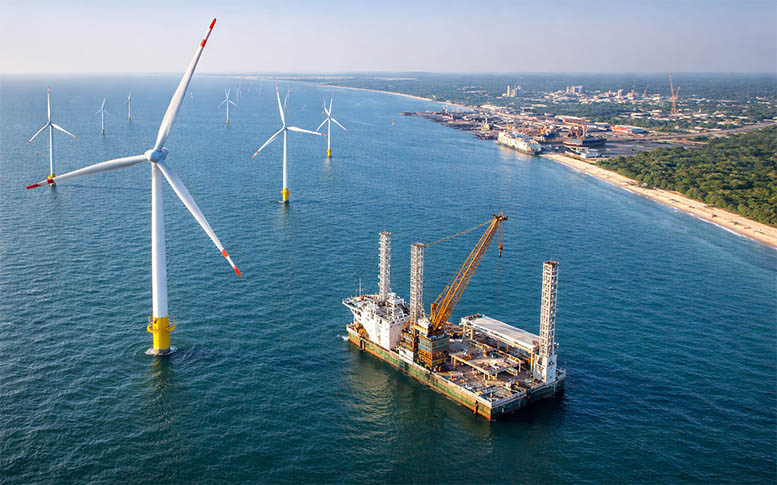
Dakshina Kannada MP Capt Brijesh Chowta has urged the Centre to give high priority to offshore wind energy generation along the Mangaluru coast, citing its strategic importance to India’s green energy and port-led development goals.

Raising the issue in the Lok Sabha under Rule 377, Chowta said studies by the National Institute of Oceanography have identified the Mangaluru coastline as part of India’s promising offshore wind ‘Zone-2’, covering nearly 6,490 sq km. He noted that the region’s relatively low exposure to cyclones and earthquakes makes it suitable for long-term offshore wind projects and called for its development as a dedicated offshore wind energy zone.

Highlighting the role of New Mangalore Port, Chowta said its modern infrastructure, multiple berths and heavy cargo-handling capacity position it well as a logistics hub for transporting and assembling large wind energy equipment.

He also pointed to the presence of major industrial units such as MRPL, OMPL, UPCL and the Mangaluru SEZ, which could serve as direct buyers of green power through power purchase agreements, improving project viability and speeding up execution.

With Karnataka’s peak power demand crossing 18,000 MW in early 2025, Chowta stressed the need to diversify renewable energy sources. He added that offshore wind projects in the Arabian Sea are strategically safer compared to the cyclone-prone Bay of Bengal.

Calling the project vital to India’s target of 500 GW of renewable energy by 2030, Chowta urged the Ministry of New and Renewable Energy to initiate resource assessments, pilot projects and stakeholder consultations at the earliest.

Comments

Add new comment

  • Coastaldigest.com reserves the right to delete or block any comments.
  • Coastaldigset.com is not responsible for its readers’ comments.
  • Comments that are abusive, incendiary or irrelevant are strictly prohibited.
  • Please use a genuine email ID and provide your name to avoid reject.