Captain Milkha Singh: An unmatchable romance with a near miss

News Network
June 19, 2021

milkhasingh.jpg

The track, to him, was like an open book in which Milkha Singh found the "meaning and purpose of life". And what a life he made for himself.

Before his 91-year-old body lost to Covid-19 on Friday after fighting it for a month, Milkha won the kind of battles that not many would have survived, forget about living long enough to tell the world about them.

"Don't worry, I am in good spirits...I am surprised, How could I get this infection?...I hope to get over it soon," Milkha had said in his last interaction with PTI before being hospitalised.

One of independent India's biggest sporting icons was a tormented man but refused to let that come in the way of accomplishments which were unheard of in his era.

He saw his parents being butchered during partition, indulged in petty crimes to survive in refugee camps of Delhi, went to jail for those and failed three attempts at joining the Army.

Who could have thought a man like that would get the sobriquet of 'The Flying Sikh'? But Milkha earned it and earned it with a master-class on how to be bigger and better than one's circumstances.

He "revered" the track like "the sanctum sanctorum in a temple where the deity resided."

To him running was both his God and beloved as he created his own little fairytale out of what what could have easily been a tale of horrors.

To talk of medals, the legendary athlete was a four-time Asian Games gold-medallist and the 1958 Commonwealth Games champion but his greatest performance was a near miss, the fourth place finish in the 400m final of the 1960 Rome Olympics.

His timing at the Italian capital remained the national record for 38 years and he was bestowed the Padma Shri in 1959.

But more than anything else, Milkha was the one who put Indian athletics on the world map by winning the gold in the then 440 yards race of the 1958 British and Commonwealth Games.

He became the first Indian athlete to win an individual gold in a Commonwealth Games, which led to then Prime Minister Jawaharlal Nehru declaring a national holiday on his request.

Milkha put his career record at 77 wins out of 80 races. He also claimed to have bettered the 'Olympics record' of that time in a race in France, but with sketchy records available, it is difficult to confirm just like his actual date of birth which is officially November 20, 1929.

He lost the race of his life in the Rome Olympics, finishing the 400m final in 45.6 seconds, 0.1 second short of the bronze medal mark.

Hard to believe but he had slowed down in a colossal error of judgement as he wanted to preserve himself for the final 150m.

He remained tormented by that miss, one of the only two incidents in his life, which he described as unforgettable -- the other being the killing of his parents in Pakistan.

"The one medal I had yearned for throughout my career had just slipped through my fingers because of one small error of judgement," Milkha wrote in his 160-page autobiography that coincided with the release of a blockbuster biopic on his life 'Bhaag Milkha Bhaag'.

However, his timing at the Italian capital remained a national record for 38 years till Paramjeet Singh broke it in 1998 at a national meet in Kolkata.

Milkha had promised to give a cash prize of Rs 2 lakh to the one who breaks his record, he eventually did not because the flamboyant star believed that Paramjeet's feat would have counted for something only if he had achieved it in a foreign competition.

"Mera record todne wala India mein paida nahi hua (the one who can break my record is not born yet in India)," he had famously said in 1991 and he hung on to that belief even when that record was shattered.

A self-proclaimed village 'bumpkin' from the undivided Punjab's Govindpura, Milkha's run for a better life started as a 15-year-old when he escaped from Pakistan to Delhi after witnessing a bloodbath that claimed his parents during the partition.

His approach to life in the refugee camp was irreverent. He worked as a boot polish boy, a shop cleaner near the old Delhi Railway Station and in between stole goods from trains to make ends meet.

The petty crimes landed Milkha in jail and he was bailed out by sister Ishvar, who sold her jewellery to get him released.

Milkha tried to step up in life by making repeated attempts at joining the army. He got through on his fourth attempt in 1952 and that proved to be the turning point which he so desperately wanted and needed.

He was posted in Secunderabad and ran his first race -- a cross country of five miles -- there when army coach Gurdev Singh promised an extra glass of milk to those who finished inside top-10.

He finished sixth and later got selected for special training in 400m. The rest, as they say, is well-documented history.

He won the selection trial the 1956 Olympics despite that he had been brutally assaulted by his rivals a day before that race.

Milkha disappointed at the Games as he failed to get past the preliminary heats but benefited from the experience and was able to persuade 400m gold winner Charles Jenkins to share his training methods.

In his autobiography, he had claimed that he trained so intensely after that disappointment that he would vomit blood and would fall unconscious on many occasions.

His life and career story is incomplete without the 1960 Indo-Pak sports meet where he outran Pakistani Abdul Khaliq before the Rome Olympics.

Khaliq was considered the fastest man in Asia at that time, having won the 100m gold in 1958 Asian Games. After winning 400m gold in the same Games, Milkha had also beaten Khaliq in the 200m final.

At first, Milkha refused to go to Pakistan as he did not want to return to a country where his parents were butchered but was persuaded by Prime Minister Nehru to face his demons.

He beat Khaliq in the 200m race in Lahore and was christened 'The Flying Sikh' by then Pakistan President General Ayub Khan who congratulated him during the awards ceremony.

Milkha retired from athletics after the 1964 Olympics, two years after winning the gold in 400m and 4x400m relay events at the Asian Games held at Jakarta.

Before that he had already taken up the job of deputy director of sports in the Punjab government in 1961 on the insistence of then chief minister Pratap Singh Kairon. He quit Indian Army and also shifted his residence to Chandigarh from Delhi.

In 1991, he introduced a compulsory games period in schools and also set up sports wings in schools in the districts to tap talent at the grassroot level.

He got married to Nirmal Kaur, captain of the Indian volleyball team, in 1963. They met for the first time in 1956 in Sri Lanka when they were there for their respective national duties.

The couple was blessed with three daughters and a son, golfer Jeev Milkha Singh.

It was quite stunning that an athlete of Milkha's stature was offered the Arjuna award, instituted in 1961, only in 2001.

He famously turned it down, saying the honour was not of the "stature of the services he rendered to the nation".

In fact, Milkha was a sum total of way more than his several races and medals. He was also much more than that near miss in Rome.

He was India's love affair with the track, the one that this country can never get over. 

Comments

Add new comment

  • Coastaldigest.com reserves the right to delete or block any comments.
  • Coastaldigset.com is not responsible for its readers’ comments.
  • Comments that are abusive, incendiary or irrelevant are strictly prohibited.
  • Please use a genuine email ID and provide your name to avoid reject.
News Network
February 1,2026

Bengaluru: The Karnataka High Court has refused to quash an investigation against a WhatsApp group administrator accused of allowing the circulation of obscene and offensive images depicting Hindutva politicians and idols in 2021.

Justice M Nagaprasanna observed that, prima facie, the ingredients of the offence under Section 295A of the Indian Penal Code were made out. “The offence under Section 295A of the IPC is met to every word of its ingredient, albeit prima facie,” the judge said.

The petitioner, Sirajuddin, a resident of Belthangady taluk in Dakshina Kannada district, had challenged the FIR registered against him at the CEN (Cyber, Economics and Narcotics) police station, Mangaluru, for offences under Section 295A of the IPC and Section 67 of the Information Technology Act. Section 295A relates to punishment for deliberate and malicious acts intended to outrage the religious feelings of any class of citizens.

According to the complaint filed by K Jayaraj Salian, also a resident of Belthangady taluk, he received a WhatsApp group link from an unknown source and was added to the group after accessing it. The group reportedly had six administrators and around 250 participants, where obscene and offensive images depicting Hindu deities and certain political figures were allegedly circulated repeatedly.

Sirajuddin was arrested in connection with the case and later released on bail on February 16, 2021. He argued before the court that he was being selectively targeted, while other administrators—including the creator of the group—were neither arrested nor investigated. He also contended that the Magistrate could not have taken cognisance of the offence under Section 295A without prior sanction under Section 196(1) of the CrPC.

Rejecting the argument, Justice Nagaprasanna held that prior sanction is required only at the stage of taking cognisance, and not at the stage of registration of the crime or during investigation.

The judge noted that the State had produced the entire investigation material before the court. “A perusal of the material reveals depictions of Hindu deities in an extraordinarily obscene, demeaning and profane manner. The content is such that its reproduction in a judicial order would itself be inappropriate,” the court said, adding that the material, on its face, had the tendency to outrage religious feelings and disturb communal harmony.

Observing that the case was still at the investigation stage, the court said it could not interdict the probe at this juncture. However, it expressed concern that the investigating officer appeared to have not proceeded uniformly against all administrators. The court clarified that if the investigation revealed the active involvement of any member in permitting the circulation of such content, they must also be proceeded against.

“At this investigative stage, any further observation by this Court would be unnecessary,” the order concluded.

Comments

Add new comment

  • Coastaldigest.com reserves the right to delete or block any comments.
  • Coastaldigset.com is not responsible for its readers’ comments.
  • Comments that are abusive, incendiary or irrelevant are strictly prohibited.
  • Please use a genuine email ID and provide your name to avoid reject.
News Network
February 4,2026

Mangaluru: Urban local bodies and gram panchayats should make the use of Kannada on signboards mandatory while issuing trade licences to commercial establishments, Dakshina Kannada Deputy Commissioner Darshan HV said. He also called for regular inspections to ensure compliance.

Presiding over the District Kannada Awareness Committee meeting at the deputy commissioner’s office, Darshan said the city corporation would be directed to ensure that shops operating in malls prominently display their names in Kannada. “All commercial establishments, including shops, companies, offices and hotels, must mandatorily display their names in Kannada on signboards,” he said.

The deputy commissioner added that the National Highways Authority of India (NHAI) would be instructed to include Kannada on signboards along national highways. Banks, he said, would be directed through committee meetings to provide application forms in Kannada.

“Even if English-medium schools and colleges impart education in English, their signboards must display the institution’s name in Kannada. Steps will also be taken to ensure that private buses display place names in Kannada,” Darshan said.

During the meeting, committee members raised concerns over the closure of Kannada-medium schools in rural areas due to a shortage of teachers and stressed the need for immediate corrective measures. They also pointed out that several industries employ workers from other states while overlooking local candidates.

Members further demanded that nationalised banks provide deposit and withdrawal slips in Kannada. It was brought to the deputy commissioner’s notice that the presence of staff without knowledge of Kannada in rural branches of nationalised banks is causing hardship to local customers.

Meanwhile, MP Srinath, president of the District Kannada Sahitya Parishat, urged the district administration to allot land for the construction of a district Kannada Bhavana in Mangaluru.

Comments

Add new comment

  • Coastaldigest.com reserves the right to delete or block any comments.
  • Coastaldigset.com is not responsible for its readers’ comments.
  • Comments that are abusive, incendiary or irrelevant are strictly prohibited.
  • Please use a genuine email ID and provide your name to avoid reject.
News Network
February 4,2026

gaming.jpg

Ghaziabad: In a tragic incident, three sisters aged 12, 14 and 16 died after jumping from the ninth floor of their apartment in Uttar Pradesh’s Ghaziabad in the early hours of Wednesday. The girls allegedly took the extreme step after becoming deeply obsessed with an online Korean task-based game.

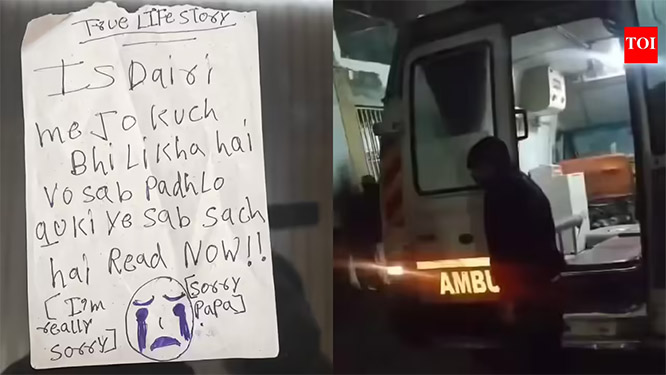
The incident occurred around 2.15 am at a high-rise apartment complex in Bharat City. Before jumping, the sisters — Pakhi (12), Prachi (14) and Vishika (16) — left behind a handwritten note that read, “Sorry, Papa.”

According to police, the girls went to the balcony, bolted the door from inside and jumped one after another. Their screams and the sound alerted their parents, neighbours and security guards. By the time the parents broke open the balcony door, all three had died.

“When we reached the spot, we confirmed that three minor girls, daughters of Chetan Kumar, had died after jumping from the building,” said Assistant Commissioner of Police Atul Kumar Singh.

Visuals from the scene on Wednesday morning showed the bodies lying on the ground, their mother wailing in grief, and stunned neighbours gathering at the complex.

Police said the sisters were heavily influenced by Korean culture and were addicted to an online “Korean love game”, though no specific game has been identified so far. Investigators are examining an eight-page suicide note written in a pocket diary, detailing the girls’ mobile and gaming activities.

“Read everything written in this diary because all of it is true. I’m really sorry. Sorry, Papa,” the note said, accompanied by a hand-drawn crying emoji.

Their father, Chetan Kumar, told police that the girls had even adopted Korean names and had gradually withdrawn from school and daily activities. “They used to say, ‘Korea is our life, Korea is our biggest love. We cannot give it up,’” he said, breaking down.

Police said the parents had recently restricted the girls’ mobile phone usage, which may have triggered distress. “The investigation has not revealed the name of any particular game, but it is evident that the girls were deeply influenced by Korean culture, as mentioned in the suicide note,” said senior police officer Nimish Patel.

The sisters reportedly did everything together, including eating and bathing. Their gaming addiction is believed to have begun during the COVID-19 pandemic, after which they became irregular at school and eventually stopped attending altogether.

Police also revealed that Chetan Kumar is married to two sisters and lives with both wives and their children, all daughters. Two of the deceased girls were daughters of one wife, while the third was their half-sister.

Further investigation is underway.

Comments

Add new comment

  • Coastaldigest.com reserves the right to delete or block any comments.
  • Coastaldigset.com is not responsible for its readers’ comments.
  • Comments that are abusive, incendiary or irrelevant are strictly prohibited.
  • Please use a genuine email ID and provide your name to avoid reject.