U.K. excludes India from relaxed student visa rules

Agencies
June 16, 2018

London, Jun 16: The U.K. government has caused outrage with its decision to exclude Indian students from a new list of countries considered low risk in order to facilitate an easier visa application process to U.K. universities.

In changes to its immigration policy tabled in Parliament on June 15, the U.K. Home Office announced a relaxation of the Tier 4 visa category for overseas students from around 25 countries.

On a list already covering countries like the U.S., Canada and New Zealand, the Home Office has added on the likes of China, Bahrain and Serbia as countries from where students would face reduced checks on educational, financial and English language skill requirements to study at British universities.

The changes, which come into effect on July 6, aim to make it easier for international students to come to study in the U.K.

However, India has been left out of this new expanded list, which means Indian students applying for similar courses will continue to face rigorous checks and documentary requirements.

'Kick in the teeth'
Lord Karan Bilimoria, Indian-origin entrepreneur and president of the U.K. Council for International Student Affairs (UKCISA), described the move as an insult to India and another example of Britain’s economically illiterate and hostile attitude to immigration.

“I consider this another kick in the teeth for India... This sends entirely the wrong message to India, to exclude it from these Tier 4 measures. The government has simply got it wrong, said “Mr. Bilimoria, while welcoming the overall visa relaxation measures introduced by U.K. Home Secretary Sajid Javid.

Mr. Bilimoria, the founder of Cobra Beer and founding-chair of U.K. India Business Council (U.K.IBC), added, “It is completely hypocritical that this is announced at the same time that Britain is talking about doing a post-Brexit Free Trade Agreement (FTA) with India. If this is the way they treat India, they can dream on about an FTA with India.”

“India has always been one of Britain’s closest allies and an emerging global economic superpower. Excluding India from this list is myopically short-sighted and is damaging what has always been a special relationship between our countries,” he said.

NISAU disappointed
The National Indian Students and Alumni Union (NISAU) U.K. also expressed disappointment at India’s exclusion from the list, which it said effectively categorises Indian students as high risk. The representative body for Indian students in the U.K. said it was unfair that Indian students should be treated differently from Chinese or other nationals on the list.

"It is important to note that June 16 announcement makes no change to the process of application for Indian students, but it is the perception of this message among Indian students that worries us. And, this raises another question — will China continue to get even more favourable actions while India gets the rhetoric," questioned Sanam Arora, president of NISAU U.K..

According to latest Office of National Statistics (ONS) data, India is among the top three countries from where overseas students come in to study at U.K. universities, after China and the U.S. While Indian students registered a hike of 30% to hit 15,171 Tier 4 visas last year, the numbers remain a far cry from around 30,000 six years ago.

The latest development will add to growing concern within Indian government circles, given that Ministers and diplomats have repeatedly highlighted the need for a more welcoming immigration regime for Indian students.

Last week, Indian High Commissioner to the U.K., Y.K. Sinha, held a meeting with the U.K.’s minister for universities, Sam Gyimah, during which he once again raised the issue of “smoother and greater student and faculty mobility between the two countries.”

“It is unfortunate that in the last six years we have seen a steep drop [in Indian student numbers]. What should be troubling universities here is that Indian students are now going in much greater numbers to the U.S., Australia — even France and Germany,” Mr. Sinha has said in the past.

Reduced documentation additional 11 countries
The U.K. Home Office said in order to make it easier for students to come and study in the U.K.’s world-leading education sector, it has expanded the list of countries from which students will be able to benefit from a streamlined application process.

Students from an additional 11 countries, including China, will be able to provide a reduced level of documentation when applying for their Tier 4 visa, the Home Office statement notes.

On being asked why India had been omitted from this expanded list, a spokesperson said, “We welcome Indian students who want to come to the U.K. to study at our world-leading educational institutions. We issue more visas to students from India than any other country except China and the USA.”

The Home Office stressed that 90% of Indian students who apply for a U.K. visa get one, a figure up from 86% in 2014 and 83% the year before that.

It added, “In addition, the proportion of Indian students coming to study in the U.K. at a university has increased from around 50% in 2010 to around 90% in 2016. Indian student visa applications are up 30% on last year. We continue to have regular discussions with the Indian government on a range of issues including on visas and U.K. immigration policy,” it said.

Comments

Add new comment

  • Coastaldigest.com reserves the right to delete or block any comments.
  • Coastaldigset.com is not responsible for its readers’ comments.
  • Comments that are abusive, incendiary or irrelevant are strictly prohibited.
  • Please use a genuine email ID and provide your name to avoid reject.
News Network
February 3,2026

wind.jpg

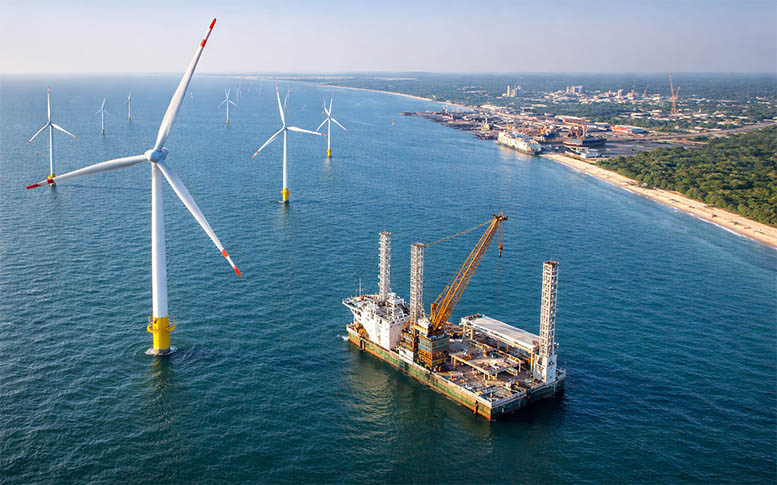
Dakshina Kannada MP Capt Brijesh Chowta has urged the Centre to give high priority to offshore wind energy generation along the Mangaluru coast, citing its strategic importance to India’s green energy and port-led development goals.

Raising the issue in the Lok Sabha under Rule 377, Chowta said studies by the National Institute of Oceanography have identified the Mangaluru coastline as part of India’s promising offshore wind ‘Zone-2’, covering nearly 6,490 sq km. He noted that the region’s relatively low exposure to cyclones and earthquakes makes it suitable for long-term offshore wind projects and called for its development as a dedicated offshore wind energy zone.

Highlighting the role of New Mangalore Port, Chowta said its modern infrastructure, multiple berths and heavy cargo-handling capacity position it well as a logistics hub for transporting and assembling large wind energy equipment.

He also pointed to the presence of major industrial units such as MRPL, OMPL, UPCL and the Mangaluru SEZ, which could serve as direct buyers of green power through power purchase agreements, improving project viability and speeding up execution.

With Karnataka’s peak power demand crossing 18,000 MW in early 2025, Chowta stressed the need to diversify renewable energy sources. He added that offshore wind projects in the Arabian Sea are strategically safer compared to the cyclone-prone Bay of Bengal.

Calling the project vital to India’s target of 500 GW of renewable energy by 2030, Chowta urged the Ministry of New and Renewable Energy to initiate resource assessments, pilot projects and stakeholder consultations at the earliest.

Comments

Add new comment

  • Coastaldigest.com reserves the right to delete or block any comments.
  • Coastaldigset.com is not responsible for its readers’ comments.
  • Comments that are abusive, incendiary or irrelevant are strictly prohibited.
  • Please use a genuine email ID and provide your name to avoid reject.
News Network
January 28,2026

ajit.jpg

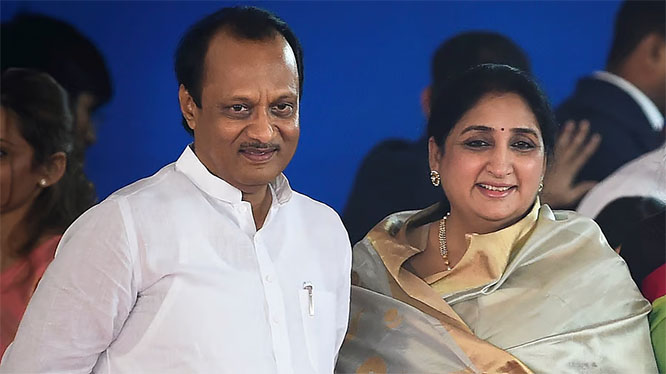
Mumbai: The sudden death of Maharashtra Deputy Chief Minister Ajit Pawar in a plane crash in his hometown of Baramati has plunged the state into political uncertainty, raising a pressing question for both the Nationalist Congress Party (NCP) and its rival faction, the Nationalist Congress Party (Sharadchandra Pawar): what next?

For the two factions that emerged after the dramatic split of June–July 2023, the moment marks their gravest challenge yet. Many believe the answer now rests with party founder Sharad Pawar.

Sharad Pawar, who founded the NCP in 1999 after parting ways with the Congress over Sonia Gandhi’s foreign origin, has already indicated his intention to step away from electoral politics once his Rajya Sabha term ends in April 2026.

Speaking at a public event in Baramati ahead of his 85th birthday on December 12, 2025, Pawar said he would not contest any further elections. “I have contested 14 elections. The younger generation needs to be given an opportunity,” he said, adding that he would decide later whether to seek another Rajya Sabha term.

Often described as the Bhishma Pitamah of Indian politics, Pawar also spoke of his gradual withdrawal from active leadership. “For the first 30 years, I handled everything. For the next 25–30 years, Ajit Dada handled responsibilities. Now, arrangements must be made for new leadership,” he said.

Ajit Pawar’s death has dramatically altered that transition, especially as he was working towards reunifying the two NCP factions.

“After the developments of June–July 2023 and the 2024 Lok Sabha and Vidhan Sabha elections, there were deep changes within the family and the party. In the last six months, serious efforts were made to reunite. Even workers from both sides wanted unity. This is a massive blow,” a Pawar family insider told DH over phone from Baramati.

Electoral outcomes over the past year reflected the split. In the 2024 Lok Sabha elections, NCP (SP) recorded the best strike rate in Maharashtra, winning eight of the 10 seats it contested. The NCP, by contrast, won just one seat out of four.

However, the trend reversed in the subsequent Vidhan Sabha elections, where the NCP emerged stronger, securing 41 of the 288 seats, while NCP (SP) managed only 10.

Within NCP (SP), Sharad Pawar’s daughter Supriya Sule serves as Working President, followed by leaders such as Rohit Pawar, state president Shashikant Shinde and former state chief Jayant Patil.

In the NCP, Praful Patel is the Working President and Raigad MP Sunil Tatkare heads the state unit. Ajit Pawar’s wife, Sunetra Pawar, is a Rajya Sabha MP, while their sons Parth and Jay are not actively involved in day-to-day politics. Parth Pawar briefly entered electoral politics in 2019 but lost the Lok Sabha election from Maval. Jay Pawar’s political debut was under consideration.

With Ajit Pawar gone, speculation has intensified that a member of the family may be asked to assume a larger role. For now, Sunetra Pawar is expected to play a key coordinating role in party affairs, alongside Patel and Tatkare.

The NCP continues to have several heavyweight leaders, including Chhagan Bhujbal, Hasan Mushrif, Dattatreya Bharne, Manikrao Kokate and Dhananjay Munde.

Ajit Pawar had already begun steps towards reconciliation between the two factions. While they contested the Pune and Pimpri-Chinchwad municipal elections separately, they later decided to fight the zilla parishad elections together under the ‘clock’ symbol—seen as the first formal step towards reunification.

Nagpur meet and party roadmap

Both NCP factions claim adherence to the ideology of ‘Shiv–Shahu–Phule–Ambedkar’. At the Rashtravadi Chintan Shivir held in Nagpur on September 19, 2025, the NCP reaffirmed its commitment to sarva dharma sambhav and discussed strengthening ties with the BJP “for the welfare and development of Maharashtra”.

In recent days, reports had suggested Ajit Pawar might return to the Maha Vikas Aghadi following the party’s poor performance in Pune municipal elections, but these claims were denied.

Big question for Maha Yuti

Ajit Pawar’s death also presents an immediate challenge for the Devendra Fadnavis-led Maha Yuti government. Pawar held crucial portfolios, including Finance, Planning and Excise. With the Budget Session approaching, appointing a new Finance Minister has become urgent.

Beyond numbers and portfolios, Maha Yuti has lost a swift decision-maker known for his administrative grip and political finesse—leaving a vacuum that will not be easy to fill.

Comments

Add new comment

  • Coastaldigest.com reserves the right to delete or block any comments.
  • Coastaldigset.com is not responsible for its readers’ comments.
  • Comments that are abusive, incendiary or irrelevant are strictly prohibited.
  • Please use a genuine email ID and provide your name to avoid reject.
News Network
February 5,2026

Bengaluru: As air quality continues to worsen across several parts of the city, hospitals in Bengaluru are reporting a steady rise in patients suffering from respiratory illnesses such as asthma, bronchitis and Chronic Obstructive Pulmonary Disease (COPD), health officials and doctors said.

Data from the Suvarna Arogya Suraksha Trust (SAST) shows that 3,891 patients received treatment for respiratory ailments between April and November 2024. The figure rose to 4,187 during the same period in 2025.

Private hospitals, too, are witnessing a 10–15 per cent year-on-year increase in such cases.

While doctors caution that the rise cannot be attributed solely to air pollution, a significant number of patients are non-smokers with no prior history of respiratory disease.

“Nearly 70 per cent of the patients we see are non-smokers with no previous respiratory issues. When other causes are ruled out, air pollution emerges as the most likely factor,” said Dr Manjunath PH, consultant interventional pulmonologist at a hospital in Kengeri.

Doctors noted that patient footfall spikes during the winter months and around Deepavali, when air quality typically worsens.

“There is a clear correlation between poor air quality and the rise in cases. People commonly present with persistent cough, breathlessness and irritation of the respiratory tract, indicating the impact of polluted air on their health,” said Dr Sheetal Chaurasia, consultant in pulmonary medicine at a private hospital in Whitefield.

Dr Chaurasia added that respiratory tract infections are also on the rise.

“Poor air quality leads to chronic airway inflammation, making the airways more vulnerable to infections. We are seeing an increase in both upper and lower respiratory tract infections,” she said.

Patients with pre-existing respiratory conditions remain the worst affected.

“For those already diagnosed with respiratory illnesses, deteriorating air quality significantly worsens the condition. Both the frequency and severity of attacks increase sharply,” said Dr Vandana P, a pulmonologist at a hospital on Bannerghatta Road.

Doctors also flagged a worrying trend of rising respiratory problems among younger adults and children.

To reduce exposure, they advised people to wear masks while travelling on two-wheelers or autos and ensure adequate ventilation at home to minimise indoor air pollution.

Comments

Add new comment

  • Coastaldigest.com reserves the right to delete or block any comments.
  • Coastaldigset.com is not responsible for its readers’ comments.
  • Comments that are abusive, incendiary or irrelevant are strictly prohibited.
  • Please use a genuine email ID and provide your name to avoid reject.