70% of journalists unfit to be in the newsroom'

[email protected] (CD Network)
July 14, 2012

JN

journ1

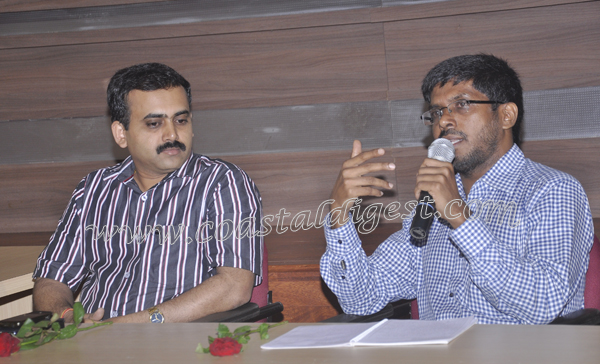
Mangalore, July 14: A. Narayana, Udayavani columnist and assistant professor of Azim Premji University Bangalore, on Saturday expressed deep anguish over increasing mediocrity in the media and said that nearly 70 per cent of the journalists presently working in different media organizations do not deserve to be in the field.

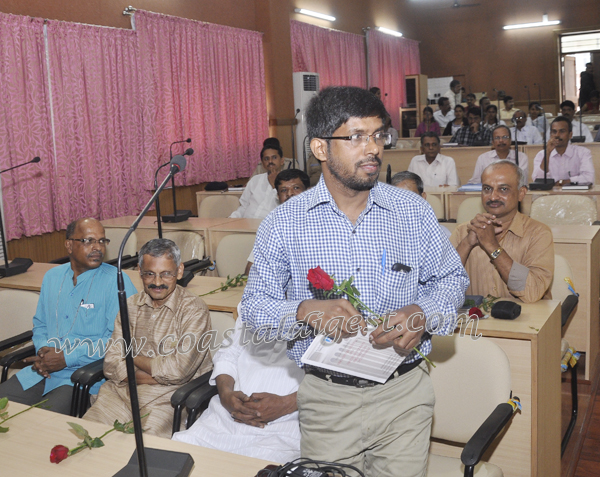
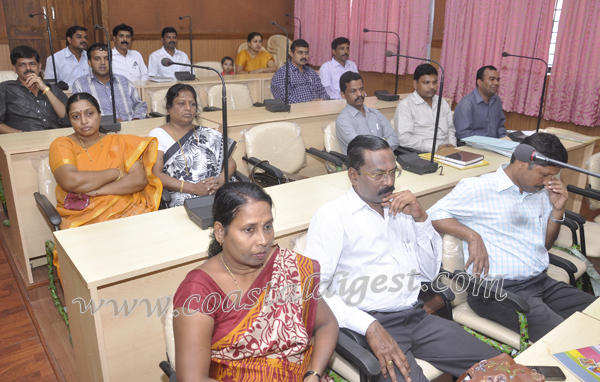
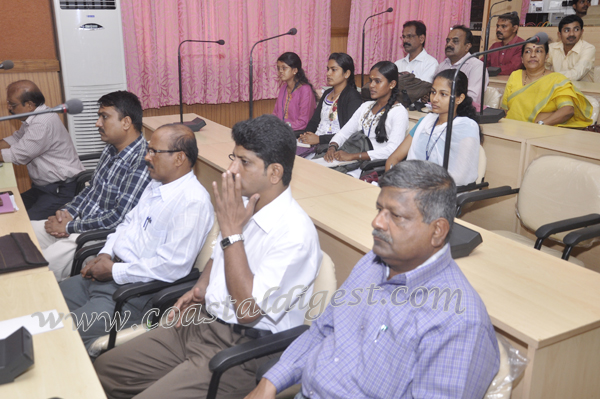
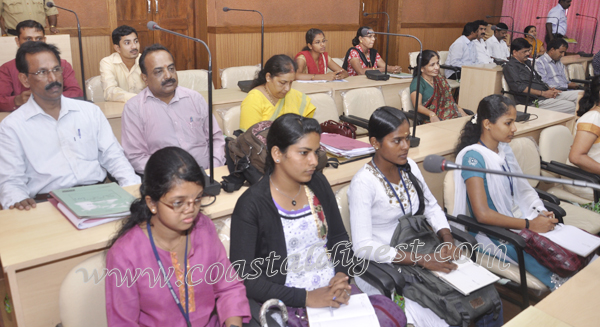
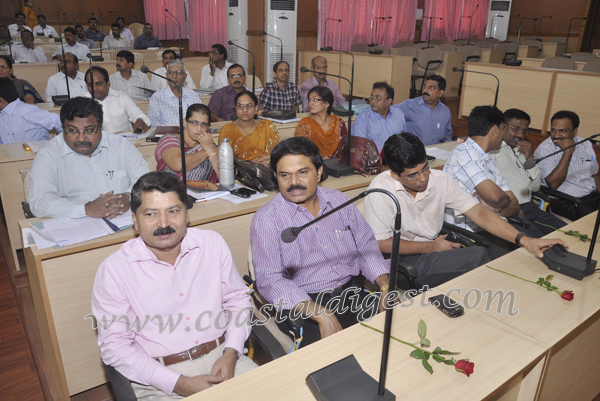
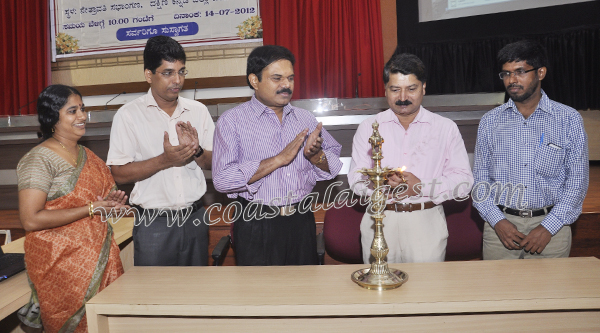
He was speaking at the “Madhyama Samvada” a sensitisatioin programme organized by the District Information Department for the district level officers of Dakshina Kannada here at the Zilla Pancahyat auditorium.

Listing out mediocrity, complacency and deadline as the three major factors playing a major role in the present day media, Prof. Narayana said in India journalism was the only field that did not call for any qualification, in-house training and accountability.

“Many of our crime reporters lack basic knowledge of law and hardly differentiate between a First Information Report and a B Report. There are reporters who do not even know the difference between the Indian Penal Code and Indian Criminal Procedure Code. It has become a challenge for the media houses to find skilled and efficient manpower,” he observed.

Stating that a gamut of factors were responsible for the final output of each newspaper or news channel, professor Narayana said the business or political interest was not the only factor that decided the choice of news or the way a certain news is reported or not reported. “A newspaper has to work within the deadline and many a times newspapers miss a news because of the time constraint. Major events like the death of former Prime Minister Rajiv Gandhi in bomb explosion get published in the next morning's newspaper even if the news broke late in the night. In such cases, the newspapers generally stop their printing and make room for the breaking news,” he said.

Shivaprasad T.R., chief news anchor of TV9, seconded the opinion of Professor Narayana and said that nearly 90 per cent of journalists compromised on their professional honesty by sharing dinner and drinks with the politicians and the officers.

“It is really sad that only 10 per cent of journalists still have some integrity and work with honesty,” he observed.

He said that the television media in India was still in infancy and it was but natural that the media suffered from a number of ailments. “It is like a baby learning to walk. It will falter every now and then. But eventually it will learn to walk,” he said.

Reacting to allegations of media crossing its limit in the absence of any regulatory mechanism, Mr. Shivaprasad said the National Broadcasting Association had been taking a number of initiatives to govern the functioning of the broadcast media and the viewers can now approach NBA if they have any grievance.

Speaking on the occasion Deputy Commissioner Channappa Gowda expressed regret over the glorifying of crime by the television media. “There has to be some self-regulation on the part of the TV media on scheduling shows related to crime. Why can't shows related to crime be telecast late in the night instead of airing them on primetime?” he asked.

K.N. Vijaya Prakash, Chief Executive Officer of Zilla Panchayat, called for introspection among the journalists and quoting Justice Markandeya Katju, he asked the journalists why the news of Aishwarya giving birth to a baby girl should take precedence over the news related to malnutrition deaths.

Deputy Commissione r of Police D. Dhamaiah, MCC Commissioner Harish Kumar, senior district administration officials and police officers participated in the programme.

Ronald Fernandes, chief of bureau Deccan Herald, Mangalore, also spoke. Rohini M., District Information Officer, compered the programme and proposed a vote of thanks.
journ2

Zp_1

Zp_2

Zp_3

Zp_4

Zp_5


Comments

Add new comment

  • Coastaldigest.com reserves the right to delete or block any comments.
  • Coastaldigset.com is not responsible for its readers’ comments.
  • Comments that are abusive, incendiary or irrelevant are strictly prohibited.
  • Please use a genuine email ID and provide your name to avoid reject.
News Network
February 5,2026

In an era where digital distractions are the primary rival to academic excellence, the Karnataka Education Department is taking the fight directly to the living room. As the SSLC (Class 10) annual examinations loom, officials have launched a localized "digital strike" to ensure students aren't losing their competitive edge to scrolling or soap operas.

The 7-to-9 Lockdown

The department has issued a formal directive urging—and in some cases, enforcing via home visits—a total blackout of mobile phones and television sets between 7:00 PM and 9:00 PM. This two-hour window is being designated as "sacred study time" across the state until the examinations conclude on April 2.

Key Pillars of the Initiative:

•    Doorstep Advocacy: Teachers are transitioning from classrooms to living rooms, meeting parents to explain the psychological benefits of a distraction-free environment.

•    Parental Accountability: The campaign shifts the burden of discipline from the student to the household, asking parents to lead by example and switch off their own devices.

•    The Timeline: The focus remains sharp on the upcoming exam block, scheduled from March 18 to April 2.

"The objective is simple: uninterrupted focus. We are reclaiming the evening hours for the students, ensuring their environment is as prepared as their minds," stated a senior department official.

Student vs. Reality

While the student community has largely welcomed the "forced focus"—with many admitting they lack the willpower to ignore notifications—the move has sparked a debate on enforceability. Without a "TV Police," the success of this initiative rests entirely on the shoulders of parents and the persuasive power of visiting educators.

Comments

Add new comment

  • Coastaldigest.com reserves the right to delete or block any comments.
  • Coastaldigset.com is not responsible for its readers’ comments.
  • Comments that are abusive, incendiary or irrelevant are strictly prohibited.
  • Please use a genuine email ID and provide your name to avoid reject.
News Network
February 1,2026

Bengaluru: Karnataka Deputy Chief Minister D K Shivakumar on Sunday criticised the Union Budget presented by Finance Minister Nirmala Sitharaman, claiming it offered no tangible benefit to the state.

Though he said he was yet to study the budget in detail, Shivakumar asserted that Karnataka had gained little from it. “There is no benefit for our state from the central budget. I was observing it. They have now named a programme after Mahatma Gandhi, after repealing the MGNREGA Act that was named after him,” he said.

Speaking to reporters here, the Deputy Chief Minister demanded the restoration of MGNREGA, and made it clear that the newly enacted rural employment scheme — VB-G RAM G — which proposes a 60:40 fund-sharing formula between the Centre and the states, would not be implemented in Karnataka.

“I don’t see any major share for our state in this budget,” he added.

Shivakumar, who also holds charge of Bengaluru development, said there were high expectations for the city from the Union Budget. “The Prime Minister calls Bengaluru a ‘global city’, but what has the Centre done for it?” he asked.

He also drew attention to the problems faced by sugar factories, particularly those in the cooperative sector, alleging a lack of timely decisions and support from the central government.

Noting that the Centre has the authority to fix the minimum support price (MSP) for agricultural produce, Shivakumar said the Union government must take concrete steps to protect farmers’ interests.

Comments

Add new comment

  • Coastaldigest.com reserves the right to delete or block any comments.
  • Coastaldigset.com is not responsible for its readers’ comments.
  • Comments that are abusive, incendiary or irrelevant are strictly prohibited.
  • Please use a genuine email ID and provide your name to avoid reject.
News Network
February 4,2026

Mangaluru: Urban local bodies and gram panchayats should make the use of Kannada on signboards mandatory while issuing trade licences to commercial establishments, Dakshina Kannada Deputy Commissioner Darshan HV said. He also called for regular inspections to ensure compliance.

Presiding over the District Kannada Awareness Committee meeting at the deputy commissioner’s office, Darshan said the city corporation would be directed to ensure that shops operating in malls prominently display their names in Kannada. “All commercial establishments, including shops, companies, offices and hotels, must mandatorily display their names in Kannada on signboards,” he said.

The deputy commissioner added that the National Highways Authority of India (NHAI) would be instructed to include Kannada on signboards along national highways. Banks, he said, would be directed through committee meetings to provide application forms in Kannada.

“Even if English-medium schools and colleges impart education in English, their signboards must display the institution’s name in Kannada. Steps will also be taken to ensure that private buses display place names in Kannada,” Darshan said.

During the meeting, committee members raised concerns over the closure of Kannada-medium schools in rural areas due to a shortage of teachers and stressed the need for immediate corrective measures. They also pointed out that several industries employ workers from other states while overlooking local candidates.

Members further demanded that nationalised banks provide deposit and withdrawal slips in Kannada. It was brought to the deputy commissioner’s notice that the presence of staff without knowledge of Kannada in rural branches of nationalised banks is causing hardship to local customers.

Meanwhile, MP Srinath, president of the District Kannada Sahitya Parishat, urged the district administration to allot land for the construction of a district Kannada Bhavana in Mangaluru.

Comments

Add new comment

  • Coastaldigest.com reserves the right to delete or block any comments.
  • Coastaldigset.com is not responsible for its readers’ comments.
  • Comments that are abusive, incendiary or irrelevant are strictly prohibited.
  • Please use a genuine email ID and provide your name to avoid reject.