



Online sexual attack against Muslim women: Open letter to CJI

News Network
January 6, 2022

sullibulli.jpg

Request for a Suo motu petition in regard to the unconstitutional, illegal and misogynistic targeting of Muslim women through the SulliDeals and BulliBai Apps.

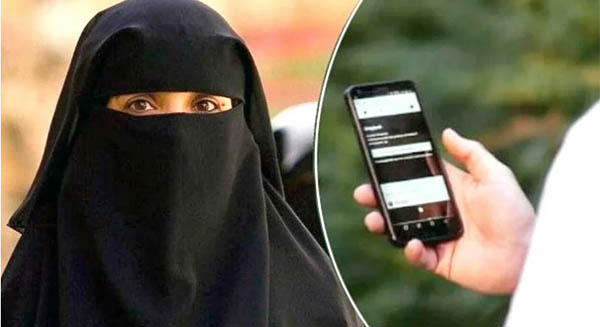
On the 1st of January, 2022, as the world was sending out celebratory messages to mark the New Year, hundreds of Muslim women woke up to deeply objectionable, obnoxious and misogynistic attack on them via the ‘Bulli Bai App’. Photos of hundreds of Muslim women, including prominent journalists, activists and thinkers, were secured and uploaded without their permission on this app and were subsequently ‘auctioned’.

The Bulli App was hosted at the URL bullibai.github.io. GitHub is platform which hosts websites, with a repository of open-source codes. After much furore, the platform was finally taken down on the morning of 01.01.2022 and the Twitter handle of the Bulli Bai has been suspended. Like ‘Sulli Deals’ the ‘Bulli Bai’ app was also created and used on GitHub. The GitHub platform allows users to create and share apps. While the portal is no longer functional, the offenders continue to walk around scot-free leaving the survivors struggling with their personal identities revealed to millions of social media users who want to buy and sell their bodies. This has rendered them vulnerable in both social media spaces and real world.

This is not the first when such an outrageous public sale of Muslim women’s bodies has taken place openly. In the month of July 2021, a similar App called Sulli Deals app offered photographs of Muslim women as ‘deals.’ for virtual auctions. The perpetrators even had no fear of legal consequences as they publicy declared their intention to launch an application that facilitates the sale of Muslim women. While the very action of downloading and posting pictures and private details of Muslim women, in both instances, was not only non-consensual and in violation of the right to privacy, it was clearly meant to degrade, dehumanize, vilify and demean Muslim women. ‘Auctioning’ women in this manner is a depraved attempt to commodify them and strip them of any personhood or dignity. This is a blatant violation of the very fundamental right to live with dignity and the right to bodily autonomy protected under Article 21 of our Constitution.

However, it is imperative for us to also recognise these repeated attacks on the dignity of Muslim women as a well thought out political strategy by majoritarian forces to systematically isolate Muslims for public harassment and humiliation, and intimidate them into silence. Terms such as ‘Sulli’ and ‘Bulli’ are offensive and derogatory slurs used to specifically insult and denigrate women belonging to the Muslim community and thereby, constitutes hate speech. The public auction of Muslim women is an extreme form of vilification of Muslims reducing them to non-citizens and sub-humans. This only points to the utter moral bankruptcy in our society where communal elements openly target, bully and perpetuate sexual violence against women with alarming impunity. Read along with the public calls for genocide on the streets of Delhi earlier last year, and at the Dharam Sansad in Haridwar more recently, it is evident that instances such as these are carefully strategized hate crimes pushing our country into a dark abyss to which there can be no turning a blind eye to anymore.

Apps such as ‘Sulli deals’ and ‘Bulli Bai’, similarly, perpetuate violence against Muslim women. These apps use pictures and social media accounts of women based on ‘visible indicators’ that establish that they are Muslim, such as their names, usernames, posts, and so on. This is a direct manifestation of the prevalent objectification of Muslim women. These actions, in addition to leading to a severe assault on the dignity of Muslim women, has affected their public participation as well. Many Muslim women were forced to undertake actions such as deleting their pictures and many had to even delete their social media profiles. This has severely limited the participation of Muslim women in online public spaces. State inaction which has allowed this, constitutes a violation of the preambular promise to Equality of Opportunity. Muslims are systematically being denied the opportunity to participate wholly and freely in public life.

Following the attacks against Muslim women on the Sulli Deals App in July, 2021, two FIRs were filed by the Delhi and Uttar Pradesh Police. Both the Delhi Commission for Women (DCW) and the National Commission for Women (NCW) took cognizance of the matter and assured action. Worryingly, nearly six months after the incident was first reported, investigations have made little progress and investigative agencies have not even able to identify the perpetrators of the crime.(1) The callous attitude of the state machinery in addressing the issue has made a complete mockery of the suffering and trauma of the targeted women. As an extension, the deafening silence of the law enforcement agencies in countering repeated communal onslaughts on Muslim women cannot but be seen as an implicit endorsement of such depravity.

The Constitution of India promises every citizen equality and a life of dignity. Nonetheless, routine communal and misogynistic aggressions such as these deprive Muslim women of the most fundamental rights. They compel marginalised women to live in fear and terror in their own country. No civilised society should meekly allow for the targeted harassment, objectification and public auctioning of its women. Given the colossal failure of the state machinery in adequately responding to such instances of hate crimes in the country, the onus now falls upon the Supreme Court to urgently intervene to safeguard the constitutional rights of minority communities and restore public faith in constitutional systems.

Such despicable assaults on the dignity of Muslim women are also calculated attacks on the very idea of India as envisaged by the Indian Constitution. They are carried out with the specific intent of ‘othering’ all marginalised communities and breaking our cherished secular fabric. These actions, solely based on religious hatred, militate against the Constitutional notions of fraternity and violate the right to equality, the right against discrimination, the right to personal liberty, right to religious freedom and the right to life. While our constitution strives for a safe environment for people irrespective of their gender and religion, such acts of violence continue to promote discrimination and public disharmony.

We, therefore, demand that the Supreme Court register a Suo motu petition and ensure that:

(i) The police register FIRs Suo moto and on the basis of complaints, investigate the offence expeditiously and take necessary steps against the perpetrators.

(ii) Monitor the investigation and prosecution in regard to these offences. (edited on 4th Jan)

(iii) Investigation and prosecution in regard to the FIRs registered in July, 2021 also be monitored by the Supreme Court and necessary action be taken if it is found that the police have failed to discharge their duties.

(iv) Direct the concerned authorities to ensure that the GitHub and Twitter platforms are not used for such blatantly illegal activities as Sulli deals and Bulli Bai apps.

(v) Direct payment of suitable compensation to the victims of these communal hate crimes.

(vi) Direct that appropriate steps be taken to ensure the prevention of recurrence of any such communal hate crime.

Comments

Add new comment

  • Coastaldigest.com reserves the right to delete or block any comments.
  • Coastaldigset.com is not responsible for its readers’ comments.
  • Comments that are abusive, incendiary or irrelevant are strictly prohibited.
  • Please use a genuine email ID and provide your name to avoid reject.
News Network
February 1,2026

Bengaluru, Feb 1: For travelers landing at Kempegowda International Airport (KIA), the sleek, wood-paneled curves of Terminal 2 promise a world-class welcome. But the famed “Garden City” charm quickly withers at the curb. As India’s aviation sector swells to record numbers—handling over 43 million passengers in Bengaluru alone this past year—the “last mile” has turned into a marathon of frustration.

The Bengaluru Logjam: Rules vs Reality

While the city awaits the 2027 completion of the Namma Metro Blue Line, the interim has been chaotic. Recent “decongestion” rules at Terminal 1 have pushed app-based cab pickups to distant parking zones, forcing weary passengers into a 20-minute walk with luggage.

“I landed after ten months away and felt like a stranger in my own city,” says Ruchitha Jain, a Koramangala resident. “My driver couldn’t find me, staff couldn’t guide me, and the so-called ‘Premium’ lane is just a fancy tax on convenience.”

•    The Cost of Distance: A 40-km cab ride can now easily cross ₹1,500, driven by demand pricing and airport surcharges.

•    The Bus Gap: While Vayu Vajra remains a lifeline, its ₹300–₹400 fare is often cited as the most expensive airport bus service in the country.

A National Pattern of Disconnect

The struggle is not unique to Karnataka. From Chennai’s coast to Hyderabad’s plateau, India’s airports tell a familiar story: brilliant runways, broken exits.

City:    Primary Issue   |    Recent Development

Bengaluru:    Cab pickup restrictions & distance  |    App-based taxis shifted to far parking zones; long walks and fare spikes reported

Chennai:    Multi-Level Parking (MLCP) hike  |    Passengers report 40-minute walks to reach cab pickup points

Hyderabad:    “Taxi mafia” & touting  |    Over 440 touting cases reported; security presence intensified

Mumbai:    Fare scams  |     Tourists charged ₹18,000 for just 400 metres, triggering police action

In Hyderabad, travelers continue to battle entrenched local groups that intimidate Uber and Ola drivers, pushing passengers toward overpriced private taxis. Chennai flyers, meanwhile, complain that reaching the designated pickup zones now takes longer than short-haul flights from cities like Coimbatore.

The ‘Budget Day’ Hope

As Finance Minister Nirmala Sitharaman presents the Union Budget 2026 today, the aviation sector is watching closely. With the government’s renewed emphasis on multimodal integration, there is cautious hope for funding toward seamless airport-metro-bus hubs.

The vision is clear: a future where planes, trains, and metros speak the same language. Until then, passengers at KIA—and airports across India—will continue to discover that the hardest part of flying isn’t the thousands of kilometres in the air, but the last few on the ground.

Comments

Chandramohan
 - 
Friday, 6 Feb 2026

Sir, I request the airport authorities to introduce a free transport services from terminal 1 to terminal 2 as is very difficult for the passengers to reach terminal 2 along with their luggage. Also a trolley should be provided to reach the counter. Hope the authorities would help the passengers as soon as possible.

Add new comment

  • Coastaldigest.com reserves the right to delete or block any comments.
  • Coastaldigset.com is not responsible for its readers’ comments.
  • Comments that are abusive, incendiary or irrelevant are strictly prohibited.
  • Please use a genuine email ID and provide your name to avoid reject.
coastaldigest.com news network
February 5,2026

protestkerala.jpg

Mangaluru: The KSRTC Mangaluru division has rolled back the fare hike on buses operating on the Mangaluru–Kasaragod route following the suspension of toll collection at the Arikkady toll plaza near Kumbala in Kasaragod district.

The fare revision had been implemented after the National Highways Authority of India (NHAI) began toll collection at the Arikkady plaza on NH-66. As a result, fares for ordinary and Rajahamsa services were increased by ₹7 and ₹10, respectively, raising the bus fare from Mangaluru to Kasaragod from ₹81 to ₹88.

Senior Divisional Controller of KSRTC’s Mangaluru division, Rajesh Shetty, said the fares were reduced after toll collection at the Arikkady plaza was stopped. “The tollgate began operations on January 13, and the toll amount was deducted from the FASTag accounts of KSRTC buses operating on the route. Following an order from the central government to suspend toll collection, KSRTC has also withdrawn the additional fare with immediate effect,” he said.

At present, vehicles travelling on the Mangaluru–Kasaragod route pay toll only at the Talapady toll plaza. The toll for light motor vehicles (LMVs) at Talapady is ₹80 for a same-day return, while heavy vehicles, including buses, are charged ₹250. At Arikkady, the toll rates were ₹130 for LMVs (same-day return) and ₹450 for buses.

Protests against Arikkady toll plaza

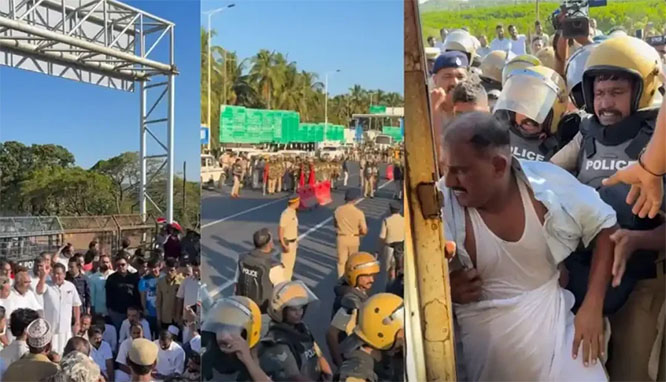
The Arikkady toll plaza witnessed widespread protests from January 12, the day toll collection commenced. On the second day, an action committee led by Manjeshwar MLA A K M Ashraf launched an indefinite protest at the site. Except for the BJP, leaders and workers of most major political parties participated in the agitation.

On the night of January 14, a large number of protesters gathered at the plaza and vandalised property, following which authorities temporarily suspended toll operations. The BJP later also expressed opposition to the toll plaza and criticised NHAI’s decision. 

Comments

Add new comment

  • Coastaldigest.com reserves the right to delete or block any comments.
  • Coastaldigset.com is not responsible for its readers’ comments.
  • Comments that are abusive, incendiary or irrelevant are strictly prohibited.
  • Please use a genuine email ID and provide your name to avoid reject.
News Network
February 9,2026

The Supreme Court on Monday expressed grave concern over digital frauds, noting that more than ₹54,000 crore has been siphoned off through cyber crimes, and described the scale of the fraud as “absolutely robbery or dacoity”.

A bench of the apex court sought swift and coordinated action from the Reserve Bank of India (RBI), banks and other agencies to curb the rising menace of digital fraud. Observing that such large-scale losses could not occur without serious lapses, the court said the frauds “may be due to collusion or negligence of bank officials”.

The bench directed inter-departmental agencies to prepare a draft memorandum of understanding (MoU) within four weeks to strengthen coordination and effectively tackle digital frauds.

Taking note of an existing standard operating procedure (SOP) framed by the RBI, which prescribes immediate steps such as temporarily blocking debit cards to prevent cyber-enabled fraud, the court directed the Centre to formally adopt and implement the RBI’s SOP across the country.

“We direct the Centre to ensure pan-India implementation of the RBI SOP for inter-agency coordination in dealing with digital frauds. We also direct the CBI to identify cases of so-called ‘digital arrest’,” the bench said.

The Supreme Court further asked the Gujarat and Delhi governments to grant sanction for investigation in identified cases. It also directed the RBI, the Department of Telecommunications (DoT) and other concerned authorities to jointly hold a meeting to evolve a framework for compensation to victims of digital arrest frauds.

Emphasising victim relief, the court said a “pragmatic and liberal approach” is required while considering compensation for those affected by digital arrest scams.

If you want it sharper, more dramatic, or more neutral (wire-style), tell me which tone you’re aiming for.

Comments

Add new comment

  • Coastaldigest.com reserves the right to delete or block any comments.
  • Coastaldigset.com is not responsible for its readers’ comments.
  • Comments that are abusive, incendiary or irrelevant are strictly prohibited.
  • Please use a genuine email ID and provide your name to avoid reject.