



I wanted to be like Kareena Kapoor, Allah guided me to Islam'

[email protected] (Mangaluru)
August 19, 2014

Mumbai, Aug 19: She wanted to be like Kareena Kapoor, and “could not wait to act in a movie”. In her last year of college, she “got offers from casting directors who would scout for faces in campuses and on Facebook”. But her “well-to-do” Mumbai-based Kashmiri Muslim family would not allow her to take up any film job unless it was offered by Yash Chopra's YRF (Yash Raj Films). That was in 2012.
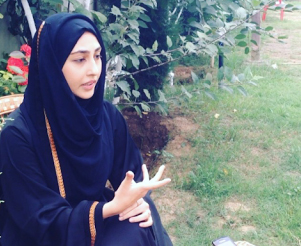
peerzada

Two years on, Murcyleen Peerzada, a 23-year-old Kashmiri woman based in Mumbai, does not idolise Kareena. She now dreams of “being like Yasmin Mogahed”, an Egypt-born American preacher known for her talks and articles on Islam.

There are other changes in Peerzada's life. She has given up her “Westernised, flamboyant” lifestyle. From a “crazy shopaholic” who would lap up the “most expensive dresses and jeans”, she now wears an all-black burqa. She says, “During my last trip to Dubai, I bought a lot of burqas; earlier, I'd shop for Western clothes.”

Her social media profile pictures have gone from her posing in glamorous tops to one in which she is draped in a hijab. All covered up, Peerzada is now an orator with the Mumbai-based, Zakir Naik-headed Islamic Research Foundation, and gives public talks on Islam in the city. Her last talk was at a ladies-only conference in Srinagar.

What caused the sudden, drastic transformation in Peerzada's aspirations and lifestyle? The Islamic preacher, though, says the change was anything but drastic. It began, she says, with Bollywood. Her father, Feroze Peerzada, a wealthy businessman who “had known Yash Chopra for the last three decades, since the days he wanted to be an actor” introduced her to the late Yash Chopra & Bollywood to Zakir Naik & hijab: such a short journey filmmaker in 2012. He offered her the job of an assistant director on the movie Ek Tha Tiger.

“That, I took, as a stepping stone to becoming an actor. I was fascinated with acting.” Then, she was signed up for YRF's Shuddh Desi Romance as a costume assistant director. But since the director Maneesh Sharma likes to take up newcomers for his movies, he asked her to do a screen test. “When I faced the camera, I suddenly felt exposed, emotionally and physically, even though I was wearing a salwar kameez. I felt vulnerable and uncomfortable. I just got up, and said, I don't want to do this,'” she says.

After some introspection, she realised that “actors are always so exposed” and texted Yash Chopra's son, filmmaker Aditya Chopra, that she has changed her mind about acting. “I didn't even want to be an assistant director any more. It's too hectic a job. What's the point if you don't want to be an actor any more?” she says. She then decided to become a costume stylist and began working with designer Manish Malhotra. Then, in October 2012, Yash Chopra passed away. “He was my mentor, and when he died, I felt I lost a big support. The idea of death shook me. I started questioning life. I wanted to look beyond singing, dancing and all that rubbish. What is the purpose of this life, I started thinking,” she says.
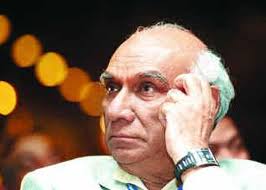
yash chopra

Peerzada quit her work with Malhotra, and sat at home for three-four months. “I was depressed. All my friends were being launched in the film world. And here I was, giving up all opportunities,” she says. Then, she saw a file of papers gathering dust in her home. “It was lying around in our home for six years. Someone had come and given that file to us, and we never bothered to look it up,” she says.

That evening in early 2013, she finally looked it up. It was a transcript of a video of Zakir Naik on the topic Women in Islam'. “I was not religious. I would pray only occasionally. But this file gripped me. I finished reading it that evening itself,” she says. That helped her find her “purpose in life”.

“I researched online and watched YouTube videos of Nouman Ali Khan and Yasmin Mogahed. I felt very enlightened and wanted to be like them,” she says. But she first needed to learn about religion. So, in March 2013, she enrolled for a course at IRF, under the tutelage of Farha Naik, the wife of Zakir Naik, “the most accurate researcher”. “I am doing their most advanced course in order to become an IRF orator,” she says. Giving talks at the IRF centre in Mumbai is a part of her course. She has delivered close to 10 lectures so far and, on August 10, she organised an Islamic peace conference' in Srinagar with the help of her father, “who has been supportive of and is inspired by” her transformation.

Her tweets are usually re-tweets of Islamic scholars, and most are spiritual, asking people to turn to Allah to solve problems in their lives. “I don't believe in teaching extremism. I have a very liberal approach towards religion. Angry speeches are not going to eventually appeal to the young, only love and wisdom can. Islam is a religion in controversy, and it needs youngsters like us to reach out to young Muslims in a humourous, light manner. American preacher Nouman Ali Khan cracks jokes in between his talks. That's how it should be,” she says.

nouman ali khan

None of Peerzada's talks are up on YouTube, but on Instagram, where she goes by the username turntoallah' and has 19,000 followers, she has posted 10-15-second videos of the Srinagar conference. In one, she says, “Nobody forced me. I started wearing the hijab on my own. I have never felt so strong and liberated in my life.”

In another clip, she says, “I don't want to be a seductress, calling people to the wrong things, which is why I left and I think that is the best decision I've ever made in my life.” One video has her saying, “Be friends with the righteous people, the company that will guide you to the right side.” Peerzada, in line with her lectures, has cut off with all her “partying, clubbing friends”.

Though Peerzada, who is doing her Masters in Islamic Studies from the Islamic Online University in Qatar, says she focuses on the “spiritual aspects” of the religion, and “has no say on who wears what”, some of her posts on Instagram suggest otherwise. “They (the media) reduce women to objects that satisfy men and cause only a negative impact in people's life including social networking sites. All the girls should learn to value themselves and their bodies. Cover up for the sake of Allah! Your body and also your character… My friends aren't the girls who display themselves to the world, my friends are the girls who say they believe in Allah and prove it everyday. They're the kinds that will Insha Allah reunite with me in jannah. Their goal isn't boys, parties and fashion'. Their goal is jannah.”

Peerzada feels that young Muslims are “bombarded with Westernisation”. “Half the songs we listen to and hum support a swag lifestyle. You know, like Kanye West's song I am a God.” Her other issue with young Muslims is that they “don't understand the meaning of the Quran because they've only read it in Arabic”. “We need to connect to the youth, speak in their language, be like some online preachers who are so joyful and approachable,” she says.

It seems she is on that path to “connect to the Muslim youth”. She writes in a post on Instagram: “Yesterday there was a musical concert in Kashmir 15 minutes away from our conference which was attended by Bollywood actors Sohail Khan and Suniel Shetty. For Kashmir, that's something rare. We were asked to move our conference so that we may be able to pull a crowd. But look at Allah's greatness, we gathered a crowd of 4,000 people and the concert a crowd of 200.” In a video she posted, Kashmiri women are haggling to shake hands with Peerzada, dressed in a shimmering black cloak. “I was walking in a street in Mumbai, and five young burqa-clad girls came to me and said that they recognise me as someone who's give a public talk,” she says.


Comments

Add new comment

  • Coastaldigest.com reserves the right to delete or block any comments.
  • Coastaldigset.com is not responsible for its readers’ comments.
  • Comments that are abusive, incendiary or irrelevant are strictly prohibited.
  • Please use a genuine email ID and provide your name to avoid reject.
News Network
January 31,2026

Roy.jpg

Bengaluru: The shooting incident involving CJ Roy, founder of the Confident Group, has once again put the spotlight on a businessman whose life has swung between flamboyant global success and persistent controversy at home.

Though Roy’s business interests extended across continents, his roots lay firmly in Karnataka. An alumnus of Christ School in Bengaluru, he later moved to Tumakuru to pursue an engineering degree. Those familiar with his early years describe him as intensely ambitious, beginning his career as a salesman at a small electronics firm dealing in computers.

Roy’s entry into large-scale real estate came through the Crystal Group, where he worked closely with Latha Namboothiri and rose from manager to director. However, the launch of the Confident Group in 2005 was clouded by industry speculation. Insiders speak of a fallout involving alleged “benami” properties and claims of deception that ultimately led to his independent venture—an episode Roy spent years trying to distance himself from, according to associates.

A tale of two cities

Roy’s professional trajectory diverged sharply across geographies.

In Dubai, he built a reputation as a bold and efficient developer, completing massive luxury residential projects in record time—some reportedly within 11 months. His rapid project delivery and lavish lifestyle in the Emirates earned him admiration and visibility in the real estate sector.

In Bengaluru, however, his image remained far more fractured. Sources say Roy stayed away from the city for several years amid disputes over unpaid dues to vendors and suppliers. Several projects were allegedly stalled, with accusations of unfulfilled commitments to cement and steel suppliers continuing to follow him.

Roy’s return to Bengaluru’s business and social circles began around 2018, marked by a conscious attempt at rebranding. His appointment as Honorary Consul of the Slovak Republic added diplomatic legitimacy, which he complemented with visible CSR initiatives, including ambulance donations and high-profile charity events.

Heavy police presence in Langford Town

Following the incident, police personnel from the Central division were deployed outside the Confident Group building in Langford Town, which also houses the Slovak Honorary Consulate in Bengaluru.

The otherwise busy premises near Hosur Road wore a deserted look on Friday, reflecting the shock and uncertainty that followed the tragedy.

Comments

Add new comment

  • Coastaldigest.com reserves the right to delete or block any comments.
  • Coastaldigset.com is not responsible for its readers’ comments.
  • Comments that are abusive, incendiary or irrelevant are strictly prohibited.
  • Please use a genuine email ID and provide your name to avoid reject.
News Network
February 3,2026

Bengaluru: Following reports of fresh Nipah virus (NiV) cases in West Bengal and heightened vigilance across parts of Southeast Asia, the Karnataka Health Department has placed the state on high alert and activated emergency preparedness protocols.

Health officials said enhanced surveillance measures have been initiated after two healthcare workers in Barasat, West Bengal, tested positive for the virus earlier this month. While no cases have been reported in Karnataka so far, authorities said the state’s past exposure to Nipah outbreaks and high inter-state mobility warranted preventive action.

Officials have directed district health teams to intensify monitoring, particularly at hospitals and points of entry, and to ensure early detection and isolation of suspected cases.

High Mortality Virus with Multiple Transmission Routes

Nipah virus is a zoonotic disease that can spread from animals to humans and has a reported fatality rate ranging between 60 and 75 per cent. Fruit bats, also known as flying foxes, are the natural reservoirs of the virus and can transmit it by contaminating food sources with saliva or urine.

Known modes of transmission include:

•    Contaminated food: Consumption of fruits partially eaten by bats or raw date-palm sap
•    Animal contact: Exposure to infected pigs or other animals
•    Human-to-human transmission: Close contact with body fluids of infected persons, particularly in healthcare settings

Symptoms and Disease Progression

The incubation period typically ranges from 4 to 14 days, though delayed onset has also been reported. Early symptoms often resemble common viral infections, making prompt clinical suspicion critical.

•    Initial symptoms: Fever, headache, body aches, fatigue, sore throat
•    Progressive symptoms: Drowsiness, disorientation, altered mental state
•    Severe stage: Seizures, neck stiffness and acute encephalitis, which can rapidly progress to coma

Public Health Advisory

The Health Department has issued precautionary guidelines urging the public to adopt risk-avoidance practices to prevent any local spillover.

Do’s
•    Wash fruits thoroughly before consumption
•    Drink boiled and cooled water
•    Use protective equipment while handling livestock
•    Maintain strict hand hygiene

Don’ts
•    Avoid fruits found on the ground or showing bite marks
•    Do not consume beverages made from raw tree sap, including toddy
•    Avoid areas with dense bat populations
•    Do not handle sick or dead animals

Preparedness Measures

Officials confirmed that isolation wards are being readied in major government hospitals and that medical staff are being sensitised to identify early warning signs.

“There is no cause for panic, but there is a need for heightened vigilance,” a senior health official said, adding that there is currently no approved vaccine or specific antiviral treatment for Nipah, and care remains largely supportive.

Comments

Add new comment

  • Coastaldigest.com reserves the right to delete or block any comments.
  • Coastaldigset.com is not responsible for its readers’ comments.
  • Comments that are abusive, incendiary or irrelevant are strictly prohibited.
  • Please use a genuine email ID and provide your name to avoid reject.
News Network
February 5,2026

Bengaluru: As air quality continues to worsen across several parts of the city, hospitals in Bengaluru are reporting a steady rise in patients suffering from respiratory illnesses such as asthma, bronchitis and Chronic Obstructive Pulmonary Disease (COPD), health officials and doctors said.

Data from the Suvarna Arogya Suraksha Trust (SAST) shows that 3,891 patients received treatment for respiratory ailments between April and November 2024. The figure rose to 4,187 during the same period in 2025.

Private hospitals, too, are witnessing a 10–15 per cent year-on-year increase in such cases.

While doctors caution that the rise cannot be attributed solely to air pollution, a significant number of patients are non-smokers with no prior history of respiratory disease.

“Nearly 70 per cent of the patients we see are non-smokers with no previous respiratory issues. When other causes are ruled out, air pollution emerges as the most likely factor,” said Dr Manjunath PH, consultant interventional pulmonologist at a hospital in Kengeri.

Doctors noted that patient footfall spikes during the winter months and around Deepavali, when air quality typically worsens.

“There is a clear correlation between poor air quality and the rise in cases. People commonly present with persistent cough, breathlessness and irritation of the respiratory tract, indicating the impact of polluted air on their health,” said Dr Sheetal Chaurasia, consultant in pulmonary medicine at a private hospital in Whitefield.

Dr Chaurasia added that respiratory tract infections are also on the rise.

“Poor air quality leads to chronic airway inflammation, making the airways more vulnerable to infections. We are seeing an increase in both upper and lower respiratory tract infections,” she said.

Patients with pre-existing respiratory conditions remain the worst affected.

“For those already diagnosed with respiratory illnesses, deteriorating air quality significantly worsens the condition. Both the frequency and severity of attacks increase sharply,” said Dr Vandana P, a pulmonologist at a hospital on Bannerghatta Road.

Doctors also flagged a worrying trend of rising respiratory problems among younger adults and children.

To reduce exposure, they advised people to wear masks while travelling on two-wheelers or autos and ensure adequate ventilation at home to minimise indoor air pollution.

Comments

Add new comment

  • Coastaldigest.com reserves the right to delete or block any comments.
  • Coastaldigset.com is not responsible for its readers’ comments.
  • Comments that are abusive, incendiary or irrelevant are strictly prohibited.
  • Please use a genuine email ID and provide your name to avoid reject.