



Apocalypse of hatred, intolerance, bigotry engulfing India: Sonia Gandhi

News Network
April 16, 2022

Hatred, bigotry and intolerance were "engulfing" the country and if not stopped these would damage the society beyond repair, Congress president Sonia Gandhi has alleged.

In a newspaper article, she called upon people not to allow this to go on and urged them to stop "this raging fire and tsunami of hate" that will "raze all that has been so painstakingly built by past generations".

"An apocalypse of hatred, bigotry, intolerance and untruth is engulfing our country today. If we don't stop it now, it will -- if it already hasn't -- damage our society beyond repair. We simply cannot and must not allow this to go on. We as a people cannot stand by and watch as peace and pluralism are sacrificed at the altar of bogus nationalism," she said in an article in 'The Indian Express'.

"Let us contain this raging fire, this tsunami of hate that has been unleashed before all that has been so painstakingly built by past generations is razed to the ground," Gandhi wrote.

She quoted Nobel laureate Rabindranath Tagore's 'Gitanjali' to say its verses were "all the more relevant and have heightened resonance" now.

"Over a century ago, the poet of Indian nationalism gave the world his immortal 'Gitanjali' of which perhaps the 35th verse has become the most celebrated and most quoted. Gurudev Tagore's prayer, with its seminal lines starting, 'Where the mind is without fear...' is all the more relevant and has heightened resonance today."

In the article "A Virus Rages", the Congress chief asked, "Does India have to be in a state of permanent polarisation?"

She alleged that the ruling establishment clearly wants the citizens of India to believe that such an environment was in their best interest.

"Whether it is dress, food, faith, festivals or language, Indian are sought to be pitted against Indians and the forces of discord are given every encouragement -- overt and covert. History -- both ancient and contemporary -- is continuously sought to be interpreted to promote prejudice animosity and vengeance," she claimed.

Her article comes in the wake of the Hijab row, violence during Ram Navami and the clash in the Jawaharlal Nehru University over serving non-vegetarian food in the hostel mess on the occasion.

Gandhi alleged it was a "travesty" that instead of utilizing the resources for creating a bright, new future for the country and engaging young minds in productive ventures, "time and valuable assets were being used up in attempts to refashion the present in terms of an imagined past".

Noting there was much talk from the prime minister about acknowledging India's diversity, she claimed the "harsh reality" was that under the ruling dispensation, the rich diversity that defined and enriched the society for centuries was "being manipulated to divide us and, worse, to harden and get more firmly entrenched" in them. 

"The rising chorus of hatred, the unconcealed instigation of aggression and even crimes against the minorities is a far departure from the accommodating, syncretic traditions in our society."

The Congress chief alleged, "There is something else more insidious that is part of this new, grand divisive plan to keep India in a state of permanent frenzy. All dissent and opinion that are opposed to the ideology of those in power are sought to be ruthlessly stifled. Political opponents are targeted and the full might of the state machinery is unleashed against them".

In the article, she claimed that activists were being threatened and sought to be silenced while social media particularly was being used to "propagate what can only be described as lies and venom".

"Fear, deception and intimidation have become the pillars of the so-called 'maximum governance, minimum government' strategy," Gandhi said.

Sharing a screenshot of the article on Twitter, Rahul Gandhi said, "Every Indian is paying the price for the hate fuelled by BJP-RSS. India's true culture is that of shared celebrations, community, and cohesive living. Let's pledge to preserve this."

Leader of Opposition in Rajya Sabha Mallikarjun Kharge shared an online link of Sonia Gandhi's article on the microblogging site and said, "The sense of hatred and animosity is prevalent in the nation, constantly fuelled by the ruling party BJP."

Comments

Add new comment

  • Coastaldigest.com reserves the right to delete or block any comments.
  • Coastaldigset.com is not responsible for its readers’ comments.
  • Comments that are abusive, incendiary or irrelevant are strictly prohibited.
  • Please use a genuine email ID and provide your name to avoid reject.
News Network
February 3,2026

manjeshwar.jpg

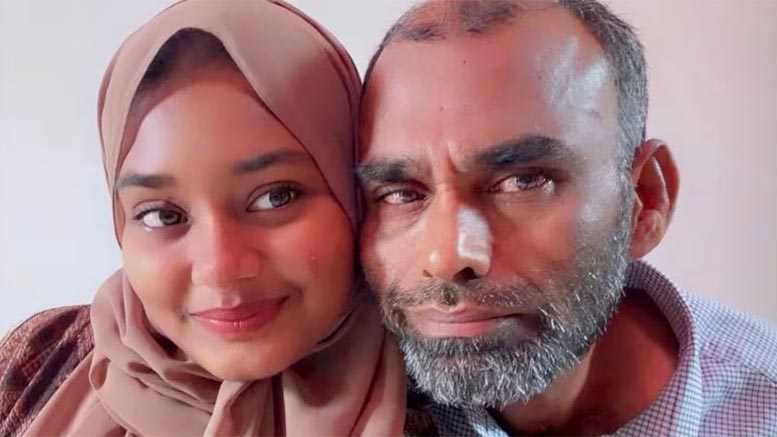
Kasaragod: An 18-year-old girl was stabbed to death at Thuminad in Manjeshwar panchayat on Monday, allegedly by her father following a domestic dispute. 

The victim has been identified as K U Mariyamath Jumaila. Her father, Umar Farooq, has been taken into police custody, Manjeshwar Station House Officer Inspector Ajith Kumar P said.

According to the police, Umar Farooq had been working in a West Asian country and returned home about three months ago. 

Family tensions reportedly escalated after his wife, Thahira (41), decided to seek a divorce and asked him to leave her life. Kasaragod district panchayat member Harshad Vorkady alleged that Umer was addicted to marijuana and frequently caused disturbances at home.

On Monday, Thahira asked Umar to come to her sister’s house in Thuminad to discuss the dispute. Jumaila accompanied her mother. 

Manjeshwar panchayat member Illiyas Thuminad said Umar arrived along with his brother, following which Thahira handed over gold ornaments and property documents to him and asked him to sever ties with her.

However, the police said a property dispute had been ongoing between Umar Farooq and his sister-in-law’s husband. During a heated argument, Umar allegedly attempted to attack the man with a sharp weapon. When Jumaila intervened to stop the assault, she was stabbed in the neck.

The teenager collapsed after bleeding profusely and was rushed to a private hospital in Mangaluru, where doctors declared her dead. Her body was later shifted to Mangalpady Taluk Hospital for post-mortem examination.

Jumaila was a former student of Sirajul Huda English Medium Higher Secondary School, Manjeshwar. 

Comments

Add new comment

  • Coastaldigest.com reserves the right to delete or block any comments.
  • Coastaldigset.com is not responsible for its readers’ comments.
  • Comments that are abusive, incendiary or irrelevant are strictly prohibited.
  • Please use a genuine email ID and provide your name to avoid reject.
News Network
February 3,2026

Bengaluru: Following reports of fresh Nipah virus (NiV) cases in West Bengal and heightened vigilance across parts of Southeast Asia, the Karnataka Health Department has placed the state on high alert and activated emergency preparedness protocols.

Health officials said enhanced surveillance measures have been initiated after two healthcare workers in Barasat, West Bengal, tested positive for the virus earlier this month. While no cases have been reported in Karnataka so far, authorities said the state’s past exposure to Nipah outbreaks and high inter-state mobility warranted preventive action.

Officials have directed district health teams to intensify monitoring, particularly at hospitals and points of entry, and to ensure early detection and isolation of suspected cases.

High Mortality Virus with Multiple Transmission Routes

Nipah virus is a zoonotic disease that can spread from animals to humans and has a reported fatality rate ranging between 60 and 75 per cent. Fruit bats, also known as flying foxes, are the natural reservoirs of the virus and can transmit it by contaminating food sources with saliva or urine.

Known modes of transmission include:

•    Contaminated food: Consumption of fruits partially eaten by bats or raw date-palm sap
•    Animal contact: Exposure to infected pigs or other animals
•    Human-to-human transmission: Close contact with body fluids of infected persons, particularly in healthcare settings

Symptoms and Disease Progression

The incubation period typically ranges from 4 to 14 days, though delayed onset has also been reported. Early symptoms often resemble common viral infections, making prompt clinical suspicion critical.

•    Initial symptoms: Fever, headache, body aches, fatigue, sore throat
•    Progressive symptoms: Drowsiness, disorientation, altered mental state
•    Severe stage: Seizures, neck stiffness and acute encephalitis, which can rapidly progress to coma

Public Health Advisory

The Health Department has issued precautionary guidelines urging the public to adopt risk-avoidance practices to prevent any local spillover.

Do’s
•    Wash fruits thoroughly before consumption
•    Drink boiled and cooled water
•    Use protective equipment while handling livestock
•    Maintain strict hand hygiene

Don’ts
•    Avoid fruits found on the ground or showing bite marks
•    Do not consume beverages made from raw tree sap, including toddy
•    Avoid areas with dense bat populations
•    Do not handle sick or dead animals

Preparedness Measures

Officials confirmed that isolation wards are being readied in major government hospitals and that medical staff are being sensitised to identify early warning signs.

“There is no cause for panic, but there is a need for heightened vigilance,” a senior health official said, adding that there is currently no approved vaccine or specific antiviral treatment for Nipah, and care remains largely supportive.

Comments

Add new comment

  • Coastaldigest.com reserves the right to delete or block any comments.
  • Coastaldigset.com is not responsible for its readers’ comments.
  • Comments that are abusive, incendiary or irrelevant are strictly prohibited.
  • Please use a genuine email ID and provide your name to avoid reject.
News Network
February 5,2026

Bengaluru: As air quality continues to worsen across several parts of the city, hospitals in Bengaluru are reporting a steady rise in patients suffering from respiratory illnesses such as asthma, bronchitis and Chronic Obstructive Pulmonary Disease (COPD), health officials and doctors said.

Data from the Suvarna Arogya Suraksha Trust (SAST) shows that 3,891 patients received treatment for respiratory ailments between April and November 2024. The figure rose to 4,187 during the same period in 2025.

Private hospitals, too, are witnessing a 10–15 per cent year-on-year increase in such cases.

While doctors caution that the rise cannot be attributed solely to air pollution, a significant number of patients are non-smokers with no prior history of respiratory disease.

“Nearly 70 per cent of the patients we see are non-smokers with no previous respiratory issues. When other causes are ruled out, air pollution emerges as the most likely factor,” said Dr Manjunath PH, consultant interventional pulmonologist at a hospital in Kengeri.

Doctors noted that patient footfall spikes during the winter months and around Deepavali, when air quality typically worsens.

“There is a clear correlation between poor air quality and the rise in cases. People commonly present with persistent cough, breathlessness and irritation of the respiratory tract, indicating the impact of polluted air on their health,” said Dr Sheetal Chaurasia, consultant in pulmonary medicine at a private hospital in Whitefield.

Dr Chaurasia added that respiratory tract infections are also on the rise.

“Poor air quality leads to chronic airway inflammation, making the airways more vulnerable to infections. We are seeing an increase in both upper and lower respiratory tract infections,” she said.

Patients with pre-existing respiratory conditions remain the worst affected.

“For those already diagnosed with respiratory illnesses, deteriorating air quality significantly worsens the condition. Both the frequency and severity of attacks increase sharply,” said Dr Vandana P, a pulmonologist at a hospital on Bannerghatta Road.

Doctors also flagged a worrying trend of rising respiratory problems among younger adults and children.

To reduce exposure, they advised people to wear masks while travelling on two-wheelers or autos and ensure adequate ventilation at home to minimise indoor air pollution.

Comments

Add new comment

  • Coastaldigest.com reserves the right to delete or block any comments.
  • Coastaldigset.com is not responsible for its readers’ comments.
  • Comments that are abusive, incendiary or irrelevant are strictly prohibited.
  • Please use a genuine email ID and provide your name to avoid reject.