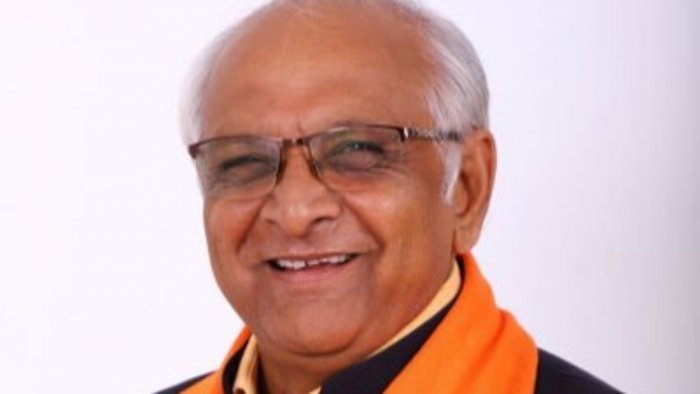
Bhupendra Patel, 55, is new Chief Minister of Gujarat

News Network
September 12, 2021

pate.jpg

Ahmadabad, Sept 12: Bhupendra Patel was elected as the new Chief Minister of Gujarat on Sunday. Patel is MLA from Ghatlodia seat. Patel (55) was unanimously elected BJP legislature party leader. His name was proposed by CM Vijay Rupani, whose resignation from the post on Saturday surprised many.

Patel won the 2017 Gujarat Legislative Assembly elections from Ghatlodia constituency, defeating Congress candidate Shashikant Patel.

Vijay Rupani (65) resigned on Saturday from the chief minister's post. It is not clear what prompted the development in Prime Minister Narendra Modi's home state, where elections to the 182-member Assembly are due in December next year.

Rupani (65), the fourth chief minister to demit office in BJP-ruled states during the coronavirus pandemic, was sworn in as chief minister – his second stint as CM - in December 2017.

"I have resigned as chief minister of Gujarat,” Rupani told reporters after meeting Governor Acharya Devvrat and submitting his resignation letter.

"I was allowed to serve the state for five years. I have contributed to the development of the state. I will further do whatever is asked by my party,” said Rupani, who completed five years in office on August 7 this year.

He first became the chief minister on August 7, 2016, following the resignation of incumbent Anandiben Patel, and continued in the office after the BJP's victory in the 2017 Assembly elections.

Comments

Add new comment

  • Coastaldigest.com reserves the right to delete or block any comments.
  • Coastaldigset.com is not responsible for its readers’ comments.
  • Comments that are abusive, incendiary or irrelevant are strictly prohibited.
  • Please use a genuine email ID and provide your name to avoid reject.
News Network
January 6,2026

lamp.jpg

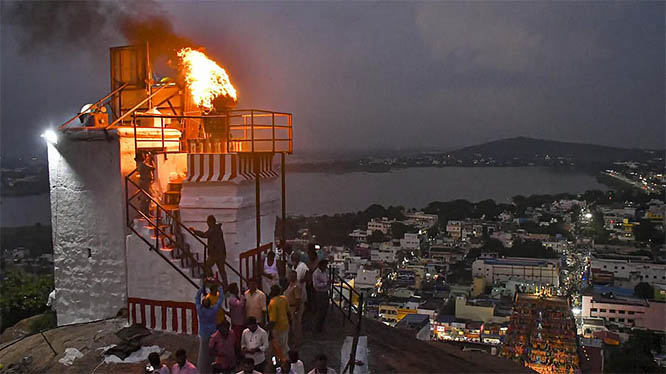
Chennai: The Madras High Court has strongly criticised the Tamil Nadu government for citing what it termed an “imaginary” law and order concern to delay the implementation of a court order permitting the lighting of the Deepam on the Deepathoon atop the Thiruparankundram hills in Madurai.

Upholding an earlier order passed by Justice G R Swaminathan, a division bench of Justices G Jayachandran and K K Ramakrishnan of the Madurai Bench dismissed the appeal filed by the state government and reaffirmed that the Deepam could be lit at the site during Karthigai Deepam.

The bench expressed displeasure over the government’s failure to implement the single judge’s directive, even after permission was granted for CISF personnel to accompany the petitioner, Rama Ravikumar, to the hilltop on December 3 to light the lamp. While allowing the ritual, the court clarified that the number of people permitted to climb the hill would be determined by the Archaeological Survey of India (ASI).

The state government had objected to the single judge’s order, arguing that allowing people to climb the hill and light the Deepam could trigger law and order issues, as the Sikkander Badusha Dargah is located about 50 metres from the Deepathoon. Meanwhile, officials of the Hindu Religious and Charitable Endowments (HR&CE) Department went ahead with lighting the lamp at the Uchipillaiyar temple at 6 pm, following established tradition.

Rejecting the government’s stand, the division bench said the apprehension of law and order problems was an “imaginary ghost” created by the authorities for their own convenience and criticised the district administration for not complying with the court’s order. The judges observed that instead of raising unfounded fears, the administration should have used the judgment as an opportunity to foster dialogue and harmony between communities.

The court also noted that neither the state government nor representatives of the dargah had produced any evidence to show that agama shastra prohibited the lighting of the Deepam at the site.

The Thiruparankundram hill has historically been a symbol of communal harmony, housing the Subramaniya Swamy temple, the Kasi Viswanathan temple and the Sikkander Badusha Dargah for centuries. However, the site became a flashpoint in February 2025 after protests by Hindu organisations over allegations that Lok Sabha MP Nawaz Kani consumed meat on the hill. Despite the controversy, local residents continue to live in peace and mutual coexistence. 

Comments

Add new comment

  • Coastaldigest.com reserves the right to delete or block any comments.
  • Coastaldigset.com is not responsible for its readers’ comments.
  • Comments that are abusive, incendiary or irrelevant are strictly prohibited.
  • Please use a genuine email ID and provide your name to avoid reject.
News Network
January 20,2026

DGP.jpg

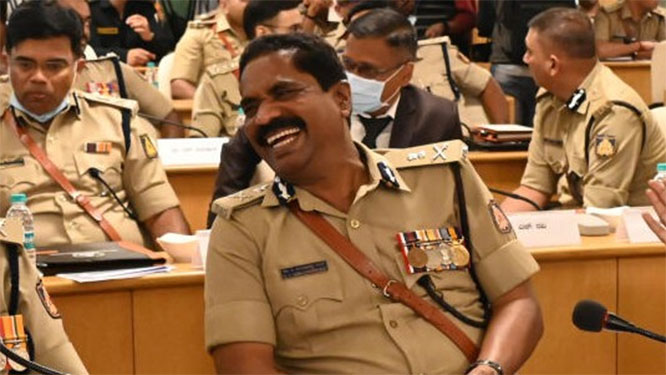
Karnataka DGP (Civil Rights Enforcement) K Ramachandra Rao was suspended with immediate effect, as per a state government order issued on Monday, 19 January. The order cited conduct unbecoming of a government servant and causing embarrassment to the state administration.

The Karnataka government suspended Rao after a purported video showed him in a compromising position with a woman inside his official chamber. The video went viral on social media. Rao rejected the videos outright, terming them "fabricated and false".

Who is K Ramachandra Rao?

Rao is a DGP-rank officer who was heading the Directorate of Civil Rights Enforcement until his suspension. He was promoted to DGP in September 2023 and assumed office in October 2023, the Sunday Guardian reported.

He also served as the Chairman and Managing Director of the Karnataka State Police Housing and Infrastructure Development Corporation Limited.

His stint as the Inspector General of Police (IGP) for the Southern Range was also marred by controversy. In 2014, during a cash seizure near Mysuru’s Yelwal, officials claimed the seized amount was ₹20 lakh, while the accused (Kerala-based merchants) claimed it was around ₹2.27 crore.

Rao, who was present during the seizure, denied all allegations. However, he was transferred soon after.

Allegations of collusion with a businessman surfaced, and a senior police officer was quoted by The Sunday Guardian as saying, “In Rao’s case, the CID has clearly mentioned that there was a great degree of lapse on the part of Rao and a deputy superintendent of police after it was brought to their notice that a few policemen, including a gunman attached to the IGP, were involved in the robbery.”

Rao had denied all wrongdoing in that incident. Despite past controversies, he rose to the state’s top police position, the Sunday Guardian reported.

Ranya Rao’s stepfather

Rao is the stepfather of Kannada actress Harshavardhini Ranya alias Ranya Rao, accused of orchestrating the illegal import of gold worth over ₹12.56 crore from Dubai to India along with two others — businessman Tarun Raju, and jewellery dealer Sahil Jain.

‘Obscene video’ controversy

A viral video showed Rao behaving inappropriately with a woman inside his office while in uniform.

The Karnataka government said in its Monday order that “vide videos and news reports widely broadcast on public news channels and media platforms, it is observed that Dr K Ramachandra Rao has acted in an obscene manner which is unbecoming of a Government Servant and also causing embarrassment to the Government.”

The order said the matter was examined by the state government, which found that the officer's conduct amounted to a violation of Rule 3 of the All India Services (Conduct) Rules, 1968.

The government said it is prima facie satisfied that "it is necessary to place Rao under suspension with immediate effect, pending inquiry".

During the suspension period, Rao will be entitled to subsistence allowance as per Rule 4 of the All India Services (Discipline and Appeal) Rules, 1969.

The order also places restrictions on his movement, stating that during the period of suspension, the officer must not leave headquarters under any circumstances without the written permission of the state government.


Comments

Add new comment

  • Coastaldigest.com reserves the right to delete or block any comments.
  • Coastaldigset.com is not responsible for its readers’ comments.
  • Comments that are abusive, incendiary or irrelevant are strictly prohibited.
  • Please use a genuine email ID and provide your name to avoid reject.
News Network
January 14,2026

phone.jpg

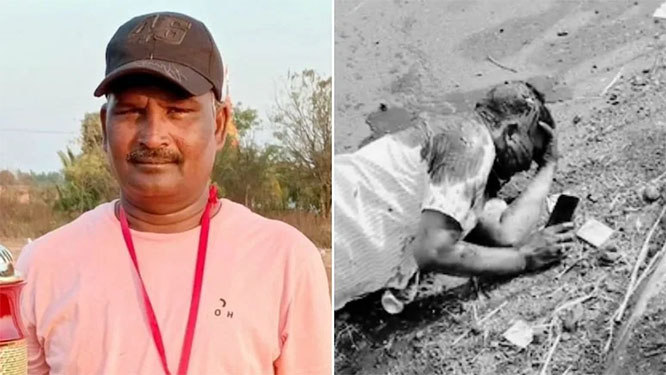
Bidar (Karnataka): A routine ride turned fatal when a nylon kite string slit the throat of a 48-year-old motorcyclist in Karnataka’s Bidar district, claiming his life in a chilling reminder of the deadly threat posed by banned kite-flying materials.

The victim, identified as Sanjukumar Hosamani, was riding near the Talamadagi Bridge when a taut kite string stretched across the road cut deep into his neck, causing profuse bleeding. Critically injured, Hosamani collapsed from his motorcycle but managed to place a final phone call to his daughter.

A disturbing video circulating on social media shows Hosamani drenched in blood, struggling to dial his daughter’s number as life ebbed away.

A passerby attempted to help by pressing a cloth against the wound to stop the bleeding. Locals said an ambulance was called immediately, but it arrived too late. Hosamani succumbed to his injuries before he could be taken to a hospital.

Family members have blamed the delay in emergency response for his death, alleging that timely medical assistance could have saved his life.

Following the incident, Hosamani’s relatives and local residents staged a protest at the accident spot, demanding strict action against the use of nylon kite strings and urgent improvements in emergency medical services.

Police have registered a case at Manna Ekhelli Police Station and said an investigation is underway.

Kite flying during Makar Sankranti is a long-standing tradition across many parts of India. While cotton strings coated with powdered glass were once common, they have increasingly been replaced by cheaper and more durable nylon strings. This durability, however, has proven lethal, as nylon can slice through skin with ease.

Commonly referred to as Chinese manjha, these strings pose a grave danger to two-wheeler riders, who often fail to notice the nearly invisible lines stretched across roads and flyovers.

The Karnataka incident is the latest in a series of such deaths reported across the country. Just this week, a 45-year-old man in Indore died after a kite string slit his throat. Delhi has witnessed multiple fatalities in recent years, including the deaths of a 22-year-old businessman in 2025, a biker in 2022, and a seven-year-old child in 2023.

Despite periodic raids and seizures by authorities, the recurring deaths underline serious gaps in enforcement, raising questions about whether current measures are sufficient to prevent further loss of life.

Comments

Add new comment

  • Coastaldigest.com reserves the right to delete or block any comments.
  • Coastaldigset.com is not responsible for its readers’ comments.
  • Comments that are abusive, incendiary or irrelevant are strictly prohibited.
  • Please use a genuine email ID and provide your name to avoid reject.