



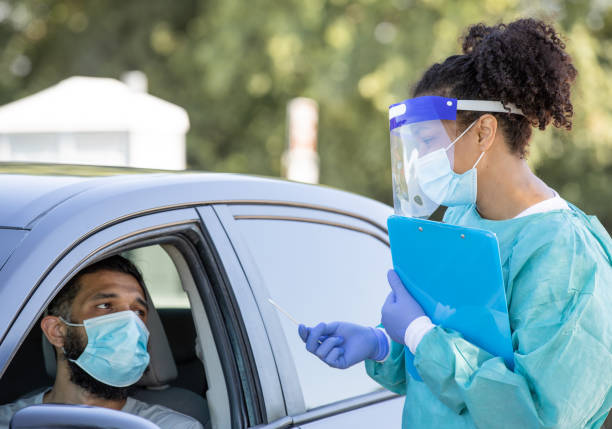
Covid-19 tests make Indians poorer by Rs 74K crore in 2 years

News Network
February 6, 2022

test.jpg

Mumbai, Feb 6: In the past two years of the Coronavirus pandemic, Indians have coughed out a stupendous Rs 74,000 crore for 74 crore Covid-19 tests from dubious private pathological labs. Finally, around 4.20 crore positive cases were detected with more than 500,000 deaths, to date.

A Nagpur-based consumer rights NGO, Grahak Bharati has said that Indians have taken various Covid-19 tests like RTPCR, RAT, TrueNAT, CBNAAT and other tests (currently) 3,255 testing labs including 1,844 private and 1,411 government.

Of these 3,255, only 2,141 (764 government and 1,377 private) labs are for conducting the much-in-demand, compulsory for most purposes and universally accepted RTPCR tests., and the remaining 1,114 (647 government+467) labs offer the other tests.

In the initial stages of the pandemic, a test was costing around Rs 3,500 or more, but gradually, the figures have stabilised to around Rs 600, besides cheap home-test kits available for around Rs 250 now.

"Considering an average of Rs 1000/test, Indians have been compelled to spend over Rs 74,000-crore only for Covid-19 tests, with private labs netting the major portion of the loot," Grahak Bharati Founder-President Barrister Vinod Tiwari said.

He claimed that a majority of these tests were virtually forced on the people even though they had no initial symptoms, or, unnecessary considering the low positivity rate, and ended up spooking the country in the name of coronavirus.

Grahak Bharati has shot off a memorandum to Prime Minister Narendra Modi, Minister of Health & Family Welfare Mansukh Mandaviya, Maharashtra Chief Minister Uddhav Thackeray, the ICMR, top central and state officials and the Central Vigilance Commission, demanding a probe into the "massive unbridled dacoity" being perpetrated on gullible Indians.

He warned that if the government fails to take priority cognisance of this nationwide racket, Grahak Bharati would file a PIL in the Supreme Court.

Alleging that it is "a systematic mega-scam" with the connivance of government officials, unscrupulous private labs and their franchisees operating with the generous blessings of politicians, Tiwari contended that it violates provisions of the central Clinical Establishments (Registration and Regulation) Act, 2010 and make such shady labs liable for severe penal action.

Elaborating, Tiwari explained that many of the private labs are remotely located franchisees under the officially approved/recognised Advanced Laboratories (1,844) in India.

Shockingly, many of these labs apparently conduct thousands of Covid-19 tests daily, ostensibly without proper approval, authority, quality control, infrastructure or qualified manpower.

"The ICMR has said that on a single day on Feb. 4, there were an unbelievable 16,03,856 tests conducted Were these necessary and practical? This only points to the possibility that a majority of the Covid tests are 'concocted' to scare the masses," alleged Tiwari.

The worrisome aspect is that merely based on these illegally-conducted tests, the government has been taking major policy decisions like lockdowns, restrictions, curbs on inter-district, inter-state and even international public movements, which in turn has spelt the death-knell for the economy. India ranks second globally (after the USA) in terms of the total infectees notched up to date.

"The so-called franchisee labs lack infrastructure, qualified post-graduate doctors, particularly Pathologist and Microbiologist and others compulsorily required for the RTPCR tests and to determine the Covid-19 positive patients, tests are conducted in remote locations and the test results are issued indiscriminately, with the digital signatures of the medicos at Advanced Laboratories thousands of kms away," fumed Tiwari.

Grahak Bharati says there is no control on the procedures for sample collection, handling, proper testing or accurate determination which often lead to contradictory results.

It recently happened with two Mumbaikars who got two different results - Covid negative and Covid positive - from two labs in 24 hours  but the Aarogya Setu portal remained unfazed.

Tiwari said that the country is in the grip of the mild Third Wave but "there is no guarantee" how many more 'waves' will sink Indians unless the government immediately clamps down on this "blatant, organised scam".

Comments

Add new comment

  • Coastaldigest.com reserves the right to delete or block any comments.
  • Coastaldigset.com is not responsible for its readers’ comments.
  • Comments that are abusive, incendiary or irrelevant are strictly prohibited.
  • Please use a genuine email ID and provide your name to avoid reject.
News Network
February 3,2026

Bengaluru: Following reports of fresh Nipah virus (NiV) cases in West Bengal and heightened vigilance across parts of Southeast Asia, the Karnataka Health Department has placed the state on high alert and activated emergency preparedness protocols.

Health officials said enhanced surveillance measures have been initiated after two healthcare workers in Barasat, West Bengal, tested positive for the virus earlier this month. While no cases have been reported in Karnataka so far, authorities said the state’s past exposure to Nipah outbreaks and high inter-state mobility warranted preventive action.

Officials have directed district health teams to intensify monitoring, particularly at hospitals and points of entry, and to ensure early detection and isolation of suspected cases.

High Mortality Virus with Multiple Transmission Routes

Nipah virus is a zoonotic disease that can spread from animals to humans and has a reported fatality rate ranging between 60 and 75 per cent. Fruit bats, also known as flying foxes, are the natural reservoirs of the virus and can transmit it by contaminating food sources with saliva or urine.

Known modes of transmission include:

•    Contaminated food: Consumption of fruits partially eaten by bats or raw date-palm sap
•    Animal contact: Exposure to infected pigs or other animals
•    Human-to-human transmission: Close contact with body fluids of infected persons, particularly in healthcare settings

Symptoms and Disease Progression

The incubation period typically ranges from 4 to 14 days, though delayed onset has also been reported. Early symptoms often resemble common viral infections, making prompt clinical suspicion critical.

•    Initial symptoms: Fever, headache, body aches, fatigue, sore throat
•    Progressive symptoms: Drowsiness, disorientation, altered mental state
•    Severe stage: Seizures, neck stiffness and acute encephalitis, which can rapidly progress to coma

Public Health Advisory

The Health Department has issued precautionary guidelines urging the public to adopt risk-avoidance practices to prevent any local spillover.

Do’s
•    Wash fruits thoroughly before consumption
•    Drink boiled and cooled water
•    Use protective equipment while handling livestock
•    Maintain strict hand hygiene

Don’ts
•    Avoid fruits found on the ground or showing bite marks
•    Do not consume beverages made from raw tree sap, including toddy
•    Avoid areas with dense bat populations
•    Do not handle sick or dead animals

Preparedness Measures

Officials confirmed that isolation wards are being readied in major government hospitals and that medical staff are being sensitised to identify early warning signs.

“There is no cause for panic, but there is a need for heightened vigilance,” a senior health official said, adding that there is currently no approved vaccine or specific antiviral treatment for Nipah, and care remains largely supportive.

Comments

Add new comment

  • Coastaldigest.com reserves the right to delete or block any comments.
  • Coastaldigset.com is not responsible for its readers’ comments.
  • Comments that are abusive, incendiary or irrelevant are strictly prohibited.
  • Please use a genuine email ID and provide your name to avoid reject.
News Network
February 1,2026

Bengaluru, Feb 1: For travelers landing at Kempegowda International Airport (KIA), the sleek, wood-paneled curves of Terminal 2 promise a world-class welcome. But the famed “Garden City” charm quickly withers at the curb. As India’s aviation sector swells to record numbers—handling over 43 million passengers in Bengaluru alone this past year—the “last mile” has turned into a marathon of frustration.

The Bengaluru Logjam: Rules vs Reality

While the city awaits the 2027 completion of the Namma Metro Blue Line, the interim has been chaotic. Recent “decongestion” rules at Terminal 1 have pushed app-based cab pickups to distant parking zones, forcing weary passengers into a 20-minute walk with luggage.

“I landed after ten months away and felt like a stranger in my own city,” says Ruchitha Jain, a Koramangala resident. “My driver couldn’t find me, staff couldn’t guide me, and the so-called ‘Premium’ lane is just a fancy tax on convenience.”

•    The Cost of Distance: A 40-km cab ride can now easily cross ₹1,500, driven by demand pricing and airport surcharges.

•    The Bus Gap: While Vayu Vajra remains a lifeline, its ₹300–₹400 fare is often cited as the most expensive airport bus service in the country.

A National Pattern of Disconnect

The struggle is not unique to Karnataka. From Chennai’s coast to Hyderabad’s plateau, India’s airports tell a familiar story: brilliant runways, broken exits.

City:    Primary Issue   |    Recent Development

Bengaluru:    Cab pickup restrictions & distance  |    App-based taxis shifted to far parking zones; long walks and fare spikes reported

Chennai:    Multi-Level Parking (MLCP) hike  |    Passengers report 40-minute walks to reach cab pickup points

Hyderabad:    “Taxi mafia” & touting  |    Over 440 touting cases reported; security presence intensified

Mumbai:    Fare scams  |     Tourists charged ₹18,000 for just 400 metres, triggering police action

In Hyderabad, travelers continue to battle entrenched local groups that intimidate Uber and Ola drivers, pushing passengers toward overpriced private taxis. Chennai flyers, meanwhile, complain that reaching the designated pickup zones now takes longer than short-haul flights from cities like Coimbatore.

The ‘Budget Day’ Hope

As Finance Minister Nirmala Sitharaman presents the Union Budget 2026 today, the aviation sector is watching closely. With the government’s renewed emphasis on multimodal integration, there is cautious hope for funding toward seamless airport-metro-bus hubs.

The vision is clear: a future where planes, trains, and metros speak the same language. Until then, passengers at KIA—and airports across India—will continue to discover that the hardest part of flying isn’t the thousands of kilometres in the air, but the last few on the ground.

Comments

Chandramohan
 - 
Friday, 6 Feb 2026

Sir, I request the airport authorities to introduce a free transport services from terminal 1 to terminal 2 as is very difficult for the passengers to reach terminal 2 along with their luggage. Also a trolley should be provided to reach the counter. Hope the authorities would help the passengers as soon as possible.

Add new comment

  • Coastaldigest.com reserves the right to delete or block any comments.
  • Coastaldigset.com is not responsible for its readers’ comments.
  • Comments that are abusive, incendiary or irrelevant are strictly prohibited.
  • Please use a genuine email ID and provide your name to avoid reject.
News Network
February 4,2026

shettigar.jpg

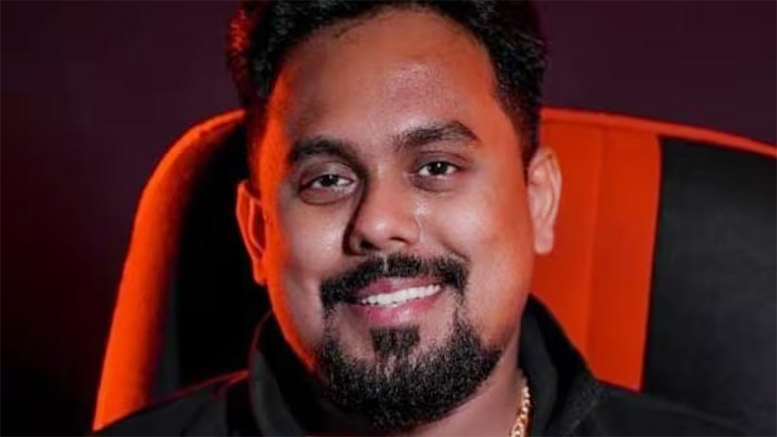
An Indian resident who won the Dh20 million (approximately Rs 50 crore) jackpot in Abu Dhabi's Big Ticket draw has told of his joy at sharing his life-changing fortune with a friend.

Shanthanu Shettigar, a shop manager in Muscat, regularly buys tickets for the monthly grand prize draw with one of his closest friends – and the pair won on February 3.

Mr Shettigar, 33, who is from Udyavar in Udupi district of the southern state of Karnataka and has lived in the Omani capital for eight years, said he was left speechless after learning of his success.

“When I first moved to Muscat, many of my colleagues were purchasing Big Ticket, which encouraged me to give it a try,” he said.

“I started buying tickets on my own, and later began sharing tickets with a close friend. The ticket that brought me this win was one we purchased together.”

“Like most people, I receive a lot of spam calls, and I was fully absorbed in my work as well. I knew the live draw was taking place tonight, but I never imagined my name would be announced,” he said.

“When I realised it was real and that I had won, I was honestly speechless. It still hasn’t fully sunk in, but I’m extremely happy.”

Mr Shettigar is not sure how he will spend his share of the money, but encouraged others to take part.

“This win was completely unexpected, so I want to take some time to think things through before deciding what to do next,” he said.

“I would definitely encourage others to participate with Big Ticket, whether with family or friends – you never know when your moment might come.”

The Big Ticket was established in 1992 with an initial first prize of Dh1 million. It is one of the most popular monthly raffles in the UAE.

It has transformed the lives of many people across the Emirates and beyond.

Entry to the Big Ticket Millionaire is Dh500. Tickets can be bought online or at counters at Zayed International Airport and Al Ain Airport.

Comments

Add new comment

  • Coastaldigest.com reserves the right to delete or block any comments.
  • Coastaldigset.com is not responsible for its readers’ comments.
  • Comments that are abusive, incendiary or irrelevant are strictly prohibited.
  • Please use a genuine email ID and provide your name to avoid reject.