India fears another covid catastrophe as cases continue to rise

Agencies
January 7, 2022

catastrophy.jpg

Haunted by the spectre of last year's crisis, India is bracing for a deluge of Covid-19 cases, with authorities of various megacities bringing in restrictions in a bid to keep infections in check.

Case numbers have yet to match the enormous figures seen last spring, when thousands died each day and the Hindu holy city of Varanasi maintained round-the-clock funeral pyres for the mass cremation of virus victims.

But daily infections nearly tripled over two days this week to more than 90,000, a surge driven by the highly contagious Omicron variant that some experts worry could again see the country's hospitals overwhelmed.

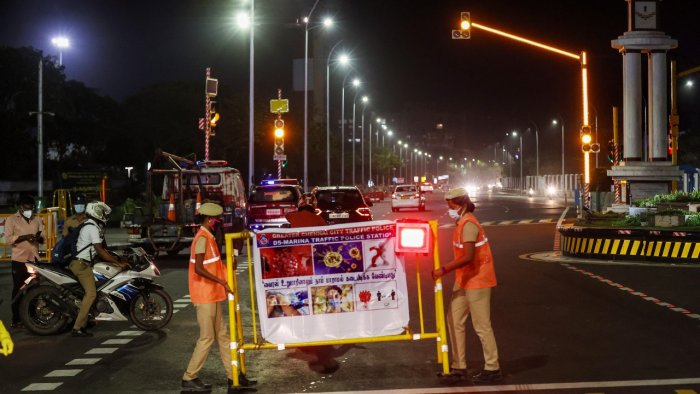
An overnight curfew has been imposed in the Delhi area that includes the capital, where weekend movement restrictions will begin on Friday evening, with all non-essential workers asked to stay home.

Tech hub Bangalore has also declared a weekend curfew, while sprawling financial centre Mumbai introduced a night curfew.

"Even a small percentage of a large number of cases translates to a large number in absolute terms," Gautam Menon, a professor at India's Ashoka University who has worked on Covid infection modelling, told AFP.

"This could potentially stress out health care systems to levels comparable to or worse than the second wave."

Doctors and nurses who spoke to AFP have so far been optimistic, with fewer severe cases among those patients admitted to hospital -- and with the benefit of experience.

"Last year, we didn't know what exactly we were dealing with. I think now, mentally, it's a little better," one frontline worker at a Delhi hospital said.

Suresh Kumar, director of Lok Nayak Jai Prakash Hospital in the capital, where cases have quadrupled from a handful at the start of the week to 20, said the rise was "not a cause for panic".

Prime Minister Narendra Modi's administration has so far shied away from the drastic nationwide lockdown introduced during last year's catastrophic outbreak.

But local officials have watched the sharply rising case numbers with alarm and some of India's biggest urban centres have moved to impose restrictions again.

Earlier virus lockdowns were a hammer blow to the Indian economy and many are worried about the financial impact of new restrictions.

"I will be working only for 15 days this month," said Delhi resident Tumul Srivastava, whose office is subject to the 50 percent occupancy limits imposed by the city.

"My salary may be deducted. All this is adding to my anxiety."

India appears better placed to weather Omicron than it was ahead of the calamitous Delta wave it suffered last spring, when more than 200,000 people died in a matter of weeks.

Back then, hospitals ran out of oxygen and patients desperately scrambled to source medicine after a run on pharmacies.

In the time since, Indian health workers have injected nearly 1.5 billion vaccine doses, with government data showing nearly two-thirds of the country fully vaccinated.

That campaign, combined with last year's Delta sweep of towns and villages around the country, may help lessen the impact of the latest spread.

"Though we do not have data, this may give strong hybrid immunity against severe outcomes," University of Michigan epidemiologist Bhramar Mukherjee told AFP.

Preliminary studies have so far suggested the Omicron variant has led to less severe health consequences among those infected, despite its rapid spread.

Mukherjee warned however that an uncontrolled spread of new infections could still pose serious problems for India, even if the direct virus toll is a fraction of that seen last year.

"As you are witnessing in the US and UK, a major chunk of the working population being sick is affecting the societal infrastructure and leading to chaos," she said.

"I am afraid there may be a period in India when we see the same thing -- just the sheer volume may make the system crumble."

Comments

Add new comment

  • Coastaldigest.com reserves the right to delete or block any comments.
  • Coastaldigset.com is not responsible for its readers’ comments.
  • Comments that are abusive, incendiary or irrelevant are strictly prohibited.
  • Please use a genuine email ID and provide your name to avoid reject.
News Network
January 31,2026

Roy.jpg

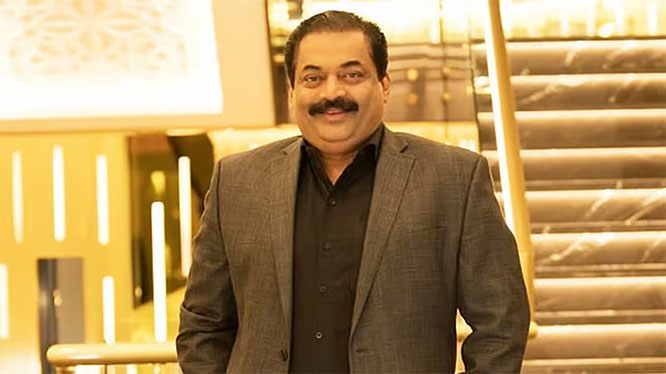
Bengaluru: The shooting incident involving CJ Roy, founder of the Confident Group, has once again put the spotlight on a businessman whose life has swung between flamboyant global success and persistent controversy at home.

Though Roy’s business interests extended across continents, his roots lay firmly in Karnataka. An alumnus of Christ School in Bengaluru, he later moved to Tumakuru to pursue an engineering degree. Those familiar with his early years describe him as intensely ambitious, beginning his career as a salesman at a small electronics firm dealing in computers.

Roy’s entry into large-scale real estate came through the Crystal Group, where he worked closely with Latha Namboothiri and rose from manager to director. However, the launch of the Confident Group in 2005 was clouded by industry speculation. Insiders speak of a fallout involving alleged “benami” properties and claims of deception that ultimately led to his independent venture—an episode Roy spent years trying to distance himself from, according to associates.

A tale of two cities

Roy’s professional trajectory diverged sharply across geographies.

In Dubai, he built a reputation as a bold and efficient developer, completing massive luxury residential projects in record time—some reportedly within 11 months. His rapid project delivery and lavish lifestyle in the Emirates earned him admiration and visibility in the real estate sector.

In Bengaluru, however, his image remained far more fractured. Sources say Roy stayed away from the city for several years amid disputes over unpaid dues to vendors and suppliers. Several projects were allegedly stalled, with accusations of unfulfilled commitments to cement and steel suppliers continuing to follow him.

Roy’s return to Bengaluru’s business and social circles began around 2018, marked by a conscious attempt at rebranding. His appointment as Honorary Consul of the Slovak Republic added diplomatic legitimacy, which he complemented with visible CSR initiatives, including ambulance donations and high-profile charity events.

Heavy police presence in Langford Town

Following the incident, police personnel from the Central division were deployed outside the Confident Group building in Langford Town, which also houses the Slovak Honorary Consulate in Bengaluru.

The otherwise busy premises near Hosur Road wore a deserted look on Friday, reflecting the shock and uncertainty that followed the tragedy.

Comments

Add new comment

  • Coastaldigest.com reserves the right to delete or block any comments.
  • Coastaldigset.com is not responsible for its readers’ comments.
  • Comments that are abusive, incendiary or irrelevant are strictly prohibited.
  • Please use a genuine email ID and provide your name to avoid reject.
News Network
February 5,2026

In an era where digital distractions are the primary rival to academic excellence, the Karnataka Education Department is taking the fight directly to the living room. As the SSLC (Class 10) annual examinations loom, officials have launched a localized "digital strike" to ensure students aren't losing their competitive edge to scrolling or soap operas.

The 7-to-9 Lockdown

The department has issued a formal directive urging—and in some cases, enforcing via home visits—a total blackout of mobile phones and television sets between 7:00 PM and 9:00 PM. This two-hour window is being designated as "sacred study time" across the state until the examinations conclude on April 2.

Key Pillars of the Initiative:

•    Doorstep Advocacy: Teachers are transitioning from classrooms to living rooms, meeting parents to explain the psychological benefits of a distraction-free environment.

•    Parental Accountability: The campaign shifts the burden of discipline from the student to the household, asking parents to lead by example and switch off their own devices.

•    The Timeline: The focus remains sharp on the upcoming exam block, scheduled from March 18 to April 2.

"The objective is simple: uninterrupted focus. We are reclaiming the evening hours for the students, ensuring their environment is as prepared as their minds," stated a senior department official.

Student vs. Reality

While the student community has largely welcomed the "forced focus"—with many admitting they lack the willpower to ignore notifications—the move has sparked a debate on enforceability. Without a "TV Police," the success of this initiative rests entirely on the shoulders of parents and the persuasive power of visiting educators.

Comments

Add new comment

  • Coastaldigest.com reserves the right to delete or block any comments.
  • Coastaldigset.com is not responsible for its readers’ comments.
  • Comments that are abusive, incendiary or irrelevant are strictly prohibited.
  • Please use a genuine email ID and provide your name to avoid reject.
News Network
January 28,2026

ajit.jpg

Mumbai: The sudden death of Maharashtra Deputy Chief Minister Ajit Pawar in a plane crash in his hometown of Baramati has plunged the state into political uncertainty, raising a pressing question for both the Nationalist Congress Party (NCP) and its rival faction, the Nationalist Congress Party (Sharadchandra Pawar): what next?

For the two factions that emerged after the dramatic split of June–July 2023, the moment marks their gravest challenge yet. Many believe the answer now rests with party founder Sharad Pawar.

Sharad Pawar, who founded the NCP in 1999 after parting ways with the Congress over Sonia Gandhi’s foreign origin, has already indicated his intention to step away from electoral politics once his Rajya Sabha term ends in April 2026.

Speaking at a public event in Baramati ahead of his 85th birthday on December 12, 2025, Pawar said he would not contest any further elections. “I have contested 14 elections. The younger generation needs to be given an opportunity,” he said, adding that he would decide later whether to seek another Rajya Sabha term.

Often described as the Bhishma Pitamah of Indian politics, Pawar also spoke of his gradual withdrawal from active leadership. “For the first 30 years, I handled everything. For the next 25–30 years, Ajit Dada handled responsibilities. Now, arrangements must be made for new leadership,” he said.

Ajit Pawar’s death has dramatically altered that transition, especially as he was working towards reunifying the two NCP factions.

“After the developments of June–July 2023 and the 2024 Lok Sabha and Vidhan Sabha elections, there were deep changes within the family and the party. In the last six months, serious efforts were made to reunite. Even workers from both sides wanted unity. This is a massive blow,” a Pawar family insider told DH over phone from Baramati.

Electoral outcomes over the past year reflected the split. In the 2024 Lok Sabha elections, NCP (SP) recorded the best strike rate in Maharashtra, winning eight of the 10 seats it contested. The NCP, by contrast, won just one seat out of four.

However, the trend reversed in the subsequent Vidhan Sabha elections, where the NCP emerged stronger, securing 41 of the 288 seats, while NCP (SP) managed only 10.

Within NCP (SP), Sharad Pawar’s daughter Supriya Sule serves as Working President, followed by leaders such as Rohit Pawar, state president Shashikant Shinde and former state chief Jayant Patil.

In the NCP, Praful Patel is the Working President and Raigad MP Sunil Tatkare heads the state unit. Ajit Pawar’s wife, Sunetra Pawar, is a Rajya Sabha MP, while their sons Parth and Jay are not actively involved in day-to-day politics. Parth Pawar briefly entered electoral politics in 2019 but lost the Lok Sabha election from Maval. Jay Pawar’s political debut was under consideration.

With Ajit Pawar gone, speculation has intensified that a member of the family may be asked to assume a larger role. For now, Sunetra Pawar is expected to play a key coordinating role in party affairs, alongside Patel and Tatkare.

The NCP continues to have several heavyweight leaders, including Chhagan Bhujbal, Hasan Mushrif, Dattatreya Bharne, Manikrao Kokate and Dhananjay Munde.

Ajit Pawar had already begun steps towards reconciliation between the two factions. While they contested the Pune and Pimpri-Chinchwad municipal elections separately, they later decided to fight the zilla parishad elections together under the ‘clock’ symbol—seen as the first formal step towards reunification.

Nagpur meet and party roadmap

Both NCP factions claim adherence to the ideology of ‘Shiv–Shahu–Phule–Ambedkar’. At the Rashtravadi Chintan Shivir held in Nagpur on September 19, 2025, the NCP reaffirmed its commitment to sarva dharma sambhav and discussed strengthening ties with the BJP “for the welfare and development of Maharashtra”.

In recent days, reports had suggested Ajit Pawar might return to the Maha Vikas Aghadi following the party’s poor performance in Pune municipal elections, but these claims were denied.

Big question for Maha Yuti

Ajit Pawar’s death also presents an immediate challenge for the Devendra Fadnavis-led Maha Yuti government. Pawar held crucial portfolios, including Finance, Planning and Excise. With the Budget Session approaching, appointing a new Finance Minister has become urgent.

Beyond numbers and portfolios, Maha Yuti has lost a swift decision-maker known for his administrative grip and political finesse—leaving a vacuum that will not be easy to fill.

Comments

Add new comment

  • Coastaldigest.com reserves the right to delete or block any comments.
  • Coastaldigset.com is not responsible for its readers’ comments.
  • Comments that are abusive, incendiary or irrelevant are strictly prohibited.
  • Please use a genuine email ID and provide your name to avoid reject.