No relief in sight as India’s scorching heatwave to continue longer

Agencies
April 30, 2022

New Delhi, Apr 30: India’s severe heatwaves are expected to stretch into early next month, meaning millions of people will have to endure more days of dangerous temperatures and hours-long power cuts.

The South Asian nation is bracing for temperatures to rise to a record high, according to Mrutyunjay Mohapatra, head of the India Meteorological Department (IMD). The agency is working with states and the union government’s disaster management arm to get early warnings to those on the ground, he said in an interview in New Delhi.

Thermometer readings have already reached 46 degrees Celsius in central and northern India, with two months to go before the monsoon season that typically brings cooling rains. They hit the highest since 1901 last month. The heat has tested power grids as air conditioners run on full blast and threatened wheat crops. Local authorities are implementing action plans to manage health risks and even deaths, Mohapatra said.

 “Why is it exceptionally warm this year? The only reason is global warming,” said Roxy Mathew Koll, a climate scientist at the Indian Institute of Tropical Meteorology. “We have looked at data for seventy years and at the intensity, the number of heatwaves is directly in response to global warming.”

India is expected to suffer more frequent and intense heatwaves, extreme rainfall and erratic monsoons in the coming decades as the planet warms, according to the United Nations’ Intergovernmental Panel on Climate Change. McKinsey estimates that work hours lost to heatwaves could cause losses of as much as $250 billion, or 4.5 per cent of gross domestic product, by the end of the decade.

For India, the world’s poorest super-emitter, adapting to a hotter Earth is as urgent a task as cutting planet-warming emissions. A recent study showed a 62 per cent rise in heat-related deaths in the last 20 years. An official assessment of climate change published in 2020 showed that the frequency and intensity of droughts and cyclones had significantly increased in the last six decades. The number of days of intense rainfall and the pace at which sea levels are rising have more than doubled over that period.

The disasters underscore how countries like India, which are responsible for relatively little of the greenhouse gases accumulated in the atmosphere, often bear the brunt of climate impacts. That means spending billions to protect themselves instead of investing in economic development that could lift millions out of poverty. These countries, especially in Africa, also tend to lack resources to monitor and forecast the weather so they can better prepare for extreme events.

India is investing to improve its observational data and computing capabilities to build better climate models, said Mohapatra. The IMD managed to cut the number of deaths caused by cyclones to six in 2021 from 10,000 a year in 1999 by making more accurate short-term predictions.

Still, the country is racing against the clock as more erratic weather becomes harder to forecast. “Worsening climate change is limiting predictability of events,” said Mohapatra.

For now, local governments may have to consider a range of measures to keep people safe from the heat, Mohapatra said. They could restrict school hours to the cooler morning hours of 7 am to 11 am, advise against farm and construction work in the afternoon and provide extra support to street vendors, outdoor workers, police and to those living in city slums without access to cooling devices.

On Thursday evening, the meteorological department issued an orange alert for the next five days for northwest and central India. The region, home to some of the world’s most polluted air, hasn’t received the light summer rain that usually comes in April and May to lower temperatures and wash away dirty particulate matter.

“IPCC projections clearly show that the heat intensity is increasing and encroaching on our daily lives, and the impact is on vulnerable people who have little resources in regions where we don’t even have observations,” said Koll from the Indian Institute of Tropical Meteorology. “We need higher resolution data and, more importantly, we need long-term policies.”

Comments

Add new comment

  • Coastaldigest.com reserves the right to delete or block any comments.
  • Coastaldigset.com is not responsible for its readers’ comments.
  • Comments that are abusive, incendiary or irrelevant are strictly prohibited.
  • Please use a genuine email ID and provide your name to avoid reject.
News Network
February 3,2026

wind.jpg

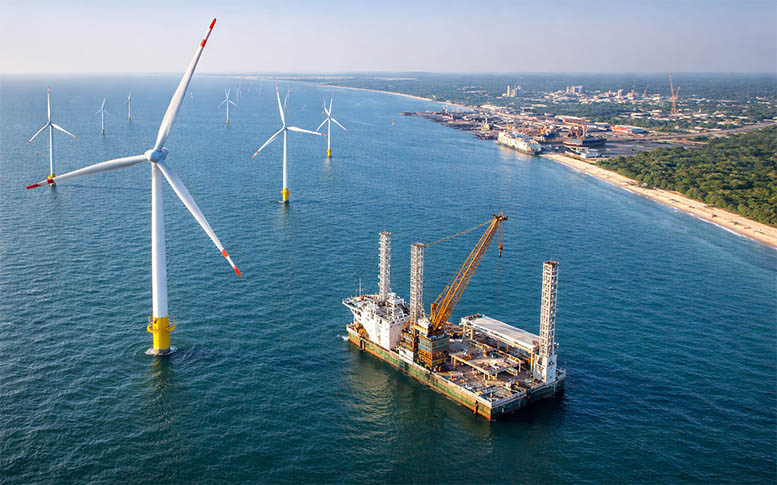
Dakshina Kannada MP Capt Brijesh Chowta has urged the Centre to give high priority to offshore wind energy generation along the Mangaluru coast, citing its strategic importance to India’s green energy and port-led development goals.

Raising the issue in the Lok Sabha under Rule 377, Chowta said studies by the National Institute of Oceanography have identified the Mangaluru coastline as part of India’s promising offshore wind ‘Zone-2’, covering nearly 6,490 sq km. He noted that the region’s relatively low exposure to cyclones and earthquakes makes it suitable for long-term offshore wind projects and called for its development as a dedicated offshore wind energy zone.

Highlighting the role of New Mangalore Port, Chowta said its modern infrastructure, multiple berths and heavy cargo-handling capacity position it well as a logistics hub for transporting and assembling large wind energy equipment.

He also pointed to the presence of major industrial units such as MRPL, OMPL, UPCL and the Mangaluru SEZ, which could serve as direct buyers of green power through power purchase agreements, improving project viability and speeding up execution.

With Karnataka’s peak power demand crossing 18,000 MW in early 2025, Chowta stressed the need to diversify renewable energy sources. He added that offshore wind projects in the Arabian Sea are strategically safer compared to the cyclone-prone Bay of Bengal.

Calling the project vital to India’s target of 500 GW of renewable energy by 2030, Chowta urged the Ministry of New and Renewable Energy to initiate resource assessments, pilot projects and stakeholder consultations at the earliest.

Comments

Add new comment

  • Coastaldigest.com reserves the right to delete or block any comments.
  • Coastaldigset.com is not responsible for its readers’ comments.
  • Comments that are abusive, incendiary or irrelevant are strictly prohibited.
  • Please use a genuine email ID and provide your name to avoid reject.
News Network
February 5,2026

Bengaluru: As air quality continues to worsen across several parts of the city, hospitals in Bengaluru are reporting a steady rise in patients suffering from respiratory illnesses such as asthma, bronchitis and Chronic Obstructive Pulmonary Disease (COPD), health officials and doctors said.

Data from the Suvarna Arogya Suraksha Trust (SAST) shows that 3,891 patients received treatment for respiratory ailments between April and November 2024. The figure rose to 4,187 during the same period in 2025.

Private hospitals, too, are witnessing a 10–15 per cent year-on-year increase in such cases.

While doctors caution that the rise cannot be attributed solely to air pollution, a significant number of patients are non-smokers with no prior history of respiratory disease.

“Nearly 70 per cent of the patients we see are non-smokers with no previous respiratory issues. When other causes are ruled out, air pollution emerges as the most likely factor,” said Dr Manjunath PH, consultant interventional pulmonologist at a hospital in Kengeri.

Doctors noted that patient footfall spikes during the winter months and around Deepavali, when air quality typically worsens.

“There is a clear correlation between poor air quality and the rise in cases. People commonly present with persistent cough, breathlessness and irritation of the respiratory tract, indicating the impact of polluted air on their health,” said Dr Sheetal Chaurasia, consultant in pulmonary medicine at a private hospital in Whitefield.

Dr Chaurasia added that respiratory tract infections are also on the rise.

“Poor air quality leads to chronic airway inflammation, making the airways more vulnerable to infections. We are seeing an increase in both upper and lower respiratory tract infections,” she said.

Patients with pre-existing respiratory conditions remain the worst affected.

“For those already diagnosed with respiratory illnesses, deteriorating air quality significantly worsens the condition. Both the frequency and severity of attacks increase sharply,” said Dr Vandana P, a pulmonologist at a hospital on Bannerghatta Road.

Doctors also flagged a worrying trend of rising respiratory problems among younger adults and children.

To reduce exposure, they advised people to wear masks while travelling on two-wheelers or autos and ensure adequate ventilation at home to minimise indoor air pollution.

Comments

Add new comment

  • Coastaldigest.com reserves the right to delete or block any comments.
  • Coastaldigset.com is not responsible for its readers’ comments.
  • Comments that are abusive, incendiary or irrelevant are strictly prohibited.
  • Please use a genuine email ID and provide your name to avoid reject.
coastaldigest.com news network
February 5,2026

protestkerala.jpg

Mangaluru: The KSRTC Mangaluru division has rolled back the fare hike on buses operating on the Mangaluru–Kasaragod route following the suspension of toll collection at the Arikkady toll plaza near Kumbala in Kasaragod district.

The fare revision had been implemented after the National Highways Authority of India (NHAI) began toll collection at the Arikkady plaza on NH-66. As a result, fares for ordinary and Rajahamsa services were increased by ₹7 and ₹10, respectively, raising the bus fare from Mangaluru to Kasaragod from ₹81 to ₹88.

Senior Divisional Controller of KSRTC’s Mangaluru division, Rajesh Shetty, said the fares were reduced after toll collection at the Arikkady plaza was stopped. “The tollgate began operations on January 13, and the toll amount was deducted from the FASTag accounts of KSRTC buses operating on the route. Following an order from the central government to suspend toll collection, KSRTC has also withdrawn the additional fare with immediate effect,” he said.

At present, vehicles travelling on the Mangaluru–Kasaragod route pay toll only at the Talapady toll plaza. The toll for light motor vehicles (LMVs) at Talapady is ₹80 for a same-day return, while heavy vehicles, including buses, are charged ₹250. At Arikkady, the toll rates were ₹130 for LMVs (same-day return) and ₹450 for buses.

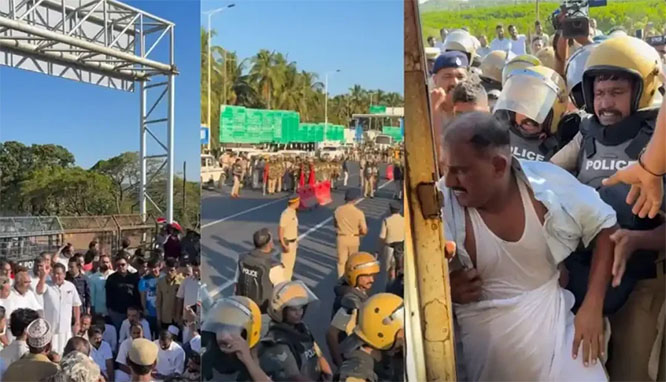
Protests against Arikkady toll plaza

The Arikkady toll plaza witnessed widespread protests from January 12, the day toll collection commenced. On the second day, an action committee led by Manjeshwar MLA A K M Ashraf launched an indefinite protest at the site. Except for the BJP, leaders and workers of most major political parties participated in the agitation.

On the night of January 14, a large number of protesters gathered at the plaza and vandalised property, following which authorities temporarily suspended toll operations. The BJP later also expressed opposition to the toll plaza and criticised NHAI’s decision. 

Comments

Add new comment

  • Coastaldigest.com reserves the right to delete or block any comments.
  • Coastaldigset.com is not responsible for its readers’ comments.
  • Comments that are abusive, incendiary or irrelevant are strictly prohibited.
  • Please use a genuine email ID and provide your name to avoid reject.