



SC transfers Gyanvapi Masjid case from Varanasi civil court to ‘experienced’ district judge

News Network
May 20, 2022

The Supreme Court on Friday, 20 May directed that the Gyanvapi mosque case should be transferred from the civil judge in Varanasi, where it is currently being heard, to the court of the district judge Varanasi – who is "more senior and experienced" and will be better placed to address the complex issues in the matter.

The bench of the apex court headed by Justice DY Chandrachud also ordered that:

•    The application filed by the masjid committee under Order 7 Rule 11 of the Code of Civil Procedure – arguing the suit by "Hindu" devotees is barred by the Places of Worship Act – will be decided on priority by district judge

•    The Supreme Court's Interim order dated 17 May shall continue to remain in operation pending the disposal of the Order 7 Rule 11 application, and for a further period of 8 weeks, to allow any party to take necessary steps.

•    If adequate arrangements for wazu (ritual washing) have not been made, then district magistrate in consultation with masjid committee should make proper arrangements.

•    The order of civil judge dated 16 May (for sealing) stands subsumed by the Supreme Court's order of 17 May, which clarified that while the area where an alleged 'Shivling' was stated to be found

The bench of Justices DY Chandrachud, Surya Kant and PS Narasimha was hearing the pleas by the masjid committee against the orders of the Varanasi court, including the original order allowing a video survey of the Gyanvapi mosque as well as the order to seal part of the mosque where a 'Shivling' was allegedly found.

The masjid committee argues that the entire case is barred because of the Places of Worship Act 1991, which says that there can be no conversion of, or change to the character of, a place of worship which has been in existence since before 15 August 1947.

The masjid committee has challenged the maintainability of the case in the Varanasi court under Order 7 Rule 11 of the Code of Civil Procedure, which bars any suit where there is no cause of action. The Varanasi court instead of considering this issue at the outset, had allowed the video survey and passed several other orders.

The apex court on 19 May had directed the Varanasi civil court to "desist from taking any further action" till it completed its hearings.

Senior advocate Huzefa Ahmadi, representing the masjid committee, argued that things "need to be nipped in the bud." He argued that the orders of the Varanasi court has led to an alteration of a status quo at the Gyanvapi mosque which has been in place for the last 500 years.

Ahmadi pointed to the way in which the report of the survey commission was leaked by lawyers for the Hindu plaintiffs on Thursday evening to argue that there was "a design" to change the status quo which had been in place previously.

Ahmadi noted that Section 3 of the Places of Worship Act – which bars the conversion of "any place of worship of any religious denomination or any section thereof into a place of worship of a different section of the same religious denomination or of a different religious denomination or any section thereof" – has no exceptions provided to it.

Justice Chandrachud suggested that a survey to assess the religious character of a particular site would not contravene Sections 3 and 4 of the Places of Worship Act.

Ahmadi contended that if such surveys were allowed to be conducted, then this would defeat the very purpose of the 1991 Act.

The bench did not go further into this issue, saying it would need to be taken up by the district judge when considering the Order 7 Rule 11 issue, and could be revisited in the Supreme Court when it takes the matter up again after its vacations.

Ahmadi also asked the court to allow worshippers in the mosque access to the taps in the area sealed because a 'Shivling' was allegedly found there, so that they could perform wazu, ie ritual washing. Solicitor General Tushar Mehta, on behalf of the State of Uttar Pradesh, objected to this saying that it could lead to a law and order problem.

The judges sought to arrive at a solution for the problem by including the direction in their order that arrangements for wazu would have to be made by the district magistrate.

What is This Case About?

Five Hindu women have sought round-the-year access to pray at “a shrine behind the western wall of the mosque complex”. The site is currently made open for Hindu prayers once a year.

A Varanasi court had in April ordered a video inspection of the site, but the survey could not take place as the mosque committee opposed the videography inside the mosque, and accused Advocate Commissioner Ajay Kumar Mishra of bias and demanded his replacement.

The local court, however, on Thursday, 12 May, ordered that the survey work will continue, and instead of replacing Mishra, appointed two more lawyers — Vishal Kumar Singh and Ajay Singh — to accompany him.

The Allahabad High Court refused to stay this order despite it being argued by the masjid committee that the mosque was protected by the Places of Worship Act 1991, resulting in the pleas at the Supreme Court.

On Monday, 16 May, the Varanasi court ordered the sealing of part of the mosque on the basis that a 'Shivling' had been found on the premises. This order was also challenged by the masjid committee on Tuesday.

The Supreme Court on Tuesday, 17 May, issued notice on pleas challenging the orders of a district court regarding the Gyanvapi Mosque in Varanasi, and passed an interim order that while the area within the mosque where an alleged 'Shivling' was said to be found should be protected, Muslims must not be restricted from entering and praying in the mosque.

Following this interim order, the Hindu plaintiffs, through their advocate Vishnu Shankar Jain, filed an application in the Varanasi court have sought the razing of the wall and the removal of the resulting debris, in order for a further survey of the area where the alleged 'Shivling' was found.

The report submitted by the Varanasi court-appointed commissioners was released by the Hindu devotees' lawyers on 19 May.

The key findings from the survey – including the alleged discovery of Hindu symbols on the architecture as well as the structure in a pool in the mosque termed a Shivling by the plaintiffs and a fountain by the defendants – can be found here.

Hindu Sena president Vishnu Gupta has approached the Supreme Court as an intervenor in the masjid committee's case, saying that the Gyanvapi Mosque is not protected by the Places of Worship Act, under Section 4(3) of the Act.

Comments

Add new comment

  • Coastaldigest.com reserves the right to delete or block any comments.
  • Coastaldigset.com is not responsible for its readers’ comments.
  • Comments that are abusive, incendiary or irrelevant are strictly prohibited.
  • Please use a genuine email ID and provide your name to avoid reject.
News Network
February 4,2026

Mangaluru: Urban local bodies and gram panchayats should make the use of Kannada on signboards mandatory while issuing trade licences to commercial establishments, Dakshina Kannada Deputy Commissioner Darshan HV said. He also called for regular inspections to ensure compliance.

Presiding over the District Kannada Awareness Committee meeting at the deputy commissioner’s office, Darshan said the city corporation would be directed to ensure that shops operating in malls prominently display their names in Kannada. “All commercial establishments, including shops, companies, offices and hotels, must mandatorily display their names in Kannada on signboards,” he said.

The deputy commissioner added that the National Highways Authority of India (NHAI) would be instructed to include Kannada on signboards along national highways. Banks, he said, would be directed through committee meetings to provide application forms in Kannada.

“Even if English-medium schools and colleges impart education in English, their signboards must display the institution’s name in Kannada. Steps will also be taken to ensure that private buses display place names in Kannada,” Darshan said.

During the meeting, committee members raised concerns over the closure of Kannada-medium schools in rural areas due to a shortage of teachers and stressed the need for immediate corrective measures. They also pointed out that several industries employ workers from other states while overlooking local candidates.

Members further demanded that nationalised banks provide deposit and withdrawal slips in Kannada. It was brought to the deputy commissioner’s notice that the presence of staff without knowledge of Kannada in rural branches of nationalised banks is causing hardship to local customers.

Meanwhile, MP Srinath, president of the District Kannada Sahitya Parishat, urged the district administration to allot land for the construction of a district Kannada Bhavana in Mangaluru.

Comments

Add new comment

  • Coastaldigest.com reserves the right to delete or block any comments.
  • Coastaldigset.com is not responsible for its readers’ comments.
  • Comments that are abusive, incendiary or irrelevant are strictly prohibited.
  • Please use a genuine email ID and provide your name to avoid reject.
News Network
January 31,2026

files.jpg

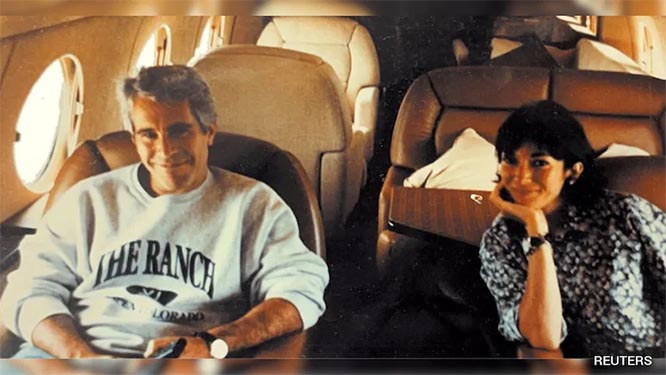
A fresh cache of files related to the investigation into the late convicted sex offender Jeffrey Epstein contains documents that reference President Donald Trump and other high-profile figures including Microsoft co-founder Bill Gates, Commerce Secretary Howard Lutnick and British billionaire Richard Branson.

Here are key details about mentions of the celebrities, none of whom have been accused of wrongdoing:

Donald Trump

The files included an FBI-compiled list of sexual assault allegations related to President Donald Trump -- many of them involving anonymous callers and unverified tips.

The allegations -- some secondhand -- were sent to the FBI's National Threat Operations Center which receives information by phone and electronically.

The document suggests that investigators followed up on a number of the tips. Some were deemed to lack credibility.

Trump has long denied any wrongdoing related to Epstein.

In a statement accompanying Friday's file dump, the Justice Department said: "Some of the documents contain untrue and sensationalist claims against President Trump that were submitted to the FBI right before the 2020 election. To be clear, the claims are unfounded and false."

Bill Gates

In a draft email among the documents, Epstein alleged Gates had engaged in extramarital affairs.

In the mail, Epstein wrote that his relationship with Gates had ranged from "helping Bill to get drugs, in order to deal with consequences of sex with russian girls, to facilitating his illicit trysts, with married women."

Richard Branson

Files show friendly relations between the two billionaires.

In an email sent to Epstein on Sept 11, 2013, Branson wrote "It was really nice seeing you yesterday. The boys in Watersports can't stop speaking about it! Any time you're in the area would love to see you. As long as you bring your harem!"

Elon Musk

The files contain numerous mail exchanges between Epstein and billionaire entrepreneur Elon Musk.

In November 2012, Epstein sent Musk an email asking "how many people will you be for the heli to island."

"Probably just Talulah and me. What day/night will be the wildest party on your island?" Musk replied.

Andrew Mountbatten-Windsor

The disgraced former prince invited Epstein to visit him at Buckingham Palace in September 2010 while the financier was making a trip to London.

An email exchange shows Epstein contacting Andrew to ask: "What time would you like me... we will also need... private time."

Andrew replied: "we could have dinner at Buckingham Palace and lots of privacy."

Howard Lutnick

Emails show that Epstein and businessman Lutnick -- currently Trump's commerce secretary -- made plans in December 2012 to lunch on Epstein's Caribbean island.

"We are heading towards you from St. Thomas" Lutnick's wife wrote to Epstein's secretary, asking where they should anchor.

Steve Tisch

Several mails suggested Epstein connected Steve Tisch, 76, producer of the movies "Forrest Gump" and "Risky Business" and the co-owner of the New York Giants football team, with multiple women.

In one exchange with Tisch, Epstein describes a woman as "russian, and rarely tells the full truth, but fun."

Zohran Mamdani's Mother, Filmmaker Mira Nair 

New York City Mayor Zohran Mamdani's mother, Mira Nair, attended an afterparty at convicted sex trafficker Ghislaine Maxwell's house for her 2009 film "Amelia", reveals a new set of Epstein files.

An email dated October 21, 2009, sent by publicist Peggy Siegal to Jeffrey Epstein, also surfaced in documents. The email, sent in the early hours, right after Siegal left the gathering, gives an insight into the afterparty. 

The party was also attended by former President Bill Clinton and Amazon CEO Jeff Bezos.

"Just left Ghislaine's townhouse...after party for film. Bill Clinton and Jeff Bezos were there...Jean Pigoni, director Mira Nair....etc," the email read.

The email described the reaction of guests to Nair's film as "tepid."

"Film received tepid reaction although women like it much more...Hillary Swank and Gen: at stupid party in Bloomingdales cheap sportwear department....very weird. Studio went for free party from store and windows for a month....Going to be in Wall Street 2 tomorrow ....more to come. xoxo Peg," the email read.

Comments

Add new comment

  • Coastaldigest.com reserves the right to delete or block any comments.
  • Coastaldigset.com is not responsible for its readers’ comments.
  • Comments that are abusive, incendiary or irrelevant are strictly prohibited.
  • Please use a genuine email ID and provide your name to avoid reject.
News Network
February 1,2026

Bengaluru, Feb 1: For travelers landing at Kempegowda International Airport (KIA), the sleek, wood-paneled curves of Terminal 2 promise a world-class welcome. But the famed “Garden City” charm quickly withers at the curb. As India’s aviation sector swells to record numbers—handling over 43 million passengers in Bengaluru alone this past year—the “last mile” has turned into a marathon of frustration.

The Bengaluru Logjam: Rules vs Reality

While the city awaits the 2027 completion of the Namma Metro Blue Line, the interim has been chaotic. Recent “decongestion” rules at Terminal 1 have pushed app-based cab pickups to distant parking zones, forcing weary passengers into a 20-minute walk with luggage.

“I landed after ten months away and felt like a stranger in my own city,” says Ruchitha Jain, a Koramangala resident. “My driver couldn’t find me, staff couldn’t guide me, and the so-called ‘Premium’ lane is just a fancy tax on convenience.”

•    The Cost of Distance: A 40-km cab ride can now easily cross ₹1,500, driven by demand pricing and airport surcharges.

•    The Bus Gap: While Vayu Vajra remains a lifeline, its ₹300–₹400 fare is often cited as the most expensive airport bus service in the country.

A National Pattern of Disconnect

The struggle is not unique to Karnataka. From Chennai’s coast to Hyderabad’s plateau, India’s airports tell a familiar story: brilliant runways, broken exits.

City:    Primary Issue   |    Recent Development

Bengaluru:    Cab pickup restrictions & distance  |    App-based taxis shifted to far parking zones; long walks and fare spikes reported

Chennai:    Multi-Level Parking (MLCP) hike  |    Passengers report 40-minute walks to reach cab pickup points

Hyderabad:    “Taxi mafia” & touting  |    Over 440 touting cases reported; security presence intensified

Mumbai:    Fare scams  |     Tourists charged ₹18,000 for just 400 metres, triggering police action

In Hyderabad, travelers continue to battle entrenched local groups that intimidate Uber and Ola drivers, pushing passengers toward overpriced private taxis. Chennai flyers, meanwhile, complain that reaching the designated pickup zones now takes longer than short-haul flights from cities like Coimbatore.

The ‘Budget Day’ Hope

As Finance Minister Nirmala Sitharaman presents the Union Budget 2026 today, the aviation sector is watching closely. With the government’s renewed emphasis on multimodal integration, there is cautious hope for funding toward seamless airport-metro-bus hubs.

The vision is clear: a future where planes, trains, and metros speak the same language. Until then, passengers at KIA—and airports across India—will continue to discover that the hardest part of flying isn’t the thousands of kilometres in the air, but the last few on the ground.

Comments

Chandramohan
 - 
Friday, 6 Feb 2026

Sir, I request the airport authorities to introduce a free transport services from terminal 1 to terminal 2 as is very difficult for the passengers to reach terminal 2 along with their luggage. Also a trolley should be provided to reach the counter. Hope the authorities would help the passengers as soon as possible.

Add new comment

  • Coastaldigest.com reserves the right to delete or block any comments.
  • Coastaldigset.com is not responsible for its readers’ comments.
  • Comments that are abusive, incendiary or irrelevant are strictly prohibited.
  • Please use a genuine email ID and provide your name to avoid reject.