Indians stranded in UAE have to pay more than regular airfare to return home!

News Network
May 5, 2020

Dubai, May 5: Tickets on repatriation flights from UAE to India, which start on May 7, could be costlier than regular airfare, and adding to the financial woes of those flying back. Nearly 200,000 Indians in the UAE have registered on the website seeking to return home.

“A one-way repatriation ticket to Delhi will cost approximately Dh1,400-Dh1,650 - this would earlier have cost between Dh600-Dh700 [during these months],” said Jamal Abdulnazar, CEO of Cozmo Travel. “A one-way repatriation flight ticket to Kerala would cost approximately Dh1,900-Dh2,300.”

This can be quite a burden, as a majority of those taking these flights have either lost their jobs or are sending back their families because of uncertainty on the work front. To now have to pay airfare that is nearly on par with those during peak summer months is quite a blow.

Sources said that officials in Indian diplomatic missions have already initiated calls to some expats, telling them about likely ticket fares and enquiring about their willingness to travel.

Although many believed repatriation would be government-sponsored, Indian authorities have clarified that customers would have to pay for the tickets themselves. Those who thought they were entitled to free repatriation might back out of travel plans for now.

Fact of life

But aviation and travel industry sources say higher rates cannot be escaped since social distancing norms have to be strictly enforced at all times. That would limit the number of passengers on each of these flights.

“One airline can carry only limited passengers - therefore, multiple airlines are likely to get the approval to operate repatriation flights,” said Abdulnazar. “Also, airports will have to maintain safe distance for passengers to queue up at immigration and security counters.

“Therefore, it is recommended that multiple carriers fly into multiple Indian airports for repatriation to be expedited.”

The Indian authorities, so far, have not taken the easy decision to get its private domestic airlines into the rescue act. Gulf News tried speaking to the leading players, but they declined to provide any official statements. So far, only Air India, the national airline, has been commissioned to operate the flights.

Air India finds itself in the driver's seat when it comes to operating India's repatriation flights. To date, there is no confirmation India's private airlines will be allowed to join in.

UAE carriers ready to help out

UAE’s Emirates airline, Etihad, flydubai and Air Arabia are likely to also operate repatriation flights to India after Air India implements the first phase of services.

“We are fully supporting governments and authorities across the flydubai network with their repatriation efforts, helping them to make arrangements for their citizens to return home,” said a flydubai spokesperson.

“We will announce repatriation flights as and when they are confirmed, recognising this is an evolving situation whilst the flight restrictions remain in place.”

An AirArabia spokesperson said the airline is ready to operate repatriation flights when the government tells them to.

Travel agencies likely to benefit

Apart from operating non-scheduled commercial flights, the Indian government is also deploying naval ships to bring expat Indians back. Sources claim the ships are to ferry passengers who cannot afford the repatriation airfares.

Even then, considering the sheer numbers who will want to get on the flights, travel agencies are likely to see a surge in bookings since airline websites alone may not cope with the demand set off in such a short span.

Learn from Gulf governments

In instances when they carried out their own repatriation flights, some GCC governments paid the ticket fares to fly in their citizens. Those citizens who did not have the ready funds could approach their diplomatic mission and aid would be given on a case-to-case basis.

Should Indians wait for normal services to resume?

Industry sources say that those Indians wanting to fly back and cannot afford the repatriation flights should wait for full services to resume once the COVID-19 pandemic settles.

But can those who lost their jobs or seen steep salary cuts stay on without adding to their costs? And is there any guarantee that when flight services resume, ticket rates would be lower than on the repatriation trips.

As such, normal travel is expected to pick up only after the repatriation exercise to several countries is completed. UAE-based travel agencies are not seeing any bookings for summer, which is traditionally the peak holiday season.

“Majority want to stay put unless full confidence is restored,” said Abdulnazar. “I expect full normalcy to be restored not until March 2021.

“People have also taken a hit to their income. Without disposable income, you will curtail your travel.”

What constitutes normalcy?

Airfares are expected to remain high, given the need to keep the middle seats empty to practise safe distance onboard.

“We expect holiday travel to resume by October or November - but, the travel sentiment will not go back to pre-COVID-19 levels anytime soon,” said Manvendra Roy, Vice-President – Commercial at holidayme, an online travel agency. “The need to keep the middle seat vacant will add 30-40 per cent pricing pressure per seat from an airline perspective.

“This will make holidays more expensive.”

As for business travel, it will take some time to recover. Corporate staff are now used to getting work done via conference calls. “Companies will also curtail their travel expenditure since their income has taken a hit,” said Abdulnazar.

Comments

Add new comment

  • Coastaldigest.com reserves the right to delete or block any comments.
  • Coastaldigset.com is not responsible for its readers’ comments.
  • Comments that are abusive, incendiary or irrelevant are strictly prohibited.
  • Please use a genuine email ID and provide your name to avoid reject.
News Network
December 16,2025

SMR1.jpg

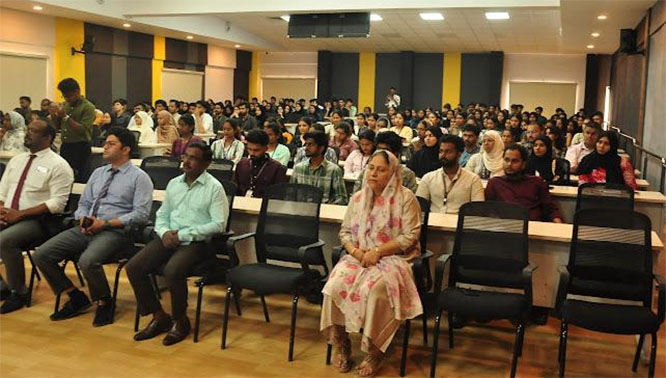
Melkar (Bantwal): The 9th Annual Day celebration of SMR Public School, titled “EXCELLENTIA”, was held on December 15 with great enthusiasm and dignity, marking a significant milestone in the institution’s journey towards academic excellence and holistic development.

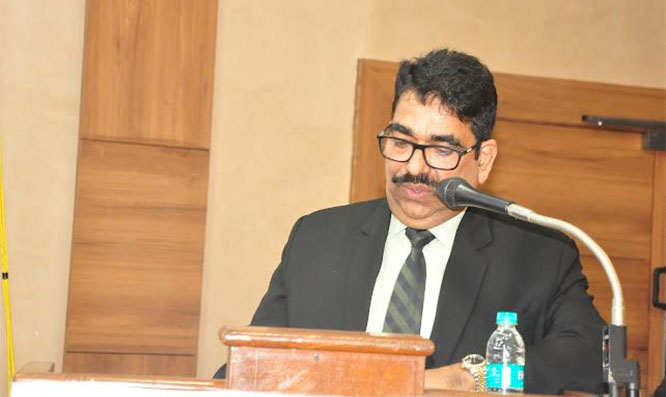
The programme was inaugurated by Dr. U. T. Iftikar Ali. The chief guests were Dr. Akhtar Hussain, Mr. P. Moosabba Beary, Mr. Zakaria Jokattre, and Dr. T. M. Abdul Rahuf—whose inspiring addresses motivated the students and appreciated the school’s contributions to education.

Mr. Abdul Nasir, Mr. Ibrahim Gadiyar, Mr. Razak Golthamajal, Mr. Sali Koya, Mr. Arshad Hussain, Mr. Ismail Balanoor, Mr. Feroz Bawa, Mr. Sahul Hameed, Mr. Abubakkar, Mr. Hameed K. Mani, Mr. Abdul Majeed (Principal, Melkar Women’s College), and Mr. Abdul Lathief (Former Principal, Melkar Women’s College) were the guests of honour.

The Annual Report was presented by the Headmistress, Ms. Fathimathul Zaheera, highlighting the school’s achievements and progress during the academic year. The Presidential Address was delivered by the Chairman of SMR Public School, Dr. Haji S. M. Rasheed, who emphasised the vital role of education in shaping students’ futures and stressed the importance of discipline, dedication, and consistent effort in achieving 100 per cent academic results.

Secretary of SMR Public School, Mr. Rifath Ahmed, and PTA President, Mr. Sandeep Kumar, were also present on the occasion.

The Annual Day celebration showcased the collective efforts of students and teachers and reaffirmed the school’s commitment to quality education and all-round development. The programme concluded with a vote of thanks, expressing gratitude to all dignitaries, parents, and well-wishers for their support. The 9th Annual Day—EXCELLENTIA—was a memorable and successful event, leaving a lasting impression on everyone present. 

SMR3.jpg

SMR2.jpg

Comments

Add new comment

  • Coastaldigest.com reserves the right to delete or block any comments.
  • Coastaldigset.com is not responsible for its readers’ comments.
  • Comments that are abusive, incendiary or irrelevant are strictly prohibited.
  • Please use a genuine email ID and provide your name to avoid reject.
News Network
December 6,2025

pilot.jpg

New Delhi: IndiGo, India’s largest airline, faced major operational turbulence this week after failing to prepare for new pilot-fatigue regulations issued by the Directorate General of Civil Aviation (DGCA). The stricter rules—designed to improve flight safety—took effect in phases through 2024, with the latest implementation on November 1. IndiGo has acknowledged that inadequate roster planning led to widespread cancellations and delays.

Below are the key DGCA rules that affected IndiGo’s operations:

1. Longer Mandatory Weekly Rest

Weekly rest for pilots has been increased from 36 hours to 48 hours.

The government says the extended break is essential to curb cumulative fatigue. This rule remains in force despite the current crisis.

2. Cap on Night Landings

Pilots can now perform only two night landings per week—a steep reduction from the earlier limit of six.

Night hours, defined as midnight to early morning, are considered the least alert period for pilots.

Given the disruptions, this rule has been temporarily relaxed for IndiGo until February 10.

3. Reduced Maximum Night Flight Duty

Flight duty that stretches into the night is now capped at 10 hours.

This measure has also been kept on hold for IndiGo until February 10 to stabilize operations.

4. Weekly Rest Cannot Be Replaced With Personal Leave

Airlines can no longer count a pilot’s personal leave as part of the mandatory 48-hour rest.

Pilots say this closes a loophole that previously reduced actual rest time.

Currently, all airlines are exempt from this rule to normalise travel.

5. Mandatory Fatigue Monitoring

Airlines must submit quarterly fatigue reports along with corrective actions to DGCA.

This system aims to create a transparent fatigue-tracking framework across the industry.

The DGCA has stressed that these rules were crafted to strengthen flight safety and align India with global fatigue-management standards. The temporary relaxations are expected to remain until February 2025, giving IndiGo time to stabilise its schedules and restore normal air travel.

Comments

Add new comment

  • Coastaldigest.com reserves the right to delete or block any comments.
  • Coastaldigset.com is not responsible for its readers’ comments.
  • Comments that are abusive, incendiary or irrelevant are strictly prohibited.
  • Please use a genuine email ID and provide your name to avoid reject.
News Network
December 20,2025

train.jpg

At least seven elephants were killed and one calf injured after a herd collided with the Sairang-New Delhi Rajdhani Express in Assam's Hojai on Saturday morning, leading to disruption of rail services. 

The Sairang-New Delhi Rajdhani Express struck a herd of elephants, resulting in the derailment of the locomotive and five coaches. No passenger casualties or injuries were reported, officials said.

The New Delhi-bound train met with the accident around 2.17 am, PTI reported. The Sairang-New Delhi Rajdhani Express connects Mizoram's Sairang (near Aizawl) to Anand Vihar Terminal (Delhi). 

Railway has issued helpline numbers at the Guwahati Railway Station:-

•    0361-2731621
•    0361-2731622
•    0361-2731623

The accident site is located about 126 km from Guwahati. Following the incident, accident relief trains and railway officials rushed to the spot to initiate rescue operations.

Train Services Disrupted

Sources said that due to the derailment and elephant body parts scattered on the tracks, train services to Upper Assam and other parts of the Northeast were affected.

Passengers from the affected coaches were temporarily accommodated in vacant berths available in other coaches of the train. Once the train reaches Guwahati, additional coaches will be attached to accommodate all passengers, after which the train will resume its onward journey.

The incident occurred at a location that is not a designated elephant corridor. The loco pilot, upon spotting the herd on the tracks, applied emergency brakes. Despite this, the elephants dashed into the train, leading to the collision and derailment.

Last month, an elephant was killed after being hit by a train in Dhupguri in West Bengal's Jalpaiguri district. The incident took place on November 30. 

The adult elephant was killed on the spot, and a calf was discovered lying injured beside the tracks. 

Over 70 Elephants Killed In Train Collisions Over Last 5 Years

At least 79 elephants have died in train collisions across the country in the last five years, the Environment Ministry had informed Parliament in August.

In a written reply in the Lok Sabha, Minister of State for Environment Kirti Vardhan Singh had said the figure is based on reports from state governments and Union Territory administrations for the period 2020-21 to 2024-25.

He said that the ministry does not maintain consolidated data on the deaths of other wild animals on railway tracks, including in designated elephant corridors.

Singh confirmed that three elephants, including a mother and her calf, were killed on July 18 this year after being hit by a speeding express train on the Kharagpur-Tatanagar section in West Bengal's Paschim Midnapore district. The incident took place near Banstala between Jhargram and Banstala stations.

The minister said several measures have been taken jointly by the Environment Ministry and the Railways to prevent such accidents.

These include imposing speed restrictions in elephant habitats, pilot projects such as seismic sensor-based detection of elephants near tracks and construction of underpasses, ramps and fencing at vulnerable points.

The Wildlife Institute of India, in consultation with the ministry and other stakeholders, has also issued guidelines titled 'Eco-friendly Measures to Mitigate Impacts of Linear Infrastructure' to help agencies design railways and other projects in ways that reduce human-animal conflicts.

Singh added that capacity-building workshops were conducted for railway officials at the Wildlife Institute of India in 2023 and 2024 to raise awareness on elephant conservation and protection.

A detailed report titled 'Suggested Measures to Mitigate Elephant & Other Wildlife Train Collisions on Vulnerable Railway Stretches in India' had also been prepared after surveys across 127 railway stretches covering 3,452 km.

Of these, 77 stretches spanning 1,965 km in 14 states were prioritised for mitigation, with site-specific interventions suggested. 

Comments

Add new comment

  • Coastaldigest.com reserves the right to delete or block any comments.
  • Coastaldigset.com is not responsible for its readers’ comments.
  • Comments that are abusive, incendiary or irrelevant are strictly prohibited.
  • Please use a genuine email ID and provide your name to avoid reject.