


Thiruvananthapuram, Mar 25: Kerala Chief Minister Pinarayi Vijayan on Tuesday said that strict action will be taken against overpricing and hoarding of essential items during lockdown period in the state.
Speaking to media persons here, he said: "Today 14 new cases of COVID-19 have been reported taking the total number of cases to 105 (excluding four discharged) in the state."
"Out of this, six are from Kasaragod district, two from Kozhikode, eight have returned from Dubai, one each from Qatar and UK; and three have got infected from a mutual contact. One health worker is also suspected to be on the list," he said.
A total of 72,460 people are under observation in the state out of which 71,994 are in isolation in their homes and 466 in hospitals. Today 164 people were hospitalised. 4,516 samples were sent for testing out of which 3,331 have tested negative.
Chief Minister Vijayan said that people should take the lockdown seriously and strictly adhere to government instructions.
"All personal vehicles should strictly be off the road. Taxis and autos can only be used for emergency purposes. People using personal vehicles should give self-declaration giving details about the purpose of the journey. Police action will be taken against those giving false information or found misusing personal vehicles," he said.
The Chief Minister today interacted with the MLAs from Kasargod through audio conferencing and asked them to co-ordinate the activities there along with the Panchayat president.
"Special attention should be given to the elderly, homeless, specially-abled in the state and local self-government institutions should take effort to arrange food and shelter for the needy. Apart from medicines, those in isolation would also be given counselling if required," he said.
He also urged the youth to come forward in volunteering during this difficult time. They can volunteer as bystanders in hospitals and help in other places too.
The Chief Minister also informed that the testing facilities at Central Universities in Kerala, IISER in Trivandrum and MIMS, Kozhikode can be used.
"All MLAs are working in their respective constituencies and they should make the effort to identify places that can be used as regional isolation centres, as and when required," said Vijayan.
Search
Kerala CM warns action against overpricing, hoarding of essential items

News Network
March 25, 2020
No cases yet, but vigilance high: Karnataka braces for Nipah threat

News Network
February 3,2026
Bengaluru: Following reports of fresh Nipah virus (NiV) cases in West Bengal and heightened vigilance across parts of Southeast Asia, the Karnataka Health Department has placed the state on high alert and activated emergency preparedness protocols.
Health officials said enhanced surveillance measures have been initiated after two healthcare workers in Barasat, West Bengal, tested positive for the virus earlier this month. While no cases have been reported in Karnataka so far, authorities said the state’s past exposure to Nipah outbreaks and high inter-state mobility warranted preventive action.
Officials have directed district health teams to intensify monitoring, particularly at hospitals and points of entry, and to ensure early detection and isolation of suspected cases.
High Mortality Virus with Multiple Transmission Routes
Nipah virus is a zoonotic disease that can spread from animals to humans and has a reported fatality rate ranging between 60 and 75 per cent. Fruit bats, also known as flying foxes, are the natural reservoirs of the virus and can transmit it by contaminating food sources with saliva or urine.
Known modes of transmission include:
• Contaminated food: Consumption of fruits partially eaten by bats or raw date-palm sap
• Animal contact: Exposure to infected pigs or other animals
• Human-to-human transmission: Close contact with body fluids of infected persons, particularly in healthcare settings
Symptoms and Disease Progression
The incubation period typically ranges from 4 to 14 days, though delayed onset has also been reported. Early symptoms often resemble common viral infections, making prompt clinical suspicion critical.
• Initial symptoms: Fever, headache, body aches, fatigue, sore throat
• Progressive symptoms: Drowsiness, disorientation, altered mental state
• Severe stage: Seizures, neck stiffness and acute encephalitis, which can rapidly progress to coma
Public Health Advisory
The Health Department has issued precautionary guidelines urging the public to adopt risk-avoidance practices to prevent any local spillover.
Do’s
• Wash fruits thoroughly before consumption
• Drink boiled and cooled water
• Use protective equipment while handling livestock
• Maintain strict hand hygiene
Don’ts
• Avoid fruits found on the ground or showing bite marks
• Do not consume beverages made from raw tree sap, including toddy
• Avoid areas with dense bat populations
• Do not handle sick or dead animals
Preparedness Measures
Officials confirmed that isolation wards are being readied in major government hospitals and that medical staff are being sensitised to identify early warning signs.
“There is no cause for panic, but there is a need for heightened vigilance,” a senior health official said, adding that there is currently no approved vaccine or specific antiviral treatment for Nipah, and care remains largely supportive.
Comments
Add new comment
- Coastaldigest.com reserves the right to delete or block any comments.
- Coastaldigset.com is not responsible for its readers’ comments.
- Comments that are abusive, incendiary or irrelevant are strictly prohibited.
- Please use a genuine email ID and provide your name to avoid reject.
Mangaluru–Kasaragod bus fare rolled back after Kerala protests force NHAI to shut Arikkady toll plaza
coastaldigest.com news network
February 5,2026
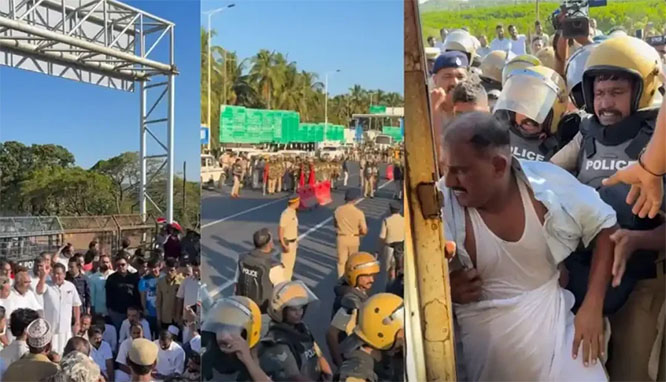
Mangaluru: The KSRTC Mangaluru division has rolled back the fare hike on buses operating on the Mangaluru–Kasaragod route following the suspension of toll collection at the Arikkady toll plaza near Kumbala in Kasaragod district.
The fare revision had been implemented after the National Highways Authority of India (NHAI) began toll collection at the Arikkady plaza on NH-66. As a result, fares for ordinary and Rajahamsa services were increased by ₹7 and ₹10, respectively, raising the bus fare from Mangaluru to Kasaragod from ₹81 to ₹88.
Senior Divisional Controller of KSRTC’s Mangaluru division, Rajesh Shetty, said the fares were reduced after toll collection at the Arikkady plaza was stopped. “The tollgate began operations on January 13, and the toll amount was deducted from the FASTag accounts of KSRTC buses operating on the route. Following an order from the central government to suspend toll collection, KSRTC has also withdrawn the additional fare with immediate effect,” he said.
At present, vehicles travelling on the Mangaluru–Kasaragod route pay toll only at the Talapady toll plaza. The toll for light motor vehicles (LMVs) at Talapady is ₹80 for a same-day return, while heavy vehicles, including buses, are charged ₹250. At Arikkady, the toll rates were ₹130 for LMVs (same-day return) and ₹450 for buses.
Protests against Arikkady toll plaza
The Arikkady toll plaza witnessed widespread protests from January 12, the day toll collection commenced. On the second day, an action committee led by Manjeshwar MLA A K M Ashraf launched an indefinite protest at the site. Except for the BJP, leaders and workers of most major political parties participated in the agitation.
On the night of January 14, a large number of protesters gathered at the plaza and vandalised property, following which authorities temporarily suspended toll operations. The BJP later also expressed opposition to the toll plaza and criticised NHAI’s decision.
Comments
Add new comment
- Coastaldigest.com reserves the right to delete or block any comments.
- Coastaldigset.com is not responsible for its readers’ comments.
- Comments that are abusive, incendiary or irrelevant are strictly prohibited.
- Please use a genuine email ID and provide your name to avoid reject.
‘Nothing for Karnataka’: DKS slams Union Budget, flags Bengaluru neglect
News Network
February 1,2026
Bengaluru: Karnataka Deputy Chief Minister D K Shivakumar on Sunday criticised the Union Budget presented by Finance Minister Nirmala Sitharaman, claiming it offered no tangible benefit to the state.
Though he said he was yet to study the budget in detail, Shivakumar asserted that Karnataka had gained little from it. “There is no benefit for our state from the central budget. I was observing it. They have now named a programme after Mahatma Gandhi, after repealing the MGNREGA Act that was named after him,” he said.
Speaking to reporters here, the Deputy Chief Minister demanded the restoration of MGNREGA, and made it clear that the newly enacted rural employment scheme — VB-G RAM G — which proposes a 60:40 fund-sharing formula between the Centre and the states, would not be implemented in Karnataka.
“I don’t see any major share for our state in this budget,” he added.
Shivakumar, who also holds charge of Bengaluru development, said there were high expectations for the city from the Union Budget. “The Prime Minister calls Bengaluru a ‘global city’, but what has the Centre done for it?” he asked.
He also drew attention to the problems faced by sugar factories, particularly those in the cooperative sector, alleging a lack of timely decisions and support from the central government.
Noting that the Centre has the authority to fix the minimum support price (MSP) for agricultural produce, Shivakumar said the Union government must take concrete steps to protect farmers’ interests.
Comments
Add new comment
- Coastaldigest.com reserves the right to delete or block any comments.
- Coastaldigset.com is not responsible for its readers’ comments.
- Comments that are abusive, incendiary or irrelevant are strictly prohibited.
- Please use a genuine email ID and provide your name to avoid reject.
Comments
Add new comment