Lockdown hits Indian expats in Saudi Arabia hard. Will govt of India pay heed to their woes?

coastaldigest.com news network
April 17, 2020

The unexpected lockdown to prevent spread of covid–19 has caused a serious damage to the lives of Indian expatriates irrespective of laborers and entrepreneurs in Kingdom of Saudi Arabia. Different stories of expatriates' ordeals are emerging from the region. 

Abdul Razaq, hailing from Udupi in Karnataka has been running small scale business at Jeddah, Saudi Arabia, based on oil refinery projects of the government. He was undergoing medical treatment for his cancer which is in fist stage. He explaines his ordeals caused by lockdown and stopping the flight facility. 

“I was regularly visiting home country for the treatment of cancer. Now I cannot go as international flight service has been stopped. I expect that government will hear problems of expatriates and will arrange facilities to take us back to home”, he said.

Mubeen from Bengaluru was working on temporary basis  for a company in Jubail. He had lost his jobs like some of his colleagues due to the lockdown.

“As everything was alright, I had brought my parents recently to Saudi Arabia on a visit visa. Things changed drastically with covid-19 attack. Continuous lockdown caused burden over the company and they removed temporary employees like me to control possible losses” he said.

“Now owner of the flat has been harassing me for the rent. I do not have money either to pay rent or to cover daily family expenses. I do not know what to do further”, he added. 

Iqbal from Mangaluru left for Saudi Arabia to help his family. He got a job in a juce centre in Dammam recently. Corona lockdown made his life difficult. He is eager to return his home country. 

“I came to Saudi Arbia because of financial difficulties as I had not found any job with good salary there. I thought I can earn well by going to Saudi Arabia. However, here too the salary was not so good. Now juice center is closed due to lockdown and sponsor is giving very small amount of money as salary through which we cannot afford our expenses and our families back in home,” he said.

“Here It is not easy get help of fellow Indians since most of them have their own ordeals. I would like to return home country; there however we can manage to get help of friends and relatives. I am looking forward the help of Indian government to start air facility for stranded NRIs,” he said. 

Mohsin from Mysuru is a taxi driver in Dammam, Saudi Arabia. He was earning on commission basis. Now Saudi government banned movement of taxis in the region, which pushed him and his fellow taxi drivers into trouble.

“We were earning commissions daily on the basis of trips. Now we cannot move outside with taxi since it may cause us to pay the fine of SR.10000. How can I manage my expenses and family members in home?”, he asked.

There are cases of pregnant women who have to return India for delivery. Those who brought family here on visit visa will not have insurance. Delivery charges and any kind of medical facilities without insurance in Saudi Arabia is very expensive. Expatriate Indians with such problems are awaiting government's help.

“I had brought my wife on one year visit visa. Now she is pregnant and I have to send her back to home for delivery. If lockdown continues, it is difficult to send back and we have to spend big amounts for delivery without insurance. It is a big burden to me as I work for small salary in a company”, said Yunus from Hyderabad, who is living in Jeddah, Saudi Arabia.

Lockdown is haunting even entrepreneurs in Saudi Arabia. Most of expatriates in the industrial hub of Jubail are doing business based on Saudi Government’s oil refinery projects. Saudi Arabia temporarily stopped most of the projects as part of public health safety measures to maintain social distance. 

“We are doing business based on oil refinery projects. Now projects are stopped. We brought around 1100 people on work permit visa on temporary basis. And also, we have around 1200 permanent workers. It is a big burden to provide them with food, accommodation and salary. It may cause a big loss for our company”, said owner of expatriates company, Sheikh Mohammed.

Saudi Arabia had reported first corona virus affected case in March 2, 2020. At the end of March, it was 1600 and now it already corssed 6000. Saudi Health ministry has cautioned the number of affected people may rise 10000 to 200,000 and directed for more precautionary measures. In such case, the Indian expatriates may have to face crisis in the region. 

Indian expatriate organizations are demanding for immediate intervention of Indian government to ensure better quarantine facility and treatment of NRIs in Saudi Arabia as the cases are increasing rapidly. The condition of laborers in some of the camps are such that seven to eight people should share a single bed room. 

“Normally if there is a flat, it will consist three to four bed rooms. In single bedroom companies will provide three four bunk beds and six to eight people should share the room. In such cases, if a person affected with virus it will spread quickly to others. Thus, Indian government should ensure quarantine facility for NRIs”, says Wasim Rabbani, president of Indian Social Forum, Eastern Region, Saudi Arabia. 

President of Karnataka Non Residential Indians, A forum for the NRI organizations of Karnataka, Zakaria Muzain says Indian Government should immediately interfere to bring back those stranded NRIs who wish to return home. Government should intervene to pressure Indian embassy to take the issues of troubled expatriates. 

“Government should make special flight arrangement for such NRIs in trouble. It should also arrange quarantine facility for those who return to India. Already there are many Non-Governmental charity organization which have come forward to give their facilities for NRIs”, he said. 

NRIs from all categories are looking forward for the help of Indian government. It is important to Indian government to take quick action as the problem is increasing in Saudi Arabia.

Comments

Althaf
 - 
Monday, 20 Apr 2020

Help from modi government is a nightmare 

Add new comment

  • Coastaldigest.com reserves the right to delete or block any comments.
  • Coastaldigset.com is not responsible for its readers’ comments.
  • Comments that are abusive, incendiary or irrelevant are strictly prohibited.
  • Please use a genuine email ID and provide your name to avoid reject.
News Network
February 8,2026

Baraka1.jpg

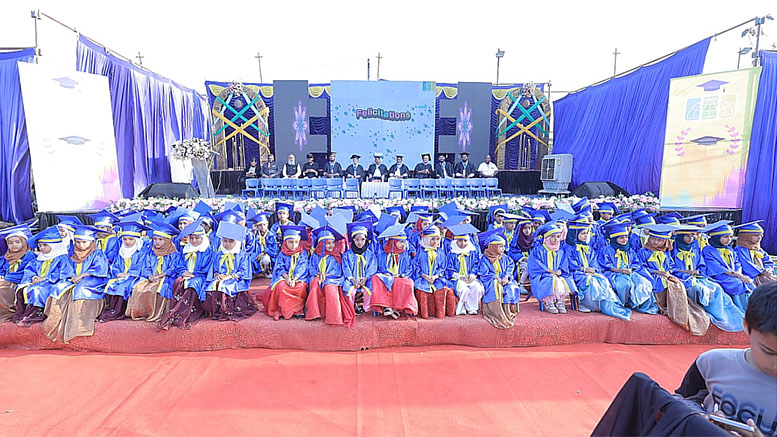
Mangaluru: Emphasising the importance of integrating cultural awareness with formal education, former Mangaluru North MLA and noted community leader Moidin Bawa said such an approach is vital for the holistic development of children and helps shape responsible, confident future citizens. He was speaking as the chief guest at the Prep Graduation Ceremony of Barakah International School and College.

The young graduates enthralled the audience with a vibrant mix of performances, including skits, action songs, short plays, and other engaging cultural programmes that showcased the creativity and confidence nurtured by the institution.

The event was graced by several prominent personalities, including Abdul Naser “Lucky Star”, President of the Wakf Advisory Committee; Dr Mohammed Nohman, Orthopaedic Surgeon; S. A. Khaleel, Chairman of the Bolar Islamic Centre; Naufal Kokkada, President of the SKSM Youth Wing; Suhail Kandak, Chairman of the Make a Change Foundation; and Mohammad Ashraf Badriya, President of Muslim Aikyata Vedike, among others.

The programme began with a warm welcome by Principal Sharfuddin B.S., who highlighted Barakah’s distinctive educational philosophy that blends academic excellence with strong moral and cultural values.

Ayan Ashraf, Director of Barakah, conveyed the Chairman’s message and reaffirmed the institution’s commitment to value-based education.

The vote of thanks was proposed by Mohammed Haneef, Principal of Islamic Studies.

Barakah International School and College is a reputed educational institution in Mangaluru, offering quality education from nursery to degree level. The institution is known for its holistic education model that harmoniously integrates cultural values with academic excellence, ensuring the all-round development of students.

Baraka3.jpg

Baraka2.jpg

Comments

Add new comment

  • Coastaldigest.com reserves the right to delete or block any comments.
  • Coastaldigset.com is not responsible for its readers’ comments.
  • Comments that are abusive, incendiary or irrelevant are strictly prohibited.
  • Please use a genuine email ID and provide your name to avoid reject.
News Network
February 3,2026

Bengaluru: Following reports of fresh Nipah virus (NiV) cases in West Bengal and heightened vigilance across parts of Southeast Asia, the Karnataka Health Department has placed the state on high alert and activated emergency preparedness protocols.

Health officials said enhanced surveillance measures have been initiated after two healthcare workers in Barasat, West Bengal, tested positive for the virus earlier this month. While no cases have been reported in Karnataka so far, authorities said the state’s past exposure to Nipah outbreaks and high inter-state mobility warranted preventive action.

Officials have directed district health teams to intensify monitoring, particularly at hospitals and points of entry, and to ensure early detection and isolation of suspected cases.

High Mortality Virus with Multiple Transmission Routes

Nipah virus is a zoonotic disease that can spread from animals to humans and has a reported fatality rate ranging between 60 and 75 per cent. Fruit bats, also known as flying foxes, are the natural reservoirs of the virus and can transmit it by contaminating food sources with saliva or urine.

Known modes of transmission include:

•    Contaminated food: Consumption of fruits partially eaten by bats or raw date-palm sap
•    Animal contact: Exposure to infected pigs or other animals
•    Human-to-human transmission: Close contact with body fluids of infected persons, particularly in healthcare settings

Symptoms and Disease Progression

The incubation period typically ranges from 4 to 14 days, though delayed onset has also been reported. Early symptoms often resemble common viral infections, making prompt clinical suspicion critical.

•    Initial symptoms: Fever, headache, body aches, fatigue, sore throat
•    Progressive symptoms: Drowsiness, disorientation, altered mental state
•    Severe stage: Seizures, neck stiffness and acute encephalitis, which can rapidly progress to coma

Public Health Advisory

The Health Department has issued precautionary guidelines urging the public to adopt risk-avoidance practices to prevent any local spillover.

Do’s
•    Wash fruits thoroughly before consumption
•    Drink boiled and cooled water
•    Use protective equipment while handling livestock
•    Maintain strict hand hygiene

Don’ts
•    Avoid fruits found on the ground or showing bite marks
•    Do not consume beverages made from raw tree sap, including toddy
•    Avoid areas with dense bat populations
•    Do not handle sick or dead animals

Preparedness Measures

Officials confirmed that isolation wards are being readied in major government hospitals and that medical staff are being sensitised to identify early warning signs.

“There is no cause for panic, but there is a need for heightened vigilance,” a senior health official said, adding that there is currently no approved vaccine or specific antiviral treatment for Nipah, and care remains largely supportive.

Comments

Add new comment

  • Coastaldigest.com reserves the right to delete or block any comments.
  • Coastaldigset.com is not responsible for its readers’ comments.
  • Comments that are abusive, incendiary or irrelevant are strictly prohibited.
  • Please use a genuine email ID and provide your name to avoid reject.
News Network
February 5,2026

In an era where digital distractions are the primary rival to academic excellence, the Karnataka Education Department is taking the fight directly to the living room. As the SSLC (Class 10) annual examinations loom, officials have launched a localized "digital strike" to ensure students aren't losing their competitive edge to scrolling or soap operas.

The 7-to-9 Lockdown

The department has issued a formal directive urging—and in some cases, enforcing via home visits—a total blackout of mobile phones and television sets between 7:00 PM and 9:00 PM. This two-hour window is being designated as "sacred study time" across the state until the examinations conclude on April 2.

Key Pillars of the Initiative:

•    Doorstep Advocacy: Teachers are transitioning from classrooms to living rooms, meeting parents to explain the psychological benefits of a distraction-free environment.

•    Parental Accountability: The campaign shifts the burden of discipline from the student to the household, asking parents to lead by example and switch off their own devices.

•    The Timeline: The focus remains sharp on the upcoming exam block, scheduled from March 18 to April 2.

"The objective is simple: uninterrupted focus. We are reclaiming the evening hours for the students, ensuring their environment is as prepared as their minds," stated a senior department official.

Student vs. Reality

While the student community has largely welcomed the "forced focus"—with many admitting they lack the willpower to ignore notifications—the move has sparked a debate on enforceability. Without a "TV Police," the success of this initiative rests entirely on the shoulders of parents and the persuasive power of visiting educators.

Comments

Add new comment

  • Coastaldigest.com reserves the right to delete or block any comments.
  • Coastaldigset.com is not responsible for its readers’ comments.
  • Comments that are abusive, incendiary or irrelevant are strictly prohibited.
  • Please use a genuine email ID and provide your name to avoid reject.