JKS fights against attempt to destroy script variety in Konkani'

[email protected] (CD Network)
June 30, 2012

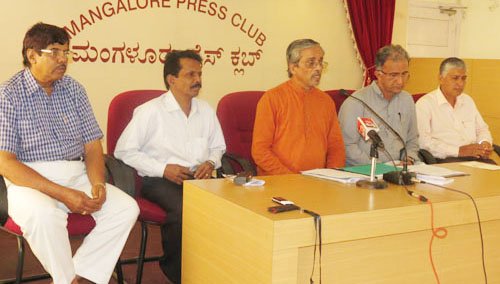
Mangalore, June 30: Jagotik Konkani Songhotton has condemned the move of Karnataka State Konkani Linguistic Minorities Institutions (KSKLMI), which had recently raised voice against considering Konkani works written in scripts other than 'Devanagari' for Central Sahitya Akademi awards.

Addressing a press meet here on Saturday, Eric Ozario, General Secretary, JKS, lamented that despite the fact that Devanagari is only the third most prolific script, after Kannada and Roman scripts, the Akademi has been squarely ignoring and neglecting Konkani literature in other scripts.

“Though Konkani is written in five different scripts, namely – Kannada, Roman, Devanagari, Perso-Arabic and Malayalam – the Sahitya Akademi (Central), since the very beginning, has been conferring Awards, Assignments and Projects only to the literature in the Devanagari script”, he said.
jks

Mr Ozario, said that he himself along with two others (Vally Vagga, Mysore and Marcel D'souza, Mangalore) on behalf of all Konkanis had approached High Court of Karnataka with a writ petition demanding the Court to issue a direction to the Sahitya Akademi to recognise all the five scripts of Konkani Language viz., Kannada, Roman (English), Devanagari, Arabic and Malayalam as eligible for grant of Awards, Research funding and all other incidental works, for which assistance is rendered by the Akademi.

He said while the High Court was considering this petition, the KSKLMI pleaded the same Court to consider 'only Devanagari for recognition'. Together, they have issued a press statement with false information. Their statements claim that 1) 'Devanagari is the official script of Konkani', 2) 'The Constitution has given prominence to the Devanagari script', 3)'Konkanis use only the Devanagari script and not Kannada or Malayalam', and 4) 'If any script other than Devanagari is recognised, it will be detrimental to Konkani Langauage'

Brushing aside all these four claims, Mr Ozario questioned how does Devanagari become the official script, just because the Devanagari lobby declares so? “Such a decision has to be taken in a democratic process, at an assembly of representatives of all scripts. Such an assembly has never been convened in Konkani, he said.

“Moreover, this is not a question of the 'Official script'. The Question is whether the Sahitya Akademi's mandate is to honour and support the 'literature' of a language or the 'script' of a language. If it is literature, then how can the Akademi pamper and patronize the literature in one script alone and completely ignore and disregard the literature in other scripts?” he questioned.

He also clarified that Constitution has never given prominence to Devanagari script over other scripts.

“In its reply to our petition the Sahitya Akademi itself has admitted to the Court that 'the mandate of the Akademi is fully to recognise and support the literary traditions of the given language. The literary traditions of Konkani being that it is in five scripts, the Akademi has no option but to recognize and support literature in all five scripts”, he said.

Stating that Konkanis are confined to Devanagari script, he said that the truth is – according to the 2001 Census, of the total Konkanis in India, 31.82% Konkanis live in Goa. 31.73% live in Karnataka. All Konkanis living in Karnataka read and write Konkani in the Kannada script. Goa is divided between Roman and Devanagari. A Study conducted in 2011 reveals that only 12.7% Konkanis in India use Devanagari script; the remaining 87.3% use other scripts. The use of Kannada script is the highest – 58%, he said.

However, Mr Ozario clarified that JKS is not fighting agaginst Devanagari. “We are not demanding that Devanagari be neglected. Our demand is that the other four scripts also be considered”, he said.

“Their attempt is to destroy all script variety in Konkani and impose their variety on everyone. This is detrimental to the unity and development of Konkani. We condemn this and seek legal remedies”, he said.

KK Utharan, Vice President (India) JKS, Dr. Pratapananda Naik, Linguist, Goa and Vally Vagga (Valerian Dsouza), writer, Mysore were also present in the press meet.

Comments

Add new comment

  • Coastaldigest.com reserves the right to delete or block any comments.
  • Coastaldigset.com is not responsible for its readers’ comments.
  • Comments that are abusive, incendiary or irrelevant are strictly prohibited.
  • Please use a genuine email ID and provide your name to avoid reject.
News Network
February 4,2026

shettigar.jpg

An Indian resident who won the Dh20 million (approximately Rs 50 crore) jackpot in Abu Dhabi's Big Ticket draw has told of his joy at sharing his life-changing fortune with a friend.

Shanthanu Shettigar, a shop manager in Muscat, regularly buys tickets for the monthly grand prize draw with one of his closest friends – and the pair won on February 3.

Mr Shettigar, 33, who is from Udyavar in Udupi district of the southern state of Karnataka and has lived in the Omani capital for eight years, said he was left speechless after learning of his success.

“When I first moved to Muscat, many of my colleagues were purchasing Big Ticket, which encouraged me to give it a try,” he said.

“I started buying tickets on my own, and later began sharing tickets with a close friend. The ticket that brought me this win was one we purchased together.”

“Like most people, I receive a lot of spam calls, and I was fully absorbed in my work as well. I knew the live draw was taking place tonight, but I never imagined my name would be announced,” he said.

“When I realised it was real and that I had won, I was honestly speechless. It still hasn’t fully sunk in, but I’m extremely happy.”

Mr Shettigar is not sure how he will spend his share of the money, but encouraged others to take part.

“This win was completely unexpected, so I want to take some time to think things through before deciding what to do next,” he said.

“I would definitely encourage others to participate with Big Ticket, whether with family or friends – you never know when your moment might come.”

The Big Ticket was established in 1992 with an initial first prize of Dh1 million. It is one of the most popular monthly raffles in the UAE.

It has transformed the lives of many people across the Emirates and beyond.

Entry to the Big Ticket Millionaire is Dh500. Tickets can be bought online or at counters at Zayed International Airport and Al Ain Airport.

Comments

Add new comment

  • Coastaldigest.com reserves the right to delete or block any comments.
  • Coastaldigset.com is not responsible for its readers’ comments.
  • Comments that are abusive, incendiary or irrelevant are strictly prohibited.
  • Please use a genuine email ID and provide your name to avoid reject.
News Network
February 3,2026

Kanchur2.jpg

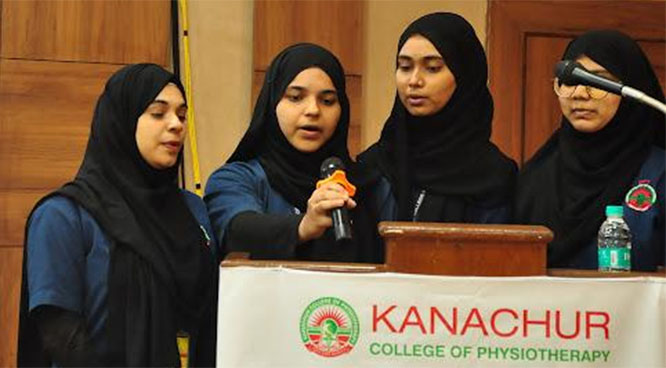
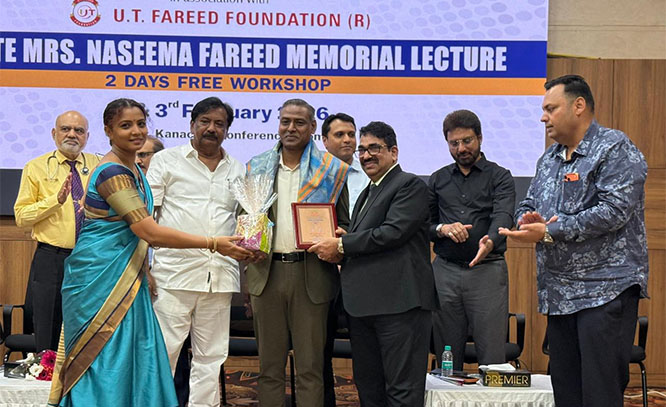
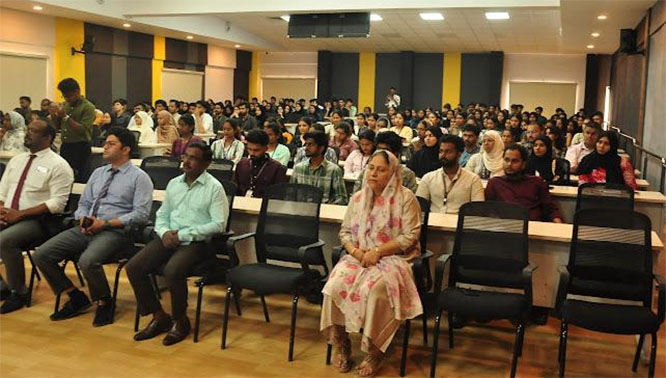
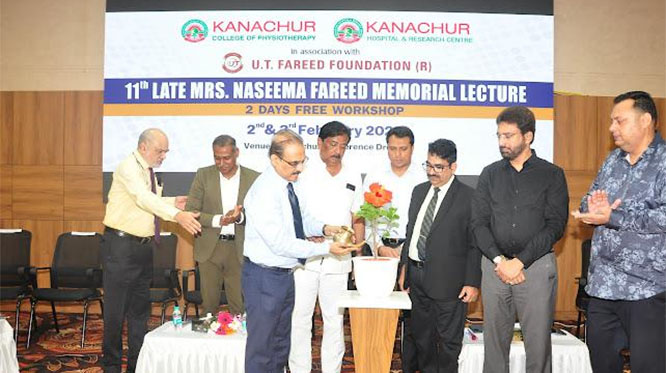
Mangaluru, Feb 3: Kanachur College of Physiotherapy and Kanachur Hospital & Research Centre, in association with U.T. Fareed Foundation (R), organised the 11th Late Mrs. Naseema Fareed Memorial Lecture on Tuesday.

The programme was inaugurated by Dr. Subramanyam K, Head of the Department and Professor, Department of Cardiology, Srinivas Institute of Medical Sciences & Research Centre, Mangaluru. In his inaugural address, Dr. Subramanyam delivered an insightful talk highlighting the vital role of physiotherapy in modern medical care, particularly in cardiac rehabilitation, patient recovery, and improving overall quality of life through a multidisciplinary healthcare approach.

The presidential address was delivered by Dr. Haji U.K. Monu, Chairman, KIET. The keynote address was presented by Dr. Mohammed Ismail Hejamady, who spoke on the evolving scope and significance of physiotherapy.

The event was held in the presence of Mr. Abdul Rahiman, Director, Kanachur Institute of Medical Sciences, Mangaluru; Dr. Vaishali Sreejith, Senate Member, Rajiv Gandhi University of Health Sciences, Bengaluru; Dr. Sudhan S.G., Professor and Principal, Krupanidhi College of Physiotherapy, Bengaluru; Dr. Shanavaz Manipady, Dean, Kanachur Institute of Medical Sciences, Mangaluru; and Dr. Venkat Rai Prabhu, Member, Kanachur Health Science Advisory Council, Kanachur Hospital & Research Centre.

Dr. Mohammad Suhail, Dean, Kanachur College of Physiotherapy, welcomed the guests and delegates.

As part of the programme, a two-day free workshop was organised on the following topics:

•    Art of Practice in Cardiopulmonary Conditions by Dr. Sudhan S.G., Principal, Krupanidhi College of Physiotherapy

•    The Gift of Life – Organ Donation by Dr. Rohan Monis, Chief Administrative Medical Officer

•    Chest X-ray Interpretation by Dr. Hemanth, Department of Radiology, KIMS

•    Pulmonary Rehabilitation by Dr. Vijaya Kumar, Department of Respiratory Medicine, KIMS

Organisers noted that the memorial lecture series has been conducted continuously for the 11th year, benefiting interns and postgraduate students from various colleges across Mangaluru. A total of 130 delegates attended the workshop.

Dr. Reshma, Vice Principal, Kanachur College of Physiotherapy, Mangaluru, delivered the vote of thanks.

Kanchur7.jpg

Kanchur6.jpg

Kanchur5.jpg

Kanchur4.jpg

Kanchur3.jpg

Kanchur1.jpg

Comments

Add new comment

  • Coastaldigest.com reserves the right to delete or block any comments.
  • Coastaldigset.com is not responsible for its readers’ comments.
  • Comments that are abusive, incendiary or irrelevant are strictly prohibited.
  • Please use a genuine email ID and provide your name to avoid reject.
News Network
February 3,2026

Bengaluru: Following reports of fresh Nipah virus (NiV) cases in West Bengal and heightened vigilance across parts of Southeast Asia, the Karnataka Health Department has placed the state on high alert and activated emergency preparedness protocols.

Health officials said enhanced surveillance measures have been initiated after two healthcare workers in Barasat, West Bengal, tested positive for the virus earlier this month. While no cases have been reported in Karnataka so far, authorities said the state’s past exposure to Nipah outbreaks and high inter-state mobility warranted preventive action.

Officials have directed district health teams to intensify monitoring, particularly at hospitals and points of entry, and to ensure early detection and isolation of suspected cases.

High Mortality Virus with Multiple Transmission Routes

Nipah virus is a zoonotic disease that can spread from animals to humans and has a reported fatality rate ranging between 60 and 75 per cent. Fruit bats, also known as flying foxes, are the natural reservoirs of the virus and can transmit it by contaminating food sources with saliva or urine.

Known modes of transmission include:

•    Contaminated food: Consumption of fruits partially eaten by bats or raw date-palm sap
•    Animal contact: Exposure to infected pigs or other animals
•    Human-to-human transmission: Close contact with body fluids of infected persons, particularly in healthcare settings

Symptoms and Disease Progression

The incubation period typically ranges from 4 to 14 days, though delayed onset has also been reported. Early symptoms often resemble common viral infections, making prompt clinical suspicion critical.

•    Initial symptoms: Fever, headache, body aches, fatigue, sore throat
•    Progressive symptoms: Drowsiness, disorientation, altered mental state
•    Severe stage: Seizures, neck stiffness and acute encephalitis, which can rapidly progress to coma

Public Health Advisory

The Health Department has issued precautionary guidelines urging the public to adopt risk-avoidance practices to prevent any local spillover.

Do’s
•    Wash fruits thoroughly before consumption
•    Drink boiled and cooled water
•    Use protective equipment while handling livestock
•    Maintain strict hand hygiene

Don’ts
•    Avoid fruits found on the ground or showing bite marks
•    Do not consume beverages made from raw tree sap, including toddy
•    Avoid areas with dense bat populations
•    Do not handle sick or dead animals

Preparedness Measures

Officials confirmed that isolation wards are being readied in major government hospitals and that medical staff are being sensitised to identify early warning signs.

“There is no cause for panic, but there is a need for heightened vigilance,” a senior health official said, adding that there is currently no approved vaccine or specific antiviral treatment for Nipah, and care remains largely supportive.

Comments

Add new comment

  • Coastaldigest.com reserves the right to delete or block any comments.
  • Coastaldigset.com is not responsible for its readers’ comments.
  • Comments that are abusive, incendiary or irrelevant are strictly prohibited.
  • Please use a genuine email ID and provide your name to avoid reject.