Why is K'taka against heritage tag for Western Ghats, question greens

July 9, 2012

wg

Bangalore, July 9: The Karnataka government's opposition to Unesco's heritage tag for the Western Ghats is being strongly criticised by greens and environmental scientists as illogical and another example of the BJP administration's ignorance about global issues.

The greens have also trashed state Forest Minister C.P. Yogeshwar's claims that the heritage tag will prevent development and spur Maoist activities.

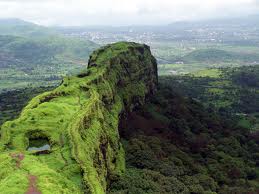
The Western Ghats are a 1,600-km-long mountain range spread over a 140,000 sq km area in Gujarat, Maharashtra, Goa, Karnataka, Kerala and Tamil Nadu. About 60 percent of the Ghats lie in Karnataka. The Western Ghats are home to rare plants and various birds and animal species but are "threatened by a number of developmental activities such as roads, railways, dams, etc", says an experts group set up by the central environment ministry.

"The move by the Karnataka government is not only illogical but it has no basis for the allegation that it will lead to more Naxal (Maoist) activities," said Panduranga Hegde, a leading environmentalist in Karnataka.

T.V. Ramachandra, professor at the Indian Institute of Science and member of the Western Ghats Task Force set up by the Karnataka government, feels that those opposing the tag have not understood what it means.

"It appears that irrespective of political affiliations, all politicians are against the heritage tag and none of them have bothered to look up the concept," said Ramachandra.

For Sanjay Gubbi, another prominent environmentalist, this declaration is neither an issue to celebrate nor a matter to worry about.

"It will be good to get it. However, there seems to be no major benefit by declaring the Western Ghats a World Heritage site except the fact that it may get some minimal recognition," said Gubbi.

Praveen Bhargav, managing trustee of Wildlife First, an NGO active in the cause of conservation, is of the view that the state's decision to oppose the heritage tag was "unfortunate and betrays a total lack of vision and scientific temper".

"While the heritage tag itself is symbolic, it is nonetheless a recognition of the state's and the community's effort to conserve the Western Ghats," said Bhargav.

Hegde noted that the opposition is mainly from a few elected representatives from Kodagu (a hilly district known for its coffee plantations and about 280 km from Bangalore) who have vested interests in plantations and mining rather than the interest of the local people or the environment.

"The government is bending backwards to their pressure which is unfortunate. It is nothing but an extension of the narrow ruling party views on global issues," he said.

The greens dismissed Yogeshwar's claims that the heritage tag would spur Maoist activities and would uproot people living there for ages.

"The government should know that there is no precedent in the heritage sites where people have been uprooted or development has come to a standstill," Hegde asserted.

Leo Saldanha of the Environment Support Group (ESG) said that the forest minister's claim is desperate scaremongering to cover up what truly is a state policy of keeping these mountain ranges accessible to all sorts of destructive development.

Gubbi contended: "I do not think the tag can spur any Maoist activities in the region. Perhaps the forest minister has been given wrong information about this issue."

He noted that "Unesco cannot enact any law to restrict the activities of the people living in those areas. This declaration (of heritage tag) has no legal teeth to impose any restrictions on agriculture, livelihood or any other activity".

Saldanha said: "If the provisions of the Forest Rights Act and the district planning process envisioned in the constitutional 73rd and 74th amendments were meaningfully implemented, it is more than likely that the local communities would only propose such activities that are in sync with the ecological landscape."

"Naxalism (Maoist activities) spreads where democratic decision-making is not allowed to work, especially when communities are keen to take responsibility of their own lives, livelihoods and futures, or when the state suppresses this natural aspiration ruthlessly. All this is true wherever Naxalism is active in Karnataka," he said.

Ramachandra, who teaches at the Centre for Ecological Sciences of the Indian Institute of Science, said the political leaders "need to understand that to ensure their own survival (to get elected again) they have to ensure the sustenance of natural resources".

"Water and food security provided by the Western Ghats can only be sustained by appropriate conservation measures and not by short-sighted exploitation of the resources," he added.

Ramachandra said the Western Ghats Task Force would discuss the issue soon and attempt to convince the state government about the heriatge tag for the Western Ghats.

Unesco recently accorded the heritage tag for 10 sites in Karnataka. They include the Pushpagiri Wildlife Sanctuary, the Brahmagiri Wildlife Sanctuary, the Talacauvery Wildlife Sanctuary, the Kudremukh National Park and the Someshwara Wildlife Sanctuary.

The 10 sites were among the 39 chosen for the tag by the central government in consultation with the states concerned. The others are in Kerala (19 sites), Tamil Nadu (six) and Maharashtra (four).

Comments

Add new comment

  • Coastaldigest.com reserves the right to delete or block any comments.
  • Coastaldigset.com is not responsible for its readers’ comments.
  • Comments that are abusive, incendiary or irrelevant are strictly prohibited.
  • Please use a genuine email ID and provide your name to avoid reject.
News Network
February 1,2026

Bengaluru: Karnataka Deputy Chief Minister D K Shivakumar on Sunday criticised the Union Budget presented by Finance Minister Nirmala Sitharaman, claiming it offered no tangible benefit to the state.

Though he said he was yet to study the budget in detail, Shivakumar asserted that Karnataka had gained little from it. “There is no benefit for our state from the central budget. I was observing it. They have now named a programme after Mahatma Gandhi, after repealing the MGNREGA Act that was named after him,” he said.

Speaking to reporters here, the Deputy Chief Minister demanded the restoration of MGNREGA, and made it clear that the newly enacted rural employment scheme — VB-G RAM G — which proposes a 60:40 fund-sharing formula between the Centre and the states, would not be implemented in Karnataka.

“I don’t see any major share for our state in this budget,” he added.

Shivakumar, who also holds charge of Bengaluru development, said there were high expectations for the city from the Union Budget. “The Prime Minister calls Bengaluru a ‘global city’, but what has the Centre done for it?” he asked.

He also drew attention to the problems faced by sugar factories, particularly those in the cooperative sector, alleging a lack of timely decisions and support from the central government.

Noting that the Centre has the authority to fix the minimum support price (MSP) for agricultural produce, Shivakumar said the Union government must take concrete steps to protect farmers’ interests.

Comments

Add new comment

  • Coastaldigest.com reserves the right to delete or block any comments.
  • Coastaldigset.com is not responsible for its readers’ comments.
  • Comments that are abusive, incendiary or irrelevant are strictly prohibited.
  • Please use a genuine email ID and provide your name to avoid reject.
News Network
February 8,2026

Baraka1.jpg

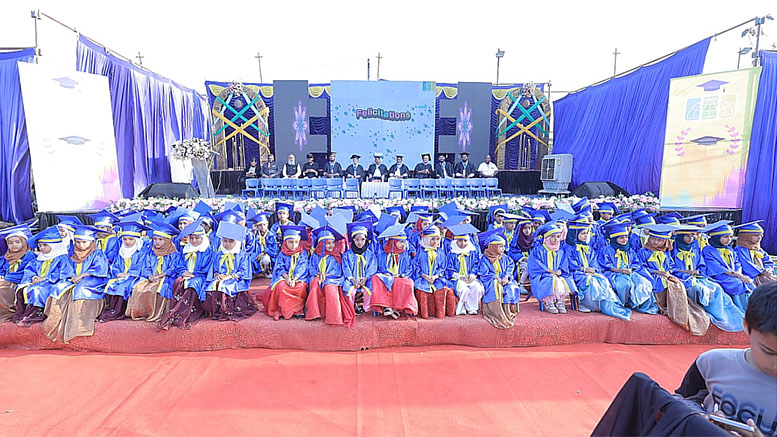
Mangaluru: Emphasising the importance of integrating cultural awareness with formal education, former Mangaluru North MLA and noted community leader Moidin Bawa said such an approach is vital for the holistic development of children and helps shape responsible, confident future citizens. He was speaking as the chief guest at the Prep Graduation Ceremony of Barakah International School and College.

The young graduates enthralled the audience with a vibrant mix of performances, including skits, action songs, short plays, and other engaging cultural programmes that showcased the creativity and confidence nurtured by the institution.

The event was graced by several prominent personalities, including Abdul Naser “Lucky Star”, President of the Wakf Advisory Committee; Dr Mohammed Nohman, Orthopaedic Surgeon; S. A. Khaleel, Chairman of the Bolar Islamic Centre; Naufal Kokkada, President of the SKSM Youth Wing; Suhail Kandak, Chairman of the Make a Change Foundation; and Mohammad Ashraf Badriya, President of Muslim Aikyata Vedike, among others.

The programme began with a warm welcome by Principal Sharfuddin B.S., who highlighted Barakah’s distinctive educational philosophy that blends academic excellence with strong moral and cultural values.

Ayan Ashraf, Director of Barakah, conveyed the Chairman’s message and reaffirmed the institution’s commitment to value-based education.

The vote of thanks was proposed by Mohammed Haneef, Principal of Islamic Studies.

Barakah International School and College is a reputed educational institution in Mangaluru, offering quality education from nursery to degree level. The institution is known for its holistic education model that harmoniously integrates cultural values with academic excellence, ensuring the all-round development of students.

Baraka3.jpg

Baraka2.jpg

Comments

Add new comment

  • Coastaldigest.com reserves the right to delete or block any comments.
  • Coastaldigset.com is not responsible for its readers’ comments.
  • Comments that are abusive, incendiary or irrelevant are strictly prohibited.
  • Please use a genuine email ID and provide your name to avoid reject.
News Network
February 5,2026

In an era where digital distractions are the primary rival to academic excellence, the Karnataka Education Department is taking the fight directly to the living room. As the SSLC (Class 10) annual examinations loom, officials have launched a localized "digital strike" to ensure students aren't losing their competitive edge to scrolling or soap operas.

The 7-to-9 Lockdown

The department has issued a formal directive urging—and in some cases, enforcing via home visits—a total blackout of mobile phones and television sets between 7:00 PM and 9:00 PM. This two-hour window is being designated as "sacred study time" across the state until the examinations conclude on April 2.

Key Pillars of the Initiative:

•    Doorstep Advocacy: Teachers are transitioning from classrooms to living rooms, meeting parents to explain the psychological benefits of a distraction-free environment.

•    Parental Accountability: The campaign shifts the burden of discipline from the student to the household, asking parents to lead by example and switch off their own devices.

•    The Timeline: The focus remains sharp on the upcoming exam block, scheduled from March 18 to April 2.

"The objective is simple: uninterrupted focus. We are reclaiming the evening hours for the students, ensuring their environment is as prepared as their minds," stated a senior department official.

Student vs. Reality

While the student community has largely welcomed the "forced focus"—with many admitting they lack the willpower to ignore notifications—the move has sparked a debate on enforceability. Without a "TV Police," the success of this initiative rests entirely on the shoulders of parents and the persuasive power of visiting educators.

Comments

Add new comment

  • Coastaldigest.com reserves the right to delete or block any comments.
  • Coastaldigset.com is not responsible for its readers’ comments.
  • Comments that are abusive, incendiary or irrelevant are strictly prohibited.
  • Please use a genuine email ID and provide your name to avoid reject.