Two minors among six languishing in jail for Kalladka clash

[email protected] (CD Network, Photos by Ahmed Anwar )
July 18, 2012

jail_copy_copy
Mangalore, July 18: Two minors boys are languishing in Udupi jail as under-trials after the police arrested them along with six others after a communal violence in Kalladka recently.

Khader and Abdulla (names changed) — both employed by a local bakery — have been in jail for more than 18 days, and yet the police did not check their age.

While the First Information Report (FIR) by the B.C. Road police puts their age at 18, the boys' school transfer certificates say they both are aged 16. Khader studied in Shri Bharathi Vidyanikethana High School, Naila, Bantwal taluk, Abdulla went to Government Higher Primary School, Aryapu in Puttur taluk.

According to the two transfer certificates, the date of birth of Khader is March 23, 1996, and that of Abdulla is October 8, 1996.

“Even though my son is only 16, he barely looks 14. He's still a child and still scared of everything,” Mariamma, Khader's mother, told The Hindu .

Gathered at their residence in Cowdell village nearby, Khader's family said the news of his arrest had come as a shock to them. “He's never even seen a police station, let alone a jail. He remains petrified in Udupi jail,” said Mohammad Ali, Khader's brother-in-law.

With remittances from Khader's father, who does odd job in Saudi Arabia, having stopped, and bills from his mother's cancer surgery and subsequent radiation treatment piling, Khader discontinued his education.

“It had been only one month since he started working at the bakery. He even did night shifts to get a little extra,” said Mr. Ali.

Khader and Abdulla were among the six arrested from a bakery in Kalladka late on June 30.

According to the owner of the bakery, who requested anonymity fearing “the police and Hindutva organisations”, the six had collected their salaries and were about to leave around 8 p.m. when the violence started a few metres away.

Scared, the men downed the shutter of the shop and decided to spend the night in the bakery.

“Around 11 p.m., the police forced open the backdoor and arrested the men,” said the owner.

Ashwani Kumar Rai, the advocate who represents the eight arrested, including the two boys, said the police routinely mention an age that was “convenient” to their case without verifying any documents.

On taking legal recourse to ensure the two boys are tried under Juvenile Justice Act and not the Indian Penal Code, Mr. Rai said: “The bail application has been sent for all of them. Getting the police to split the FIR, and transfer the case to another court will take time and delay the application of the others.”

However, District Child Welfare Committee chairperson Asha Nayak said the present legal approach was “vitiating the liberty of the children and vitiating the trial process”.

She said it was a matter of right for the children to be tried under the Juvenile Justice Act.

She blamed the police for not verifying the age of the boys.

“When they have to fill so many details in the arrest memo, why do they flout laws when it comes to age? It is imperative to verify the age especially when they look young,” Ms. Nayak said.

Superintendent of Police Abhishek Goyal said he was not aware that two of the arrested were minors.

Comments

Add new comment

  • Coastaldigest.com reserves the right to delete or block any comments.
  • Coastaldigset.com is not responsible for its readers’ comments.
  • Comments that are abusive, incendiary or irrelevant are strictly prohibited.
  • Please use a genuine email ID and provide your name to avoid reject.
News Network
February 5,2026

In an era where digital distractions are the primary rival to academic excellence, the Karnataka Education Department is taking the fight directly to the living room. As the SSLC (Class 10) annual examinations loom, officials have launched a localized "digital strike" to ensure students aren't losing their competitive edge to scrolling or soap operas.

The 7-to-9 Lockdown

The department has issued a formal directive urging—and in some cases, enforcing via home visits—a total blackout of mobile phones and television sets between 7:00 PM and 9:00 PM. This two-hour window is being designated as "sacred study time" across the state until the examinations conclude on April 2.

Key Pillars of the Initiative:

•    Doorstep Advocacy: Teachers are transitioning from classrooms to living rooms, meeting parents to explain the psychological benefits of a distraction-free environment.

•    Parental Accountability: The campaign shifts the burden of discipline from the student to the household, asking parents to lead by example and switch off their own devices.

•    The Timeline: The focus remains sharp on the upcoming exam block, scheduled from March 18 to April 2.

"The objective is simple: uninterrupted focus. We are reclaiming the evening hours for the students, ensuring their environment is as prepared as their minds," stated a senior department official.

Student vs. Reality

While the student community has largely welcomed the "forced focus"—with many admitting they lack the willpower to ignore notifications—the move has sparked a debate on enforceability. Without a "TV Police," the success of this initiative rests entirely on the shoulders of parents and the persuasive power of visiting educators.

Comments

Add new comment

  • Coastaldigest.com reserves the right to delete or block any comments.
  • Coastaldigset.com is not responsible for its readers’ comments.
  • Comments that are abusive, incendiary or irrelevant are strictly prohibited.
  • Please use a genuine email ID and provide your name to avoid reject.
News Network
February 8,2026

Baraka1.jpg

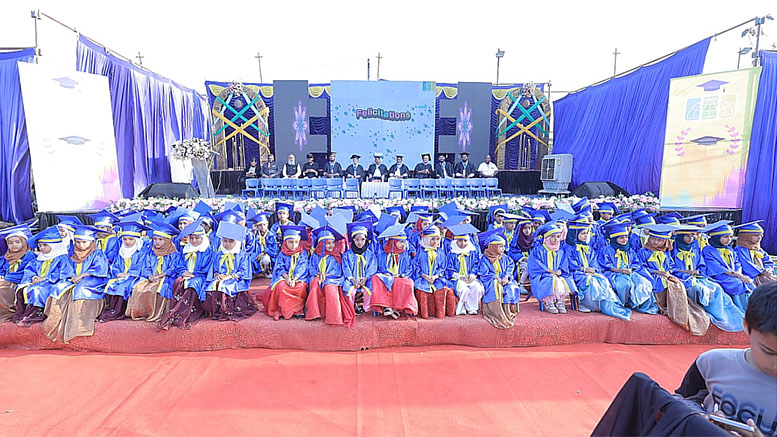
Mangaluru: Emphasising the importance of integrating cultural awareness with formal education, former Mangaluru North MLA and noted community leader Moidin Bawa said such an approach is vital for the holistic development of children and helps shape responsible, confident future citizens. He was speaking as the chief guest at the Prep Graduation Ceremony of Barakah International School and College.

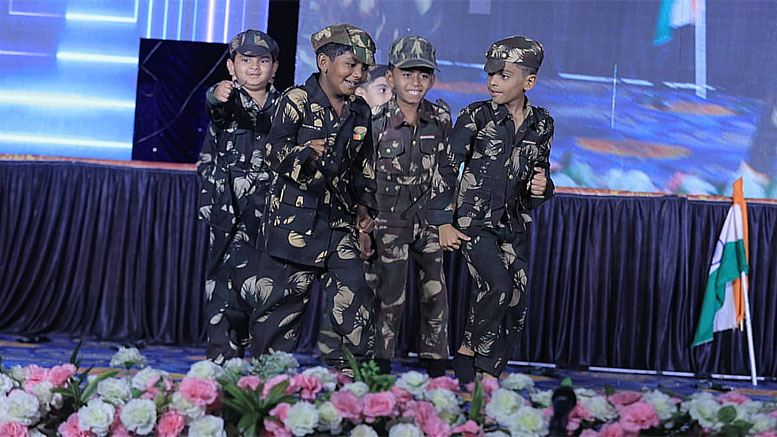
The young graduates enthralled the audience with a vibrant mix of performances, including skits, action songs, short plays, and other engaging cultural programmes that showcased the creativity and confidence nurtured by the institution.

The event was graced by several prominent personalities, including Abdul Naser “Lucky Star”, President of the Wakf Advisory Committee; Dr Mohammed Nohman, Orthopaedic Surgeon; S. A. Khaleel, Chairman of the Bolar Islamic Centre; Naufal Kokkada, President of the SKSM Youth Wing; Suhail Kandak, Chairman of the Make a Change Foundation; and Mohammad Ashraf Badriya, President of Muslim Aikyata Vedike, among others.

The programme began with a warm welcome by Principal Sharfuddin B.S., who highlighted Barakah’s distinctive educational philosophy that blends academic excellence with strong moral and cultural values.

Ayan Ashraf, Director of Barakah, conveyed the Chairman’s message and reaffirmed the institution’s commitment to value-based education.

The vote of thanks was proposed by Mohammed Haneef, Principal of Islamic Studies.

Barakah International School and College is a reputed educational institution in Mangaluru, offering quality education from nursery to degree level. The institution is known for its holistic education model that harmoniously integrates cultural values with academic excellence, ensuring the all-round development of students.

Baraka3.jpg

Baraka2.jpg

Comments

Add new comment

  • Coastaldigest.com reserves the right to delete or block any comments.
  • Coastaldigset.com is not responsible for its readers’ comments.
  • Comments that are abusive, incendiary or irrelevant are strictly prohibited.
  • Please use a genuine email ID and provide your name to avoid reject.
News Network
February 1,2026

Bengaluru: The Karnataka High Court has refused to quash an investigation against a WhatsApp group administrator accused of allowing the circulation of obscene and offensive images depicting Hindutva politicians and idols in 2021.

Justice M Nagaprasanna observed that, prima facie, the ingredients of the offence under Section 295A of the Indian Penal Code were made out. “The offence under Section 295A of the IPC is met to every word of its ingredient, albeit prima facie,” the judge said.

The petitioner, Sirajuddin, a resident of Belthangady taluk in Dakshina Kannada district, had challenged the FIR registered against him at the CEN (Cyber, Economics and Narcotics) police station, Mangaluru, for offences under Section 295A of the IPC and Section 67 of the Information Technology Act. Section 295A relates to punishment for deliberate and malicious acts intended to outrage the religious feelings of any class of citizens.

According to the complaint filed by K Jayaraj Salian, also a resident of Belthangady taluk, he received a WhatsApp group link from an unknown source and was added to the group after accessing it. The group reportedly had six administrators and around 250 participants, where obscene and offensive images depicting Hindu deities and certain political figures were allegedly circulated repeatedly.

Sirajuddin was arrested in connection with the case and later released on bail on February 16, 2021. He argued before the court that he was being selectively targeted, while other administrators—including the creator of the group—were neither arrested nor investigated. He also contended that the Magistrate could not have taken cognisance of the offence under Section 295A without prior sanction under Section 196(1) of the CrPC.

Rejecting the argument, Justice Nagaprasanna held that prior sanction is required only at the stage of taking cognisance, and not at the stage of registration of the crime or during investigation.

The judge noted that the State had produced the entire investigation material before the court. “A perusal of the material reveals depictions of Hindu deities in an extraordinarily obscene, demeaning and profane manner. The content is such that its reproduction in a judicial order would itself be inappropriate,” the court said, adding that the material, on its face, had the tendency to outrage religious feelings and disturb communal harmony.

Observing that the case was still at the investigation stage, the court said it could not interdict the probe at this juncture. However, it expressed concern that the investigating officer appeared to have not proceeded uniformly against all administrators. The court clarified that if the investigation revealed the active involvement of any member in permitting the circulation of such content, they must also be proceeded against.

“At this investigative stage, any further observation by this Court would be unnecessary,” the order concluded.

Comments

Add new comment

  • Coastaldigest.com reserves the right to delete or block any comments.
  • Coastaldigset.com is not responsible for its readers’ comments.
  • Comments that are abusive, incendiary or irrelevant are strictly prohibited.
  • Please use a genuine email ID and provide your name to avoid reject.