One dies, 7 lose sight after cataract operation

[email protected] (The Hindu)
August 17, 2012

Udupi, August 17: One person died while seven others have lost their vision after undergoing cataract surgery at the Charmakki Narayana Shetty Lions (CNSL) Eye Hospital at Kota in Udupi district from August 1 to 3. The cause of the tragedy is suspected to be contamination of solution used during surgery.


District Health Officer Ramachandra Bairy said on Thursday that of the 38 who underwent surgery at the hospital, eight had got infected. Of the eight, two had undergone evisceration procedure.
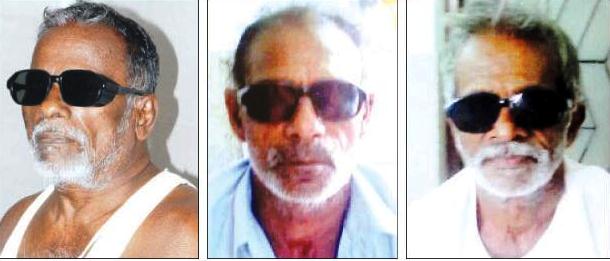
drishti

Shivarama Jogi, Narasimha Shetty and Panju Poojary

Of the two who underwent evisceration, Narasimha Shetty (72) of Airody village had heart problem and he died of cardiac arrest at Kasturba Hospital in Manipal on August 2. But Dr. Bairy said that evisceration might have been a precipitating factor in his death. The other patient, Sukra (35) from Bhatkal, had been discharged.


Dr. Bairy said that on August 1, 11 persons underwent cataract operations at the hospital. Of the 11, two got infection. Three of the 15 persons who underwent cataract surgery on August 2 were infected. On August 3, 12 persons underwent cataract operation, and three got infected.


The names of the other six patients are: Shivaram Jogi (60) from Giliyaru village; Girija (50) of Saligrama; Panju Poojary (68) of Heroor, Brahmavar; Sita B. Poojary (52) of Kundapur; Manjunath Udupa (75) of Ampar; Narasa Poojary (62) of Haluvalli village and Koteshwara.


They were being treated and would be discharged in a day or two. “There will be no hundred per cent recovery in the vision of the patients,”, Dr. Bairy said.


Eye Surgeon of Mobile Ophthalmic Unit of the District Government Hospital Nityananda Nayak will visit Kasturba Hospital on August 17 and check the records of recovery of vision of the patients.


Dr. Bairy said that not all those who had undergone cataract operations at the CNSL Hospital had got infection. The eight patients who got infected might be due to contamination in solution used in surgery.


The solutions had been sent for testing to a laboratory in Kundapur, but had tested negative. The Department of Health would send the samples of solution to the Kasturba Hospital in Manipal for testing and to another lab for cross testing.

Patients clueless

Dr. Bairy said that evisceration is a method of removing dead tissues from the eye balls to prevent spreading of infection to brain tissue.

For the patients who had lost their vision due to the cataract surgery after undergoing cataract surgery at the Charmakki Narayana Shetty Lions (CNSL) Eye Hospital at Kota in Udupi district from August 1 to 3, it is a tragedy they are struggling to cope with. The cause of the tragedy is suspected to be contamination of solution used during surgery.


Shivarama Jogi (65), a resident of Giliyaru village, who had undergone cataract surgery at the CNSL Hospital and who is now taking treatment at Prasad Netralaya in Udupi, said: “Before the cataract operation at the CNSL Eye Hospital, the vision in both my eyes was blurred. But after I underwent cataract operation (to my left eye), I cannot see anything with my left eye”.


Mr. Jogi's son Praveen Kumar told presspersons that his father was a diabetic with a cardiac problem. He was running a canteen in Guntur in Andhra Pradesh. He had returned home to Giliyaru village three months ago. He had blurred vision in both the eyes. Since his glasses broke, he visited the CNSL Hospital in the end of July. It was then that he was told to undergo cataract operation. His father was treated by Chandrashekhar Kamath at CNSL Hospital. He underwent cataract operation in the left eye on August 2. A lens at a cost of Rs. 9,000 was implanted in his eye. He was told to visit the hospital after a week.


When they went to see Dr. Kamath after a week, there was itching in his eye. He gave drops and told them to come after a week. But when the itching persisted, they again went to Dr. Kamath. When they asked Dr. Kamath about the problem, he had told them that it was an infection.


Then Dr. Kamath took Mr. Jogi to Kasturba Hospital in Manipal on August 11. Mr. Jogi got admitted at Kasturba Hospital on August 13. But on the advice of a relative, he had shifted to the Prasad Netralaya in Udupi on August 14.


The ophthalmologist Krishna Prasad at Prasad Netralaya had assured them that he would first save the eye and then think of the sight, Mr. Kumar said.


The relatives of two patients — Sita B. Poojary and Panju Poojary from Kundapur, who had earlier undergone cataract surgery at CNSL Hospital and were now receiving treatment at Kasturba Hospital, too were distraught.


Ms. Poojary's son Ratnakar Poojary said that his 52-year-old mother had undergone cataract operation at the CNSL Hospital on August 3. A lens of Rs. 9,000 was implanted in her eye. But she experienced itching and pain on August 4 and she was told to get admitted to Kasturba Hospital on August 5. “But neither doctors at Kota or Manipal are telling them what exactly the problem is,” he said.


Panju Poojary's son-in-law Jaya Poojary said that his father-in-law had got operated for cataract at the CNSL Hospital on August 3. While there was no problem for the first one week, Mr. Panju Poojary, 68, began experiencing pain from the second week. The CNSL Hospital told them to take treatment at Kundapur, Hubli or Manipal.


They had come to Kasturba Hospital in Manipal, he said.


Deputy Commissioner M.T. Reju told mediapersons that the solutions would be sent for testing on August 17. The entire CNSL Eye Hospital would be inspected including its operation theatre. “After the results of the tests and the report of the inspection are in, we will take legal action against the guilty”, he said.


Probe sought

The Kasturi Karnataka Janapara Vedike, which played a vital role in exposing the issue of one alleged death and seven patients losing their vision after undergoing cataract surgery at the Charmakki Narayana Shetty Lions (CNSL) Hospital at Kota in Udupi district from August 1 to 3, demanded a probe into the entire issue. The cause of the tragedy was suspected to be contamination of solution used during surgery.


Ramesh Gowda, President of State unit of the Vedike, told presspersons that the district administration and District Health and Family Welfare Officer should immediately conduct a probe and punish the guilty.


Comments

Add new comment

  • Coastaldigest.com reserves the right to delete or block any comments.
  • Coastaldigset.com is not responsible for its readers’ comments.
  • Comments that are abusive, incendiary or irrelevant are strictly prohibited.
  • Please use a genuine email ID and provide your name to avoid reject.
News Network
February 1,2026

Golf.jpg

The coastal city of Mangaluru is gearing up for a major sporting milestone with the launch of a Golf Excellence Academy at the Pilikula Golf Club (PGC), scheduled to open on May 31. The initiative aims to position Mangaluru firmly on India’s national golfing map.

Speaking to reporters on Saturday during PGC’s first-ever floodlit Pro-Am tournament, club captain Manoj Kumar Shetty said the project is being funded by UAE-based philanthropist Michael D’Souza and is currently in the design phase. Experts from leading golf academies across the country are expected to visit Mangaluru to help shape the training programme and infrastructure.

The academy will train 20 young golfers at a time, with a long-term vision of producing national-level players from the region. Until now, PGC relied on an in-house coach, but the recent renovation of the course and the introduction of floodlights have opened new possibilities for expanding the sport.

Shetty said discussions are underway with two reputed coaching academies, whose heads are expected to visit PGC shortly. “A dormitory for trainers is already under construction. We are inviting academies to assess the facilities and suggest changes so we can build a truly world-class Golf Excellence Academy,” he said.

Professional golfer Aryan Roopa Anand noted that the floodlit course would be a game-changer for young players. “Students can now practise after school hours, even up to 8 or 9 pm, without compromising on academics,” he said.

Comments

Add new comment

  • Coastaldigest.com reserves the right to delete or block any comments.
  • Coastaldigset.com is not responsible for its readers’ comments.
  • Comments that are abusive, incendiary or irrelevant are strictly prohibited.
  • Please use a genuine email ID and provide your name to avoid reject.
News Network
February 3,2026

Bengaluru: Following reports of fresh Nipah virus (NiV) cases in West Bengal and heightened vigilance across parts of Southeast Asia, the Karnataka Health Department has placed the state on high alert and activated emergency preparedness protocols.

Health officials said enhanced surveillance measures have been initiated after two healthcare workers in Barasat, West Bengal, tested positive for the virus earlier this month. While no cases have been reported in Karnataka so far, authorities said the state’s past exposure to Nipah outbreaks and high inter-state mobility warranted preventive action.

Officials have directed district health teams to intensify monitoring, particularly at hospitals and points of entry, and to ensure early detection and isolation of suspected cases.

High Mortality Virus with Multiple Transmission Routes

Nipah virus is a zoonotic disease that can spread from animals to humans and has a reported fatality rate ranging between 60 and 75 per cent. Fruit bats, also known as flying foxes, are the natural reservoirs of the virus and can transmit it by contaminating food sources with saliva or urine.

Known modes of transmission include:

•    Contaminated food: Consumption of fruits partially eaten by bats or raw date-palm sap
•    Animal contact: Exposure to infected pigs or other animals
•    Human-to-human transmission: Close contact with body fluids of infected persons, particularly in healthcare settings

Symptoms and Disease Progression

The incubation period typically ranges from 4 to 14 days, though delayed onset has also been reported. Early symptoms often resemble common viral infections, making prompt clinical suspicion critical.

•    Initial symptoms: Fever, headache, body aches, fatigue, sore throat
•    Progressive symptoms: Drowsiness, disorientation, altered mental state
•    Severe stage: Seizures, neck stiffness and acute encephalitis, which can rapidly progress to coma

Public Health Advisory

The Health Department has issued precautionary guidelines urging the public to adopt risk-avoidance practices to prevent any local spillover.

Do’s
•    Wash fruits thoroughly before consumption
•    Drink boiled and cooled water
•    Use protective equipment while handling livestock
•    Maintain strict hand hygiene

Don’ts
•    Avoid fruits found on the ground or showing bite marks
•    Do not consume beverages made from raw tree sap, including toddy
•    Avoid areas with dense bat populations
•    Do not handle sick or dead animals

Preparedness Measures

Officials confirmed that isolation wards are being readied in major government hospitals and that medical staff are being sensitised to identify early warning signs.

“There is no cause for panic, but there is a need for heightened vigilance,” a senior health official said, adding that there is currently no approved vaccine or specific antiviral treatment for Nipah, and care remains largely supportive.

Comments

Add new comment

  • Coastaldigest.com reserves the right to delete or block any comments.
  • Coastaldigset.com is not responsible for its readers’ comments.
  • Comments that are abusive, incendiary or irrelevant are strictly prohibited.
  • Please use a genuine email ID and provide your name to avoid reject.
News Network
February 3,2026

wind.jpg

Dakshina Kannada MP Capt Brijesh Chowta has urged the Centre to give high priority to offshore wind energy generation along the Mangaluru coast, citing its strategic importance to India’s green energy and port-led development goals.

Raising the issue in the Lok Sabha under Rule 377, Chowta said studies by the National Institute of Oceanography have identified the Mangaluru coastline as part of India’s promising offshore wind ‘Zone-2’, covering nearly 6,490 sq km. He noted that the region’s relatively low exposure to cyclones and earthquakes makes it suitable for long-term offshore wind projects and called for its development as a dedicated offshore wind energy zone.

Highlighting the role of New Mangalore Port, Chowta said its modern infrastructure, multiple berths and heavy cargo-handling capacity position it well as a logistics hub for transporting and assembling large wind energy equipment.

He also pointed to the presence of major industrial units such as MRPL, OMPL, UPCL and the Mangaluru SEZ, which could serve as direct buyers of green power through power purchase agreements, improving project viability and speeding up execution.

With Karnataka’s peak power demand crossing 18,000 MW in early 2025, Chowta stressed the need to diversify renewable energy sources. He added that offshore wind projects in the Arabian Sea are strategically safer compared to the cyclone-prone Bay of Bengal.

Calling the project vital to India’s target of 500 GW of renewable energy by 2030, Chowta urged the Ministry of New and Renewable Energy to initiate resource assessments, pilot projects and stakeholder consultations at the earliest.

Comments

Add new comment

  • Coastaldigest.com reserves the right to delete or block any comments.
  • Coastaldigset.com is not responsible for its readers’ comments.
  • Comments that are abusive, incendiary or irrelevant are strictly prohibited.
  • Please use a genuine email ID and provide your name to avoid reject.