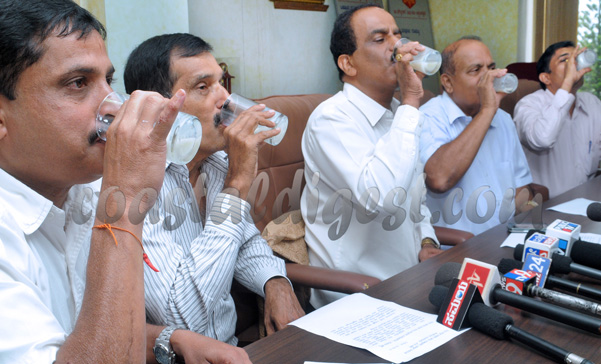
DKMUL office-bears rubbish 'poison' rumours; drink Nandini milk in front of media

August 20, 2012

Kmf_PM_1

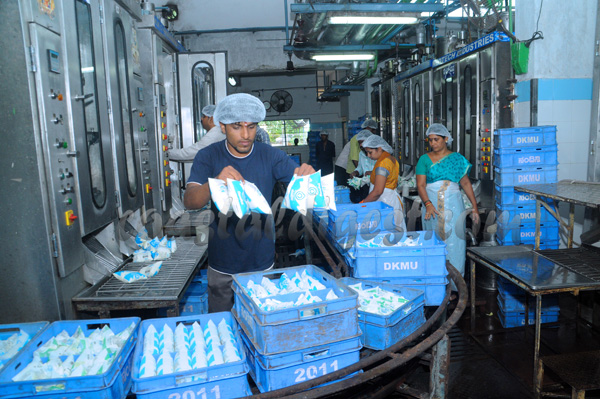
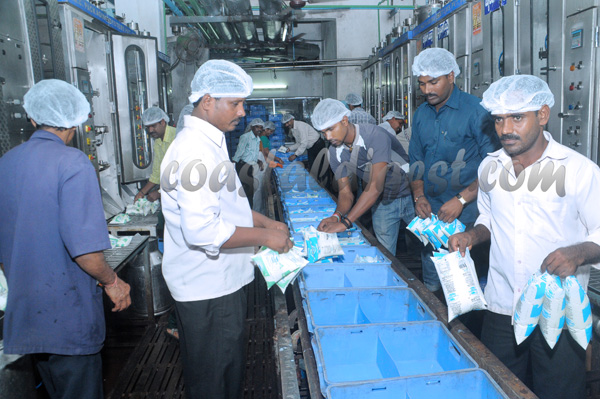
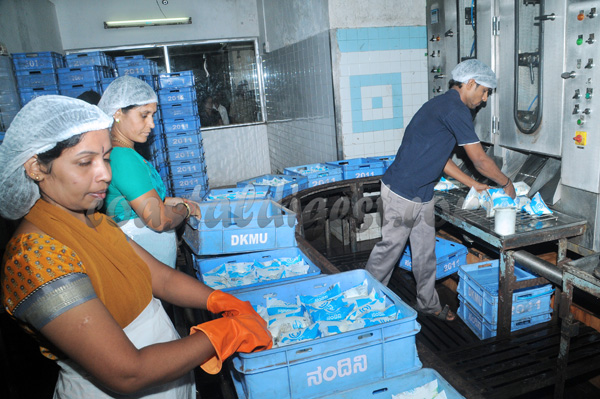
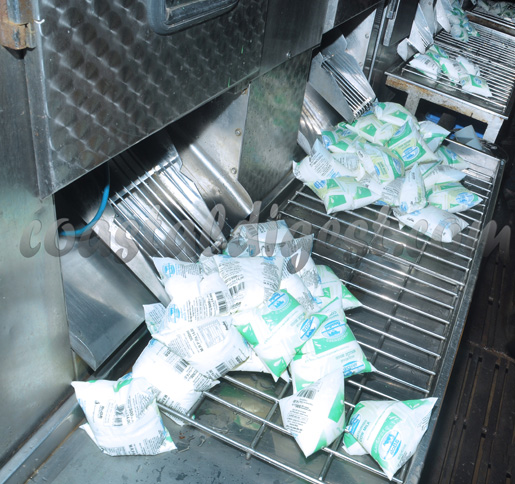
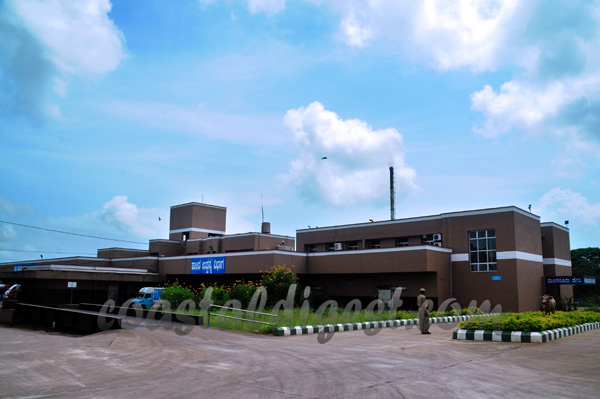
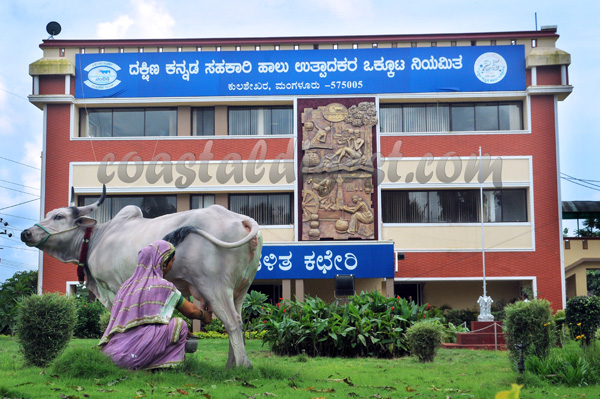
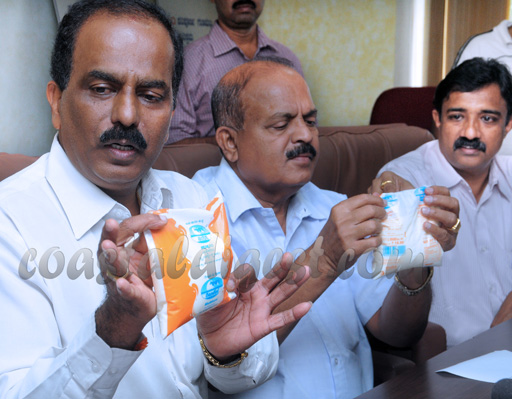
Mangalore, August 20: The Office-bearers of the Dakshina Kannada Milk Producer's Cooperative Union Limited (DKMUL) on Monday battled the 'poison' rumours and drank the milk directly from Nandini packets in front of media.

After the confidence-building demo, Raviraj Hegde, the president of DKMUL told media persons that the rumours that Nandini milk sold by them was poisoned was indeed a handiwork of some anti-social elements who wanted to instill fear in the minds of people.

Urging the people not to pay heed to any such rumours, he said that DKMUL got samples from several different locations, tested and found them safe.

Informing that DKMUL supplies around 3.36 litres of milk to over 2.5 lakh consumer every day, he said not a single incident which supports the 'poison' rumour was reported so far.

Mr Hegde said that DKMUL has been supplying milk for 25 years and has been awarded ISO - 22000-2005 certification. Nandini milk is processed scientifically and undergoes quality check every day, he said.

He also said that the similar rumours of 'milk poisoning' were circulating in some other parts of Karnataka on Sunday and spread to Dakshina Kannada on Monday with some variations.

“We and our consumers want to know who started to spread these rumours and why? We also have lodged a complaint with police, who visited the dairy and carryout out inspection”, he said.

Warning


Meanwhile Deputy Commissioner N S Channappa Gowda has warned rumour mongers that strict action would be initiated against them if found guilty of spreading message about Nandini milk being adulterated or unsafe for consumption.

Mangalore City Police Commissioner Seemanth Kumar Singh also has warned that stringent action would be taken against those who spread such rumours.

Related: 'Milk poison' rumour creates panic in Mangalore
Kmf_PM_2

Kmf_PM_3

Kmf_PM_4

Kmf_PM_5

Kmf_PM_6

Kmf_PM_7

Kmf_PM_8


Comments

Add new comment

  • Coastaldigest.com reserves the right to delete or block any comments.
  • Coastaldigset.com is not responsible for its readers’ comments.
  • Comments that are abusive, incendiary or irrelevant are strictly prohibited.
  • Please use a genuine email ID and provide your name to avoid reject.
News Network
February 3,2026

Bengaluru: Following reports of fresh Nipah virus (NiV) cases in West Bengal and heightened vigilance across parts of Southeast Asia, the Karnataka Health Department has placed the state on high alert and activated emergency preparedness protocols.

Health officials said enhanced surveillance measures have been initiated after two healthcare workers in Barasat, West Bengal, tested positive for the virus earlier this month. While no cases have been reported in Karnataka so far, authorities said the state’s past exposure to Nipah outbreaks and high inter-state mobility warranted preventive action.

Officials have directed district health teams to intensify monitoring, particularly at hospitals and points of entry, and to ensure early detection and isolation of suspected cases.

High Mortality Virus with Multiple Transmission Routes

Nipah virus is a zoonotic disease that can spread from animals to humans and has a reported fatality rate ranging between 60 and 75 per cent. Fruit bats, also known as flying foxes, are the natural reservoirs of the virus and can transmit it by contaminating food sources with saliva or urine.

Known modes of transmission include:

•    Contaminated food: Consumption of fruits partially eaten by bats or raw date-palm sap
•    Animal contact: Exposure to infected pigs or other animals
•    Human-to-human transmission: Close contact with body fluids of infected persons, particularly in healthcare settings

Symptoms and Disease Progression

The incubation period typically ranges from 4 to 14 days, though delayed onset has also been reported. Early symptoms often resemble common viral infections, making prompt clinical suspicion critical.

•    Initial symptoms: Fever, headache, body aches, fatigue, sore throat
•    Progressive symptoms: Drowsiness, disorientation, altered mental state
•    Severe stage: Seizures, neck stiffness and acute encephalitis, which can rapidly progress to coma

Public Health Advisory

The Health Department has issued precautionary guidelines urging the public to adopt risk-avoidance practices to prevent any local spillover.

Do’s
•    Wash fruits thoroughly before consumption
•    Drink boiled and cooled water
•    Use protective equipment while handling livestock
•    Maintain strict hand hygiene

Don’ts
•    Avoid fruits found on the ground or showing bite marks
•    Do not consume beverages made from raw tree sap, including toddy
•    Avoid areas with dense bat populations
•    Do not handle sick or dead animals

Preparedness Measures

Officials confirmed that isolation wards are being readied in major government hospitals and that medical staff are being sensitised to identify early warning signs.

“There is no cause for panic, but there is a need for heightened vigilance,” a senior health official said, adding that there is currently no approved vaccine or specific antiviral treatment for Nipah, and care remains largely supportive.

Comments

Add new comment

  • Coastaldigest.com reserves the right to delete or block any comments.
  • Coastaldigset.com is not responsible for its readers’ comments.
  • Comments that are abusive, incendiary or irrelevant are strictly prohibited.
  • Please use a genuine email ID and provide your name to avoid reject.
News Network
February 8,2026

Baraka1.jpg

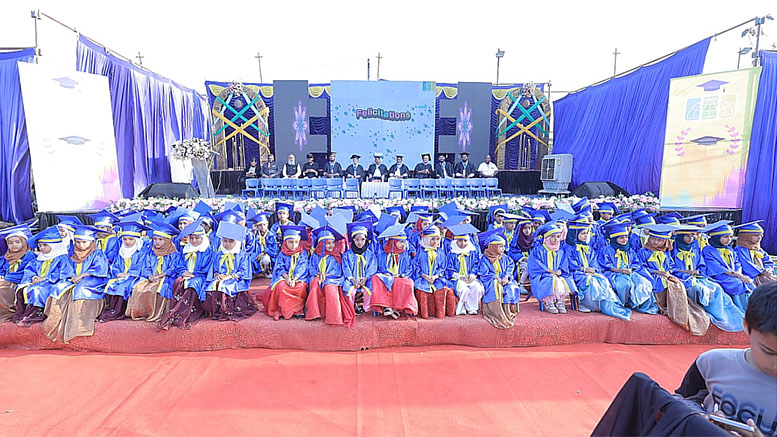
Mangaluru: Emphasising the importance of integrating cultural awareness with formal education, former Mangaluru North MLA and noted community leader Moidin Bawa said such an approach is vital for the holistic development of children and helps shape responsible, confident future citizens. He was speaking as the chief guest at the Prep Graduation Ceremony of Barakah International School and College.

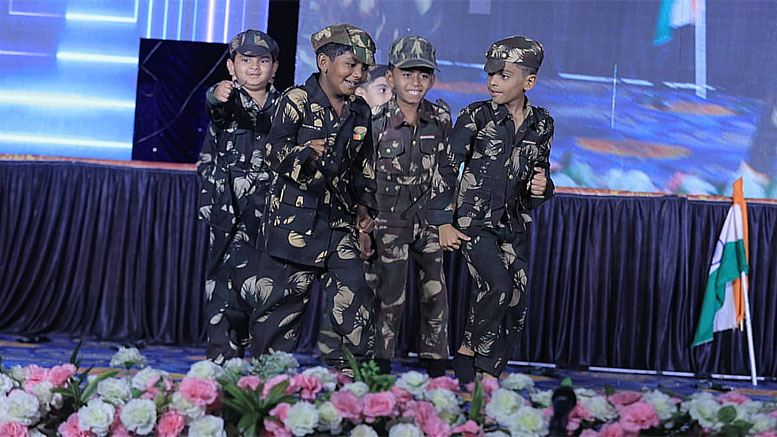
The young graduates enthralled the audience with a vibrant mix of performances, including skits, action songs, short plays, and other engaging cultural programmes that showcased the creativity and confidence nurtured by the institution.

The event was graced by several prominent personalities, including Abdul Naser “Lucky Star”, President of the Wakf Advisory Committee; Dr Mohammed Nohman, Orthopaedic Surgeon; S. A. Khaleel, Chairman of the Bolar Islamic Centre; Naufal Kokkada, President of the SKSM Youth Wing; Suhail Kandak, Chairman of the Make a Change Foundation; and Mohammad Ashraf Badriya, President of Muslim Aikyata Vedike, among others.

The programme began with a warm welcome by Principal Sharfuddin B.S., who highlighted Barakah’s distinctive educational philosophy that blends academic excellence with strong moral and cultural values.

Ayan Ashraf, Director of Barakah, conveyed the Chairman’s message and reaffirmed the institution’s commitment to value-based education.

The vote of thanks was proposed by Mohammed Haneef, Principal of Islamic Studies.

Barakah International School and College is a reputed educational institution in Mangaluru, offering quality education from nursery to degree level. The institution is known for its holistic education model that harmoniously integrates cultural values with academic excellence, ensuring the all-round development of students.

Baraka3.jpg

Baraka2.jpg

Comments

Add new comment

  • Coastaldigest.com reserves the right to delete or block any comments.
  • Coastaldigset.com is not responsible for its readers’ comments.
  • Comments that are abusive, incendiary or irrelevant are strictly prohibited.
  • Please use a genuine email ID and provide your name to avoid reject.
News Network
February 4,2026

shettigar.jpg

An Indian resident who won the Dh20 million (approximately Rs 50 crore) jackpot in Abu Dhabi's Big Ticket draw has told of his joy at sharing his life-changing fortune with a friend.

Shanthanu Shettigar, a shop manager in Muscat, regularly buys tickets for the monthly grand prize draw with one of his closest friends – and the pair won on February 3.

Mr Shettigar, 33, who is from Udyavar in Udupi district of the southern state of Karnataka and has lived in the Omani capital for eight years, said he was left speechless after learning of his success.

“When I first moved to Muscat, many of my colleagues were purchasing Big Ticket, which encouraged me to give it a try,” he said.

“I started buying tickets on my own, and later began sharing tickets with a close friend. The ticket that brought me this win was one we purchased together.”

“Like most people, I receive a lot of spam calls, and I was fully absorbed in my work as well. I knew the live draw was taking place tonight, but I never imagined my name would be announced,” he said.

“When I realised it was real and that I had won, I was honestly speechless. It still hasn’t fully sunk in, but I’m extremely happy.”

Mr Shettigar is not sure how he will spend his share of the money, but encouraged others to take part.

“This win was completely unexpected, so I want to take some time to think things through before deciding what to do next,” he said.

“I would definitely encourage others to participate with Big Ticket, whether with family or friends – you never know when your moment might come.”

The Big Ticket was established in 1992 with an initial first prize of Dh1 million. It is one of the most popular monthly raffles in the UAE.

It has transformed the lives of many people across the Emirates and beyond.

Entry to the Big Ticket Millionaire is Dh500. Tickets can be bought online or at counters at Zayed International Airport and Al Ain Airport.

Comments

Add new comment

  • Coastaldigest.com reserves the right to delete or block any comments.
  • Coastaldigset.com is not responsible for its readers’ comments.
  • Comments that are abusive, incendiary or irrelevant are strictly prohibited.
  • Please use a genuine email ID and provide your name to avoid reject.