


Mumbai, Mar 27: The Reserve Bank of India (RBI) on Friday lowered the key repo rate by 75 basis points to 4.4 per cent in a bid to arrest the economic slowdown amid coronavirus (COVID-19) outbreak.
The reverse repo rate now stands at 4 per cent, down by 90 basis points, said RBI Governor Shaktikanta Das adding this has been done to make it unattractive for banks to passively deposit funds with the central bank and instead lend it to the productive sectors.
The six-member monetary policy committee (MPC) met on March 24, 25 and 27 and voted 4:2 in favour of the repo rate reduction. The MPC also decided to continue with the accommodative stance as long as it is necessary to revive growth and mitigate the impact of COVID-19 on the economy while ensuring that inflation remains within the target.
"The need of the hour is to shield the economy from the pandemic," said Das. "We need to mitigate the impact of coronavirus, revive economic growth and provide financial stability."
Repo rate is the rate at which a country's central bank lends money to commercial banks, and the reverse repo rate is the rate at which it borrows from them.
The RBI Governor further said that the economic growth and inflation projection will be highly contingent depending on the duration, spread and intensity of the pandemic.
"Global economic activity has come to a near standstill as COVID-19 related lockdowns and social distancing are imposed across a widening swathe of affected countries. Expectations of a shallow recovery in 2020 from 2019's decade low in global growth have been dashed," said Das.
"The outlook is now heavily contingent upon the intensity, spread and duration of the pandemic. There is a rising probability that large parts of the global economy will slip into recession," he said.
However, the RBI has injected liquidity of Rs 2.8 lakh crore via various instruments equal to 1.4 per cent of GDP. "Along with today's measures, liquidity measures equal to 3.2 per cent of GDP. The RBI will take continuous measures to ensure liquidity in the system."
The RBI governor has said that all banking institutions can offer a three-month moratorium on all loans for a period of three months. The RBI has also allowed banks to restructure the working capital cycle for companies without worrying that these will have to be classified as a non-performing asset (NPA).
The three-month moratorium will permit banks to avoid a large onset of NPAs during the 21-day lockdown and keep their books healthy.
Das said banks and other financial institutions should do all they can to keep credit flowing to economic agents facing financial stress on account of the isolation that the virus has imposed.
"Market participants should work with regulators like the RBI and the Securities and Exchange Board of India (SEBI) to ensure the orderly functioning of markets in their role of price discovery and financial intermediation," he said.
Search
RBI reduces repo rate by 75 basis points to battle COVID-19 impact

News Network
March 27, 2020
Al Hind Air, FlyExpress secure govt nod; more airlines lined up for 2026

News Network
December 24,2025

New Delhi: Two new airlines - Al Hind Air and FlyExpress - are set to take to the skies, with the carriers receiving their no objection certificates from the Civil Aviation Ministry.
In 2026, apart from these two carriers, Uttar Pradesh-based Shankh Air, which already has a No Objection Certificate (NOC), is likely to start operations.
Al Hind Air is being promoted by Kerala-based alhind Group.
The ministry is keen to have more airline operators in the country, which is one of the world's fastest growing domestic civil aviation markets.
Currently, there are nine operational scheduled domestic carriers in the country. Fly Big, a regional airline, suspended scheduled flights in October.
IndiGo and Air India Group - Air India and Air India Express - together have over 90 per cent of the domestic market share.
Concerns about apparent duopoly in the fast-growing domestic airlines' industry got amplified this month in the wake of the massive operational disruptions at IndiGo, which has a market share of more than 65 per cent.
"Over the last one week, pleased to have met teams from new airlines aspiring to take wings in Indian skies- Shankh Air, Al Hind Air and FlyExpress. While Shankh Air has already got the NOC from the Ministry, Al Hind Air and FlyExpress have received their NOCs this week," Civil Aviation Minister K Rammohan Naidu said in a post on X on Tuesday.
According to him, it has been the endeavour of the ministry to encourage more airlines in Indian aviation which is amongst the fastest growing aviation markets.
Schemes like UDAN, have enabled smaller carriers Star Air, India One Air and Fly91 to play an important role in the regional connectivity within the country and there is more scope for further growth, he added.
Apart from Air India, Air India Express, IndiGo and state-owned Alliance Air, other scheduled carriers are Akasa Air, SpiceJet, Star Air, Fly91 and IndiaOne Air, as per latest data from the Directorate General of Civil Aviation (DGCA).
In the past years, many airlines, including Go First and Jet Airways, stopped flying amid debt woes.
Comments
Add new comment
- Coastaldigest.com reserves the right to delete or block any comments.
- Coastaldigset.com is not responsible for its readers’ comments.
- Comments that are abusive, incendiary or irrelevant are strictly prohibited.
- Please use a genuine email ID and provide your name to avoid reject.
‘Pakistan has no moral right to question India’s military operation’: Pak Islamist lawmaker exposes own country’s hypocrisy
News Network
December 23,2025
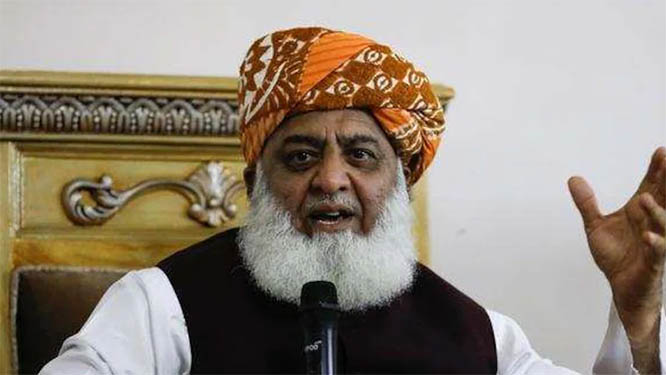
A Pakistani lawmaker has called out the hypocrisy of his country's leadership, drawing a parallel between Islamabad's military actions against Kabul and India's 'Operation Sindoor'.
Condemning the Pakistan army, led by Asim Munir, for strikes on Afghanistan - which resulted in civilian casualties - Jamiat Ulema-e-Islam-F (JUI-F) chief Maulana Fazlur Rehman questioned the consistency of Islamabad's logic. He argued that if Pakistan's cross-border attacks are considered justified, then the country has little ground to object when India enters Pakistani territory to eliminate terrorists.
Rehman was addressing the 'Majlis-e-Ittehad-e-Ummat' conference on Monday in Karachi's Lyari. The town recently gained international attention as the setting for the Ranveer Singh-starrer Dhurandhar, which depicted the intersection of informants and operatives within the Lyari underworld.
"If you say that we attacked our enemy in Afghanistan and justify this, then India can also say that it attacked Bahawalpur, Muridke, and the headquarters of groups responsible for the attack in Kashmir," Rehman said, referring to India's retaliatory strikes. "Then how can you raise objections? The same accusations are now being levelled against Pakistan by Afghanistan. How do you justify both positions?"
The JUI-F chief's remarks specifically referenced 'Operation Sindoor'.
On May 7, Indian armed forces carried out pre-dawn missile strikes on nine terror targets in Pakistan and Pakistan-occupied Kashmir, including the Jaish-e-Mohammad stronghold of Bahawalpur and Lashkar-e-Taiba's base in Muridke.
Pak-Afghanistan Tension
Fazlur Rehman has been a consistent critic of the Pakistani government's policy towards Afghanistan. In October, during a peak in bilateral tensions, he offered to mediate between the two nations. According to a Dawn report, he stated, "In the past, I have played a role in reducing tensions between Pakistan and Afghanistan, and I can still do so."
Rehman is known to wield significant influence within the region and remains the only Pakistani lawmaker to have met with the Taliban's supreme leader, Haibatullah Akhundzada.
Recently, India condemned Pakistan's fresh strikes on Afghanistan. "We have seen reports of border clashes in which several Afghan civilians have been killed," Ministry of External Affairs (MEA) spokesperson Randhir Jaiswal said at a weekly media briefing.
"We condemn such attacks on innocent Afghan people. India strongly supports the territorial integrity, sovereignty and independence of Afghanistan," he said.
A spokesperson for the Taliban regime claimed Pakistan initiated the attacks and that Kabul was "forced to respond".
The two countries have been locked in an increasingly bitter dispute since the Taliban authorities retook control in Kabul in 2021, with Islamabad accusing its neighbour of harbouring terrorists - a charge that the Afghan government denies.
Comments
Add new comment
- Coastaldigest.com reserves the right to delete or block any comments.
- Coastaldigset.com is not responsible for its readers’ comments.
- Comments that are abusive, incendiary or irrelevant are strictly prohibited.
- Please use a genuine email ID and provide your name to avoid reject.
PM Modi, King Abdullah II share 8-point vision to deepen India-Jordan ties
News Network
December 16,2025

Prime Minister Narendra Modi on Monday held talks with Jordan’s King Abdullah II in Amman, during which the two leaders discussed ways to further strengthen bilateral relations, with the Prime Minister outlining an eight-point vision covering key areas of cooperation.
Describing the meeting as “productive”, PM Modi said he shared a roadmap focused on trade and economy, fertilisers and agriculture, information technology, healthcare, infrastructure, critical and strategic minerals, civil nuclear cooperation, and people-to-people ties.
In a post on social media platform X, the Prime Minister praised King Abdullah II’s personal commitment to advancing India–Jordan relations, particularly as both countries mark the 75th anniversary of the establishment of diplomatic ties this year.
“Held productive discussions with His Majesty King Abdullah II in Amman. His personal commitment towards vibrant India-Jordan relations is noteworthy. This year, we are celebrating the 75th anniversary of our bilateral diplomatic relations,” PM Modi said.
The meeting took place at the Al Husseiniya Palace, where the two leaders also exchanged views on regional and global issues of mutual interest. According to the Ministry of External Affairs (MEA), both sides agreed to further deepen cooperation in areas including trade and investment, defence and security, counter-terrorism and de-radicalisation, fertilisers and agriculture, infrastructure, renewable energy, tourism, and heritage.
The MEA said both leaders reaffirmed their united stand against terrorism.
PM Modi arrived in Amman earlier on Monday and was received by Jordanian Prime Minister Jafar Hassan, who accorded him a formal welcome. Following the talks, King Abdullah II hosted a banquet dinner in honour of the Prime Minister, reflecting the warmth of bilateral ties.
Jordan is the first leg of PM Modi’s three-nation tour. From Amman, the Prime Minister will travel to Ethiopia at the invitation of Prime Minister Abiy Ahmed Ali, marking his first official visit to the African nation. The tour will conclude with a visit to Oman.
Comments
Add new comment
- Coastaldigest.com reserves the right to delete or block any comments.
- Coastaldigset.com is not responsible for its readers’ comments.
- Comments that are abusive, incendiary or irrelevant are strictly prohibited.
- Please use a genuine email ID and provide your name to avoid reject.
Comments
Add new comment