



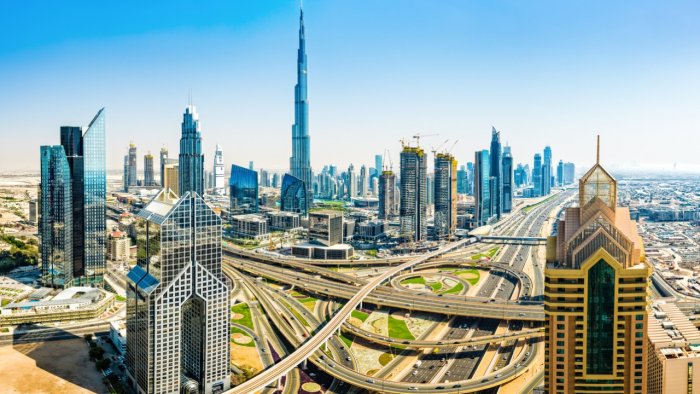
Dubai luxury home market soars as world’s rich flee covid

News Network
May 6, 2021

dubai.jpg

After nearly three decades in London, Christophe Reech was fed up with the city's pandemic lockdowns. This spring, he sold his luxury townhouse and jetted off to the desert sheikhdom of Dubai to start a new life with his family.

There was no turning back, he said. The French business magnate's super wealthy foreign friends were doing the same, driving an unprecedented surge in sales of Dubai's most-exclusive properties.

“Here in Dubai, there's only one strategy: Business as usual,” said Reech, the chairman of an eponymous group that owns real estate and financial technology companies. The philosophy is simple: “Let's make sure everyone's vaccinated and keep everything open."

“Of course that attracts people like me," he said.

As vaccines roll out unevenly worldwide and waves of infections force countries to extend restrictions, foreign buyers flush with cash have flooded Dubai's high-end property market, one of the few places in the world where they can dine, shop and do business in person.

They're snapping up record numbers of luxury villas and penthouses, sending prices rocketing in this boom-and-bust market.

Sales of Dubai's upscale properties, once slow, soared 230 per cent in the first quarter of 2021, compared to the same period last year.

Prices in some top-end areas rose as much as 40 per cent, according to Property Finder, the country's largest real-estate website.

A record-breaking 90 properties worth 10 million dirhams each (USD 2.7 million) changed hands last month, on top of 84 in March, surpassing heights hit eight years ago, according to real estate consultancy Property Monitor. For comparison, there were 54 such transactions in all of 2020.

"Tons of people are coming in and buying multimillion dollar properties on the spot, with no due diligence time whatsoever,” said Matthew Cooke, a partner at consultancy Knight Frank, who manages penthouse sales on Dubai's Palm Jumeirah artificial archipelago.

As with previous cycles, cash buyers started snatching up homes at bargain prices and flipping them for profits. Analysts say that will continue until prices rise too high and returns diminish.

How long the craze lasts and what awaits the skyscraper-studded city then remains unclear. Home prices are still falling in the middle tiers of the city's saturated property market, which has seen values drop sharply since peaks reached seven years ago due to overbuilding.

Average residence sale prices in the Burj Khalifa, the world's tallest building, collapsed to USD 400 per square foot this month from USD 1,300 in 2013.

“The market is going through a boom time ... but people are very aware that Dubai can run too quickly and it all falls apart," said Jackie Johns, partner at Premier Estates, an affiliate of Christie's International Real Estate, referring to the debt-driven crisis that brought the city to its knees in 2008.

The hot streak in the luxury market isn't unique to Dubai, as ultra-low interest rates and families' desire for more space has seen the wealthy in cities like New York and Paris decamp to suburban mansions. But there are other factors at play in the glitzy emirate, home to the long-haul carrier Emirates and tallest tower on Earth.

Since first reopening to tourists last summer, Dubai has pitched itself as the world's pandemic-friendly vacation spot.

With no mandatory dayslong quarantines, foreign visitors now party in Dubai's bustling bars and on its beaches, their selfies at hotel-resorts and helicopter pads stirring resentment back home.

The tourist influx helped drive the country's dramatic surge in coronavirus cases in January, prompting the UK to suspend flights.

But the United Arab Emirates, with its young population and low mortality rates, has fared relatively well during the pandemic.

The country of over 9 million, which relied heavily on the Chinese state-backed Sinopharm vaccine for its inoculation campaign, has administered 10.6 million vaccine doses.

A global financial center known as an oasis in the volatile Middle East, Dubai long has benefitted from capital flight. Homeowners on the Palm Jumeirah — which saw 43 per cent of all April transactions — include Afghan warlords and the political elite from countries like Nigeria, Syria and Lebanon, all searching for a safe place to park their savings.

Comments

Grace
 - 
Tuesday, 18 May 2021

The fewest elders, the lowest dead toll. As simple as that.

Add new comment

  • Coastaldigest.com reserves the right to delete or block any comments.
  • Coastaldigset.com is not responsible for its readers’ comments.
  • Comments that are abusive, incendiary or irrelevant are strictly prohibited.
  • Please use a genuine email ID and provide your name to avoid reject.
News Network
February 1,2026

Bengaluru, Feb 1: For travelers landing at Kempegowda International Airport (KIA), the sleek, wood-paneled curves of Terminal 2 promise a world-class welcome. But the famed “Garden City” charm quickly withers at the curb. As India’s aviation sector swells to record numbers—handling over 43 million passengers in Bengaluru alone this past year—the “last mile” has turned into a marathon of frustration.

The Bengaluru Logjam: Rules vs Reality

While the city awaits the 2027 completion of the Namma Metro Blue Line, the interim has been chaotic. Recent “decongestion” rules at Terminal 1 have pushed app-based cab pickups to distant parking zones, forcing weary passengers into a 20-minute walk with luggage.

“I landed after ten months away and felt like a stranger in my own city,” says Ruchitha Jain, a Koramangala resident. “My driver couldn’t find me, staff couldn’t guide me, and the so-called ‘Premium’ lane is just a fancy tax on convenience.”

•    The Cost of Distance: A 40-km cab ride can now easily cross ₹1,500, driven by demand pricing and airport surcharges.

•    The Bus Gap: While Vayu Vajra remains a lifeline, its ₹300–₹400 fare is often cited as the most expensive airport bus service in the country.

A National Pattern of Disconnect

The struggle is not unique to Karnataka. From Chennai’s coast to Hyderabad’s plateau, India’s airports tell a familiar story: brilliant runways, broken exits.

City:    Primary Issue   |    Recent Development

Bengaluru:    Cab pickup restrictions & distance  |    App-based taxis shifted to far parking zones; long walks and fare spikes reported

Chennai:    Multi-Level Parking (MLCP) hike  |    Passengers report 40-minute walks to reach cab pickup points

Hyderabad:    “Taxi mafia” & touting  |    Over 440 touting cases reported; security presence intensified

Mumbai:    Fare scams  |     Tourists charged ₹18,000 for just 400 metres, triggering police action

In Hyderabad, travelers continue to battle entrenched local groups that intimidate Uber and Ola drivers, pushing passengers toward overpriced private taxis. Chennai flyers, meanwhile, complain that reaching the designated pickup zones now takes longer than short-haul flights from cities like Coimbatore.

The ‘Budget Day’ Hope

As Finance Minister Nirmala Sitharaman presents the Union Budget 2026 today, the aviation sector is watching closely. With the government’s renewed emphasis on multimodal integration, there is cautious hope for funding toward seamless airport-metro-bus hubs.

The vision is clear: a future where planes, trains, and metros speak the same language. Until then, passengers at KIA—and airports across India—will continue to discover that the hardest part of flying isn’t the thousands of kilometres in the air, but the last few on the ground.

Comments

Chandramohan
 - 
Friday, 6 Feb 2026

Sir, I request the airport authorities to introduce a free transport services from terminal 1 to terminal 2 as is very difficult for the passengers to reach terminal 2 along with their luggage. Also a trolley should be provided to reach the counter. Hope the authorities would help the passengers as soon as possible.

Add new comment

  • Coastaldigest.com reserves the right to delete or block any comments.
  • Coastaldigset.com is not responsible for its readers’ comments.
  • Comments that are abusive, incendiary or irrelevant are strictly prohibited.
  • Please use a genuine email ID and provide your name to avoid reject.
News Network
February 1,2026

US President Donald Trump on Saturday claimed that the government of India led by Prime Minister Narendra Modi has made a deal to buy Venezuelan oil, as opposed to purchasing it from Iran.

"We've already made that deal, the concept of the deal," he told reporters on Air Force One.

Trump had imposed 25% tariffs on countries buying Venezuelan oil, including India, in March 2025. He had also hit India with tariffs for buying Russian oil, saying it was "funding" President Vladimir Putin's war against Ukraine.

Trump has said that the US has taken control of the oil-rich Venezuela after capturing former President Nicolas Maduro in January.

A fleet of 18 ships loaded with crude oil bound for refineries in Texas, Louisiana, and Mississippi in January, the most since December 2024, according to a report by the news agency Bloomberg.

Combined crude deliveries to the US will reach about 2,75,000 barrels a day, more than doubling volumes seen in December last year. Shipments to China, which averaged 4,00,000 barrels a day last year, fell to zero in January.

PM Modi, Venezuelan President Agree To Expand Ties

Prime Minister Narendra Modi and Venezuela's acting President Delcy Rodriguez spoke on Friday and agreed to take the bilateral relations to "new heights" in the years ahead.

It was the first phone call between the two leaders since the capture of Maduro and his wife by the US on January 3.

"Spoke with Acting President of Venezuela, Ms. Delcy Rodriguez. We agreed to further deepen and expand our bilateral partnership in all areas, with a shared vision of taking India-Venezuela relations to new heights in the years ahead," PM Modi said in a post on X.

A statement from Prime Minister Modi's office said the two leaders agreed to further expand and deepen the India-Venezuela partnership in all areas, including trade and investment, energy, digital technology, health, agriculture, and people-to-people ties.

They exchanged views on various regional and global issues of mutual interest and underscored the importance of their close cooperation for the Global South, the statement said.

Rodriguez also said that they discussed partnerships in the fields of agriculture, science and technology, mining, and tourism, as well as the pharmaceutical and automotive industries.

Comments

Add new comment

  • Coastaldigest.com reserves the right to delete or block any comments.
  • Coastaldigset.com is not responsible for its readers’ comments.
  • Comments that are abusive, incendiary or irrelevant are strictly prohibited.
  • Please use a genuine email ID and provide your name to avoid reject.
News Network
February 4,2026

shettigar.jpg

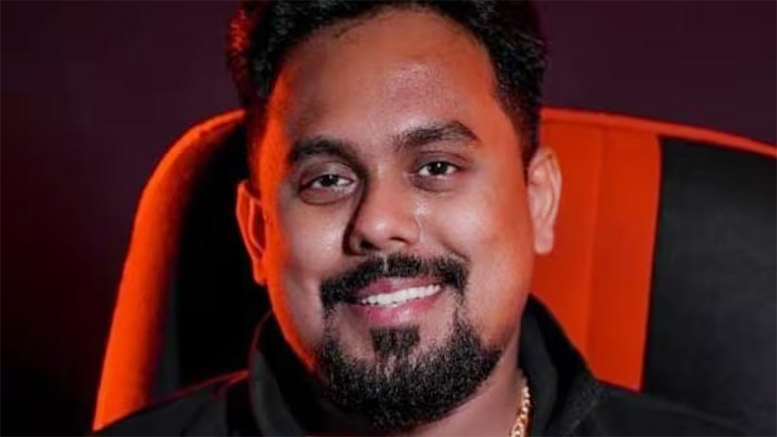
An Indian resident who won the Dh20 million (approximately Rs 50 crore) jackpot in Abu Dhabi's Big Ticket draw has told of his joy at sharing his life-changing fortune with a friend.

Shanthanu Shettigar, a shop manager in Muscat, regularly buys tickets for the monthly grand prize draw with one of his closest friends – and the pair won on February 3.

Mr Shettigar, 33, who is from Udyavar in Udupi district of the southern state of Karnataka and has lived in the Omani capital for eight years, said he was left speechless after learning of his success.

“When I first moved to Muscat, many of my colleagues were purchasing Big Ticket, which encouraged me to give it a try,” he said.

“I started buying tickets on my own, and later began sharing tickets with a close friend. The ticket that brought me this win was one we purchased together.”

“Like most people, I receive a lot of spam calls, and I was fully absorbed in my work as well. I knew the live draw was taking place tonight, but I never imagined my name would be announced,” he said.

“When I realised it was real and that I had won, I was honestly speechless. It still hasn’t fully sunk in, but I’m extremely happy.”

Mr Shettigar is not sure how he will spend his share of the money, but encouraged others to take part.

“This win was completely unexpected, so I want to take some time to think things through before deciding what to do next,” he said.

“I would definitely encourage others to participate with Big Ticket, whether with family or friends – you never know when your moment might come.”

The Big Ticket was established in 1992 with an initial first prize of Dh1 million. It is one of the most popular monthly raffles in the UAE.

It has transformed the lives of many people across the Emirates and beyond.

Entry to the Big Ticket Millionaire is Dh500. Tickets can be bought online or at counters at Zayed International Airport and Al Ain Airport.

Comments

Add new comment

  • Coastaldigest.com reserves the right to delete or block any comments.
  • Coastaldigset.com is not responsible for its readers’ comments.
  • Comments that are abusive, incendiary or irrelevant are strictly prohibited.
  • Please use a genuine email ID and provide your name to avoid reject.