



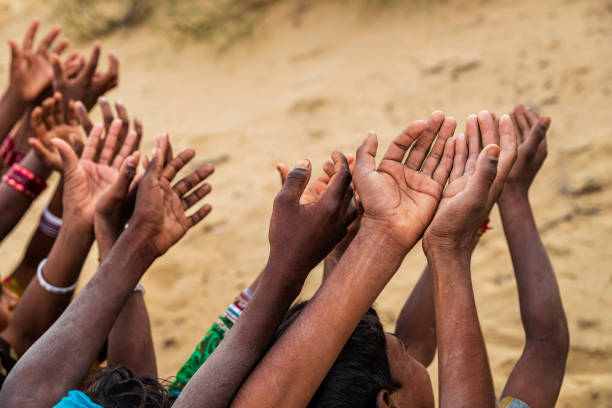
India is hungry as Modi talks of feeding the world

Agencies
May 26, 2022

hungryindia.jpg

The only thing India can possibly do during this year’s global food crisis is to not make it any worse for its own poor. As the cost of basic nutrition balloons everywhere, the second-most-populous nation’s best bet is to fall back on its extensive system of state procurement and public distribution to soften the blow.

But, around mid-April, Prime Minister Narendra Modi promised US President Joe Biden that India could feed the world. If the World Trade Organisation allowed it, “India is ready to supply food stocks to the world from tomorrow,” Modi said, recalling the conversation.

Modi’s ministers and advisers ought to have known better. Just as the Indian leader was talking to Biden, the north Indian wheat crop was being scorched by a deadly heat wave. The Ukraine war and the resulting grain shortage may have presented India with an opportunity to script a role for itself in international trade, but climate change and a brewing chapati crisis should have been reasons to curb the enthusiasm.

Eventually it had to do just that: In mid-May, India imposed a hasty ban on wheat exports to ensure its own food security. It was a repeat of the Covid-19 fiasco when Modi bragged about how India, the world’s pharmacy, will save humanity. But a vicious outbreak of the delta variant forced it to backtrack. By March 31, India’s share of the global vaccine trade was just 2.3 per cent. Just as with the pandemic, the ripples of New Delhi’s wheat flip-flop are being felt internationally. The Group of Seven nations criticized the embargo. "If everyone starts to impose export restrictions or to close markets, that would worsen the crisis," German agriculture minister Cem Ozdemir said.

Actually, the opposite might be true. From Indonesia’s restrictions on palm-oil shipments to Malaysia’s ban on chicken exports, some 30 countries have resorted to such measures. Had India not closed its markets, the country might have faced a shortage of chapatis — India’s ubiquitous, unleavened daily bread. People, rich or poor, don’t consume wheat; they buy flour to make chapatis. And this year, there may be 6.5 per cent fewer chapatis for the same crop as previous harvests, while wheat output itself will likely see its first dip in seven years. 

In a nutshell, the problem is this: Last year, one kilo of Indian wheat resulted in about 770 grams of flour. This year, that might go down to 720 grams. The hottest March in 122 years has stunted grain formation. In fact, traders are buying wheat that is below their normal flour-yield cut-off level — that would be a score below 76 on a hectoliter test. Now, inferior readings of 72 are acceptable because of the scarcity of good wheat, according to industry sources.

Blame can be laid to the unusually early heat wave that engulfed India and Pakistan, weather that was made at least 30 times more likely by human-caused climate change, according to scientists at the World Weather Attribution initiative. India’s crop will be lucky to exceed 100 million tons this year, a steep decline from the initial government estimate of a record 111 million-ton harvest.

Taking 15 million metric tons from this total to export to the world — as the government boasted — was more than a little shortsighted. For one, the Food Corporation of India, the state-buying agency, has neglected to fill out its granaries. Last year, it bought 43 million metric tons for its stockpiles. This year’s target has been slashed to less than half of that. Those 19.5 million tons of purchases, plus the 30 million tons currently in FCI storage will mostly go into public distribution if the Modi administration extends the free grain program it started during the pandemic. There will be little left in the state’s wheat pool to tamp down any speculative fervor in the domestic open market.

The government isn’t without tools. If prices skyrocket, New Delhi can impose stock limits to force traders to release their hoards. The FCI could also offload more rice than wheat into the subsidised public distribution system. Most Indian diets nowadays can accommodate both. This could free up about 10 million tons of wheat to accommodate government-to-government supply deals such as with Egypt.

Still, these are stopgap solutions. The premise of Modi’s failed farm-reform legislation was to give more freedom to farmers to discover free-market prices for their produce. The about-face over wheat shows that when it comes to India’s agriculture, primacy of markets remains a pipe dream. A limit on sugar exports has also come up. Unlike wheat, where India is a bit player in global trade, the country is No. 2 in sugar shipments after Brazil. That’s a perfidy in itself because the sweetener guzzles water — and by selling it overseas, India exports its precious rain.

Maybe the current wheat shortage will ease if, as Lithuania has proposed, a protective corridor for grain shipments from Ukraine ends up breaking a Russian blockade of the Black Sea. With that, the pressure to feed India’s 1.4 billion people may also lift. But the long-term threat of climate change won’t go away. As global temperatures rise 2 degrees Celsius or more above pre-industrial levels, the country’s chapati challenge is only going to become more urgent.

Comments

Add new comment

  • Coastaldigest.com reserves the right to delete or block any comments.
  • Coastaldigset.com is not responsible for its readers’ comments.
  • Comments that are abusive, incendiary or irrelevant are strictly prohibited.
  • Please use a genuine email ID and provide your name to avoid reject.
News Network
February 3,2026

Bengaluru: Following reports of fresh Nipah virus (NiV) cases in West Bengal and heightened vigilance across parts of Southeast Asia, the Karnataka Health Department has placed the state on high alert and activated emergency preparedness protocols.

Health officials said enhanced surveillance measures have been initiated after two healthcare workers in Barasat, West Bengal, tested positive for the virus earlier this month. While no cases have been reported in Karnataka so far, authorities said the state’s past exposure to Nipah outbreaks and high inter-state mobility warranted preventive action.

Officials have directed district health teams to intensify monitoring, particularly at hospitals and points of entry, and to ensure early detection and isolation of suspected cases.

High Mortality Virus with Multiple Transmission Routes

Nipah virus is a zoonotic disease that can spread from animals to humans and has a reported fatality rate ranging between 60 and 75 per cent. Fruit bats, also known as flying foxes, are the natural reservoirs of the virus and can transmit it by contaminating food sources with saliva or urine.

Known modes of transmission include:

•    Contaminated food: Consumption of fruits partially eaten by bats or raw date-palm sap
•    Animal contact: Exposure to infected pigs or other animals
•    Human-to-human transmission: Close contact with body fluids of infected persons, particularly in healthcare settings

Symptoms and Disease Progression

The incubation period typically ranges from 4 to 14 days, though delayed onset has also been reported. Early symptoms often resemble common viral infections, making prompt clinical suspicion critical.

•    Initial symptoms: Fever, headache, body aches, fatigue, sore throat
•    Progressive symptoms: Drowsiness, disorientation, altered mental state
•    Severe stage: Seizures, neck stiffness and acute encephalitis, which can rapidly progress to coma

Public Health Advisory

The Health Department has issued precautionary guidelines urging the public to adopt risk-avoidance practices to prevent any local spillover.

Do’s
•    Wash fruits thoroughly before consumption
•    Drink boiled and cooled water
•    Use protective equipment while handling livestock
•    Maintain strict hand hygiene

Don’ts
•    Avoid fruits found on the ground or showing bite marks
•    Do not consume beverages made from raw tree sap, including toddy
•    Avoid areas with dense bat populations
•    Do not handle sick or dead animals

Preparedness Measures

Officials confirmed that isolation wards are being readied in major government hospitals and that medical staff are being sensitised to identify early warning signs.

“There is no cause for panic, but there is a need for heightened vigilance,” a senior health official said, adding that there is currently no approved vaccine or specific antiviral treatment for Nipah, and care remains largely supportive.

Comments

Add new comment

  • Coastaldigest.com reserves the right to delete or block any comments.
  • Coastaldigset.com is not responsible for its readers’ comments.
  • Comments that are abusive, incendiary or irrelevant are strictly prohibited.
  • Please use a genuine email ID and provide your name to avoid reject.
News Network
February 1,2026

Bengaluru: The Karnataka High Court has refused to quash an investigation against a WhatsApp group administrator accused of allowing the circulation of obscene and offensive images depicting Hindutva politicians and idols in 2021.

Justice M Nagaprasanna observed that, prima facie, the ingredients of the offence under Section 295A of the Indian Penal Code were made out. “The offence under Section 295A of the IPC is met to every word of its ingredient, albeit prima facie,” the judge said.

The petitioner, Sirajuddin, a resident of Belthangady taluk in Dakshina Kannada district, had challenged the FIR registered against him at the CEN (Cyber, Economics and Narcotics) police station, Mangaluru, for offences under Section 295A of the IPC and Section 67 of the Information Technology Act. Section 295A relates to punishment for deliberate and malicious acts intended to outrage the religious feelings of any class of citizens.

According to the complaint filed by K Jayaraj Salian, also a resident of Belthangady taluk, he received a WhatsApp group link from an unknown source and was added to the group after accessing it. The group reportedly had six administrators and around 250 participants, where obscene and offensive images depicting Hindu deities and certain political figures were allegedly circulated repeatedly.

Sirajuddin was arrested in connection with the case and later released on bail on February 16, 2021. He argued before the court that he was being selectively targeted, while other administrators—including the creator of the group—were neither arrested nor investigated. He also contended that the Magistrate could not have taken cognisance of the offence under Section 295A without prior sanction under Section 196(1) of the CrPC.

Rejecting the argument, Justice Nagaprasanna held that prior sanction is required only at the stage of taking cognisance, and not at the stage of registration of the crime or during investigation.

The judge noted that the State had produced the entire investigation material before the court. “A perusal of the material reveals depictions of Hindu deities in an extraordinarily obscene, demeaning and profane manner. The content is such that its reproduction in a judicial order would itself be inappropriate,” the court said, adding that the material, on its face, had the tendency to outrage religious feelings and disturb communal harmony.

Observing that the case was still at the investigation stage, the court said it could not interdict the probe at this juncture. However, it expressed concern that the investigating officer appeared to have not proceeded uniformly against all administrators. The court clarified that if the investigation revealed the active involvement of any member in permitting the circulation of such content, they must also be proceeded against.

“At this investigative stage, any further observation by this Court would be unnecessary,” the order concluded.

Comments

Add new comment

  • Coastaldigest.com reserves the right to delete or block any comments.
  • Coastaldigset.com is not responsible for its readers’ comments.
  • Comments that are abusive, incendiary or irrelevant are strictly prohibited.
  • Please use a genuine email ID and provide your name to avoid reject.
News Network
February 1,2026

Bengaluru, Feb 1: For travelers landing at Kempegowda International Airport (KIA), the sleek, wood-paneled curves of Terminal 2 promise a world-class welcome. But the famed “Garden City” charm quickly withers at the curb. As India’s aviation sector swells to record numbers—handling over 43 million passengers in Bengaluru alone this past year—the “last mile” has turned into a marathon of frustration.

The Bengaluru Logjam: Rules vs Reality

While the city awaits the 2027 completion of the Namma Metro Blue Line, the interim has been chaotic. Recent “decongestion” rules at Terminal 1 have pushed app-based cab pickups to distant parking zones, forcing weary passengers into a 20-minute walk with luggage.

“I landed after ten months away and felt like a stranger in my own city,” says Ruchitha Jain, a Koramangala resident. “My driver couldn’t find me, staff couldn’t guide me, and the so-called ‘Premium’ lane is just a fancy tax on convenience.”

•    The Cost of Distance: A 40-km cab ride can now easily cross ₹1,500, driven by demand pricing and airport surcharges.

•    The Bus Gap: While Vayu Vajra remains a lifeline, its ₹300–₹400 fare is often cited as the most expensive airport bus service in the country.

A National Pattern of Disconnect

The struggle is not unique to Karnataka. From Chennai’s coast to Hyderabad’s plateau, India’s airports tell a familiar story: brilliant runways, broken exits.

City:    Primary Issue   |    Recent Development

Bengaluru:    Cab pickup restrictions & distance  |    App-based taxis shifted to far parking zones; long walks and fare spikes reported

Chennai:    Multi-Level Parking (MLCP) hike  |    Passengers report 40-minute walks to reach cab pickup points

Hyderabad:    “Taxi mafia” & touting  |    Over 440 touting cases reported; security presence intensified

Mumbai:    Fare scams  |     Tourists charged ₹18,000 for just 400 metres, triggering police action

In Hyderabad, travelers continue to battle entrenched local groups that intimidate Uber and Ola drivers, pushing passengers toward overpriced private taxis. Chennai flyers, meanwhile, complain that reaching the designated pickup zones now takes longer than short-haul flights from cities like Coimbatore.

The ‘Budget Day’ Hope

As Finance Minister Nirmala Sitharaman presents the Union Budget 2026 today, the aviation sector is watching closely. With the government’s renewed emphasis on multimodal integration, there is cautious hope for funding toward seamless airport-metro-bus hubs.

The vision is clear: a future where planes, trains, and metros speak the same language. Until then, passengers at KIA—and airports across India—will continue to discover that the hardest part of flying isn’t the thousands of kilometres in the air, but the last few on the ground.

Comments

Chandramohan
 - 
Friday, 6 Feb 2026

Sir, I request the airport authorities to introduce a free transport services from terminal 1 to terminal 2 as is very difficult for the passengers to reach terminal 2 along with their luggage. Also a trolley should be provided to reach the counter. Hope the authorities would help the passengers as soon as possible.

Add new comment

  • Coastaldigest.com reserves the right to delete or block any comments.
  • Coastaldigset.com is not responsible for its readers’ comments.
  • Comments that are abusive, incendiary or irrelevant are strictly prohibited.
  • Please use a genuine email ID and provide your name to avoid reject.