Why is K'taka against heritage tag for Western Ghats, question greens

July 9, 2012

wg

Bangalore, July 9: The Karnataka government's opposition to Unesco's heritage tag for the Western Ghats is being strongly criticised by greens and environmental scientists as illogical and another example of the BJP administration's ignorance about global issues.

The greens have also trashed state Forest Minister C.P. Yogeshwar's claims that the heritage tag will prevent development and spur Maoist activities.

The Western Ghats are a 1,600-km-long mountain range spread over a 140,000 sq km area in Gujarat, Maharashtra, Goa, Karnataka, Kerala and Tamil Nadu. About 60 percent of the Ghats lie in Karnataka. The Western Ghats are home to rare plants and various birds and animal species but are "threatened by a number of developmental activities such as roads, railways, dams, etc", says an experts group set up by the central environment ministry.

"The move by the Karnataka government is not only illogical but it has no basis for the allegation that it will lead to more Naxal (Maoist) activities," said Panduranga Hegde, a leading environmentalist in Karnataka.

T.V. Ramachandra, professor at the Indian Institute of Science and member of the Western Ghats Task Force set up by the Karnataka government, feels that those opposing the tag have not understood what it means.

"It appears that irrespective of political affiliations, all politicians are against the heritage tag and none of them have bothered to look up the concept," said Ramachandra.

For Sanjay Gubbi, another prominent environmentalist, this declaration is neither an issue to celebrate nor a matter to worry about.

"It will be good to get it. However, there seems to be no major benefit by declaring the Western Ghats a World Heritage site except the fact that it may get some minimal recognition," said Gubbi.

Praveen Bhargav, managing trustee of Wildlife First, an NGO active in the cause of conservation, is of the view that the state's decision to oppose the heritage tag was "unfortunate and betrays a total lack of vision and scientific temper".

"While the heritage tag itself is symbolic, it is nonetheless a recognition of the state's and the community's effort to conserve the Western Ghats," said Bhargav.

Hegde noted that the opposition is mainly from a few elected representatives from Kodagu (a hilly district known for its coffee plantations and about 280 km from Bangalore) who have vested interests in plantations and mining rather than the interest of the local people or the environment.

"The government is bending backwards to their pressure which is unfortunate. It is nothing but an extension of the narrow ruling party views on global issues," he said.

The greens dismissed Yogeshwar's claims that the heritage tag would spur Maoist activities and would uproot people living there for ages.

"The government should know that there is no precedent in the heritage sites where people have been uprooted or development has come to a standstill," Hegde asserted.

Leo Saldanha of the Environment Support Group (ESG) said that the forest minister's claim is desperate scaremongering to cover up what truly is a state policy of keeping these mountain ranges accessible to all sorts of destructive development.

Gubbi contended: "I do not think the tag can spur any Maoist activities in the region. Perhaps the forest minister has been given wrong information about this issue."

He noted that "Unesco cannot enact any law to restrict the activities of the people living in those areas. This declaration (of heritage tag) has no legal teeth to impose any restrictions on agriculture, livelihood or any other activity".

Saldanha said: "If the provisions of the Forest Rights Act and the district planning process envisioned in the constitutional 73rd and 74th amendments were meaningfully implemented, it is more than likely that the local communities would only propose such activities that are in sync with the ecological landscape."

"Naxalism (Maoist activities) spreads where democratic decision-making is not allowed to work, especially when communities are keen to take responsibility of their own lives, livelihoods and futures, or when the state suppresses this natural aspiration ruthlessly. All this is true wherever Naxalism is active in Karnataka," he said.

Ramachandra, who teaches at the Centre for Ecological Sciences of the Indian Institute of Science, said the political leaders "need to understand that to ensure their own survival (to get elected again) they have to ensure the sustenance of natural resources".

"Water and food security provided by the Western Ghats can only be sustained by appropriate conservation measures and not by short-sighted exploitation of the resources," he added.

Ramachandra said the Western Ghats Task Force would discuss the issue soon and attempt to convince the state government about the heriatge tag for the Western Ghats.

Unesco recently accorded the heritage tag for 10 sites in Karnataka. They include the Pushpagiri Wildlife Sanctuary, the Brahmagiri Wildlife Sanctuary, the Talacauvery Wildlife Sanctuary, the Kudremukh National Park and the Someshwara Wildlife Sanctuary.

The 10 sites were among the 39 chosen for the tag by the central government in consultation with the states concerned. The others are in Kerala (19 sites), Tamil Nadu (six) and Maharashtra (four).

Comments

Add new comment

  • Coastaldigest.com reserves the right to delete or block any comments.
  • Coastaldigset.com is not responsible for its readers’ comments.
  • Comments that are abusive, incendiary or irrelevant are strictly prohibited.
  • Please use a genuine email ID and provide your name to avoid reject.
News Network
February 3,2026

Kanchur2.jpg

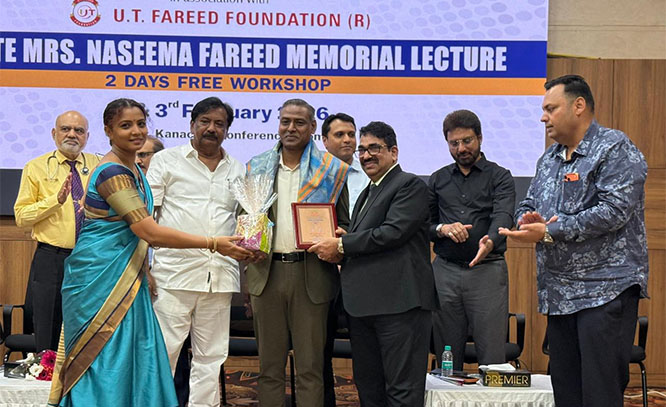
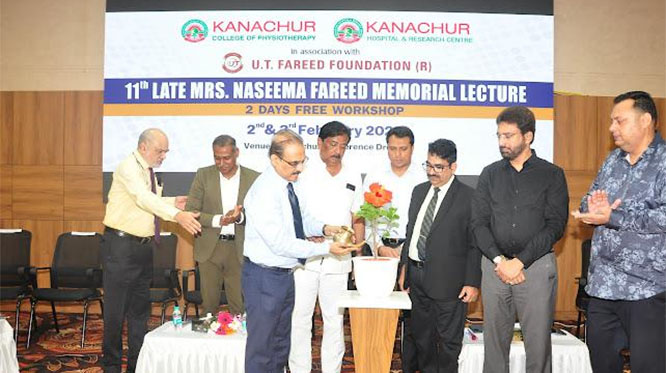
Mangaluru, Feb 3: Kanachur College of Physiotherapy and Kanachur Hospital & Research Centre, in association with U.T. Fareed Foundation (R), organised the 11th Late Mrs. Naseema Fareed Memorial Lecture on Tuesday.

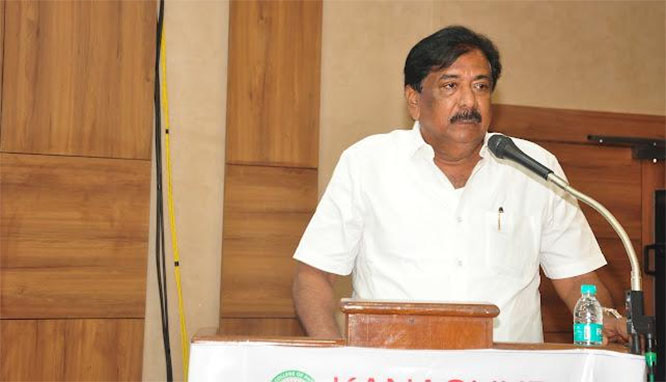
The programme was inaugurated by Dr. Subramanyam K, Head of the Department and Professor, Department of Cardiology, Srinivas Institute of Medical Sciences & Research Centre, Mangaluru. In his inaugural address, Dr. Subramanyam delivered an insightful talk highlighting the vital role of physiotherapy in modern medical care, particularly in cardiac rehabilitation, patient recovery, and improving overall quality of life through a multidisciplinary healthcare approach.

The presidential address was delivered by Dr. Haji U.K. Monu, Chairman, KIET. The keynote address was presented by Dr. Mohammed Ismail Hejamady, who spoke on the evolving scope and significance of physiotherapy.

The event was held in the presence of Mr. Abdul Rahiman, Director, Kanachur Institute of Medical Sciences, Mangaluru; Dr. Vaishali Sreejith, Senate Member, Rajiv Gandhi University of Health Sciences, Bengaluru; Dr. Sudhan S.G., Professor and Principal, Krupanidhi College of Physiotherapy, Bengaluru; Dr. Shanavaz Manipady, Dean, Kanachur Institute of Medical Sciences, Mangaluru; and Dr. Venkat Rai Prabhu, Member, Kanachur Health Science Advisory Council, Kanachur Hospital & Research Centre.

Dr. Mohammad Suhail, Dean, Kanachur College of Physiotherapy, welcomed the guests and delegates.

As part of the programme, a two-day free workshop was organised on the following topics:

•    Art of Practice in Cardiopulmonary Conditions by Dr. Sudhan S.G., Principal, Krupanidhi College of Physiotherapy

•    The Gift of Life – Organ Donation by Dr. Rohan Monis, Chief Administrative Medical Officer

•    Chest X-ray Interpretation by Dr. Hemanth, Department of Radiology, KIMS

•    Pulmonary Rehabilitation by Dr. Vijaya Kumar, Department of Respiratory Medicine, KIMS

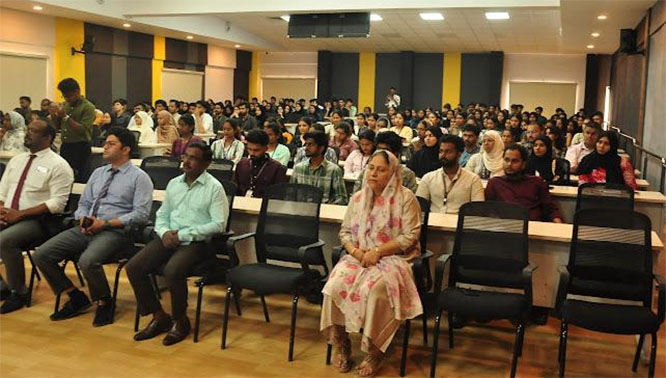
Organisers noted that the memorial lecture series has been conducted continuously for the 11th year, benefiting interns and postgraduate students from various colleges across Mangaluru. A total of 130 delegates attended the workshop.

Dr. Reshma, Vice Principal, Kanachur College of Physiotherapy, Mangaluru, delivered the vote of thanks.

Kanchur7.jpg

Kanchur6.jpg

Kanchur5.jpg

Kanchur4.jpg

Kanchur3.jpg

Kanchur1.jpg

Comments

Add new comment

  • Coastaldigest.com reserves the right to delete or block any comments.
  • Coastaldigset.com is not responsible for its readers’ comments.
  • Comments that are abusive, incendiary or irrelevant are strictly prohibited.
  • Please use a genuine email ID and provide your name to avoid reject.
News Network
February 5,2026

In an era where digital distractions are the primary rival to academic excellence, the Karnataka Education Department is taking the fight directly to the living room. As the SSLC (Class 10) annual examinations loom, officials have launched a localized "digital strike" to ensure students aren't losing their competitive edge to scrolling or soap operas.

The 7-to-9 Lockdown

The department has issued a formal directive urging—and in some cases, enforcing via home visits—a total blackout of mobile phones and television sets between 7:00 PM and 9:00 PM. This two-hour window is being designated as "sacred study time" across the state until the examinations conclude on April 2.

Key Pillars of the Initiative:

•    Doorstep Advocacy: Teachers are transitioning from classrooms to living rooms, meeting parents to explain the psychological benefits of a distraction-free environment.

•    Parental Accountability: The campaign shifts the burden of discipline from the student to the household, asking parents to lead by example and switch off their own devices.

•    The Timeline: The focus remains sharp on the upcoming exam block, scheduled from March 18 to April 2.

"The objective is simple: uninterrupted focus. We are reclaiming the evening hours for the students, ensuring their environment is as prepared as their minds," stated a senior department official.

Student vs. Reality

While the student community has largely welcomed the "forced focus"—with many admitting they lack the willpower to ignore notifications—the move has sparked a debate on enforceability. Without a "TV Police," the success of this initiative rests entirely on the shoulders of parents and the persuasive power of visiting educators.

Comments

Add new comment

  • Coastaldigest.com reserves the right to delete or block any comments.
  • Coastaldigset.com is not responsible for its readers’ comments.
  • Comments that are abusive, incendiary or irrelevant are strictly prohibited.
  • Please use a genuine email ID and provide your name to avoid reject.
News Network
February 3,2026

Bengaluru: Following reports of fresh Nipah virus (NiV) cases in West Bengal and heightened vigilance across parts of Southeast Asia, the Karnataka Health Department has placed the state on high alert and activated emergency preparedness protocols.

Health officials said enhanced surveillance measures have been initiated after two healthcare workers in Barasat, West Bengal, tested positive for the virus earlier this month. While no cases have been reported in Karnataka so far, authorities said the state’s past exposure to Nipah outbreaks and high inter-state mobility warranted preventive action.

Officials have directed district health teams to intensify monitoring, particularly at hospitals and points of entry, and to ensure early detection and isolation of suspected cases.

High Mortality Virus with Multiple Transmission Routes

Nipah virus is a zoonotic disease that can spread from animals to humans and has a reported fatality rate ranging between 60 and 75 per cent. Fruit bats, also known as flying foxes, are the natural reservoirs of the virus and can transmit it by contaminating food sources with saliva or urine.

Known modes of transmission include:

•    Contaminated food: Consumption of fruits partially eaten by bats or raw date-palm sap
•    Animal contact: Exposure to infected pigs or other animals
•    Human-to-human transmission: Close contact with body fluids of infected persons, particularly in healthcare settings

Symptoms and Disease Progression

The incubation period typically ranges from 4 to 14 days, though delayed onset has also been reported. Early symptoms often resemble common viral infections, making prompt clinical suspicion critical.

•    Initial symptoms: Fever, headache, body aches, fatigue, sore throat
•    Progressive symptoms: Drowsiness, disorientation, altered mental state
•    Severe stage: Seizures, neck stiffness and acute encephalitis, which can rapidly progress to coma

Public Health Advisory

The Health Department has issued precautionary guidelines urging the public to adopt risk-avoidance practices to prevent any local spillover.

Do’s
•    Wash fruits thoroughly before consumption
•    Drink boiled and cooled water
•    Use protective equipment while handling livestock
•    Maintain strict hand hygiene

Don’ts
•    Avoid fruits found on the ground or showing bite marks
•    Do not consume beverages made from raw tree sap, including toddy
•    Avoid areas with dense bat populations
•    Do not handle sick or dead animals

Preparedness Measures

Officials confirmed that isolation wards are being readied in major government hospitals and that medical staff are being sensitised to identify early warning signs.

“There is no cause for panic, but there is a need for heightened vigilance,” a senior health official said, adding that there is currently no approved vaccine or specific antiviral treatment for Nipah, and care remains largely supportive.

Comments

Add new comment

  • Coastaldigest.com reserves the right to delete or block any comments.
  • Coastaldigset.com is not responsible for its readers’ comments.
  • Comments that are abusive, incendiary or irrelevant are strictly prohibited.
  • Please use a genuine email ID and provide your name to avoid reject.