Ravana was a dalit from Uttar Pradesh, says Subramanian Swamy

CD Network
December 28, 2014

Varanasi, Dec 28: Bharatiya Janata Party leader Subramanian Swamy said that content of history text books in schools was rubbish and the time has come when the Centre should make necessary changes. He was addressing a seminar on 'I and my India' hosted by Youth in Action at Swatantrata Bhawan on Banaras Hindu University campus on Saturday.

Swamy surprised the gathering with his historical finding that demon king Ravana and his wife Mandodari were dalits from UP. He said that Ravana was born at Basrakh near Ghaziabad while Mandodari was from Meerut region. After being blessed by Lord Shiva, Ravana dethroned Kuber to capture power in Lanka.

The history being taught in schools was written during British era, when the Indian society was divided by drawing a line in the name of Aryan and Dravidian, said Swamy. Instead of legendary personalities of country, invaders like Babar and Sher Shah Suri are being taught to children. Terming existing education system as divisive for country, he said that the education structure divides Hindus and Muslims. Differences were created on caste lines. Sanskrit, regional and folk languages were marginalized to maintain the monopoly of English. He said that BJP will promote indigenous and value-based educational system.

He again said that all who have born on this soil are Hindus and it could be proved by testing their DNA. Muslims of the country also know this fact but it does not suit their clerics, he added.

Comments

Harsh sharma
 - 
Friday, 25 Mar 2022

Tha k you for relevant information.

Add new comment

  • Coastaldigest.com reserves the right to delete or block any comments.
  • Coastaldigset.com is not responsible for its readers’ comments.
  • Comments that are abusive, incendiary or irrelevant are strictly prohibited.
  • Please use a genuine email ID and provide your name to avoid reject.
News Network
January 5,2026

sharjeel.jpg

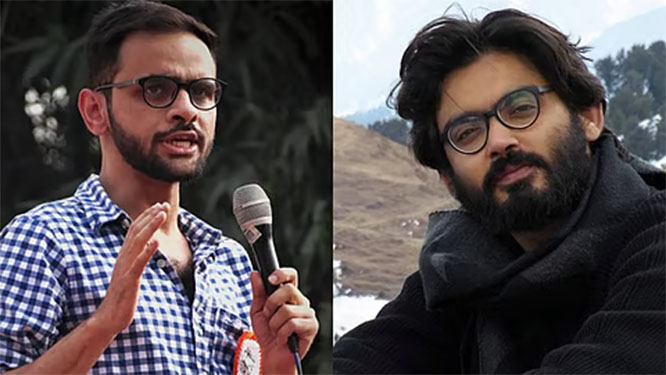
The Supreme Court on Monday refused to grant bail to activists Umar Khalid and Sharjeel Imam in the 2020 Delhi riots case, saying there was a prima facie case against them under the Unlawful Activities (Prevention) Act.

However, a bench of Justices Aravind Kumar and N V Anjaria granted bail to activists Gulfisha Fatima, Meeran Haider, Shifa Ur Rehman, Mohd. Saleem Khan, and Shadab Ahmad in the case.

Here is what the Bench said on the matter:

"This court is satisfied that the prosecution material disclosed a prima facie allegation against the appellants Umar Khalid and Sharjeel Imam. The statutory threshold stands attracted qua these appellants. This stage of proceedings does not justify their enlargement on bail," the Bench said.

"Umar Khalid and Sharjeel Imam stand on a qualitatively different footing as compared to other accused," it said, as reported by Bar and Bench.

The Court added that Khalid and Imam can "move for bail on completion of examination of protected witnesses or completion of one year from present order."

The Court further stated, "The UAPA as a special statute represents a legislative judgment as to the conditions on which bail may be granted in pre trial stage. Delay serves as a trigger for heightened judicial scrutiny. The discussion has been confined to delay and prolonged incarceration. UAPA offences are rarely confined to isolated acts. The statutory scheme reflects this understanding," as mentioned by the publication.

"Section 43D(5) of UAPA departs from general provisions for grant of bail. (But) it does not exclude judicial scrutiny or mandate denial of bail in default," the Bench noted.

On December 10, the top court reserved its verdict on separate pleas of the accused after hearing arguments from Solicitor General Tushar Mehta and Additional Solicitor General S V Raju, appearing for Delhi police, and senior advocates Kapil Sibal, Abhishek Singhvi, Siddhartha Dave, Salman Khurshid and Sidharth Luthra, appearing for the accused.

Umar, Sharjeel and the other accused were booked under the Unlawful Activities (Prevention) Act (UAPA), an anti-terror law, and provisions of the erstwhile IPC for allegedly being the "masterminds" of the 2020 riots, which left 53 people dead and more than 700 injured in northeast Delhi.

The violence erupted during widespread protests against the Citizenship (Amendment) Act (CAA) and the National Register of Citizens (NRC).

The accused moved the apex court challenging a Delhi High Court order dated September 2 denying them bail in the "larger conspiracy" case of the February 2020 riots.

Comments

Add new comment

  • Coastaldigest.com reserves the right to delete or block any comments.
  • Coastaldigset.com is not responsible for its readers’ comments.
  • Comments that are abusive, incendiary or irrelevant are strictly prohibited.
  • Please use a genuine email ID and provide your name to avoid reject.
News Network
January 6,2026

uae.jpg

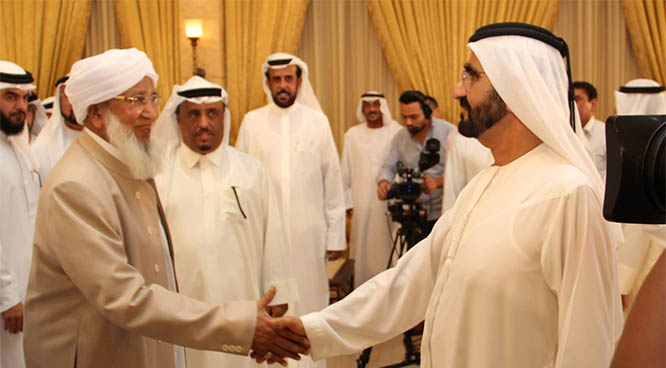
Sheikh Abubakr Ahmad, Grand Mufti of India, has congratulated Sheikh Mohammed bin Rashid Al Maktoum on completing twenty years as the ruler of Dubai.

In a statement, Sheikh Abubakr Ahmad said Sheikh Mohammed’s leadership has played a key role in transforming Dubai into one of the world’s leading cities and a global model for development, innovation, security and efficient governance. He noted that Dubai today is recognised as a vibrant international hub marked by tolerance, cleanliness and peaceful coexistence among diverse communities.

Recalling his personal experience of visiting Dubai over several decades, the Grand Mufti said the emirate’s inclusive and humanitarian policies have made it a welcoming home for people from across the world. He added that Dubai has emerged as a symbol of human dignity and mutual respect, while also contributing to stronger engagement between the Islamic world and the wider global community.

He said Dubai’s journey of progress is deeply rooted in the legacy of the late Sheikh Zayed bin Sultan Al Nahyan, the founder of the United Arab Emirates, and Sheikh Rashid bin Saeed Al Maktoum, regarded as the architect of modern Dubai. Their vision, based on wisdom, justice and service to humanity, continues to shape the leadership of Sheikh Mohammed bin Rashid Al Maktoum, he added.

Concluding his message, Sheikh Abubakr Ahmad prayed for Sheikh Mohammed bin Rashid Al Maktoum’s good health and continued success, and for lasting peace, stability and progress for Dubai and the United Arab Emirates.

Comments

Add new comment

  • Coastaldigest.com reserves the right to delete or block any comments.
  • Coastaldigset.com is not responsible for its readers’ comments.
  • Comments that are abusive, incendiary or irrelevant are strictly prohibited.
  • Please use a genuine email ID and provide your name to avoid reject.
News Network
January 6,2026

lamp.jpg

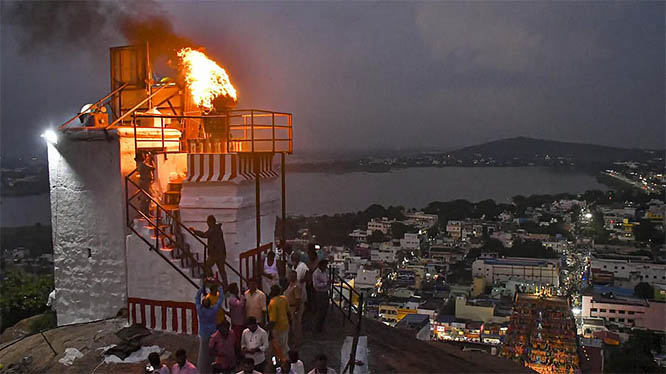
Chennai: The Madras High Court has strongly criticised the Tamil Nadu government for citing what it termed an “imaginary” law and order concern to delay the implementation of a court order permitting the lighting of the Deepam on the Deepathoon atop the Thiruparankundram hills in Madurai.

Upholding an earlier order passed by Justice G R Swaminathan, a division bench of Justices G Jayachandran and K K Ramakrishnan of the Madurai Bench dismissed the appeal filed by the state government and reaffirmed that the Deepam could be lit at the site during Karthigai Deepam.

The bench expressed displeasure over the government’s failure to implement the single judge’s directive, even after permission was granted for CISF personnel to accompany the petitioner, Rama Ravikumar, to the hilltop on December 3 to light the lamp. While allowing the ritual, the court clarified that the number of people permitted to climb the hill would be determined by the Archaeological Survey of India (ASI).

The state government had objected to the single judge’s order, arguing that allowing people to climb the hill and light the Deepam could trigger law and order issues, as the Sikkander Badusha Dargah is located about 50 metres from the Deepathoon. Meanwhile, officials of the Hindu Religious and Charitable Endowments (HR&CE) Department went ahead with lighting the lamp at the Uchipillaiyar temple at 6 pm, following established tradition.

Rejecting the government’s stand, the division bench said the apprehension of law and order problems was an “imaginary ghost” created by the authorities for their own convenience and criticised the district administration for not complying with the court’s order. The judges observed that instead of raising unfounded fears, the administration should have used the judgment as an opportunity to foster dialogue and harmony between communities.

The court also noted that neither the state government nor representatives of the dargah had produced any evidence to show that agama shastra prohibited the lighting of the Deepam at the site.

The Thiruparankundram hill has historically been a symbol of communal harmony, housing the Subramaniya Swamy temple, the Kasi Viswanathan temple and the Sikkander Badusha Dargah for centuries. However, the site became a flashpoint in February 2025 after protests by Hindu organisations over allegations that Lok Sabha MP Nawaz Kani consumed meat on the hill. Despite the controversy, local residents continue to live in peace and mutual coexistence. 

Comments

Add new comment

  • Coastaldigest.com reserves the right to delete or block any comments.
  • Coastaldigset.com is not responsible for its readers’ comments.
  • Comments that are abusive, incendiary or irrelevant are strictly prohibited.
  • Please use a genuine email ID and provide your name to avoid reject.